
Waves Review
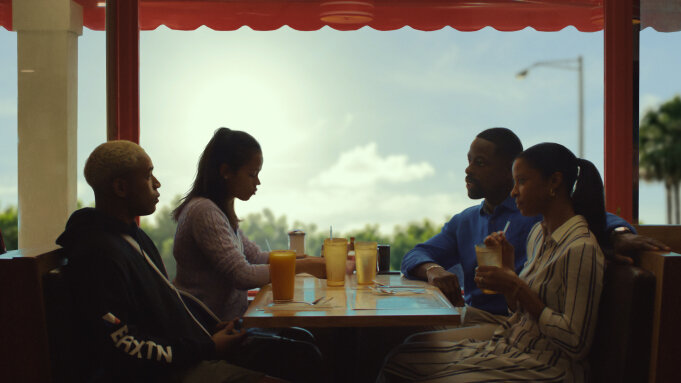
Waves traces the epic emotional journey of a suburban African-American family—led by a well-intentioned but domineering father—as they navigate love, forgiveness, and coming together in the aftermath of a loss.
R: Language throughout, drug and alcohol use, some sexual content and brief violence-all involving teens.
Runtime: 2 Hours and 15 Minutes
Production Companies: A24, Guy Grand Productions, JW Films
Distributor: A24
Writer/Director: Trey Edward Shults
Cast: Kelvin Harrison Jr., Lucas Hedges, Taylor Russell, Alexa Demie, Renée Elise Goldsberry, Sterling K. Brown
Release Date: November 1, 2019
A24 is working really hard right now to close 2019 out with a bang by delivering hard-hitting features designed to mesmerize you and give you a goddamn anxiety attack. Before the release of Safdie’s Uncut Gems in December (which does just that), we’re getting Trey Edward Shults’ Waves, an epic drama that I saw at TIFF which moved me to my core more than many other films this year.

Whitney Houston’s classic song “The Greatest Love of All” begins with, “I believe the children are our future // Teach them well and let them lead the way // Show them all the beauty they possess inside.” That’s pretty much the lyrical equivalent of the basis of this movie. Waves is a two-part epic drama primarily focused on an African-American family living in the city of Miami, specifically the teenage kids, a hyper-masculine blond son named Tyler and the quiet and timid daughter named Emily. The first half centers on Tyler, an athletic wrestling prodigy who is overworked by the pressure of his overtly masculine dad and blinded by his own ego, eventually blowing his arm out of commission in the middle of playoffs. But that’s okay because he has a loving girlfriend he can depend on and... wait, no! She’s pregnant! With all the odds stacked against Tyler, we watch as his once incredible life crumbles. Shults pursues the story even further by switching the lens to his sister. The latter half of the film shifts over to Emily as a romance blossoms between her and an awkward (but endearing) student named Luke while she learns how to open up again following a tragic incident she feels guilty about.
The more projects that director Trey Edward Shults tackles, the more ambitious he gets with his storytelling. The last feature he did was It Comes at Night, a movie I thoroughly enjoyed for what it was, but he has struck gold with Waves. Waves is a grand departure from his previous film stylistically and tonally, but maintains an element that bleeds into this effectively: the family dynamic. The family is what ties this together as a whole. The way the kids are raised by their parents, the relationship they share, and their internal resentment translates over to their behavior.
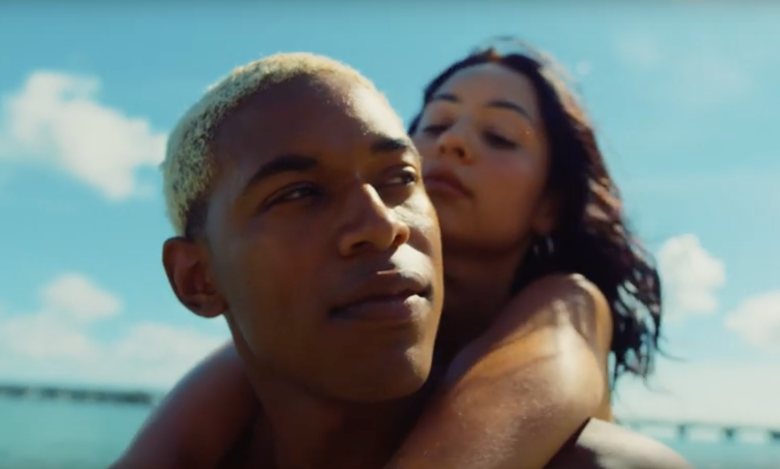
Waves is mostly an ensemble piece packed with stellar performances from everyone. Sterling K. Brown is fantastic as the monarching masculine, demanding jock-ish father. The inescapable Lucas Hedges is great too. Alexa Demie! Does she have like, a lifelong contact with A24? Honestly, I'd love to watch her lead a movie, whether it’s an A24 project or not. Taylor Russell is amazing as well, but the person that makes this film incredibly thrilling is Kelvin Harrison Jr.
For this being Kelvin Harrison Jr.’s second feature collaboration with Shults, he once again shines on another level. I hope their relationship becomes something like Ryan Coogler and Michael B. Jordan’s because they make nothing short of magic together. This is Harrison’s defining year that proves he’s a powerful force of nature. Between this and Luce, the actor is having the best 2019 and I'm here for him. This film is a perfect showcase of his range as a performer. While Luce had him reserved, quiet, and a bit sociopathic, his performance as Tyler is a more ramped up version of that. He’s visibly short tempered and at times frightening, but not in the mind-fucked way. If you’ve seen Luce and remember the final frame of that movie, just take that glimpse of Harrison’s expression and apply it here. The first hour primarily focuses on him, so you see the toxic masculine aggression that was planted by his father, whom he trains with and is pushed to the limit by. The best way to describe Tyler’s personality is as if Kanye West was Gen-Z, or if Luce was an All-American boy who succumbed to the pressures of being a teen rather than being Black, which is an area about this film that I will expand on a bit later.
It’s everyone’s movie, but Harrison rules. He dominates the screen and grips your pounding heart at its core. He is so captivating all the way through that at times I said to myself:
This is a side of Harrison we’ve never seen before, and honestly if this wasn’t such an ensemble picture he would be a shoo-in for Best Actor.
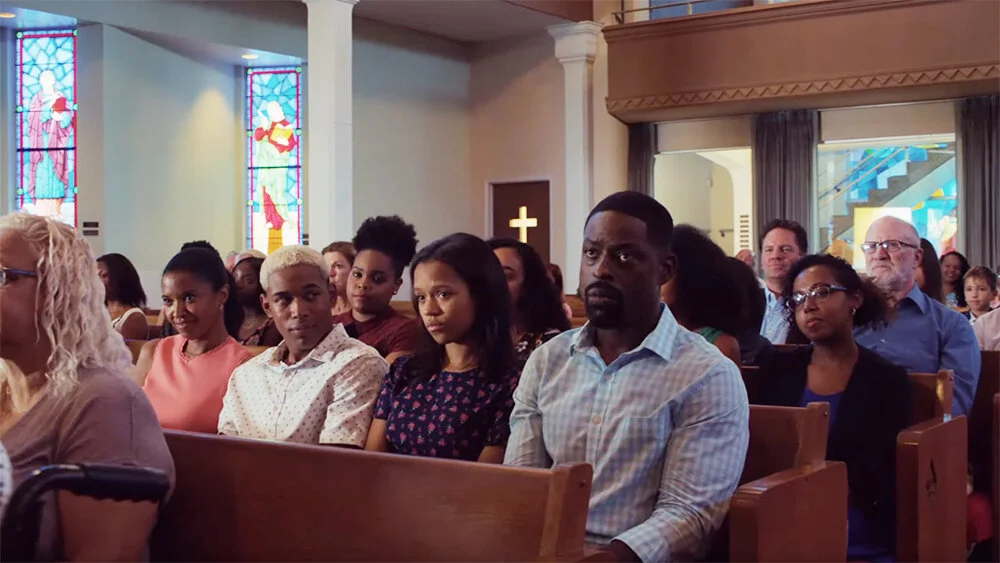
More so than Euphoria, more so than whatever the fuck 13 Reasons Why is at this point, Waves is the media piece that nails the Gen-Z culture. I know I’m comparing apples to oranges, but when it comes to representation of my demographic I’ve seen both series fall completely short of the culture by overly glamorizing it and romanticizing the tragedy of it. This might be the first film that captures the authentic, carefree joy we share with others and the horrors that can result from our inner demons, stemming from our elders and figures we idolize. When they say, “the apple doesn’t fall too far from the tree” it usually relates to our downfalls, being unable to break the mold that is established by our parents and the world, which is an accurate aspect about our culture today that not many films talk about.
The cinematography, done by Shults’ long time DP, may take visual influence from a Sam Levinson project like Euphoria (which he also worked on) and Assassination Nation—like the sweeping tracking shots to reflect the mind space of a modern American teen—but there are so many other sequences where it aligns perfectly with Shults’ vision, with long takes that are mesmerizing and add to the frenetic chaos of the teens’ separate lives. Besides that, the shot composition is incredible too. It ranges from electrifying, prolonged rotating shots done in one take in the most confined of spaces to tracking shots that raise the tension of an argument.
The film also contains small details that capture how technology and social media connects our generation and affects our moods. The emotional beats can hit so hard with just a drop of a text message, and they aren’t just pop-ups. There are POV shots of text messages and seeing the words in the recipient’s response can ruin your day, like feeling the FOMO from an IG story. A lot of the shots are like visual text messages in the sense that the camera would pan back and forth to characters having an engaging conversation, raising your pulse in the process. Plus, this movie’s playlist is meticulously curated, mixing diegetic and non-diegetic sound to keep you in the headspace of a character, elevating the tension and emotions in the scene. This might be the first movie I’ve seen that effectively uses a Kanye song in a way that is as terrifying as Kanye is today.

I’m glad modern movies are analyzing the topic of toxic masculinity, but better caution needs to be taken regarding its depiction. Some of the film’s major faults involve the lack of caution in depicting this African-American family, especially with Trey Edward Shults being a White filmmaker. Don’t get me wrong, the characters are all written like real people. The family is specifically suburban, which is an entirely separate case when it comes to Black culture and how they navigate the world, but it’s harmful when it comes to how we’re represented in a way that I personally can’t reside with. This might be just me—and I hope other Black film critics address this too—but when you set your story on Black characters, one needs to be extremely careful with representation. I love how this family is written and how they are individually characterized, but you can’t just have ONE throwaway line of dialogue to comment on Blackness to further the self-destruction of a person. In an earlier scene, Brown’s character Ronald tells his son Tyler (already diagnosed with a severe muscle injury) that, “for us to survive you have to work 10 times harder than everybody else,” and that pushes Tyler to crumble physically and mentally. That just didn’t sit well with me. I could’ve done without that line because then I wouldn’t have to add race to this equation. But later on he’s called a “nigger” by a racist/conservative White woman, rightfully triggering him, but it’s played as one of the primary breaking points for him mentally snapping. Is your Blackness supposed to be a burden to the world? Because that’s what it feels like this movie is implying, especially with Black males. While I am non-binary, I still get a bit offended when it comes to stuff like this. I truly understand Shults’ good intentions, but I wasn’t with that.
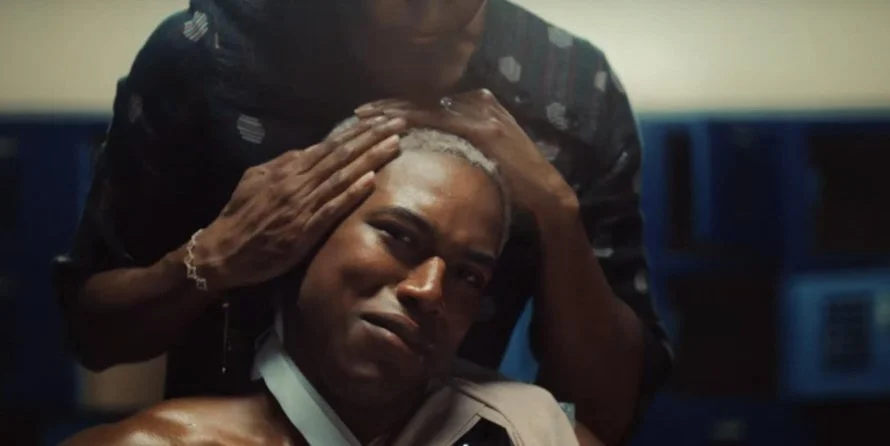
In the second half, the film makes a much needed major change in tone, pace, and visual style. After the intensity that shocks the audience, a romance develops between Emily and a boy named Luke, which is quite cute and meaningful. THAT SAID, there is a subplot which continues the conversation of Blackness that sits even worse with me where it’s revealed that Luke has a similar upbringing to Tyler, where he is pushed by an overtly toxic father. Yet, somehow he ended up being a sweet-natured boy who also wrestles. Now, if he was any race other than White, I would feel much better regarding this subplot. But because of his race and how the first half criminalizes the Black male, I felt uncomfortable, to say the least. I’ve seen way too much criminalization of the Black male in media lately while also having young Black women get with White males. Look at every movie Amandla Stenberg has been in recently and tell me what race her love interests were. Everything, Everything, The Darkest Hour, Hands That Touch, The Hate U Give… which is a funny case because the one time she did get close to a Black male he ends up getting shot dead by the police, and then her boyfriend is fucking Archie! In terms of the upcoming Little Mermaid live action remake, they’re hella keen on casting a White male as Eric to play opposite Halle Bailey’s Ariel. I’m one for interracial romances, but barely do I see one with a Black male and someone who’s not a woman of color where he’s not depicted as an entitled abuser, but when the genders are shifted the White guy is so nice and cute and the Black woman easily falls for him. The best thing I got is Miles Morales, I guess. An animated character is the best I can get for this kind of gender equality for romance in media. Plus, there are areas in the second half that could’ve been condensed for the sake of the runtime. While it still maintained its emotional compellment, I didn’t need that subplot—or main plot—to go to another state, literally.

Since it takes place in Miami, it’s very A24 and can complete the Floridian Artsy Trilogy. Seriously, package this with Moonlight and The Florida Project and you’ve got yourself a bargain of a deal. There are areas here that are so authentically Maimi and so distinctively Floridian that it fits right into that mix. At least it’s thoughtful in those regards. It feels authentic to the state and the crazy shit that goes on over there… even the making of a Florida man in the process.

Waves is an ambitiously well-crafted drama doubling as an accurate Gen-Z American story that perfectly understands the nature and the environment, even down to the pressures faced by the generation. It’s bolstered by incredible performances throughout, despite its major irresponsibility when it comes to conveying the importance of race.

