
Portrait of a Lady On Fire Review
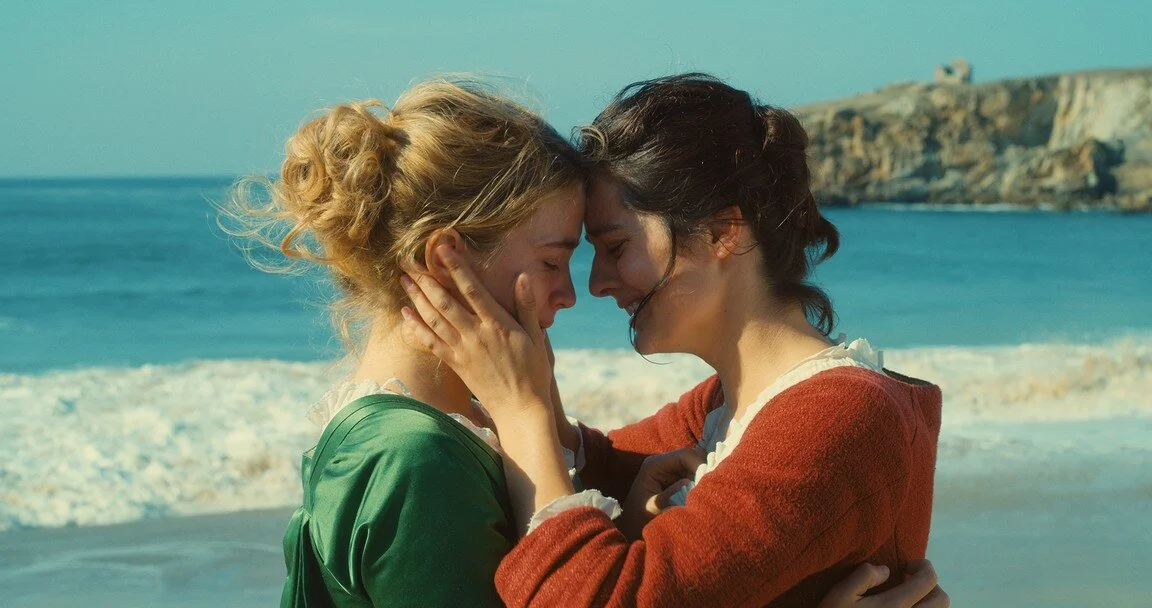
France, 1760. Marianne is commissioned to paint the wedding portrait of Héloïse, a young woman who has just left the convent. Because she is a reluctant bride-to-be, Marianne arrives under the guise of companionship, observing Héloïse by day and secretly painting her by firelight at night. As the two women orbit one another, intimacy and attraction grow as they share Héloïse's first moments of freedom. Héloïse's portrait soon becomes a collaborative act and a testament to their love.
NR
Production Companies: Lilies Films, Arte France Cinéma, Hold Up Films, Centre National de la Cinématographie, Canal+, Ciné+, Arte France, Cinécap 2, Région Ile-de-France
Runtime: 1 Hour and 59 Minutes
Distributor: NEON
Writer/Director: Céline Sciamma
Cast: Noémie Merlant, Adèle Haenel, Luàna Bajrami, Valeria Golino
Release Date: December 6, 2019
If there’s one thing you must know about me, it’s that I am a Pisces, which is both a blessing and a curse. There are many good things about being a Pisces, but what I find to be one of the worst aspects is being super analytical when it comes to romantic movies depicting human emotions. My hopeless romantic ass easily gets swept up by love stories that make me weep. That said, Portrait of a Lady on Fire is now one of my favorite romance movies of all time.

Enter Marianne, an esteemed painter who is commissioned—long before we commissioned our friends via social media to do artwork for us—to paint a portrait of a French countess’ daughter, a young woman named Héloïse who is to be betrothed. Told to disguise herself as a companion for Héloïse (who has tarnished other portraits of her by other artists), the two begin to get along swimmingly. As the two get acquainted with one another, a romance blossoms between them and that’s kind of all you need to know.
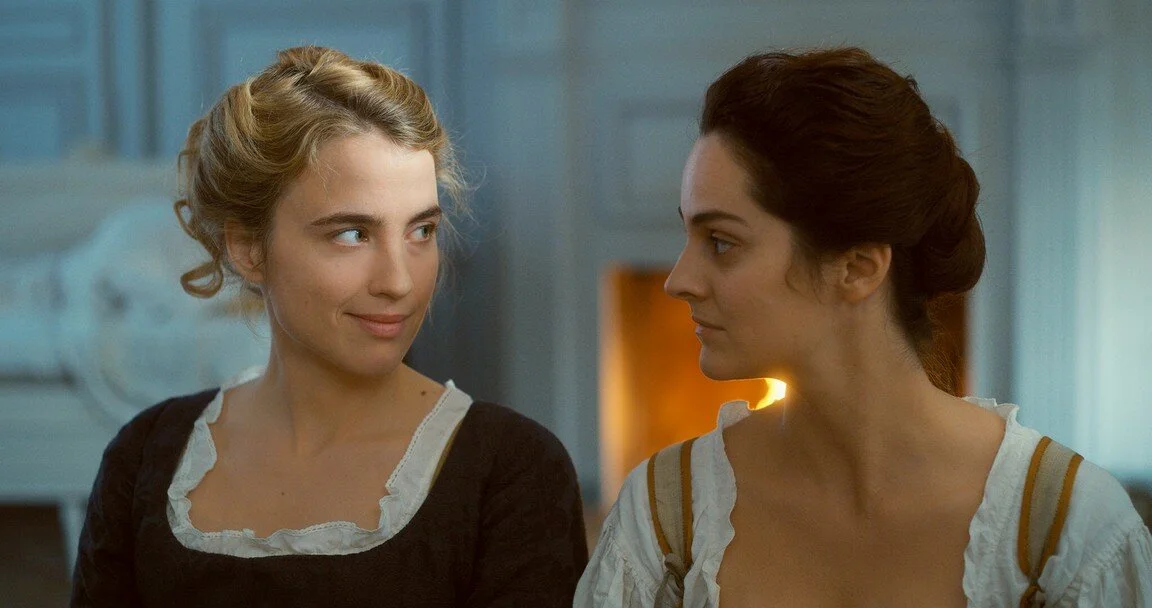
Marianne and Héloïse’s first encounter plays out like the unveiling of a mysterious figure (Héloïse) in a ‘50s-era film as she’s followed by Marianne. Thanks to the composition behind that scene, you can feel the distinctive burning passion of writer/director Céline Sciamma behind her lens telling this female-centric story in a refreshing new light, bringing forth the deserved representation in lesbian cinema that puts power back into the female gaze. As a lesbian filmmaker, Sciamma tells this significant story in a way that never feels inconsiderate or gratuitous with her screenplay and vision. She unapologetically delivers the love story in a personalized manner that never caters to the male gaze. A lot of lesbian romances fall into the trap of catering to the male gaze, for men have a fetishized perception of lesbian women. Films such as Blue is the Warmest Color and Disobedience deliver just that through prolonged sex scenes that are borderline pornographic and weak storytelling. There’s also the fact that said features are helmed by male directors who are foreign to the sexuality and the deposition of a woman. Through her thoughtful vision and framework, Sciamma ensures that her actresses (Noémie Merlant and Adèle Haenel) are never sexualized, and it’s brilliantly consistent throughout. There aren’t any sex scenes whatsoever; instead of letting that be the defining factor of their relationship, it’s instead depicted with visual motifs of how they perceive each other. As their relationship builds at a steady momentum and the tension between them rises, you find yourself longing to see them kiss. Whenever their characters would make out and proceed to have sex, Sciamma would jump cut to them in bed together cuddling, post-coitus, because she’s not going to give male viewers that satisfaction.
What strengthens Sciamma’s story even further is how she develops her central characters and the world they inhabit. Given the late-18th Century French era, a time when women's individual rights were limited due the dominating rule of man (well theorized by the lack of male presence in the story, which I thought was hella cool), the basis of the romance between Marianne and Héloïse is captivating. Their contrasting upbringings—Héloïse being sheltered from the world, making her curious about everything around her while Marianne is able to travel the world to make a name for herself—hold so much weight when it comes to how they interact with each other and how they admire one another. This ultimately benefits their relationship by making it feel so effortlessly organic. It doesn’t immediately rush into their relationship because it thoughtfully develops their camaraderie first.
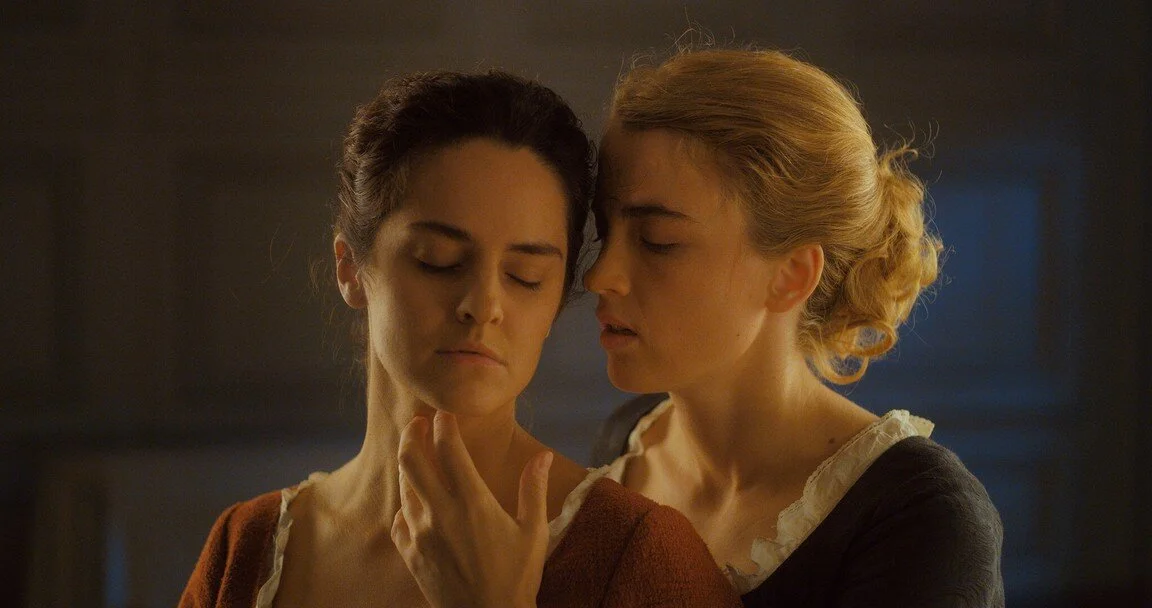
For me, what makes Portrait of a Lady on Fire top (no pun intended) other lesbian romance dramas—or most dramas in general—is how the film expertly handles the development of a special relationship. They connect as people before their infatuation blossoms. It’s not just their dialogue and conversations, but it’s how they study each other’s mannerisms and body movements with fleeting glances. Those subtle moments reveal the root of their romance. It’s like planting a flower. You notice Sciamma planting the seed in the beginning, watering it throughout with intimate moments, like Marianne teaching Héloïse about the world outside her window, and patiently watching that romance grow. You can’t just throw a seed into the ground and expect instant romance. Plenty of films in the genre have been so clumsy in that regard, but Sciamma establishes a well-developed relationship where they start off as companions that get to know each other by spending time together and having meaningful conversations about their life experiences, wants, and desires. She doesn't go straight into the romance, but instead focuses on the human connectivity and the mutual emotions they shared, strengthening the significance of their relationship. The more you learn about Marianne and Héloïse, the more you grow attached to them and their relationship.
Their romance is rooted in understanding and connection. The story is told through the perspective of women. It's very much a gender-specific movie that’s distinctively told through a woman's perspective. From a visual standpoint, there are so many effective POV and close-up shots of the leads observing, reading each other while we watch the passion of their emotions on display. The screenplay does a fantastic job depicting the openness and vulnerability that women have, making a lot of the scenes between the two more intimate without treading any familiar areas. The importance of a woman's characteristics and nature is the propeller of the significance of their romance.
That setting is even further explored through a subplot focusing on Héloïse’s young maid (Luàna Bajrami) getting an an abortion, a topic that’s very relevant today, which is fascinating to watch given the era. I was personally unaware of how this practice took place waaaay back then and having that be so meticulously interwoven with the leads’ past lives worked well. The story never loses sight of its characters and their relationship with the world.
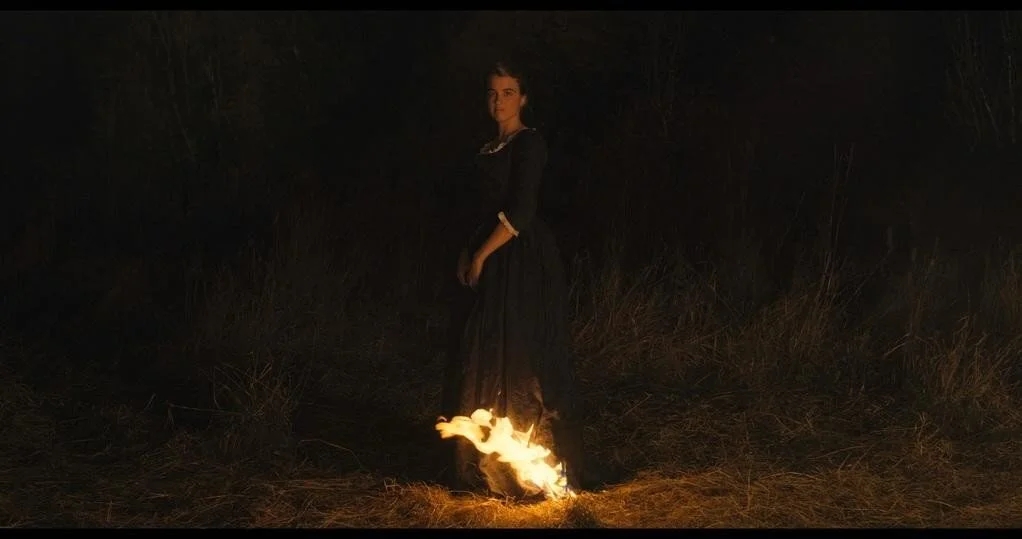
The small cast is great. Noémie Merlant and Adèle Haenel have magnificent chemistry, but it's really Haenel who triumphs most. They're both pretty solid, but Haenel is the actress who had me in both fascination and tears ample times. Not to give anything away, but she out Timothee Chalamet-ed Timothee Chalamet and, shit, her performance is phenomenal. She's the more complex of the two where Héloïse is avidly curious and desires freedom so much that she must assert her dominance while keeping a ladylike persona.
All the tropes that you'd normally find in a set up such as this are thankfully thrown out the window in order to further the intimacy. It’s not one of those romances that uses the “Liar Revealed” cliche until the end; instead, they get that shit out of the way quickly. Once that is accomplished and they can understand each other's ticks and emotions, the romantic tension builds and WOOOOO, LESBIANS! LESBIANS!
It's truly about time that a lesbian film is released and isn't something pornographic to pique the interest of men. The focus is mostly on the gender experience and the beautiful love found between the women. I'm also glad that this movie managed to out-romance Titanic in the notion of painting being the basis of the romance. Fuck “paint me like one of your French girls”. These actual French girls out-did that.
I wish I could elaborate as to why this movie is incredible without giving too much away, but believe me when I say this is one of the best, if not THE best, romance dramas of the decade. As much as I love Call Me By Your Name, Portrait of a Lady on Fire exceeds that ranking as a LGBTQ romance drama for me. Yes, it does get a tad bit cheesy, but my favorite meals are dairy-based despite my lactose intolerance so… that’s easily ignored.

Céline Sciamma delivers a gender-perspective romance built upon human connection without sexualizing her characters to shift beyond the female gaze. The film is so grounded and personal, which without a doubt makes it peak lesbian cinema. It's truly one of this year’s unmissable movies. I wish France went ahead and submitted this as their representative Best International Feature Film for the Oscars because it's truly one of 2019’s best pictures. I have yet to see Les Miserables and I bet it's fantastic, but despite its accomplishment of being the first French film made by a Black filmmaker to be submitted in that category, I am a teeny bit salty. If this movie was a person, I’d hug them and say:

Rating: 5/5 | 98%

