
The Last Black Man in San Francisco Review
R: For language, brief nudity and drug use
A24, Plan B Entertainment, Longshot Features
2 Hrs
Director: Joe Talbot | Screenwriters: Joe Talbot, Rob Richert
Cast: Jimmie Fails, Jonathan Majors, Danny Glover, Tichina Arnold, Rob Morgan, Mike Epps, Finn Wittrock, Thora Birch
Release Date: June 7, 2019 (NY & LA)
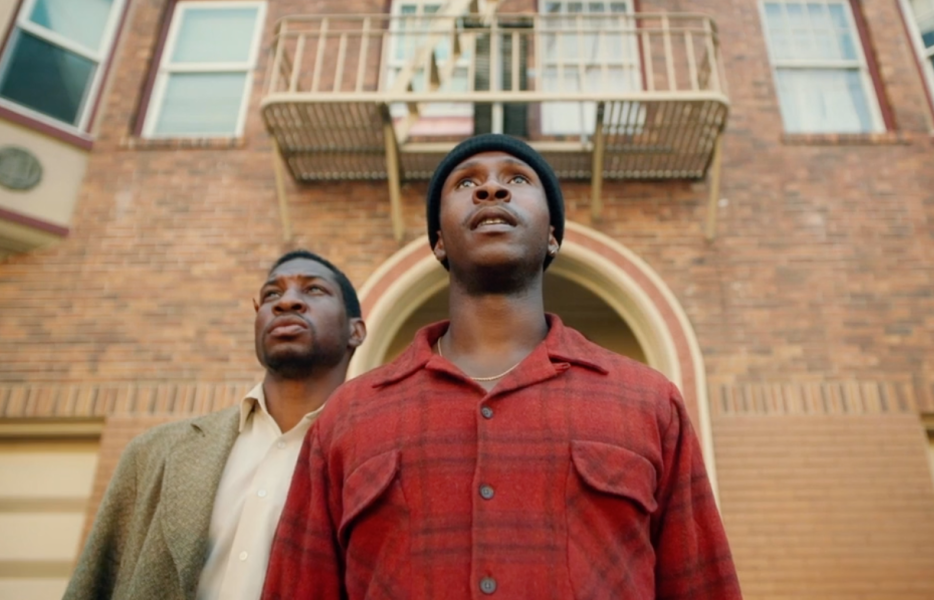
Jimmie Fails has one hope in life: to reclaim the majestic Victorian house his grandfather built. Every week, Jimmie and his only friend, Montgomery, make a pilgrimage across San Francisco to Jimmie’s dream home and imagine what life would be like if this neighborhood had never changed. When they realize the house’s current owners have moved out, Jimmie decides to recreate the home his family once had. As he struggles to reconnect with his family and reconstruct the community he longs for, Jimmie’s domestic aspirations blind him to reality.

Once in a blue moon, there will be a movie that speaks to you on a personal level that no other movie can capsulize for you. A movie that makes you feel seen if every way, shape, or form. A movie that you wholeheartedly connect to and makes you say, “This is my movie. This was made for me.” I was one of the first people to catch Joe Talbot’s directorial debut, The Last Black Man in San Francisco, in January at Sundance. Upon that first viewing, the only thing I said as I walked out of my P&I screening with tears running down my face was, “This is my movie.”
For the past several semesters as a college student, I have taken anthropology courses where I’ve become invested in, and educated about, the ongoing change occurring in my borough (Brooklyn) and the different communities. I have lived in Crown Heights all of my life, and recently I’ve seen an influx of changes on my block. On my Instagram (@RendyJones) I made a highlighted set of the new apartments and spaces being built from places which used to be small businesses and parking lots for apartments. So, watching this take place right before my eyes and taking anthropology classes where I learn the after effects of gentrification has me very worried, if not slightly paranoid, but the final blow that broke me was this movie, which is a poetic piece of art that’s exquisitely moving from beginning to end.
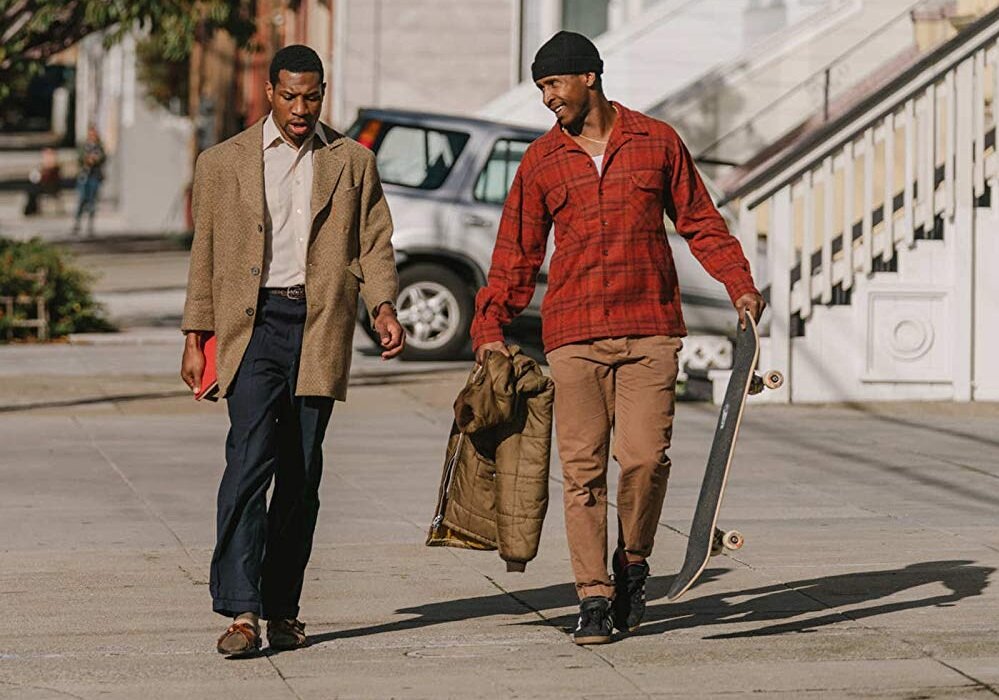
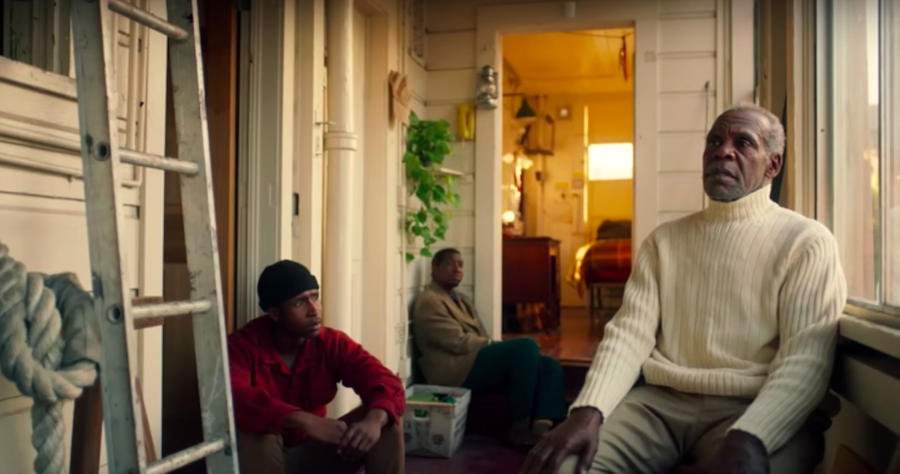
The film centers on Jimmie Fails (Fails), a passionate black man in his 20s who resides with his best friend Mont (Majors) and his grandfather (Glover). All he wants to do is to reclaim the house his grandfather built that he grew up in. He routinely visits the house to keep the exteriors tidy, fully aware that there are other people living there, and seeing if the current owners moved out. When the owners actually do move out, Jimmie and Mont move in (without any lease at all and following his heart) and tries to do everything in his power to claim the home that brought him the best times of his life in a city that changed right before his eyes.
This story may sound thin by description, but the way it’s executed is unlike anything you’ve ever seen before. It’s profound. In the first five minutes, director Joe Talbot exhibits an experimental style that is unexpected and helps carry the story by letting the imagery on screen be the narrator rather than just the characters. There is a beautiful moment that captures the gaping marginalization of class between the old school San Francisco of Black people who once owned the neighborhood and now live on the streets, versus new age hipsters who took over in a way that is subtle and classy. Moments like that never let up as they do something inventive and new with each frame. The film never utters the word ‘gentrification,’ but presents it throughout in its own language. The antagonist of the film is gentrification and the way Talbot displays San Francisco is similar to that of a character. While it bears so much relatable realism, there are fantasy elements that give the film another layer of beauty. The story is not afraid to get weird as it showcases the talents’ voices. The fearlessness Talbot displays while making this distinctly personal film struck me deep in my core.
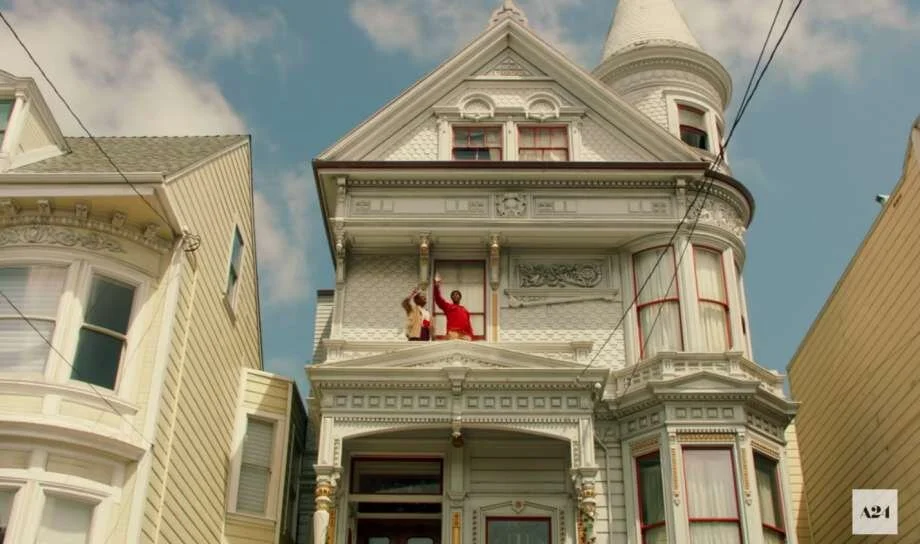
A reason why Jimmie Fail’s story hit me hard is his motivation. Being driven by nostalgia, reminiscing on the days when life was great and his family was whole, when his happiness was at its peak, is effective on a relatable level. On the surface it may seem like an obsession, but as the film goes on, it’s a deep love that you recognize - a relative feeling that anyone who has ever loved a home can recognize. He abides by the term, “home is where the heart is” through his actions rather than speech. Being boastful about how his grandfather built this house in San Francisco, which justifies his claim to his home against real estate agents and gentrifiers, Jimmie’s drive to fight for his land - fight for his home - is captivating and you support his will to win. And that’s something that I connected with. It’s something that my friends who live in Astoria, Queens are also experiencing. To see that it’s not just me and my friends going through this - and to get a film that poetically captures the love of a city that made oneself whole - is powerful.
This is Jimmie Fails’ story, and he’s the shining star. For this being his first ever feature performance based off his story, the energy and passion is emitted on screen with each frame. He shows a nuanced and charming presence in this role based off of himself. His performance is a brilliant debut which is bolstered by his sentimentality and his charisma.
Jonathan Majors plays his socially awkward, but gifted, multi-talented best friend, Mont, and he’s also incredible. Together, they make this movie even more magical than the expressive visuals.
2019 has been a great year for depicting powerful and loving friendships between characters. While the bond between Molly and Amy is strong in Booksmart (another film that boasts a strong friendship) I’ve never seen a better onscreen friendship than Jimmie and Mont. In Black culture, men are often ridiculed by other men for showing any type of open platonic love. And when they do, that man is forced to say “no homo.” But this movie might be the first to show that you don’t have to. There are never any homosexual undertones, or anything remotely close to that, between Jimmie and Mont as they are two best friends who just loyally support each other through thick and thin. The chemistry between Fails and Majors is incredible and is one of the many gifts that buttress this immaculate story.
Besides its theme of gentrification, there is a beautiful love letter to Black culture and urbanization integrated into the story which elevated this entire experience for me. In Jimmie and Mont’s journey, they conflict with the neighborhood group of thug-like men who talk shit all day to each other and are all tatted up. Every urbanized neighborhood has those guys and if you are from one, they’re easily identifiable. The way people interact with each other never feels stereotypical as Talbot puts the characters in their own element and shoots them as so. He never depicts the characters as bad people, but as humans. The way they’re presented within the narrative is gorgeous and it’s the kind of depiction that films of this nature should follow.
Another elevation that gives the film its complete voice is the score by Emile Mosseri. Whether it’s a bellowing trumpet to capture the vibrancy of Jimmie and Mont’s adventure or the high notes on the piano to enforce the sentimentality of the despair, Jimmie feels as the city throws every obstacle in his way. Mosseri’s score provides some of the catchiest and most enriching music that hits perfectly. His score is so exceptional and it cannot be overlooked.
God, I want whatever energy drink West coast filmmakers are drinking, because projects such as this one, Boots Riley’s Sorry to Bother You, and Carlos López Estrada’s Blindspotting are brilliant works of experimental filmmaking that match their stories, if not surpasses them. Now I know how cinephiles feel when they watch a Goddard film.
Though there are areas during the second act where the film drags and the slow pace stretches, it wins you over with a powerful and moving finale central point that is, to me, perfect in every way. With scenes I’ll be quoting ‘til the end of time and excellent visual imagery, this movie is like falling in love and plays as a reminder as to why I love movies.

This is one of those stories where I feel seen. I feel seen as Black person, a Black person who has seen a neighborhood change before my very eyes and feeling that fear that it's going to affect me. A Black person whose lifestyle is different from others in my area, but can still empathize on a common ground of respect with them.
Joe Talbot’s directorial debut is every thought I’ve had about the shift of society rolled into one film. Besides that, this is a poetic experimentation that tributes Black culture in a way I’ve never witnessed before and made me so proud of who I am. Last Black Man is a revolutionary tale that will linger with me through the year. This isn’t just one of my favorite movies of the year, but one of my favorite movies, period.
During the Sundance awards after party, I went up to Joe and Jimmie and told them from the bottom of my heart how much their film meant to me, where I’m from, what’s going on in my neighborhood, and how I felt connected to every frame. The duo both hugged and thanked me. Then, Joe said to me, “that’s why we made this movie. Not just for us, but the people like you.” It was one of the best moments that I will treasure forever and I hope this film gets the exposure it deserves, because it truly is remarkable. I’ve seen this film twice now, and seeing it a second time after 5 months was like falling in love all over again and I can’t wait to see it a third time.

Bursting through the door with fresh talent Jimmie Fails and first time director Joe Talbot, The Last Black Man in San Francisco is an extraordinary visually poetic deconstruction of gentrification and blackness rolled into one beautiful love letter that will grip your emotions to the bone.
Rating: 5/5 | 97%

