
'Dream Scenario' Review: Pathetic is the New Peak Nic Cage Performance
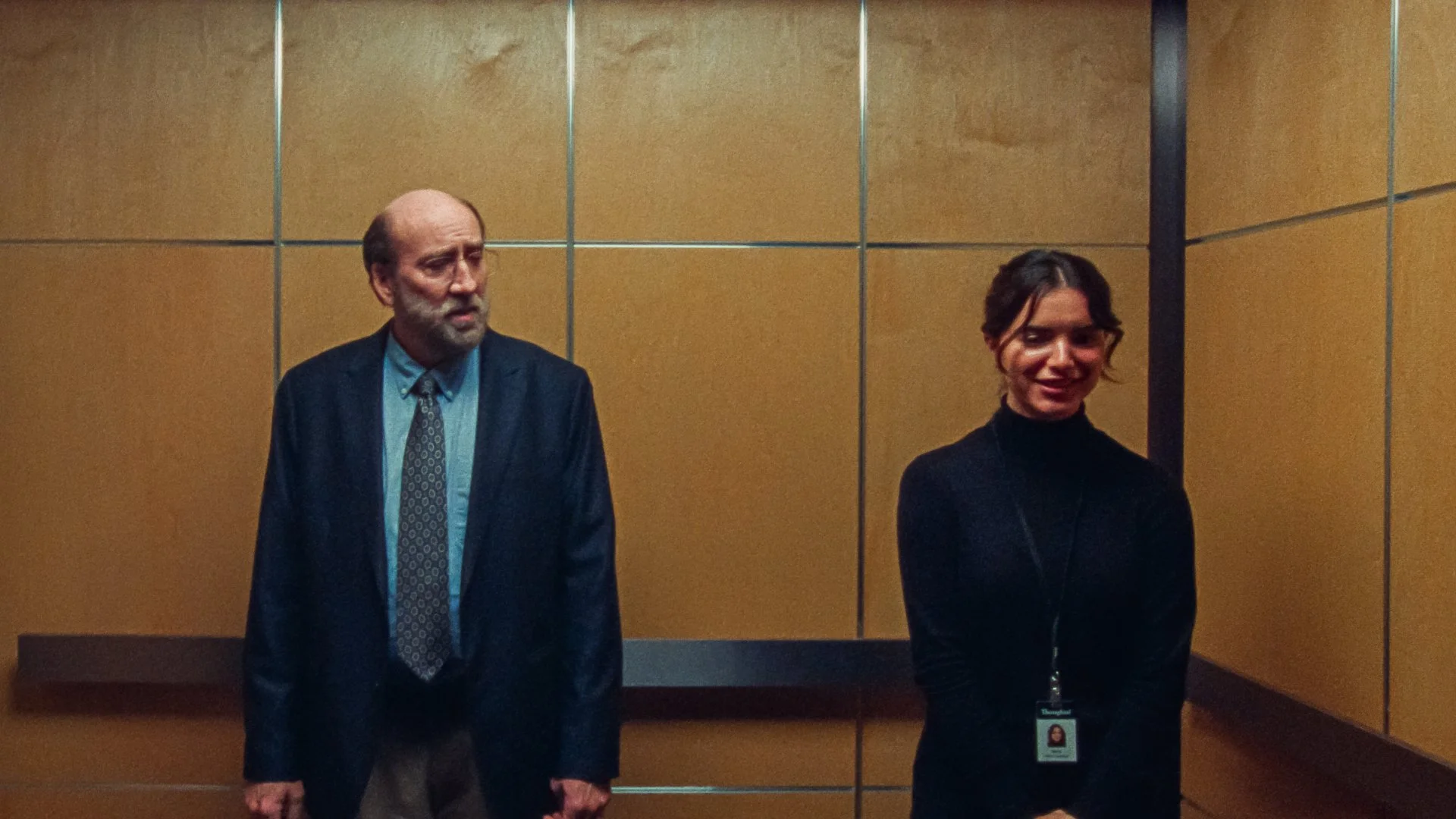
Dream Scenario
R: Language, violence and some sexual content
Runtime: 1 Hour and 40 Minutes
Production Companies: A24, Square Peg
Distributor: A24
Director: Kristoffer Borgli
Writer: Kristoffer Borgli
Cast: Nicolas Cage, Julianne Nicholson, Michael Cera, Tim Meadows, Dylan Gelula, Dylan Baker
Release Date: November 10, 2023 (NY/LA) | November 23, 2023
Only in Theaters
Arriving shortly after his dark comedy Sick of Myself, Norwegian writer/director Kristoffer Borgli continues his "narcissistic normie" film duology with his latest, Dream Scenario. He specializes in making movies about people embarking on an ego-death journey—people established as unremarkable nobodies eventually becoming viral sensations out of a bizarre coincidence. Then, their characters change for the worse. Sick of Myself followed a young woman exploiting her skin condition for fame. Dream Scenario, however, follows a middle-aged protagonist, but his desire for visibility remains, nonetheless.
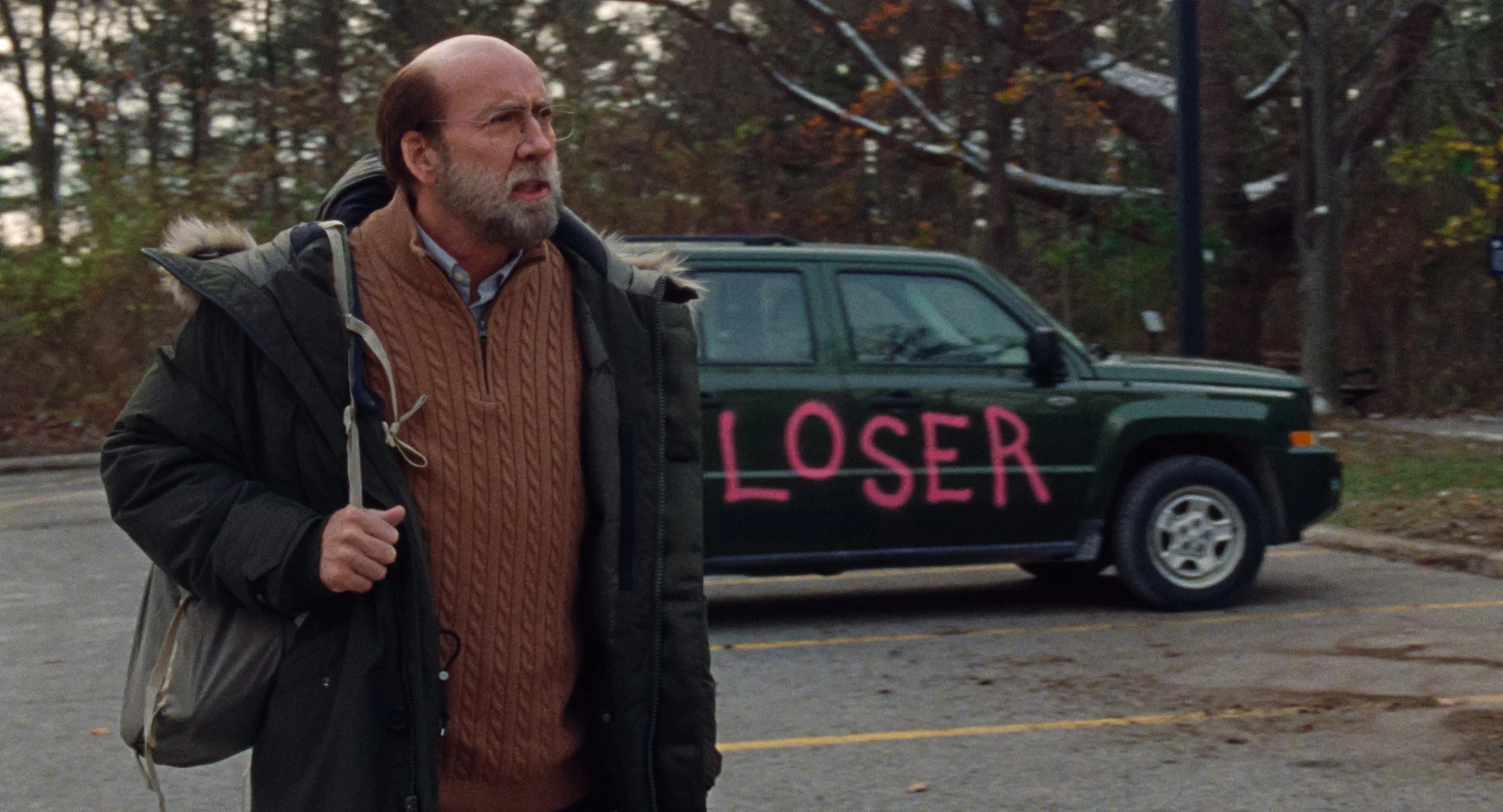
Ocler College professor Paul Matthews (Nicolas Cage) finds himself at the epicenter of a mass phenomenon when he starts appearing in everyone's dreams. His students, friends, and strangers—all but his wife Janet (Julianne Nicholson)—have been dreaming about him specifically. He’s spawning in everyone's subconscious like Freddy Krueger, observing their predicaments but not doing anything notable. Inadvertently, Paul becomes a viral sensation and is swept up in his newfound fame since he is known for such little accomplishments or credibility. The more attention he receives, the deadlier his presence in dreams becomes, affecting his social standing.

Remember the Spongebob episode "Sleepy Time," where Spongebob's astral-projected self hopped around all his friends’ dreams, and his unwarranted participation pissed everyone off? Imagine that episode but as a surrealist social satire on contemporary mass hysteria and all its politics. Linking Dream Scenario's premise to an early Spongebob episode is enough to sell the film to any reader despite any criticisms that follow this sentence. That said, Dream Scenario is every bit of a fun, hilarious roller coaster ride, even if its commentary stays at a surface level.
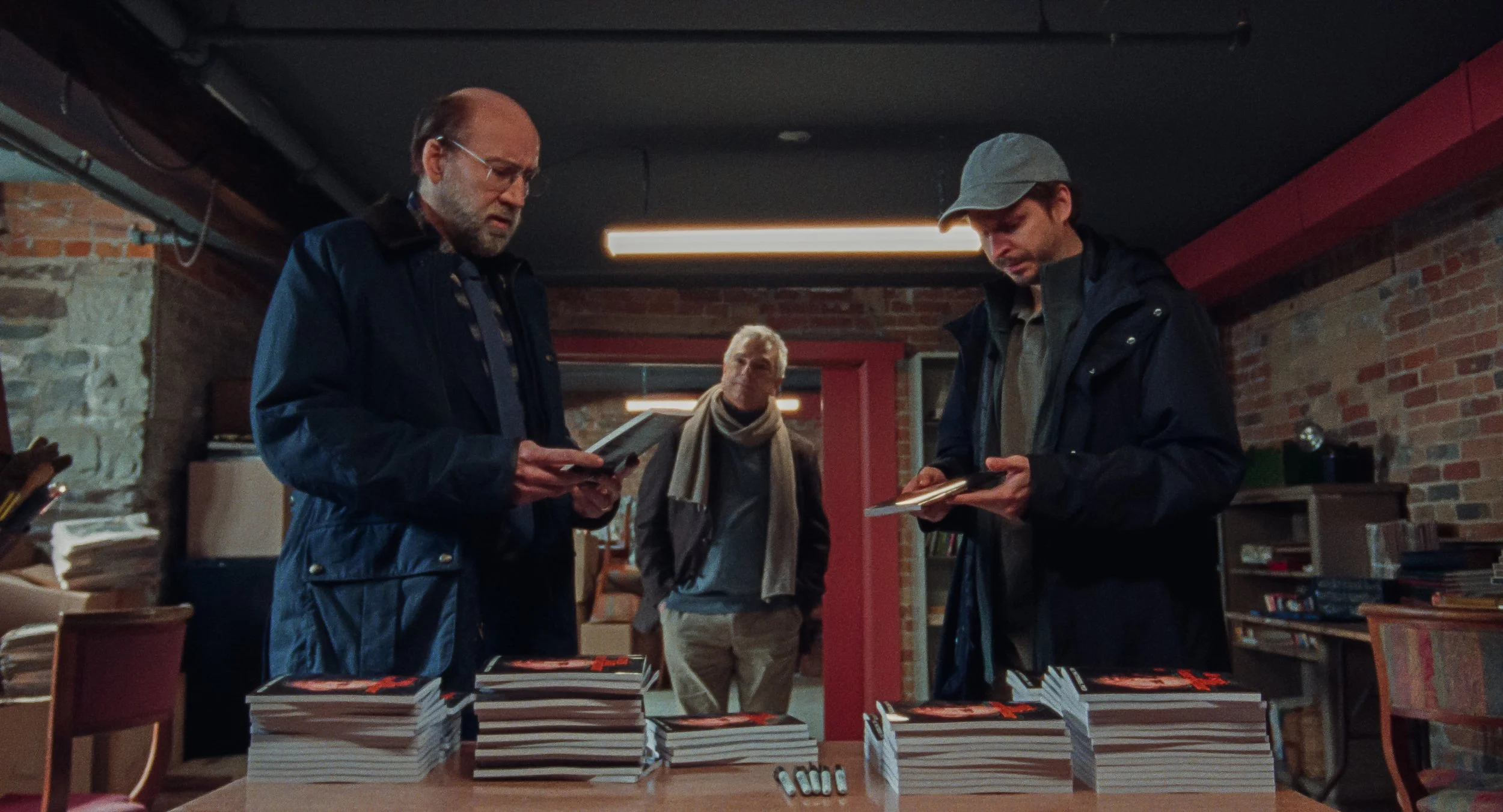
Whenever Nic Cage stars in something, he either plays a Nic Cage variant with all his loveable tics or showcases a fresh range that marks one of the best performances of his career. Dream Scenario falls under the latter. As an anxious, awkward professor, Cage simply disappears without a trace. Beyond the bald cap he dons, Matthews speaks in a nasally high-pitched voice and exudes spinelessness. Essentially, Cage expands his comic reach by playing a Chris Parnell-type. Trait for trait: Paul Matthews is Jerry from Rick and Morty in human form. Maybe it's the nerdy voice, but he could out-lose Jerry, which is remarkable. Oscar-worthy, even. Matthews is one of Cage's best comedic performances since Raising Arizona.
Kristoffer Borgli forms a creative study on the lead's fragile ego through Paul and the outrageous concept linked to his popularity. From its opening, Paul's inherent insecure nature shows when an old colleague refuses to cite him for a minuscule detail in her upcoming book—already desiring to seek notoriety in some capacity within his field—while he talks a big game about a book he's been procrastinating for years from writing. Once his overnight fame slowly reaches its apex, Borgli's fable-like story nails the hammer in how rapidly a little taste of fame affects one's desire for power and entitlement.
Borgli's script is heftier in exploring Paul's downward spiral than in having a noteworthy perspective on our media-obsessed culture. Gracing the "water is wet" significance is the witty surrealism in the dialogue and plotting. Borgli gets giddy like a Mad Hatter when he throws Paul into a dizzying media rabbit hole, and the film significantly stands out in its strangeness. All the elements in the media cycle—ranging from how social ascent benefits everyone within the unit to how quickly someone becomes exploited for wealth—are accurate as Borgli captures modern senstationism's frenetic nature, impacting the film's breakneck speed in its pacing. Every facet of its story is silly and absurd, yet cerebral, like a comedic-oriented Black Mirror episode or the recently concluded show, The Other Two. And much like Black Mirror, the imagery is either delightful or genuinely frightening.
Borgli provides an alluring, visceral imagery in his direction that takes advantage of the concept. He makes a gradual slow-burning tonal change through the many dream sequences that start as awkwardly funny to eventually nightmarish. The vivid, dreamy cinematography by Benjamin Loeb (Mandy, Sick of Myself) helps shape the film's dark comedic identity while intuitively reflecting the progression within the lead's ego. Other details, such as quick-cut close-ups of Paul doing double takes but in separate angles and shot frames whenever he makes a late decision, add to his characterization and the comedy.
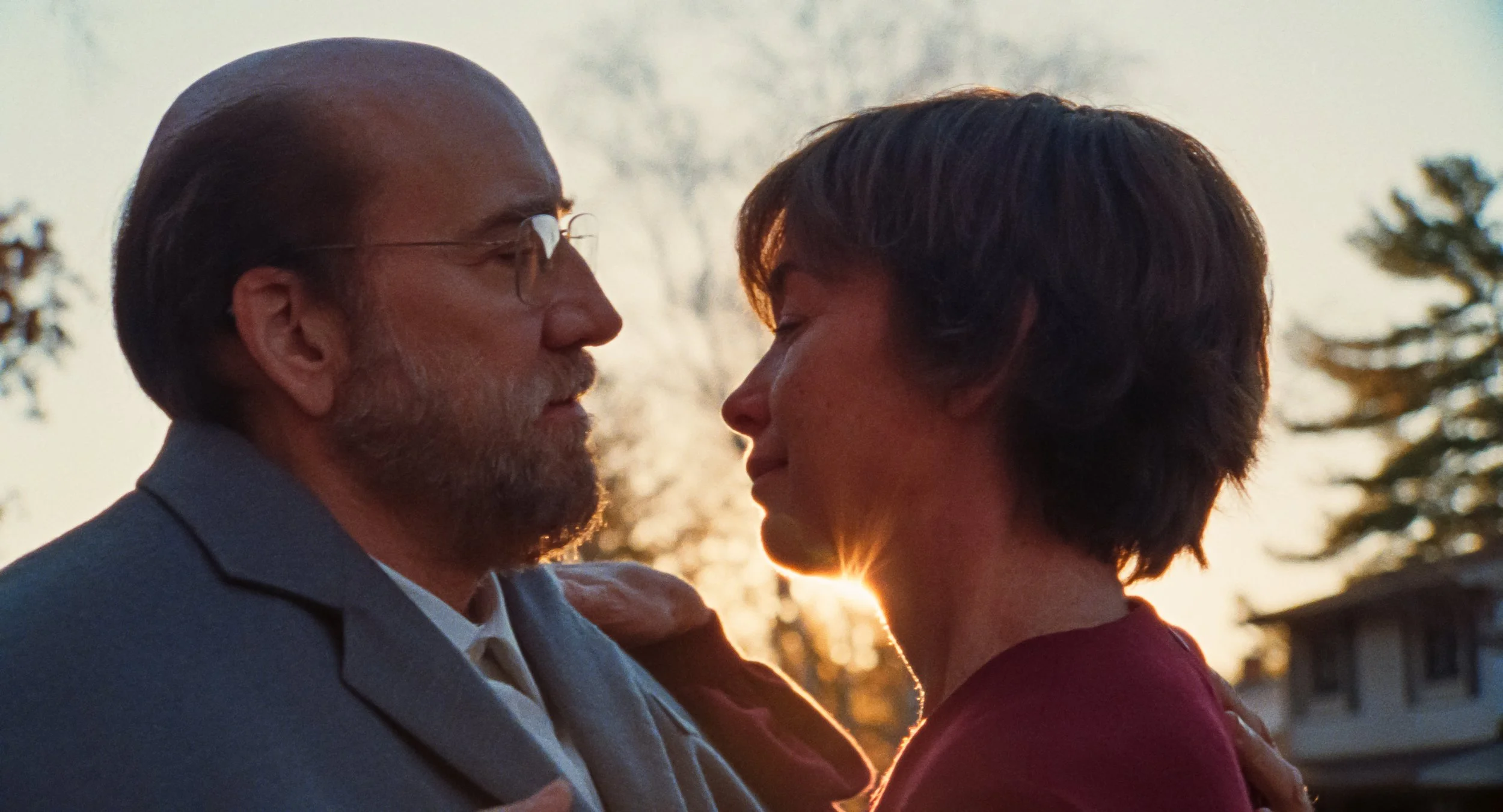
The supporting cast sustains the film's comedic nature when it has to become wilder in tone. Character actors like Tim Meadows—who can't stop playing principals in media for some reason—play Paul's boss and only comrade who doesn't dream about him. A hilarious sequence featuring a new-aged d-bag Michael Cera, Kate Berlant, and a thirsty Dylan Gelula as an advertising team who contacts Paul to land him as a client, satirizing how companies exploit celebrities for branding, stands out as one of the film's best scenes. Julianne Nicholson plays a significant role as Paul's wife, who attempts to keep his ego in check as the only person who loves him and somewhat becomes his conscience that he constantly ignores. She is the only form of normalcy in a sea of freaks—an excellent contrast to Cage, putting realism in surrealism.

Dream Scenario operates on a one-tracked "eat you up and spit you out" mindset, which every other contemporary social satire commenting on "cancel culture" does nowadays. The only thing it has going for it is its depiction of how the media cycle can apply to just about everybody, but there's no meat to the conversation. The accuracy and humor give the ground level some poundage, but there's potential to do more than what it has. Perhaps Dream Scenario having little to say about modern culture is the point of it all, for it works thoroughly as a comedic romp. From that lens, it's a fun ride, but if you expect good commentary, you’ll be disappointed.

Funny, absurd, and surreal, Dream Scenario is an exciting social romp that does little in satire but makes up for it with hilarity and a sublime Nic Cage performance.

