‘They Shot the Piano Player’ Review: Animated Bossa Nova Doc From 'Chico & Rita' Team Hits All the Wrong Keys | TIFF 2023
PG13: For smoking and some violence
Runtime: 1 Hour and 43 minutes
Production Companies: Fernando Trueba Producciones Cinematográficas, Gao Shan Pictures, Les Films d'Ici Méditerranée, Prima Linea Productions, Submarine
Distributor: Sony Pictures Classics
Directors: Fernando Treuba, Javier Mariscal
Writers: Fernando Treuba
Cast: Jeff Golblum, Vincius de Moraes, Tom Jobim, João Gilberto, Caetano Veloso, Milton Nascimento, Gilberto Gil, Paolo Moura, João Donato, Mutinho,
Release Date: November 24, 2023 (NY/LA)
In Theaters Only
Over a decade ago, Spanish filmmakers Javier Mariscal and Fernando Trueba made Chico and Rita, an adult animated film about two Cuban musicians who fall in love while trying to pursue their dreams. It pioneered how the industry perceived animated features, for it was the first adult animated film to receive a Best Animated Feature nomination in 2011. It's been a long time since the two collaborated on a project. Mariscal and Trueba's latest, They Shot the Piano Player, sees the duo returning to animation and switching it up in a medium-bending feature centered on a mystery within the pioneering days of the bossa nova scene.
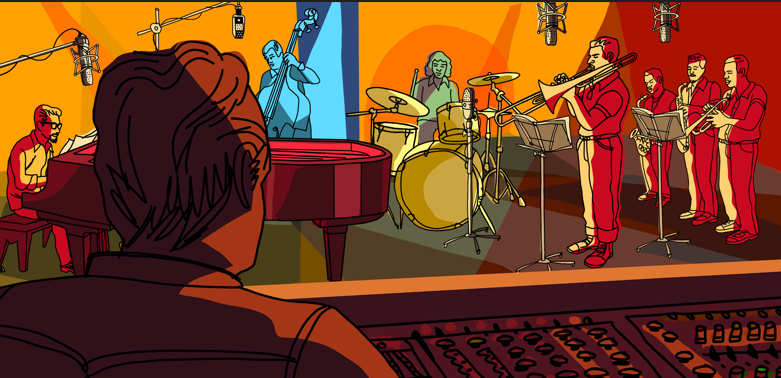
Photo credit: Javier Mariscal. Courtesy of Sony Pictures Classics.
During a writing session, New York-based music journalist Jeff (Jeff Goldblum) listens to a tune played by bossa nova pianist Francisco Tenório Junior. Compelled by the music, Jeff goes down a Tenório rabbit hole. He finds out T.J. disappeared at age 35 during the ‘70s. Right then and there, Jeff pivots his attention towards the pianist's mysterious vanishing. He embarks on a globe-trotting quest to uncover the man behind the keys, how he was a significant figure of the bossa nova movement, and why he disappeared without a trace.

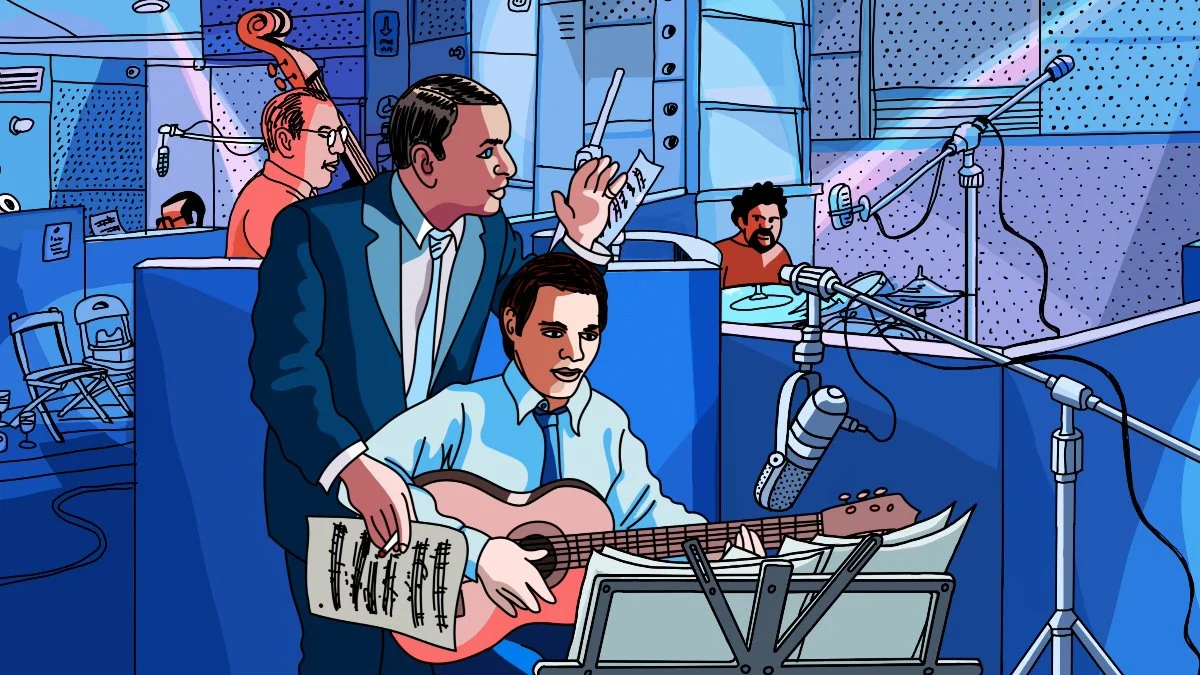
They Shot the Piano Player bears similarities to Mariscal and Trueba's previous visual style and color language features. It has a New Yorker cartoonist architecture in its backgrounds and character designs, which wavers between hyperrealistic and expressive. The colors and imagery are 1:1 replications of our world throughout the scenes set during the present day. Everything from the cities to the people has thinly outlined features colorized with fine detail. As Jeff interviews real Latin American musicians from the ‘70s, such as Vinicius de Moraes, Caetano Veloso, Toquinho, Bill Evans, and Ella Fitzgerald, to name a few, the animation has a cool rotoscope meets watercolor look as it presents the subjects in a very flattering and detailed style.
When Jeff interviews a figure close to Tenório, and they illustrate the old years, the colors emphasize freedom. Once the context of the totalitarian regime comes into play, the exuberant colors add a cathartic edge. People's skin tones are composed of singular colors, and the backgrounds are full of smeared watercolor brushstrokes. Much like Chico and Rita, Mariscal and Trueba have the music complement their color choices, specifically during jazz session sequences.

Part of why it took so long for the two filmmakers to reunite was because Trueba had been doing his research on Tenório for the past 15 years. He was on an Eminem level of obsession with the late pianist whom he never knew. He said, "Wait, we need to make this into a movie," and based Jeff on himself. Usually, I'm against self-inserts, but if Trueba threw himself as the lead, maybe this hybrid feature wouldn't be playing the wrong keys.
The first sour note this film hits is a G-flat. G, as in Goldblum, whose casting makes the film fall flat. In a crowd of countless musicians from a bygone era (that most of the public outside Brazil don't know), Goldblum's presence as the sole leading voice is a complete distraction, sucking out the informative ambiance the film tries to elicit. Serving as a narrator and lead with dialogue tackling this real topic that involves murder, dictatorship, and crime, his distinctive voice shifts the tone to a bizarre place. Later scenes often find Jeff (the character) learning about disturbing details regarding the Brazilian totalitarian era. Those objectively soul-crushing moments fail to land because they're basically speaking to Jeff Goldblum, who often delivers his lines with an unenthused force. One particularly awkward moment comes to mind when Jeff heads to an abandoned torture chamber, and when the person he's with describes the stuff they did, he responds with, "Oh no. That's terrible," and the screen fades to black.
If the picture isn't coming across as awkward, it's artificial. A good chunk of the runtime is spent on Jeff talking to these musicians, all from Trueba's recordings. And you can tell because of the poor sound quality on each party's side. It only made me envision Goldblum in his jammies recording his lines.
With the many interviews the filmmakers had on file, they overstuff the runtime with countless repetitious retorts from musicians who all go, "He was a great player. He was cool. Ahead of his time," and it's like that for a good 95 minutes straight. It's a lot of meaningless conversation that goes nowhere, like the most boring episode of the Serial podcast ever. There are a few scenes where subjects like his surviving family members share a specific story and go into detail about a moment they shared, but they are few and far between.

As a long-awaited follow-up, Javier Mariscal and Fernando Trueba's They Shot the Piano Player repeatedly play the wrong keys. While it wears its good intentions on its sleeves, the poor Western-minded Hollywood casting and a less-than-engaging execution of a fascinating historical tale made this experimental animated feature a disappointment.