‘The French Dispatch’ Review
R: Graphic nudity, some sexual references, and language
Runtime: 1 Hr and 48 Minutes
Production Companies: Indian Paintbrush, American Empirical Pictures
Distributor: Searchlight Pictures
Director: Wes Anderson
Writer: Wes Anderson
Cast: Benicio del Toro, Adrien Brody, Tilda Swinton, Léa Seydoux, Frances McDormand, Timothée Chalamet, Lyna Khoudri, Jeffrey Wright, Mathieu Amalric, Stephen Park, Bill Murray, Owen Wilson
Release Date: October 22, 2021
In Theaters Only
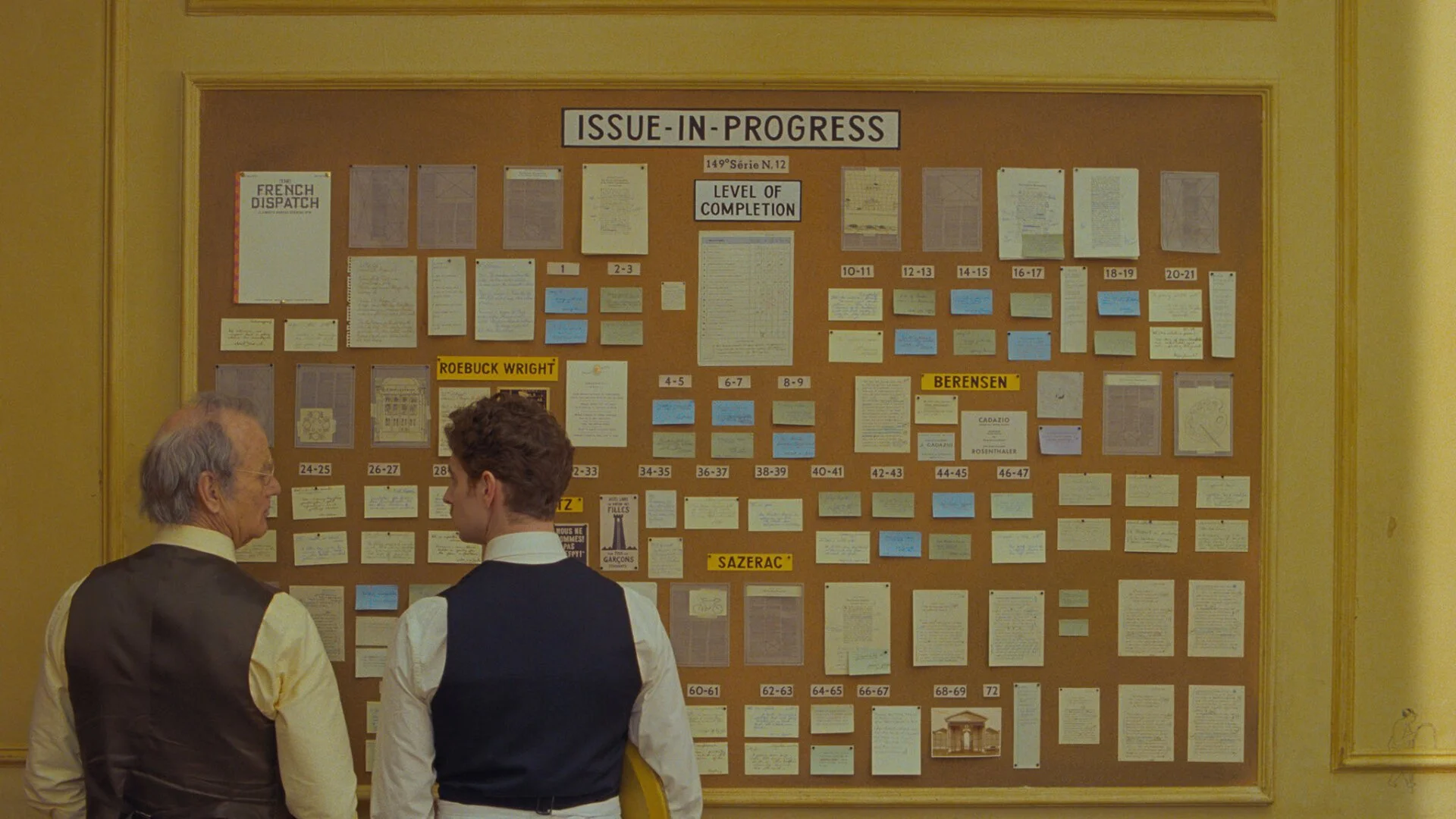
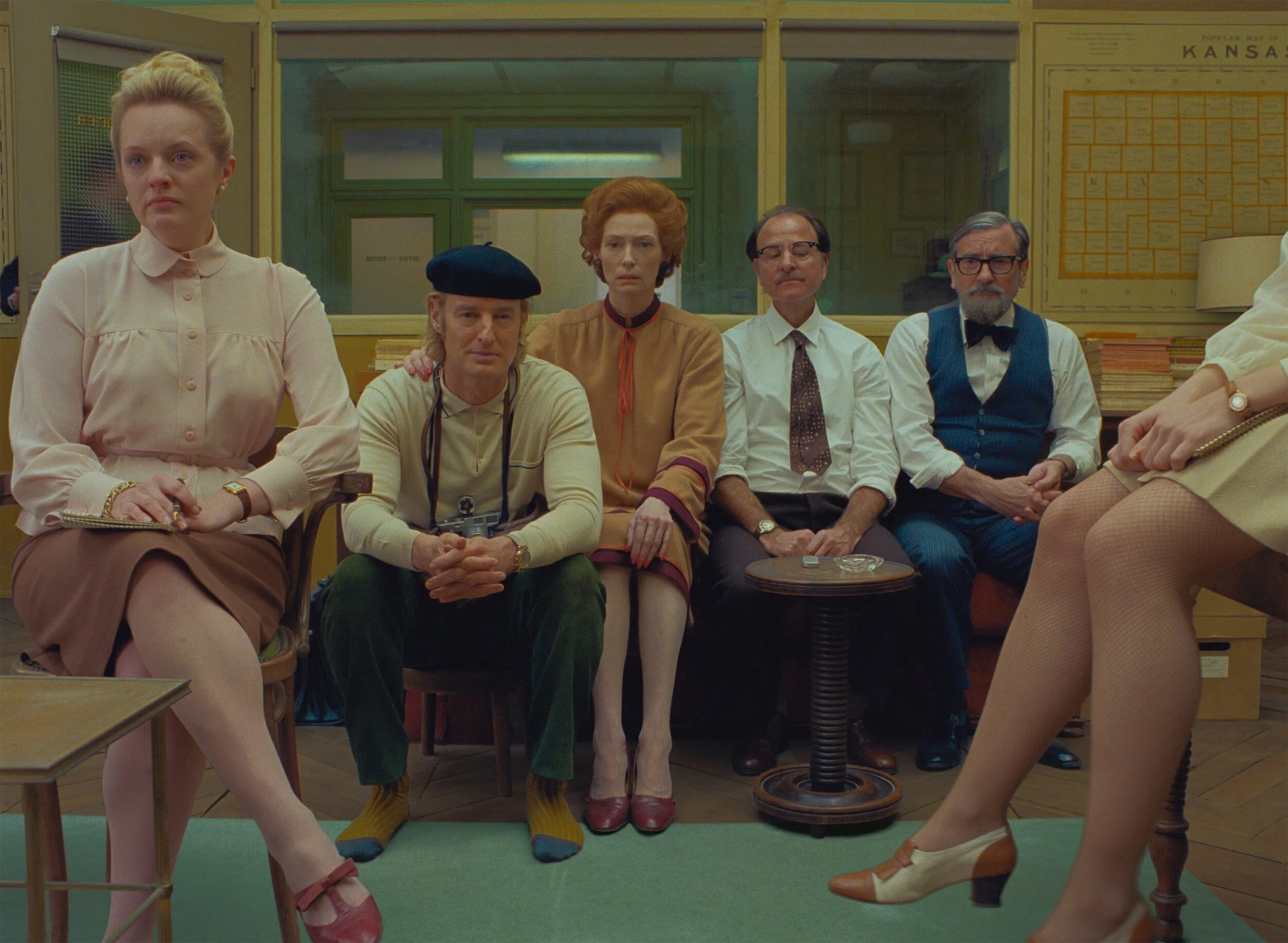
On the occasion of the death of its beloved Kansas-born editor Arthur Howitzer Jr., the staff of The French Dispatch, a widely circulated American magazine based in the French city of Ennui-sur-Blasé, convenes to write his obituary. Memories of Howitzer flow into the creation of four stories: a travelogue of the seediest sections of the city itself from The Cycling Reporter; “The Concrete Masterpiece,” about a criminally insane painter, his guard, and muse, and his ravenous dealers; “Revisions to a Manifesto,” a chronicle of love and death on the barricades at the height of student revolt; and “The Private Dining Room of the Police Commissioner,” a suspenseful tale of drugs, kidnapping and fine dining.
Everyone’s favorite symmetrical framing, tonally quirky, and one-of-a-kind storyteller, Wes Anderson, is back in full form. We’ve been waiting so damn long for The French Dispatch that in 2020, I would watch the first trailer on a routine basis as motivation to live. With this new Wes Anderson joint, the indie darling of most cinephiles takes to a new angle of storytelling by delivering a bold new format he hasn’t tackled before: anthology! The film is composed of a series of shorts taken from the words of four journalists who work at a Kansas-born magazine based in a French town. It’s like their version of The New Yorker. Upon the death of the team’s editor-in-chief (Bill Murray), the best writers from the magazine recollect their memories of him and the multiple great articles that impacted the outlet.
Throughout his filmmaking career, Wes Anderson has found ways to exude his trademark style while applying new techniques to his enormous skillset. With this French Dispatch, he compiles every known Anderson-ism to date and drops it into this film like a meteor. Do NOT let this be your first Wes Anderson movie because if you ain’t in on his style or his premise, you will either be left in the dust or paralyzed by the overwhelming caveat of styles executed on screen. This isn’t your average, everyday Wes Anderson; this is advanced Wes Anderson. I was overwhelmed while watching this film because it’s the Wes Andersoniest Wes Anderson movie to ever Wes Anderson… and that’s a lot for a movie that’s composed of various short stories. If I were to even touch upon the wide array of techniques he applied in this movie, we’d be here from dusk till dawn. But what I will do is express what I loved most.
If you know me, you know I’m an animation nerd and some of my favorite Wes Anderson stuff is his stop motion animated features, with my favorite of his entire filmography being The Fantastic Mr. Fox. As far as style goes, the film combines the likes of his live-action and stop motion in areas that factored into my admiration and laughter. Due to this feature including three extensive vignettes that range in location, Anderson makes sure each one pops, doesn’t step over the others’ toes, and makes you unsure about which sets or props are real or of hand-crafted design. The blending of stop motion and live-action is a testament to how Anderson takes everything from his past to deliver a visual feast. The film’s climax involves a high-scaled and comedic car chase that is completely 2D animated. I mean, you don’t get more Anderson than that, man.
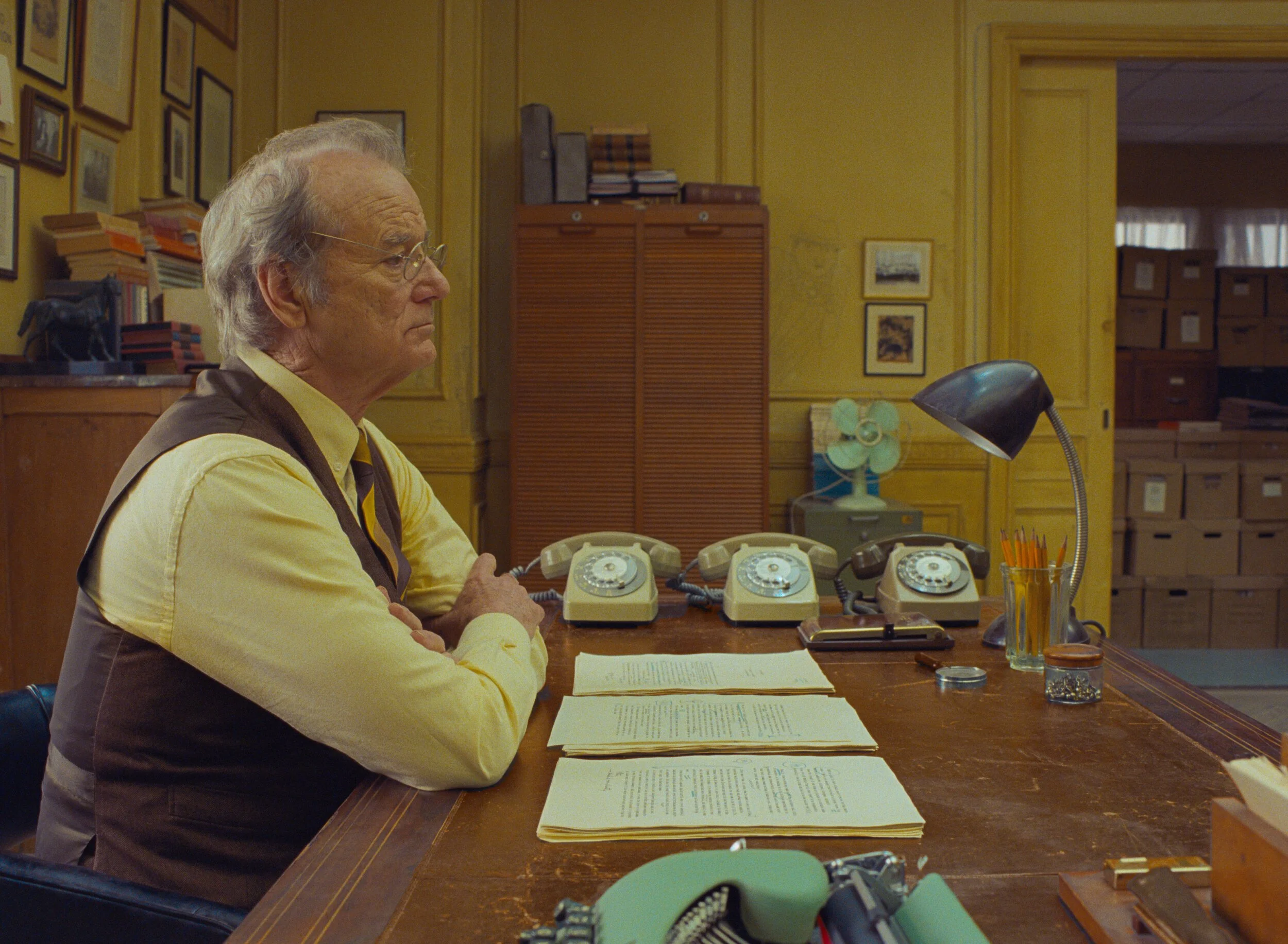
There’s so much attention to detail within each short story and how they’re presented from a visual standpoint. They vary in storytelling, even with the lesser segments, but boy is it visually astounding to witness. If you’re not a fan of Wes Anderson’s works, then first off, what are you doing here? This movie sure as hell ain’t gonna convert you. That being said, it will leave you in admiration of his craft and his ability to make three separate stories as distinct as they can be from a visual standpoint.
As far as casting goes, The French Dispatch is Anderson’s equivalent to Super Smash Bros. 4, for it features many veteran actors he’s collaborated with on previous projects making their grand (and expected) return, such as Bill Murray, Owen Wilson, Adrien Brody, Frances McDormand, and Ed Norton. There are also some welcomed newcomers, such as Timothée Chalamet, Léa Seydoux, Benicio del Toro, and (to me), the film’s MVP Jeffrey Wright. Everyone is clearly in on the fun and brings out the best of Anderson’s tonal flair in both deadpan delivery and comedic timing, but the best elements performance-wise come from the roulette of newcomers who entered this cinematic universe.
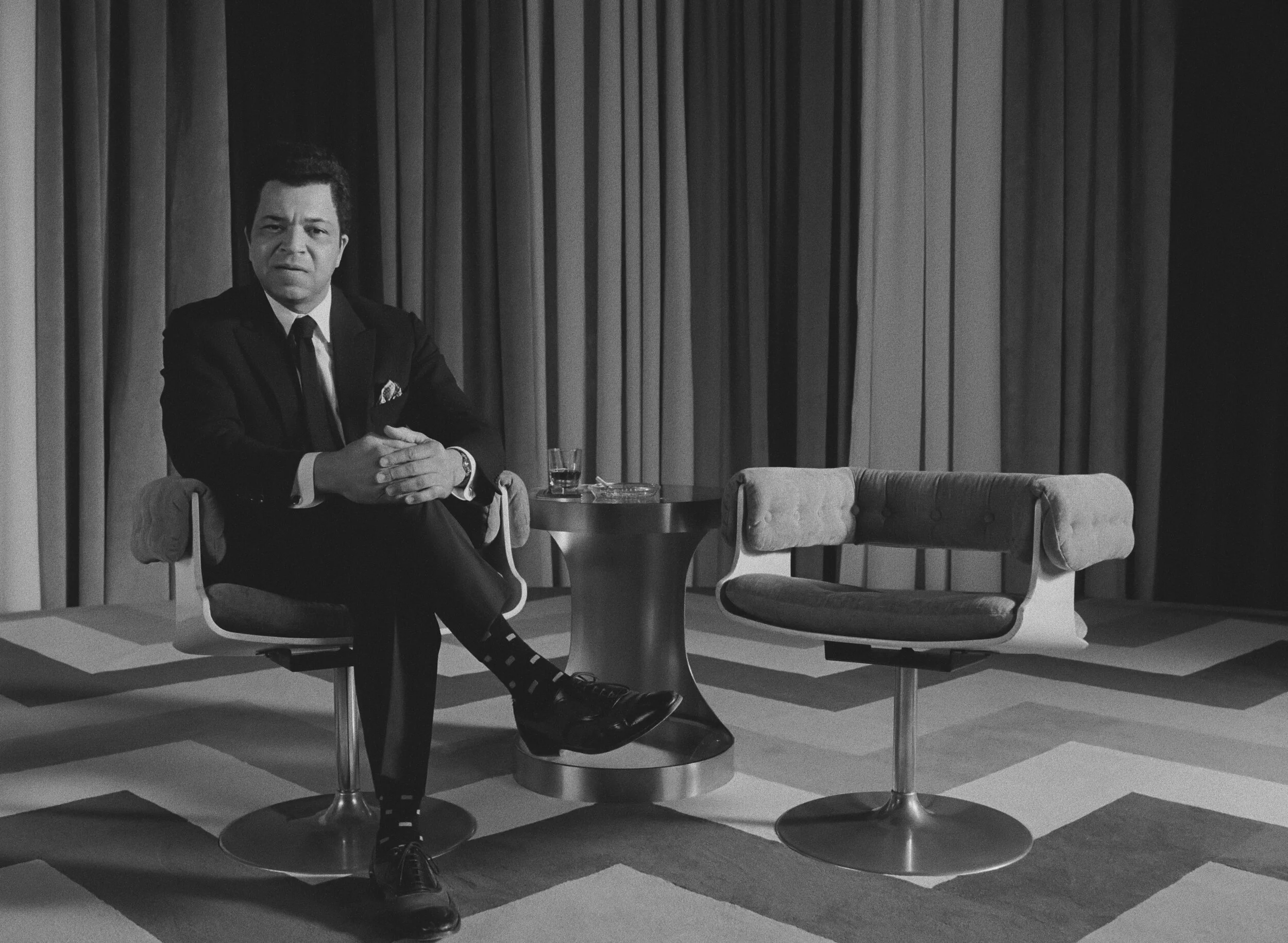
My favorite short of the three is “The Concrete Masterpiece,” which features Del Toro and Seydoux as a prisoner artist and his lover/muse/guard who become famous within the art world thanks to a rich and tax-evading art dealer. It’s the most fluent story of the three and Del Toro and Seydoux are absolutely masterful in their roles as well-written individuals and lovers. When I say that Léa Seydoux and Benicio Del Toro had more chemistry in the span of 25 minutes or so than she had with Daniel Craig in the last two Bond movies, you know it’s strong.
Then, you have Jeffrey Wright who is clearly doing his best James Baldwin impression and he’s incredible. From his sophisticated and professionally articulate vernacular to his deep octave and expressive mannerisms, he feels like a character from an entirely different movie but never one who felt completely out of place. His presence made me fully understand Anderson’s notion of delivering a passionate love letter to the heyday of American journalism with some of the best writers who have ever penned a piece in a magazine. Also, James Baldwin was the only American author I actually knew and recognized based upon general knowledge. That being said, Wright is absolutely incredible alongside his dialogue and his arc within the story he’s set in.
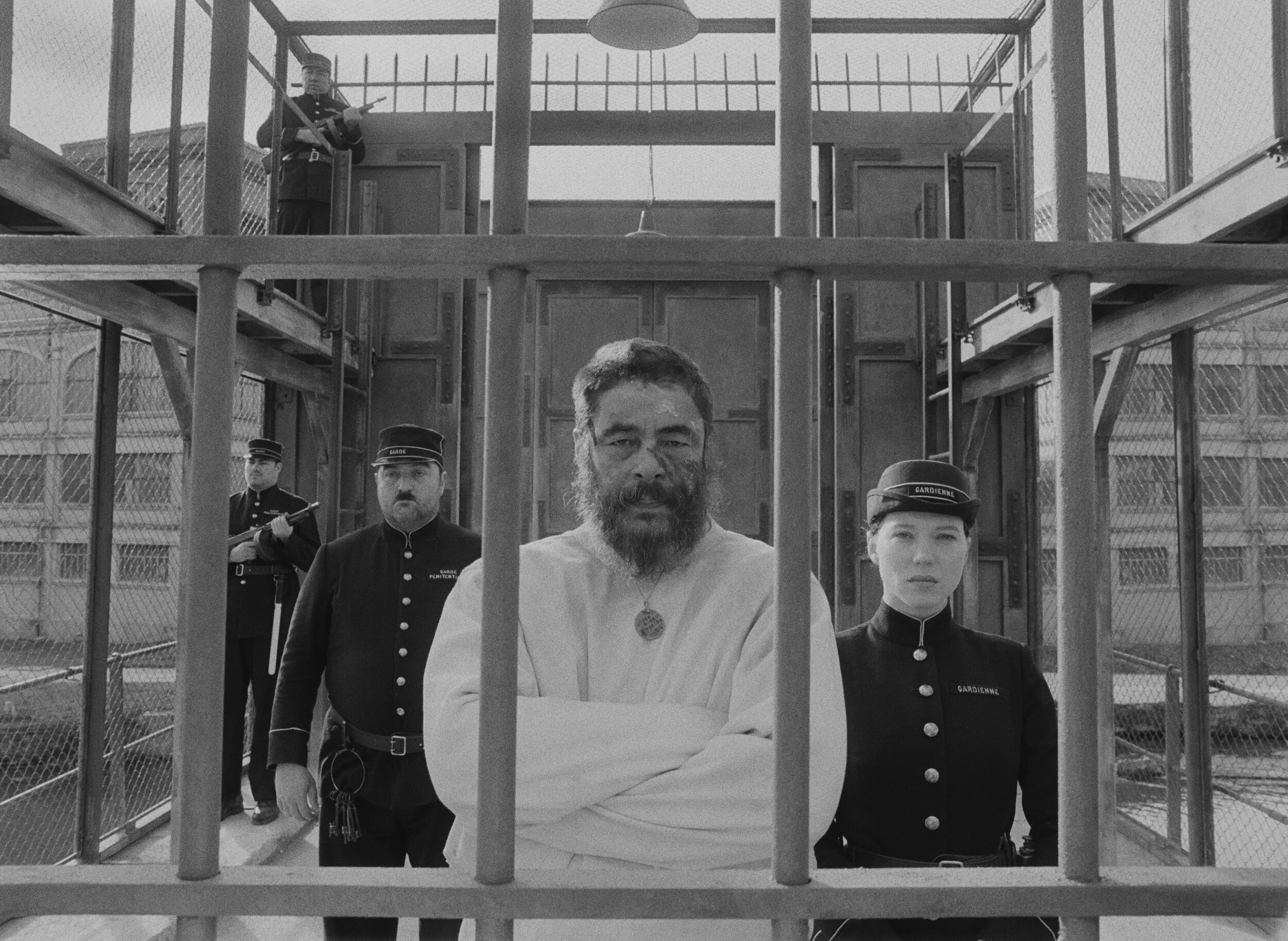
I adore the general basis of The French Dispatch. I love the concept and admire the execution from a stylistic standpoint. Still, this film just wasn’t for me. It’s a good Wes Anderson movie that will absolutely appeal to his fans. I am a Wes Anderson fan myself. I just wasn’t completely there for the full ride… or, I guess, 1/3 of his stories. As much as I love Anderson’s work, for his humor is 100% my shit, there are massive pacing issues in some of the stories that prevented me from being completely onboard. The film made me feel like Goldilocks at times because one story felt like it was too slow, one went too fast, and one was just right. The first story, “The Concrete Masterpiece,” was the one that was just right to me. Meanwhile, “Revisions to a Manifesto” and “The Private Dining Room of the Police Commissioner” were too slow and too fast, respectively. Okay, I might be nitpicking because I adore Wright’s performance so much and I could’ve lived in his story, “The Private Dining Room of the Police Commissioner,” forever. But I wasn’t keen on “Revisions to a Manifesto” at all and it’s mostly due to its setup.
As aforementioned, it’s fantastically constructed, visually gorgeous, and utilizes certain storytelling techniques with flashbacks to make it stand out. It’s the writing that didn’t come together. In “Manifesto,” you follow reporter Lucinda Krementz (Frances McDormand), who is profiling a leader of a student revolt (Timothée Chalamet) and helps with his manifesto. Due to becoming infatuated with her subject — and sleeping with him — she gets caught in the crossfire. During that story, the lines begin to blur as to what Anderson is trying to achieve. The script goes on endless tangents that are loose and at times feel unnecessary to the story at hand. It tries too hard to give a distinct personality to characters who, at the end of the day, are attuned to his quirky world.
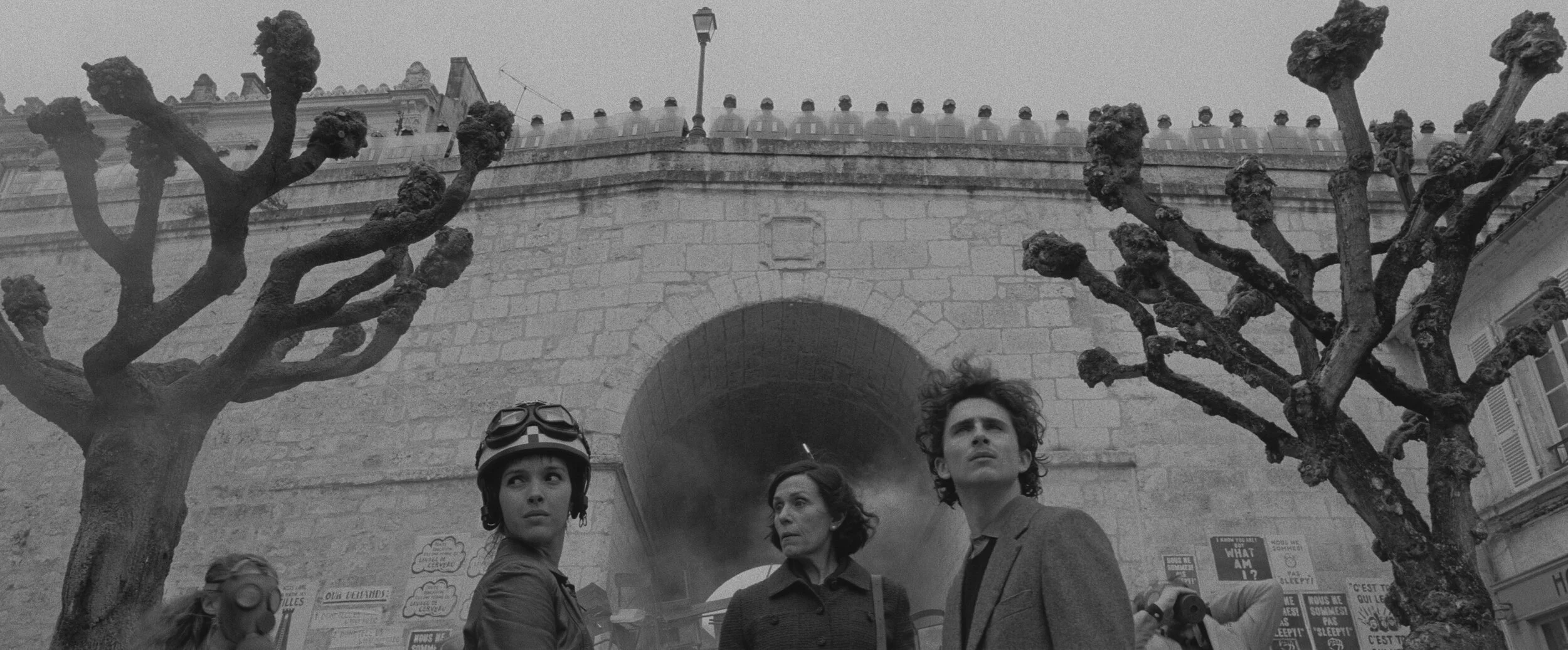
We gotta move past the “female journalist sleeping with their subject” trope because it’s both redundant and ill-conceived. I get that he plays it for humor, but in the grand scheme of films that depict women in journalism, it’s on the same level of rote as the following media: Richard Jewell, Sharp Objects, Trainwreck, Never Been Kissed, Gilmore Girls (2016), House of Cards, Absence of Malice, and the first Iron Man. Do you see how long this list is?! If you’re going to be a love letter to journalism unlike anything that’s been done before, that also means you have to break the mold of how people, primarily women, in the field are depicted in media. Anderson fails to accomplish this.
The film peaks so heavily at the end of the first story that, as far as tone goes, everything after ends up being the same, which is so much Anderson that the state of overwhelming emotions turns into a slight frustration. I appreciate what Anderson was attempting to do and there are many positives within The French Dispatch to outweigh the negative, for it bodes as a new frontier for the prolific filmmaker, but overall it’s mid-tier Anderson to me. I’d rewatch 2/3’s of this movie, especially the first part and some of the last story, but overall… meh.
Now, if someone wants a non-New Yorker magazine to kiss ass to, let’s make an anthology love letter movie based on Nickelodeon Magazine or Nintendo Power. Yes, those would be nice.