‘Last Night in Soho’ Review
R: Bloody violence, sexual content, language, brief drug material, and brief graphic nudity
Runtime: 1 Hr and 56 Minutes
Production Companies: Film4 Productions, Perfect World Pictures, Working Title Films, Complete Fiction Pictures
Distributor: Focus Features
Director: Edgar Wright
Writer: Edgar Wright, Krysty Wilson-Cairns
Cast: Thomasin McKenzie, Anya Taylor-Joy, Matt Smith, Michael Ajao, Terence Stamp, Diana Rigg
Release Date: October 29, 2021
In Theaters Only

Eloise, an aspiring fashion designer, is mysteriously able to enter the 1960s where she encounters a dazzling wannabe singer, Sandie. But the glamour is not all it appears to be and the dreams of the past start to crack and splinter into something far darker.

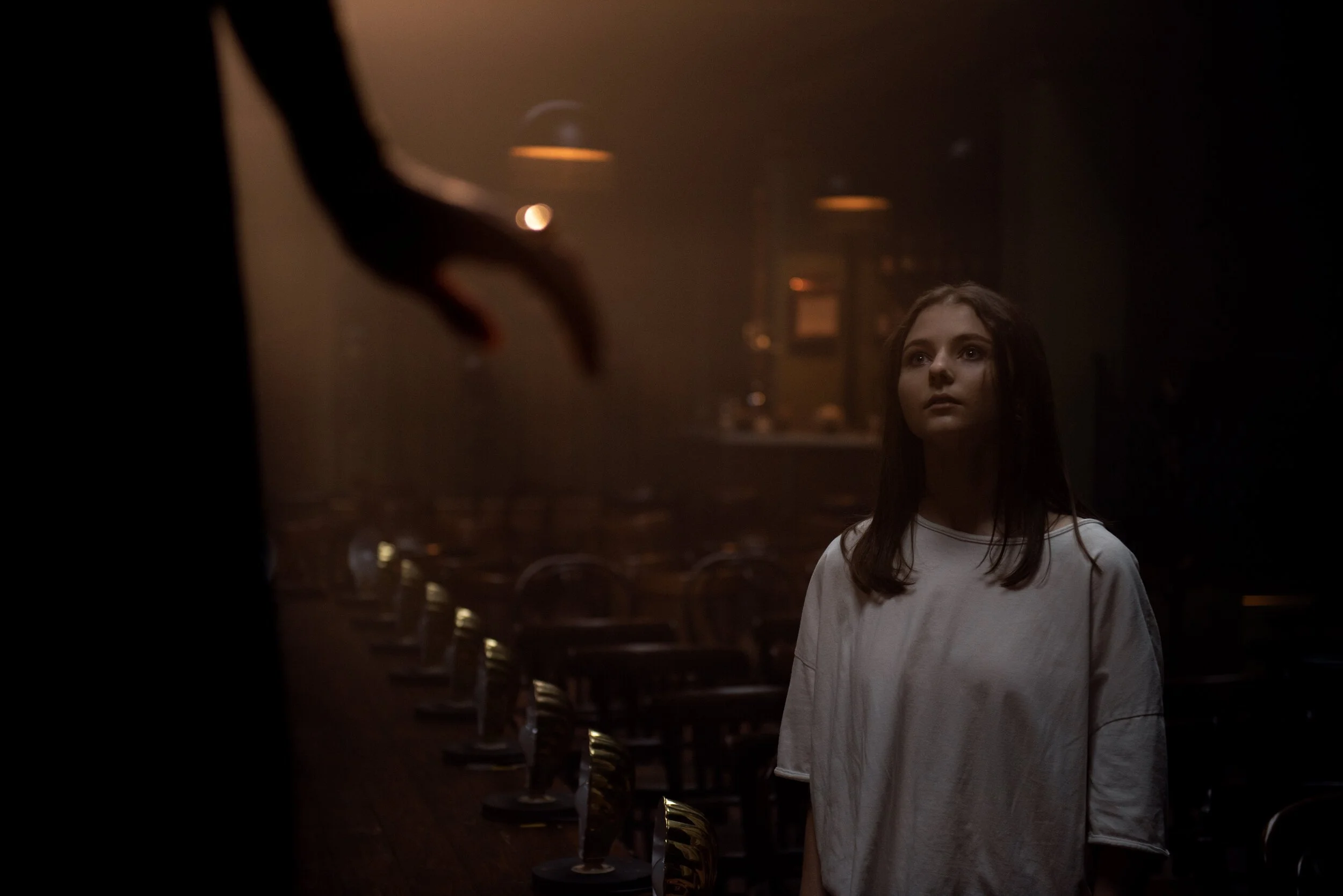
As of recent, Edgar Wright has been venturing out of his usual fare of comedy features and tackling other genres. In this year alone, he delved into documentary filmmaking with The Sparks Brothers and now released his first psychological horror narrative feature, Last Night in Soho. Since this is his first time tackling this genre in a straightforward manner, many will be curious as to how Wright’s signature style of filmmaking will translate. From a directorial standpoint, it works exceptionally well. Wright’s voice and style confidently carry the film in terms of style and pacing. All of his well-known trademarks are present tenfold, from his kinetic quick edits to walk-on-scene transitions to meticulous music cues that add weight to the scenes and the mindset of his lead, Eloise. There are a few moments where he goes back to his Shaun of the Dead roots, channeling a state of claustrophobia and terror as ghoulish figures are trying to grab onto a character. Eloise (Thomasin McKenzie) shares similar attributes with Wright, for they both are obsessed with the late 20th-century scene as far as music and fashion go. Though I’d say this is the most mainstream of his movies in terms of filmmaking, he’s so damn confident in the world he depicts and his voice is still clear to the audience.
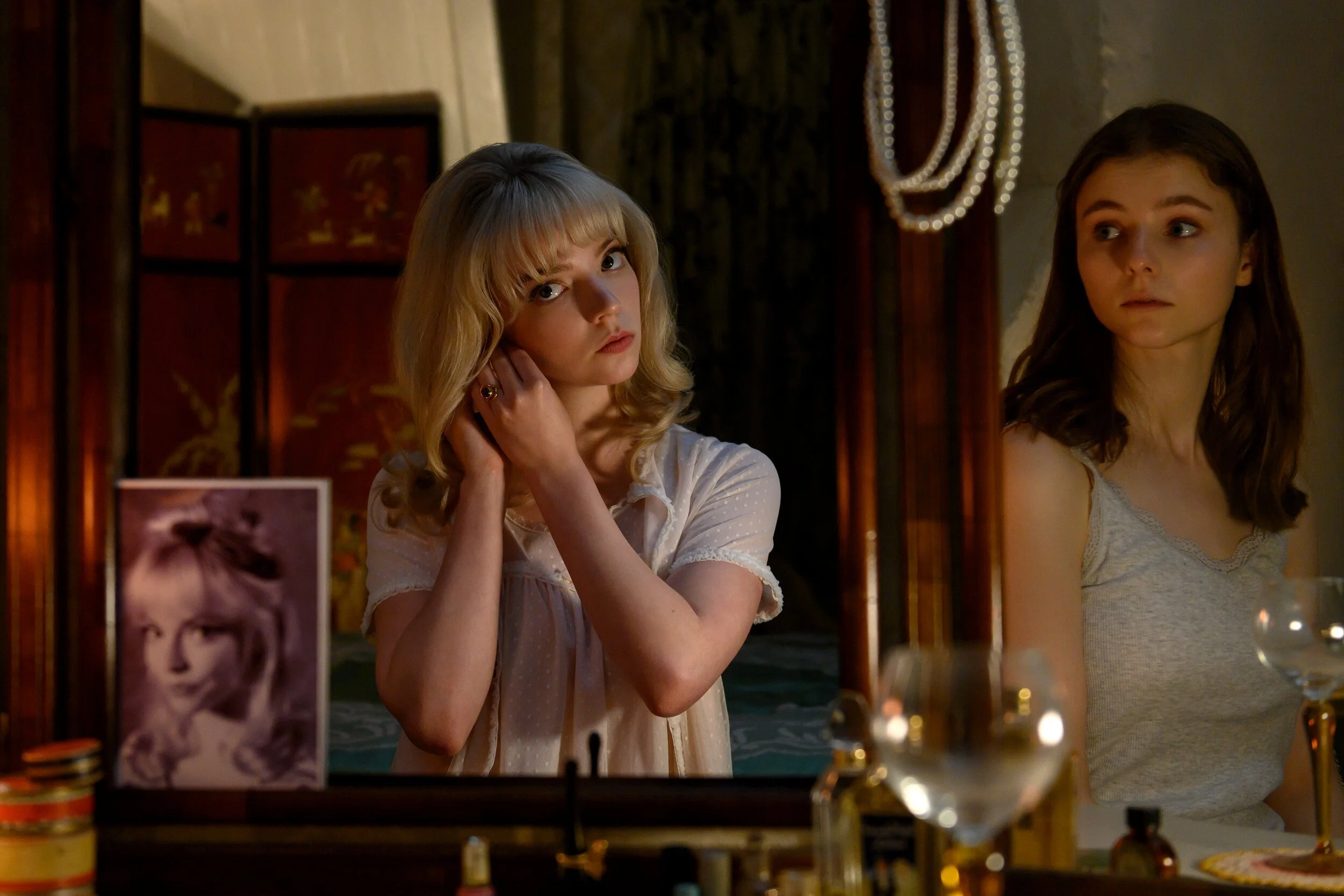
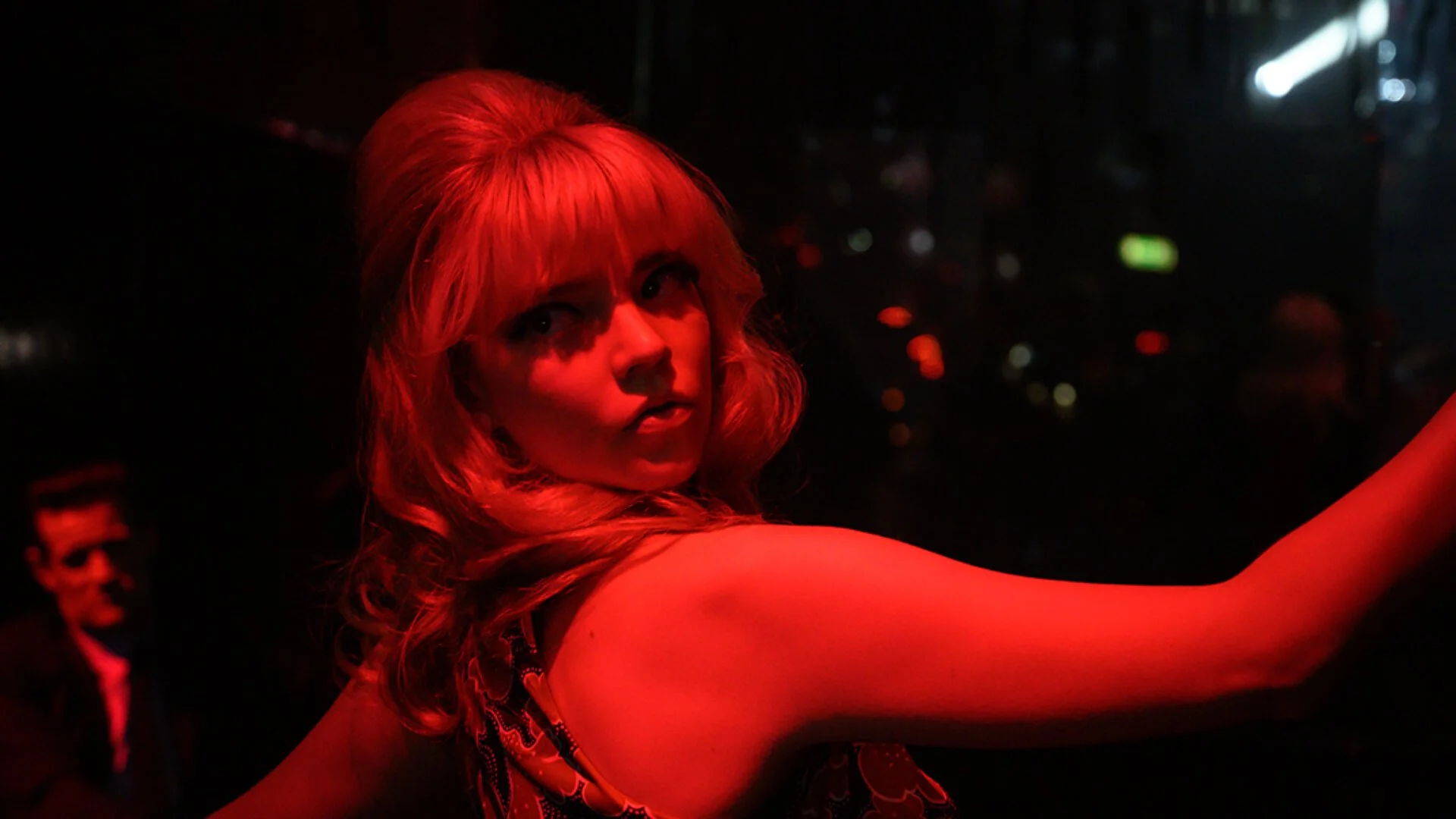
Much like his previous films, Wright does a great job visually transporting you to the world he creates for his lead and personalizing it with their experience using both old and new techniques. In Soho, he delivers alluring and dreamlike imagery to make this time travel fantasy a luxurious spectacle. Once Eloise has transported herself to 1960s London, she enters a fancy ballroom and finds herself tethered to Sandie (Anya Taylor-Joy) for the first time. You’re left completely breathless by the level of detail in set and costume design that brings this era of London to life. The first time Eloise experiences historic events with her own eyes, Wright delivers a brilliant dance sequence as a means to display how Eloise lives through Sandie’s shoes. It’s the best sequence the film has to offer and it immerses you completely. At that point, the film delivers on an early Laika Studios aesthetic with fantasy elements and horror similar to Coraline and Paranorman. In a way, the film follows the same beats as Coraline where the lead finds herself in a parallel world which starts out as a dream come true and slowly becomes her worst nightmare. When supernatural elements come to haunt her, the designs of the ghoulish figures look so similar to the zombies of Paranorman. Is this Edgar Wright’s way of telling us he wants to do an animated feature? I hope so. When he does get into the horror elements, Wright delivers on some decently executed scares while encapsulating an unnerving atmosphere that’s actually attuned to the film’s central theme of female trauma.
If you know me or follow me on social media, you might know that I’m a huge Anya Taylor-Joy fan. She kills this role, expressing great range in movement, physicality, and vocal range. However, this is Thomasin McKenzie’s movie and she naturally carries it. Ever since her feature debut in Debra Granik’s Leave No Trace in 2018, Thomasin McKenzie has quickly become one of the most powerful up-and-coming actresses who skillfully and seamlessly embodies whatever role she tackles. In this film, she shows great versatility with slow-burning emotions, starting off as timid and shy and slowly growing into a mixture of boiling anger and distress, all while doing an impeccably consistent British accent.


God, it pains me to say what I’m about to say. I really don’t want to say what I am about to say because Edgar Wright is my favorite filmmaker who raised me through Scott Pilgrim and the Cornetto trilogy. He’s also the reason I love screenwriting and Beck. That said, Last Night in Soho is the lowest-tier movie he’s done to date. The film is visually mesmerizing, but all of the glaring flaws lie within the script written by Wright and Krysty Wilson-Cairns. It’s clear that Wright has been itching to make this movie for a long time and it shows in bits and pieces throughout, but the final product plays like a rough draft, feeling incomplete in the storytelling and character departments.
Outside of Eloise, Sandie, and her landlord Miss Collins (the late Diana Rigg), every character is a one-note archetype who makes you cringe. Say what you will about Baby Driver, which is mid-tier Wright, but at least all of the characters had a unique personality. In this film, there’s no sliver of a character whatsoever.
The film’s set-up is rough and oftentimes made me cringe due to how glaringly inorganic and forced it was. 18-year-old Eloise heads to London to attend a fashion uni as a first-year student in order to become a fashion designer. Naturally, she’s shy and anxious, which is pretty relatable. Immediately, she gets ridiculed for her timid demeanor and fashion sense. Her uppity mean girl roommate becomes her primary bully and within one weekend, Eloise prompts herself to move out of her dorm room and into a new apartment. Mind you, this all takes place in modern times and since this is the first time Wright is writing Gen-Z characters, everyone outside of Eloise is written to be a stereotypical caricature straight out of a late-‘90s or early-‘00s film. I get that this “movie world” has to have its own rhythm, but the cliched “mean girl” trope is so unbearable and rushed that it makes the initial setup feel so forced. Seriously, people start bullying Eloise because she has her own style and listens to 20th-century music from very popular bands of the time. Have you ever met a Gen-Z person? They have unique fashion tastes and most of them are obsessed with 20th-century music. This is a uni where everyone specializes in fashion yet the writing treats it like it’s a high school.
When Eloise goes back in time, the film fails to establish the rules regarding how she and Sandie are intertwined. The two are tethered in some form but the narrative is never clear about how it works. At first, Eloise is living directly through Sandie’s shoes, but later on you see her being trapped through Sandie’s reflection in a mirror. Other times she’s in her own shoes watching Sandie’s life from her own physical distance. The lack of consistency makes the story confusing and messy. By the time you get to the big reveal, it poses more questions than answers.
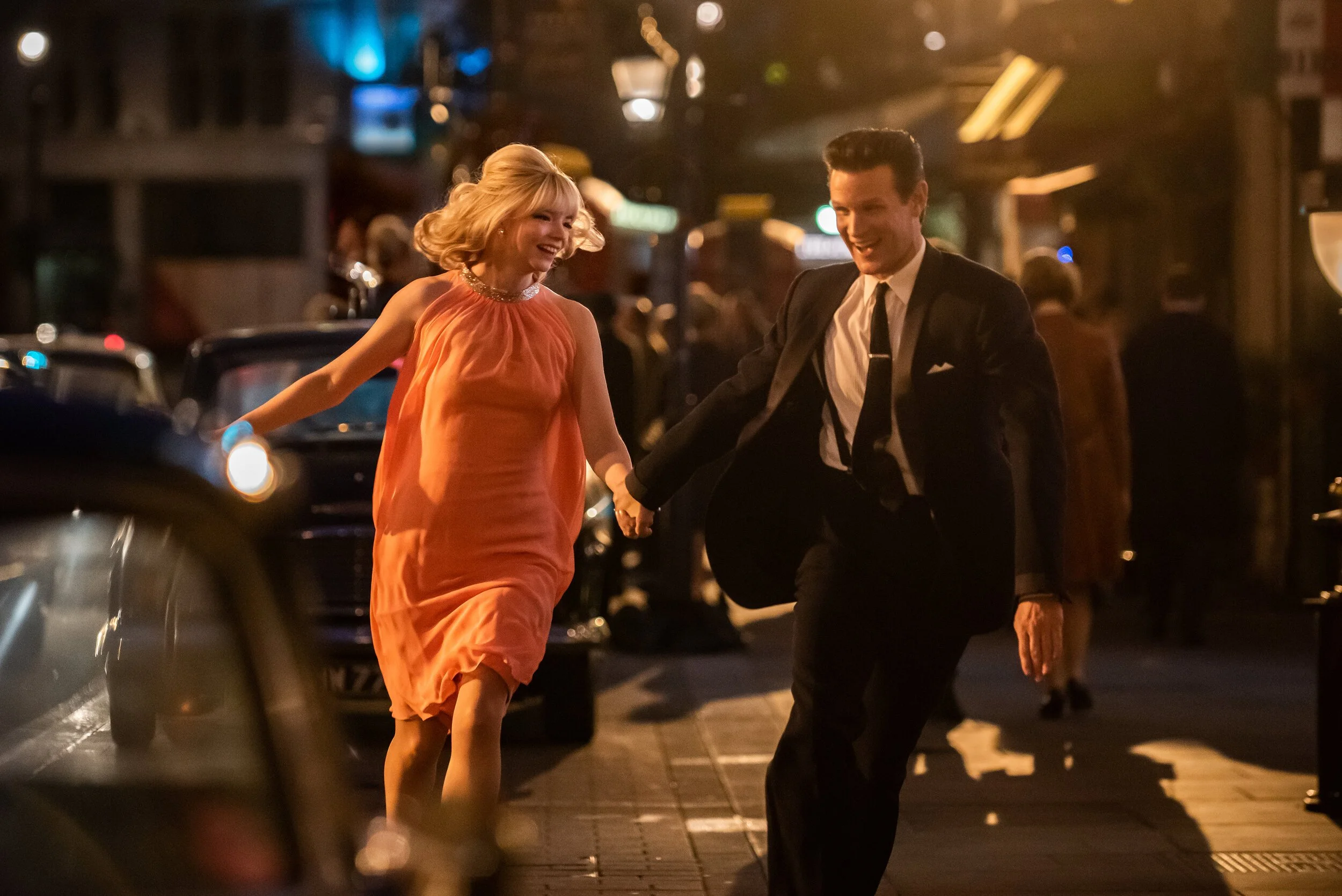
Wright explores a lot of “firsts” with this film. Most notably, this is his first time having a central female lead. Through Eloise, he attempts to explore female exploitation, which plays as an underlying theme from the get-go. He’s very blunt with the themes, both verbally and visually, for nearly every male character is depicted as a sexual predator or creep… except for one that I’ll get to in a moment. Part of the terror that begins to haunt Eloise is the triggering sexual trauma she sees Sandie experiencing in her career. It’s so damn on the nose that even the casting takes away from the mystery. Once you see friggin’ Matt Smith, you already know what kind of role he’s about to play. Sorry dude, but after Promising Young Woman, you need to be more creative if you gonna cast a male scumbag who pulls the wool over a woman’s eyes. Wright and Wilson-Cairns try to explore the unfortunately timely (no pun intended) theme of sexism and female exploitation and completely miss the mark due to it being so in-your-face while every character is one-note. As its themes regarding sexual trauma become more transparent, they’re utilized as a means to add to the horror in a directly triggering manner, especially for female audiences. If you’re a sexual assault survivor in any capacity, don’t see this movie. It will fuck you up and cause major panic attacks. It’s the equivalent of a dude going, “Yeah, I’m a feminist,” while incorporating female-centric derogatory terms in his daily vocabulary.
If that wasn’t enough, this shit ended up getting personal. Apart from Wright exploring his first female lead, he also includes his fir— oh wait, Jamie Foxx was in Baby Driver — second ever Black supporting character… and what do you know? It’s problematic as hell. Early on, Eloise befriends a fellow student, John (Michael Ajao), who tends to her every need in such an unbearable manner that it adds to the early 2000s vibe the film already exudes. John is a straight-up Black simp with a savior complex. This guy is so cringe, for all he does is appear as an assist trophy to Eloise. It’s as bad as — if not worse than — Finn in The Force Awakens where he only exists to help his white girl crush. The girl could cough and John would run to her aid with a tissue and be like, “For you, my queen.” He’s not necessarily a mystical negro because… he does get to lock it down, but nevertheless it plays like a variation of a trope that’s mostly outdated. It gets problematic in various ways because Wright tries to do his best white allyship in the script where John compares being discriminated against to Eloise’s white female experience and I couldn’t help but groan. And of course, after he does that, he unintentionally incorporates an intense scene where Black trauma and female trauma get intertwined and it’s one of the most intense and egregiously tone-deaf scenes I’ve seen this year.

If there’s anything Last Night in Soho ingrained in me, it’s that I am not imploring white directors who work with white-only casts to change their diversity so soon. Edgar, I love you. I wanna be like you. I look up to you. Why did you do this? I know you’ve written… one other Black character in your career. As a Black person, I’m gonna say it’s okay to stay in your lane. This Black simp character only evokes tropes that we’re all trying to move past from.
Much like Baby Driver, Last Night in Soho is a “style over substance” effort for Edgar Wright. While the dreamlike, psychedelic and ghoulish level of horror is inspired and Wright’s trademark styles are present throughout, the screenplay is far from realized in nearly every regard. Everything about the script is so bare-bones while the storytelling is completely loose. This film was in desperate need of a few more writing passes. Watching something like this from one of the best filmmakers of the comedy genre feels like I’m witnessing someone go through their mid-life crisis, taking bold risks even though they should simply stick to what they know best.