
‘Teenage Sex and Death at Camp Miasma’ Review: Jane Schoenbrun’s Horny Horror Satire Slashes Through Repression
Why do queer folk attach themselves to horror? It’s something I’ve wondered about myself and all my fellow queer companions. Most of my LGBTQ homies love seeing blood spilled. Jane Schoenbrun’s most gratifying and ambitious horror yet, Teenage Sex and Death at Camp Miasma, boils it down best through Gillian Anderson’s southern‑drawled Billy Presley: “flesh and fluids.” For many of us, horror films provide a release that mirrors our repression. The film suggests as much too – but not in terms of guts or gore, rather in terms of, uh, cums and squirts. If that language makes you blush, it doesn’t hold a candle to Schoenbrun’s hot, sapphic slasher tribute.
Camp Miasma is a brilliant examination of sexual liberation from a novel perspective. Cerebral and ambitious as it seems, it’s also the cheekiest Schoenbrun has ever been, juggling masterfully between a sex‑positive trans tale, a razor‑sharp metatextual takedown of the horror IP landscape, and a love letter to ‘80s slashers.
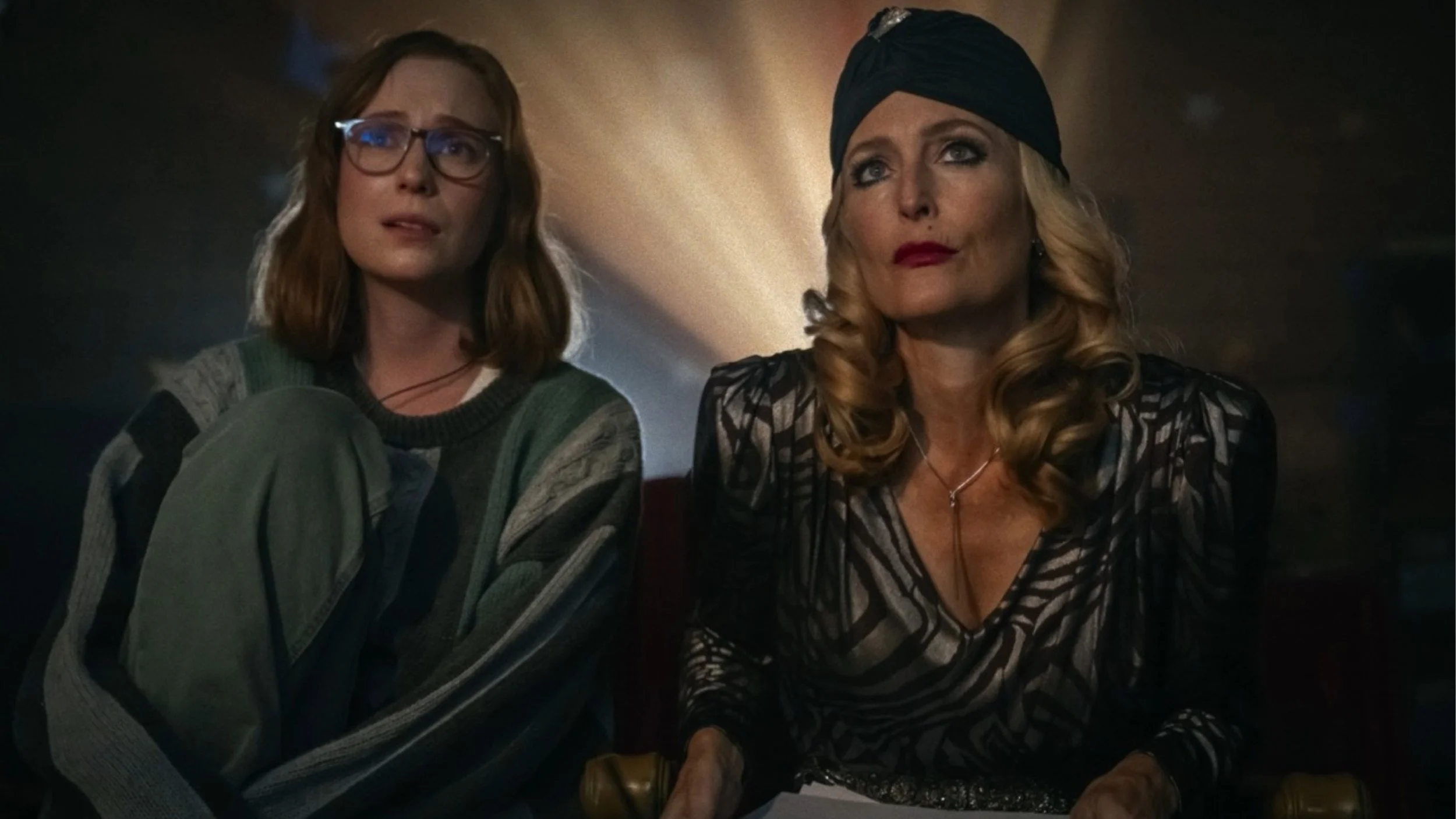
Image copyright (©) Courtesy of Mubi
MPA Rating: R (for bloody violence, gore, sexual content, graphic nudity, drug use and some language.)
Runtime: 1 Hour and 52 Minutes (112 minutes)
Language: English
Production Companies: MUBI
Distributor: MUBI
Director: Jane Schoenbrun
Screenwriter: Jane Schoenbrun
Cast: Hannah Einbinder, Gillian Anderson, Jack Haven, Patrick Fischler, Sarah Sherman, Zach Cherry, Jasmin Savoy Brown, Eva Victor, Amanda Fix, Arthur Conti, Dylan Baker, Quintessa Swindell, Kevin McDonald
U.S Release Date: August 7, 2026
The film follows Kris (Hannah Einbinder at their most neurotic), an up‑and‑coming queer horror filmmaker tapped to reboot the Camp Miasma franchise – a once‑successful slasher series about a killer genderqueer named Little Death (a silent yet compelling Jack Haven) whose vengeance once stood toe‑to‑toe with Jason Voorhees and Freddy Krueger. In its hilarious opening credits, full of in‑universe paraphernalia, we learn that, like every horror property, it spawned too many sequels and dumb brand expansions (release the Little Death album on Spotify), alienating its once‑massive fanbase. Kris, however, is a huge fan, describing the original as her “queer awakening.”
She travels to the Pacific Northwest to meet reclusive former actress Billy Presley (Gillian Anderson), the original installment’s final girl, to convince her to reprise her role in the reboot. She arrives at Billy’s compound in Camp Trivol, where the original film was shot. The cabin is dressed with treats and sweets everywhere, and they even have KFC for their first shared meal. They begin discussing their connection to the original Miasma, but the conversation quickly turns to Kris as an individual, how she’s married to her work, and how sex has become a distraction. Billy challenges the high‑strung Kris on her sexual repression, dissociation from self, and utmost desire.
Schoenbrun turns horror fandom into another monster worth dissecting with Miasma.
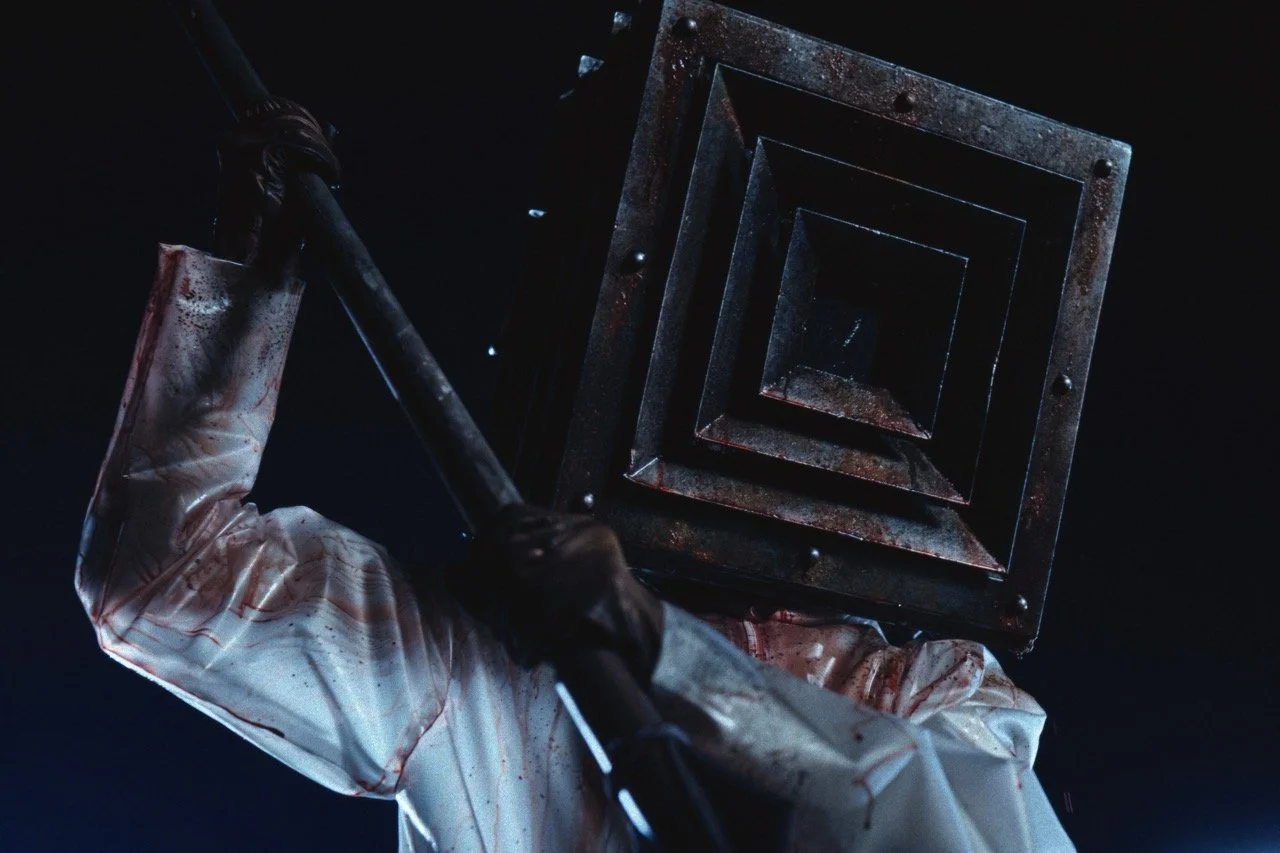
Jack Haven in Teenage Sex and Death at Camp Miasma, a MUBI release.
With each feature, Schoenbrun’s dissection of “nostalgia” within horror – repurposing the definition while personalizing it with trans allegories in a landscape concerned with broad repackaging – has cemented them as one of the boldest visionaries working today. Three movies in, and they’ve done more for the genre than some of the new‑day maestros have in years. While I wasn’t as big on We’re All Going to the World’s Fair, its lo‑fi creepypasta aesthetic amidst a tale of human connection in a digital age resonates strongly today. Then, I Saw the TV Glow eviscerated me so much that when I first saw it at SXSW 2024, I couldn’t look my friend in the eye afterward. It was my favorite film of that year.
Miasma continues the filmmaker’s winning streak, this time engaging with horror IPs through an industry lens. Whenever Kris nerds out over her love of the original Miasma, whether with her squash‑playing agent (Sarah Sherman) or production execs, she’s met with pushback that speaks to the homogeneous staleness of horror’s legacy‑sequel IP culture. At times it might feel too academic or on the nose, but Kris’s uber‑millennial self‑characterization roots the conversation, and Einbinder’s perfectly neurotic portrayal makes it feel grounded in character rather than just the filmmaker airing grievances.
Kris’s millennial‑viewer nerdism, when placed against Billy’s Norma Desmond‑esque grandeur, also yields some solid laughs. She represents the film-nerd millennial who tries to personalize and psychoanalyze their love, but in doing so leaves out their own passion. With that, they lose a sense of self, and sexual pleasure becomes a duty rather than a form of self‑expression.
Unlike their previous features, Schoenbrun has fun exercising their slasher proficiency, just as they did with their Buffy love on TV Glow. The film stops in its tracks with characters watching their influential source material: Camp Miasma within Miasma. Stylistically, they master the ‘80s slasher in all its cheesy atmosphere, old‑school dialect, and dated transphobia. They also venture into Cronenberg‑esque body horror and eroticism, all of which land without fail, proving that whatever classic horror genre they traverse, they can perfect it effortlessly. Now I want to see Schoenbrun do giallo.
Schoenbrun finds horror in repression and liberation in desire.
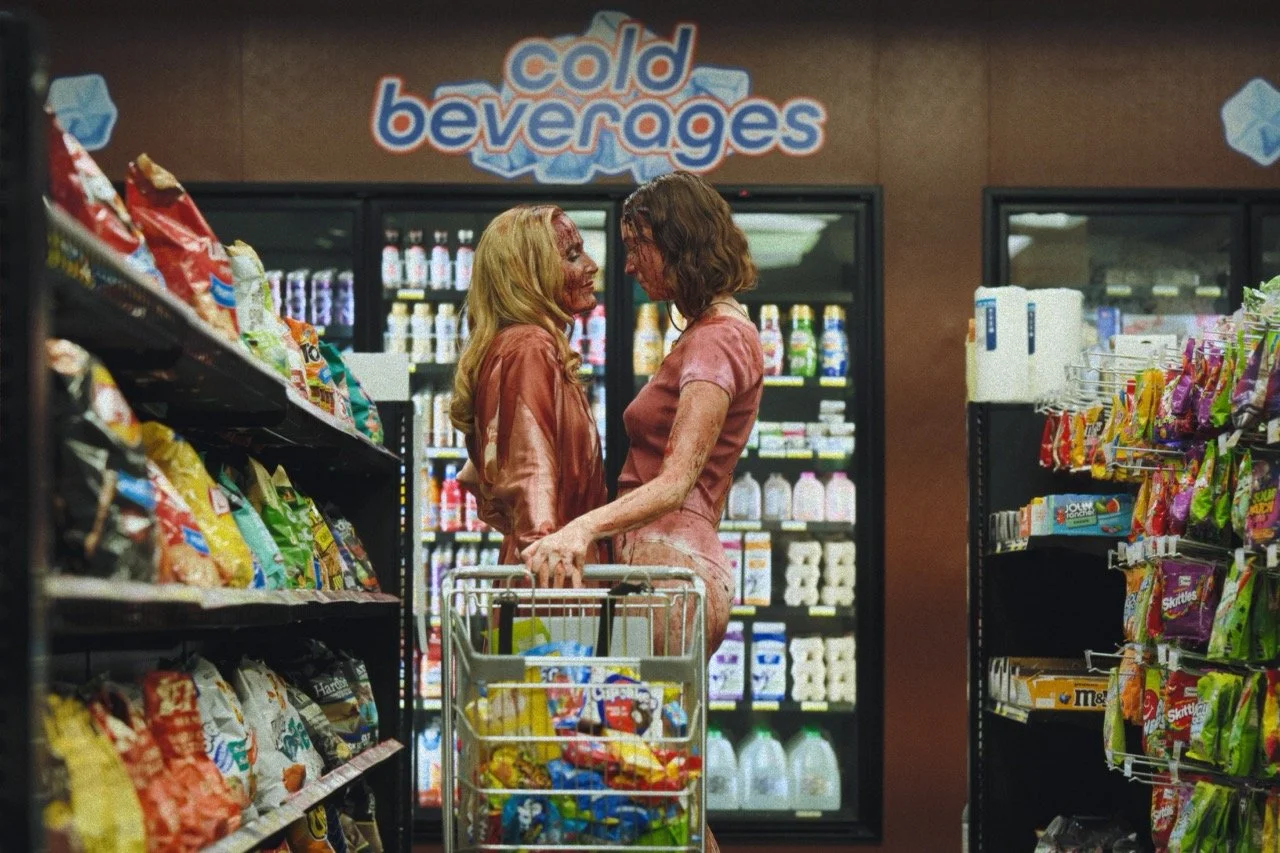
Gillian Anderson and Hannah Einbinder in Teenage Sex and Death at Camp Miasma, a MUBI release.
Whereas the dysphoria of not living in your true identity was the core of TV Glow, Miasma (again using cis mouthpieces) offers a personalized discussion of coming into a new flesh. The trans non‑binary filmmaker, through Kris, explores finding sexual gratification post‑transition: what it’s like to want and to enjoy pleasure with a partner in one’s true form. That struggle is bottled in Kris and all her anxieties.
Hacks star Hannah Einbinder gives a confident lead performance, beautifully translating Kris’s repression through her honest, well‑worn apprehension and body language. Gillian Anderson’s classic movie-star gravitas as her foil imbues wisdom and patience. Kris and Billy’s budding, uber‑romantic relationship realizes the film’s conversations on desire with amplified composition, making you a voyeur in their shared intimacy. Apologies to every sapphic seeing this; it will leave you gnawing at the seat in front of you with its sexy, frivolous spirit, especially against Brandon Tonner-Connolly’s beautiful matte-painted backgrounds. It’s remarkable that Schoenbrun can oscillate between broad and specific without sacrificing their vision or wit, even getting trollish (you’ll believe fried chicken tenders can be eaten erotically).
A second viewing unlocks the emotional core beneath all the sex, blood, and satire.
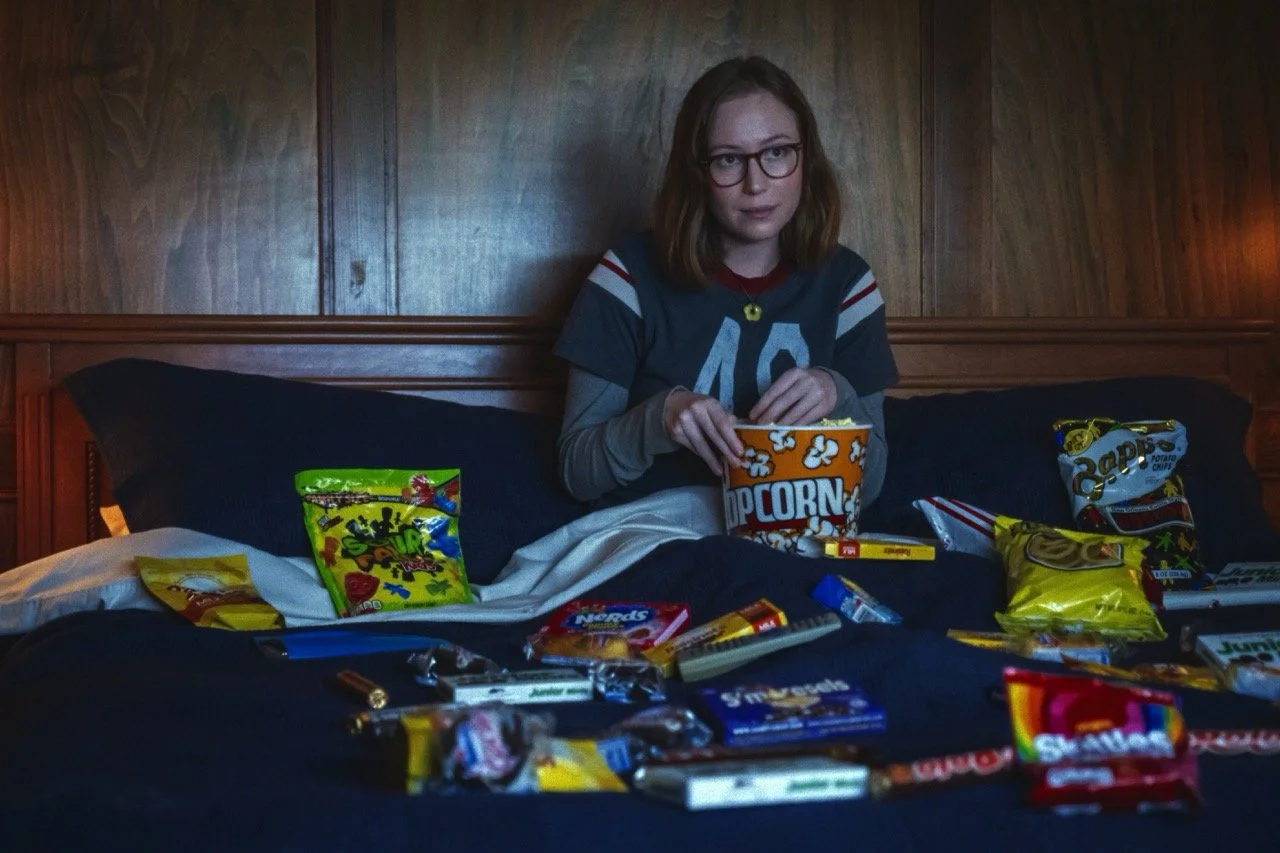
Hannah Einbinder in Teenage Sex and Death at Camp Miasma, a MUBI release.
The film also reaches for the metatextual beyond through a subtle, straightforward navigation. The characters are aware they’re fabric within a picture, but they never cheaply address their fictional existence. On first watch, it’s overwhelming. The specificity of dysphoric sexuality and disconnect can feel emotionally distant. But a second watch is like post‑nut clarity; the interplay between meta‑commentary and sexual liberation reveals a stronger emotional core, down to shot details like a split diopter that had me in tears by the film’s end. Plus, the movie is downright fun. It’s light‑hearted, genuinely hilarious, and the kind of horror satire that makes you want to pop in a VHS.
Jane Schoenbrun’s Teenage Sex and Death at Camp Miasma kills. It’s a near‑masterpiece rebuttal to the sexless, prudish nature plaguing not just horror, but cinema at large. In a time where the lame, hetero ass “One Night Only” caters to conservatism masked as progressiveness, this queer romp intersects satire and desire, told in a sexy, stunning, funny, bloody, and sweet package for all the theys and gays chasing the sexual thrill they haven’t felt since their sexual awakening via that VHS your parents told you not to touch, but you did anyway.
