
'Late Fame' Review: Willem Dafoe Navigates Career Uncertainty and Nepo-Babies in Mellow NYC Satire
Note: This review was originally published as part of our NYFF63 coverage. Magnolia Pictures releases Late Fame opens in theaters on August 7, 2026.
Arthur Schnitzler's novel Late Fame follows an elderly man grappling with adoration and a nostalgia for a past life through the eyes of a younger generation who essentially revitalize him from a life he used to lead. Kent Jones (Diane) and Samy Burch (May December)'s feature adaptation, which stars Willem Dafoe, is released at the most opportune moment, as it appears that works of art have been misplaced. Considering that nostalgia has become an omnipresent theme in our lives in nearly every aspect – and not just the monotony of the media we consume – the very entertaining and scathing Late Fame dissects the dark side of it in a grounded New York fashion.
Courtesy of Late Fame LLC
MPA Rating: NR
Runtime: 1 Hour and 36 Minutes
Language: English
Production Companies: Killer Films, Fresh Fish Films, Morning Moon Productions, Working Barn Productions, Pine Bay Pictures, Spark Features, In Bloom, AmorFortuna
Distributor: Magnolia Pictures
Director: Kent Jones
Writer: Samy Burch
Cast: Willem Dafoe, Greta Lee, Edmund Donovan
U.S Release Date: August 7, 2026
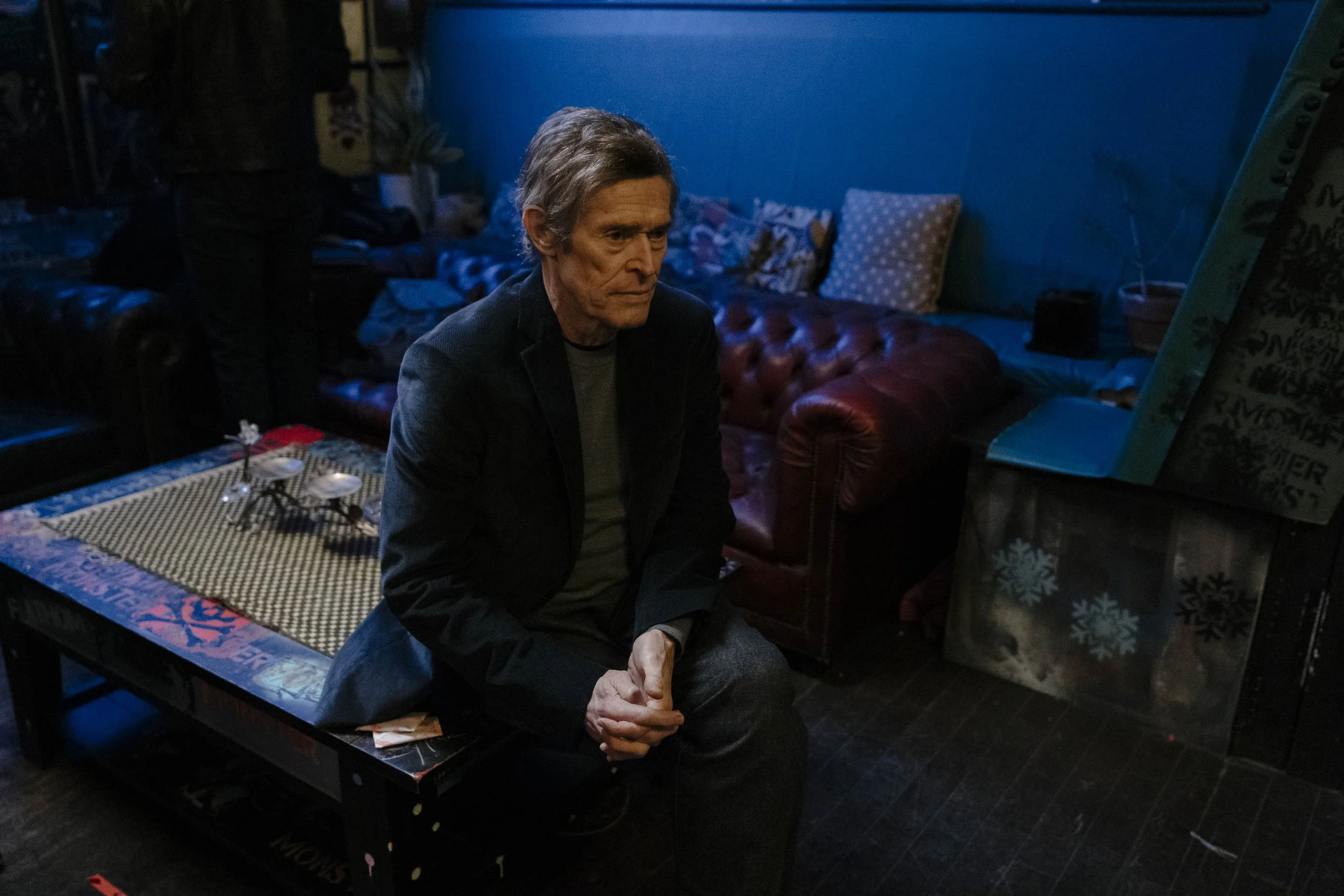
Ed Saxberger (Dafoe) is an up-and-coming poet from Philly who moved to NYC during the ‘70s. He published a collection of poems in a book titled Way Past Go. Today, he’s a 70-something-year-old postman who lives comfortably in his walk-up studio apartment and likes his quiet routine, which involves going to his local bar and having drinks with his fellow old New Yorkers. One day, when he arrives home from work, he's approached by a sophisticated, wealthy, overly eager young man, Meyers (Edmund Donovan), who recognizes him from Way Past Go. Meyers invites Saxberger to join "The Enthusiasm Society," a pretentious band of 20-something literary intellectuals who consider themselves outcasts from the mainstream. Among them is Gloria (Greta Lee), a Blanche DuBois-like musical theater actress who entertains affections from the boys and is poised to be admired by Saxberger. He greets his new fans, who express themselves with snobbish academic vernacular, and agrees to write a new poem for their live literary show. While penning his first poem in decades, Saxberger contemplates the "what ifs" of a life he hasn't led.
Late Fame rips nepo baby-run NYC a new one.

A scene from LATE FAME, a Magnolia Pictures release. Photo courtesy of Magnolia Pictures.
With Late Fame, Kent Jones and Samy Burch update Schnitzler's Austrian-based text and transport it to contemporary NYC. They satirize the depressing development of art media in the contemporary “Big Apple” landscape. Jones' directorial approach follows the same path as his previous personal drama, Diane, like many indie character portraits. Nevertheless, the voyeuristic, intimate lens elevated by DP Wyatt Garfield's camerawork is in harmony with Burch's sharp and hilarious screenplay. After her stunning work on May December, Burch continues her amazing streak of writing characters as a product of their surroundings. It nails the current anthropology of NYC through the interactions between Saxberger and Meyers and his crew.
Early into their first outing, Saxberger describes the reality of a group of Gen-Z 20-something white boys who look to his past with rose-tinted glasses, which he himself does not have. While it seems like sweet adoration and respect at first, the film cleverly reveals the devolution of facets of art and creativity. Mostly, it aims at the subset of middle- or high-class NYU nepo baby white boys who all look like variations of each other and were perhaps radicalized by watching Dead Poets Society once. Burch illustrates the real persona of these men, all of whom have co-opted creative art spaces and are somehow the future of it, despite lacking a distinctive voice or a true respect for the art and the people who once walked that field.
Anecdotally, I have witnessed this firsthand during my excursions into the alt comedy scene, and while I’m not as old as Ed Saxberger, I've hung around one too many annoying white liberal men like Meyers to clock the personality and the class in real time. It’s a truth that Late Fame accurately depicts and is illustrated in such a funny manner. Yet, it makes me think about how relevant this 1895 story is.
Willem Dafoe and Greta Lee’s humanistic performances effectively bridge Late Fame’s social commentary.
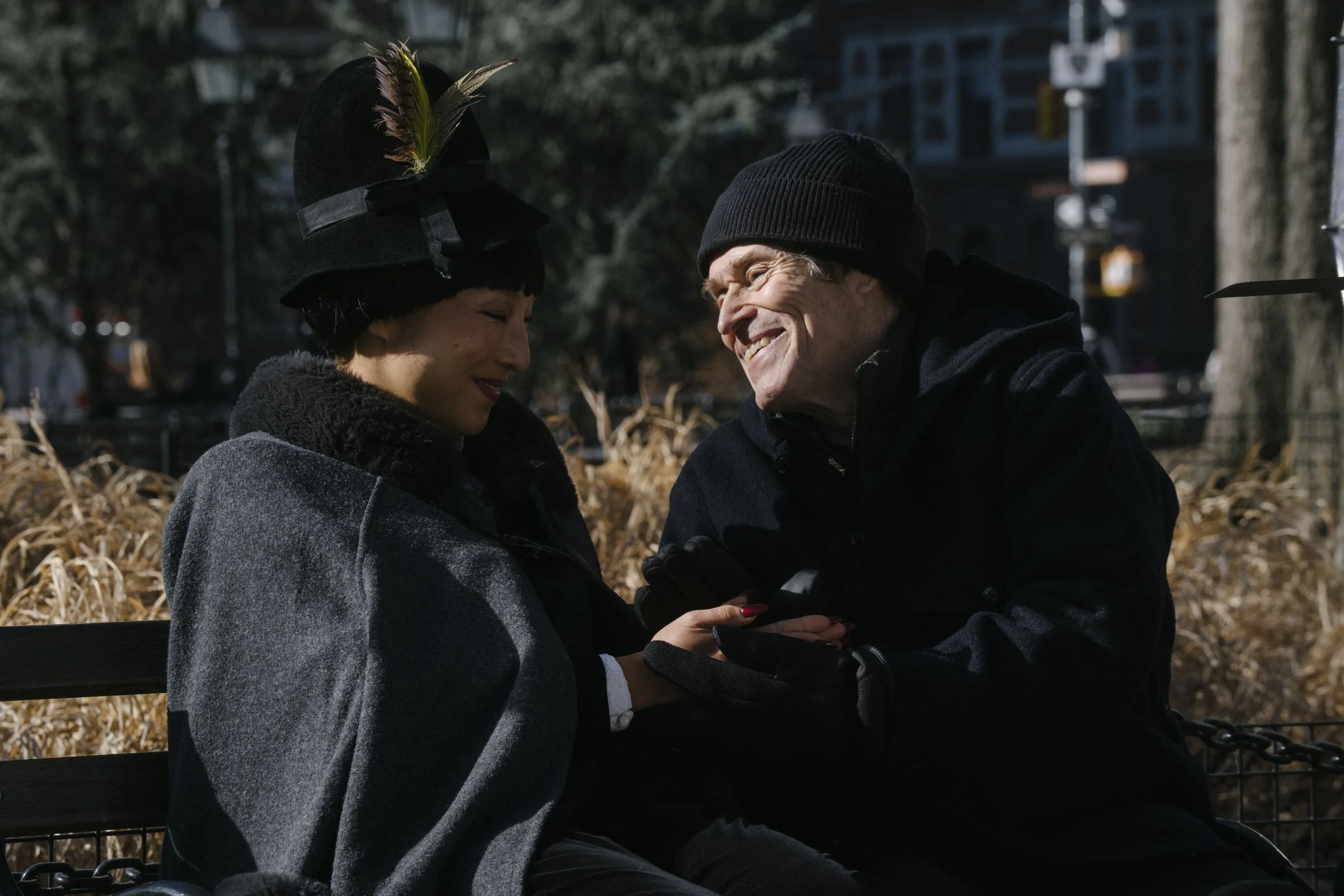
Greta Lee and Willem Dafoe in LATE FAME, a Magnolia Pictures release. Photo courtesy ofMagnolia Pictures.
Willem Dafoe does his Willem Dafoe thing, as he does every time in grounded character pieces: embodying the role of his character, finding the humanity, elevated by whatever filmmaker’s naturalistic direction. This one being Jones. Dafoe has always expertly delivered a character's slow descent into madness. Even though Saxberger isn't going Green Goblin-mode, the Enthusiasm Society's disease of nostalgia affects his arrogance, and you can feel the real psychological shift as you spend more time with him.
Late Fame effectively bridges the generational divide by incorporating the radiant Gloria, the sole female member of the Enthusiasm Society, and the only millennial. She has the fashionable style of Maxine from Russian Doll with a Blanche DuBois persona. Needless to say, Greta Lee is full of arresting exuberance, and like Saxberger and the boys, you're bewitched by her presence. As a millennial with a failed career, she adds a layer of realism to the conversation about art that's, on one hand, very tragic and, on the other, true to life. Conversely, Gloria feels like a character from a different film, and the portrait of Saxberger occasionally deviates from its path.
LAST STATEMENT
Though incredibly entertaining, Late Fame frequently loses momentum and focus, particularly in the second half, with scenes of Saxberger navigating the modern art world or even just the wild-card Gloria. Despite its vérité-like flow, well-balanced comedic satire, and excellent character performances, there's nothing relatively remarkable about it. And like Saxberger, that's okay. It operates well in the routine it establishes for itself and consistently keeps you engaged with its familiar yet earnest rhythm. And you know what? That's worth a snap or two.
