
'Sorry, Baby' Review: Thoughtful and Empathetic Traumedy Marks a Bold Debut For Eva Victor
Eva Victor is a name you'll probably recognize if you've been around the New York or internet comedy scene. Victor’s earlier comedy blends sardonic wit with astute observation, and those attributes are on full display in their leap from the stage/small screen to her big, tender, poignant, and darkly funny debut, Sorry, Baby. At this past Sundance, where many movies were simply 'fine', Victor's undeniably was the best film that played there and, by extension, this year thus far. Joining the ranks of Jordan Peele and Penny Marshall—in a debut that swings between both—this portrait of a young person healing past a traumatic event is a miraculous breakthrough for a comedian taking their skillset to the big screen.

Image copyright (©) Courtesy of A24
MPA Rating: R (Sexual content and language.)
Runtime: 1 Hour and 43 Minutes
Production Companies: Pastel, Big Beach, High Frequency Entertainment, Tango Entertainment
Distributor: A24
Director: Eva Victor
Writer: Eva Victor
Cast: Eva Victor, Naomi Ackie, Lucas Hedges, John Carroll Lynch, Louis Cancelmi, Kelly McCormack
Release Date: June 27, 2025
Agnes (Victor), a New England-based grad student turned English professor, navigates trauma and recovery following being sexually assaulted by her former professor (Louis Cancelmi). Over several chapters spanning five years, she faces a series of challenges as she deals with PTSD. At her side are her best friend Lydie (Naomi Ackie) who visits her house by the sea, and her kind-hearted next-door neighbor Gavin (Lucas Hedges).
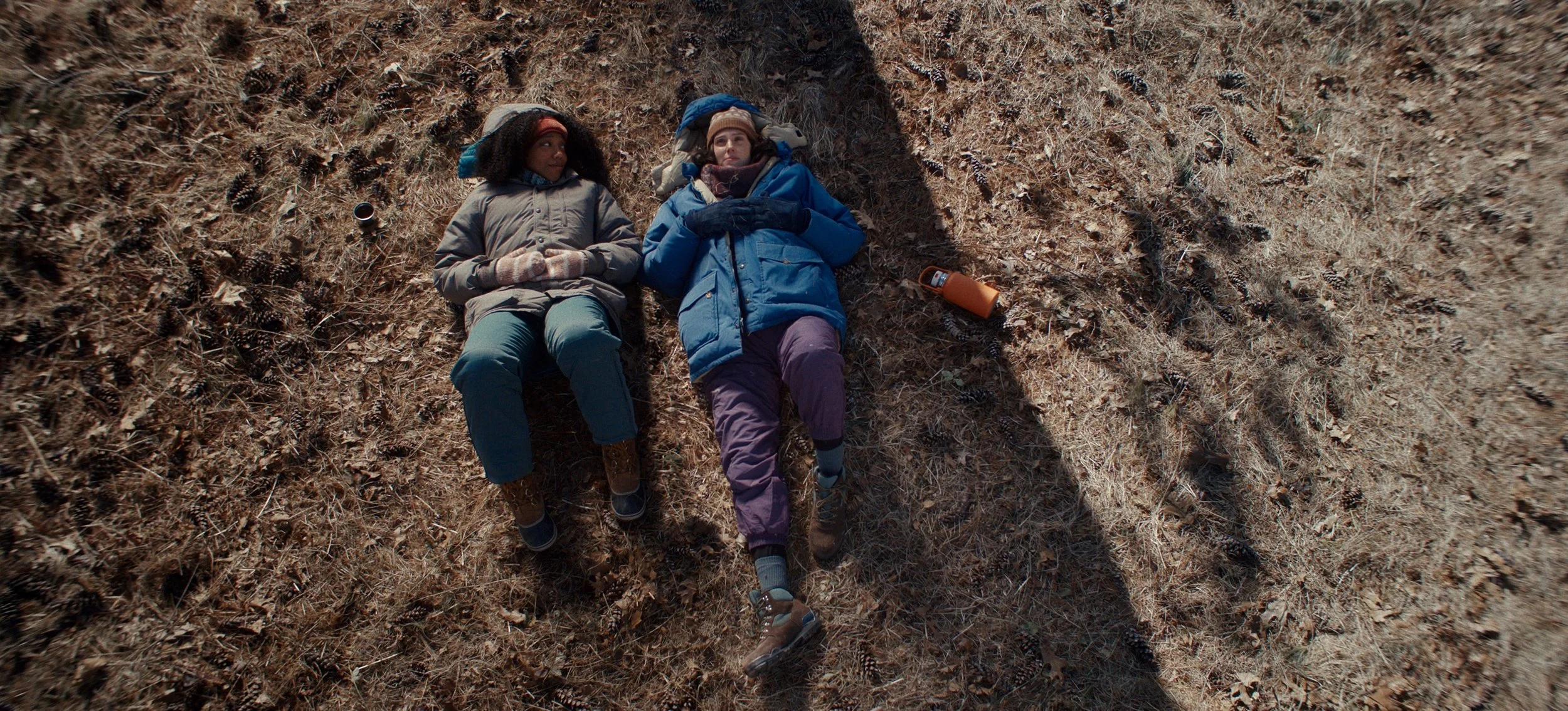
Sorry, Baby leads with empathy, giving grace to survivors
Regardless of how well-made they are, many movies that deal with the sensitive subject of sexual violence often fail to consider survivors in their portrayals. In such cases, filmmakers depict it with a brutality that many survivors may find triggering. Victor, however, approaches the subject with empathetic awareness, focusing on the events before and after Agnes's experience without depicting the incident itself. His artistic approach defies common tropes by employing a bold, confident style in portraying Agnes’s journey, while capturing the complexity and rawness of the emotions that follow her particular experience.
In its Sundance description, the film is summarized as: “Something bad happened to Agnes. But life goes on… for everyone around her, at least.” This perfectly reflects the structure Victor employs, with its non-chronological framing mirroring the reality that trauma is non-linear and does not define those who experience it. Agnes is a joyful, well-rounded person, to the dismay of her rival Natasha (Kelly McCormick), who harbors a one-sided grudge against her and even admits at one point that “everyone likes her.” But it’s around her best friend Lydie that Agnes truly comes alive. Eva Victor and Naomi Ackie’s exceptional on-screen chemistry beautifully captures Lydie and Agnes’s eternal, loving friendship and their unwavering support for one another. Whenever Lydie appears, the film occasionally takes on the tone of a buddy comedy, especially as the two prepare for Lydie’s upcoming baby with her partner Fran (E.R. Fightmaster). The film’s dry wit pairs perfectly with the dreary New England setting.
Sorry, Baby bursts with Victor’s intellect and wit
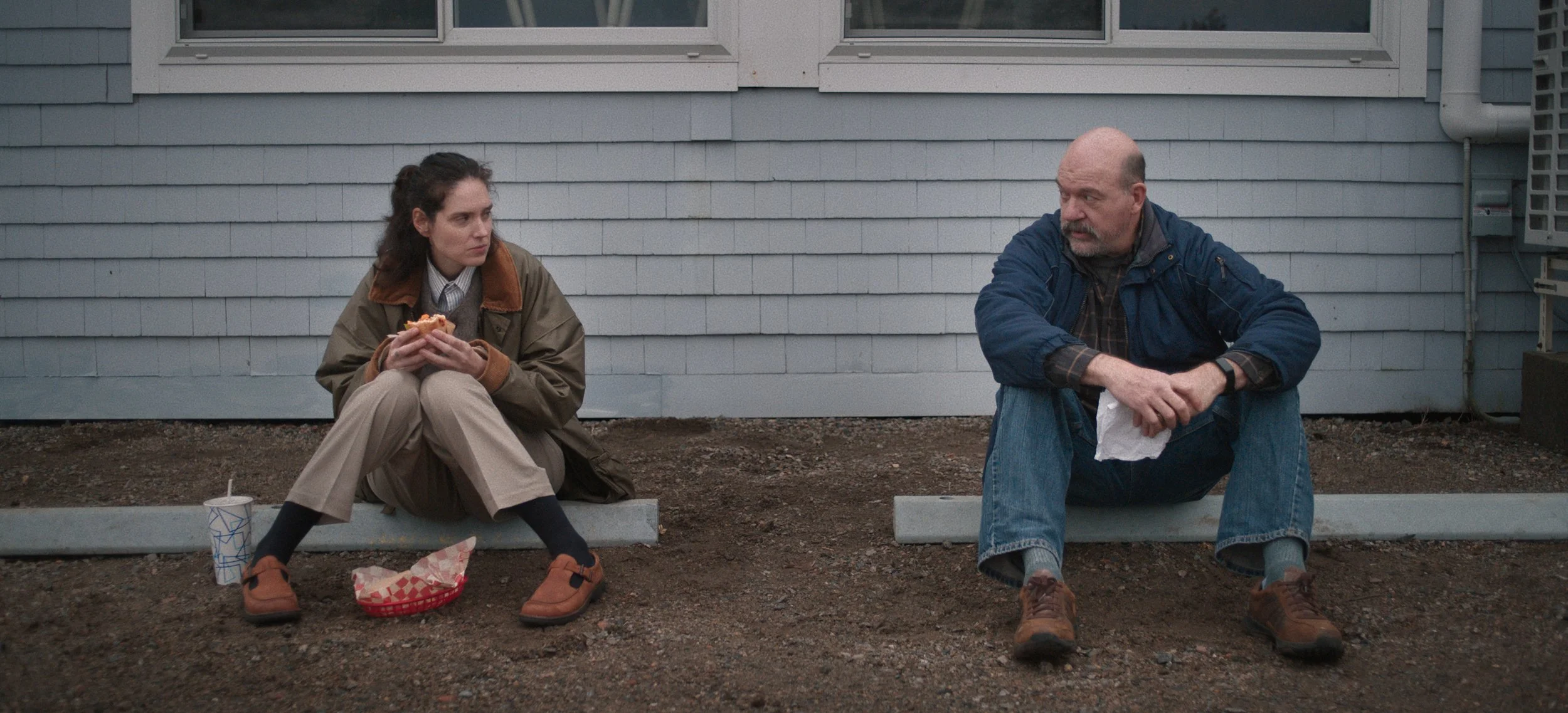
In the film's vignette-style structure, Victor's script slyly strikes a sharp comedic spirit while being carefully crafted in its tone. The humor is derived from the eccentricities that arise from Agnes' everyday activities, whether it be serving jury duty or adopting an emotional support cat on the spot in the street. While the snapshots contain sharp, comedic dialogue, they are also human. The film doesn't conflate the sensitive subject as one thing as Agnes unveils their complex feelings towards their situation, and it's painted with sophisticated honesty. Some of the most potent scenes derive from intimate moments shared with strangers who help her cope with her emotions. One standout scene involves a hard-boiled sandwich shop owner (a great John Carroll Lynch) helping calm a panic-attacked Agnes in her car and subsequently sharing "a good sandwich with her.
In addition to its deft screenwriting, Victor's filmmaking demonstrates a distinctive, visual flair. Mia Cioffi Henry's cinematography (Superior, Invisible Beauty) evokes a sense of isolation and a little bit of claustrophobia, specifically in the wide shots and revealing the different corridors of Agnes’ house, where much of the narrative is set. It’s worth nothing that Victor shadowed Jane Schoenbrun on I Saw the TV Glow —my number one film of 2024—and those skills are omnipresent in bold visual cues that evoke elevated horror while highlighting Agnes' PTSD. I will always remember seeing this at Sundance, chilled from head to toe over the oner featuring an out-of-body Agnes driving as the camera rigged to the hood of the car, and going “holy shit. Eva is actually doing it.”
Sorry, Baby is a triple-threat showcase for Victor. At its core is a remarkable performance that boldly carries the weight of both the comedy and the emotion. Victor’s cadence progresses from youthfulness to automatism to assurance over the course of the chapters. They prove to be a force to be reckoned with in many facets—even in their ability to hold their own alongside veteran actors like Naomi Ackie and Lucas Hedges, who is such a charmer he occasionally makes you wonder if this is a Manchester by the Sea sequel in disguise. If this isn’t the ultimate calling card, I’m not sure what is.
Final Statement
Eva Victor's brilliant, beautifully shot, meticulous portrait of healing with a subtle sense of humor, Sorry, Baby, is a fantastic directing debut that is both empathic and introspective.
