
'Sirāt' Review: A Memorable, Hypnotic Dance Through Hell
At every film festival I attended this fall, word spread like wildfire about Oliver Laxe’s unflinching, road trip music-centric movie Sirāt. My colleagues and friends instructed me to go in blind and be taken aback by its audacity. Yet, nothing could have prepared me for Sirāt. It’s a beautiful film that explores the humanity within us and the heinous horrors of life that are beyond our control. The only thing you can do is dance.
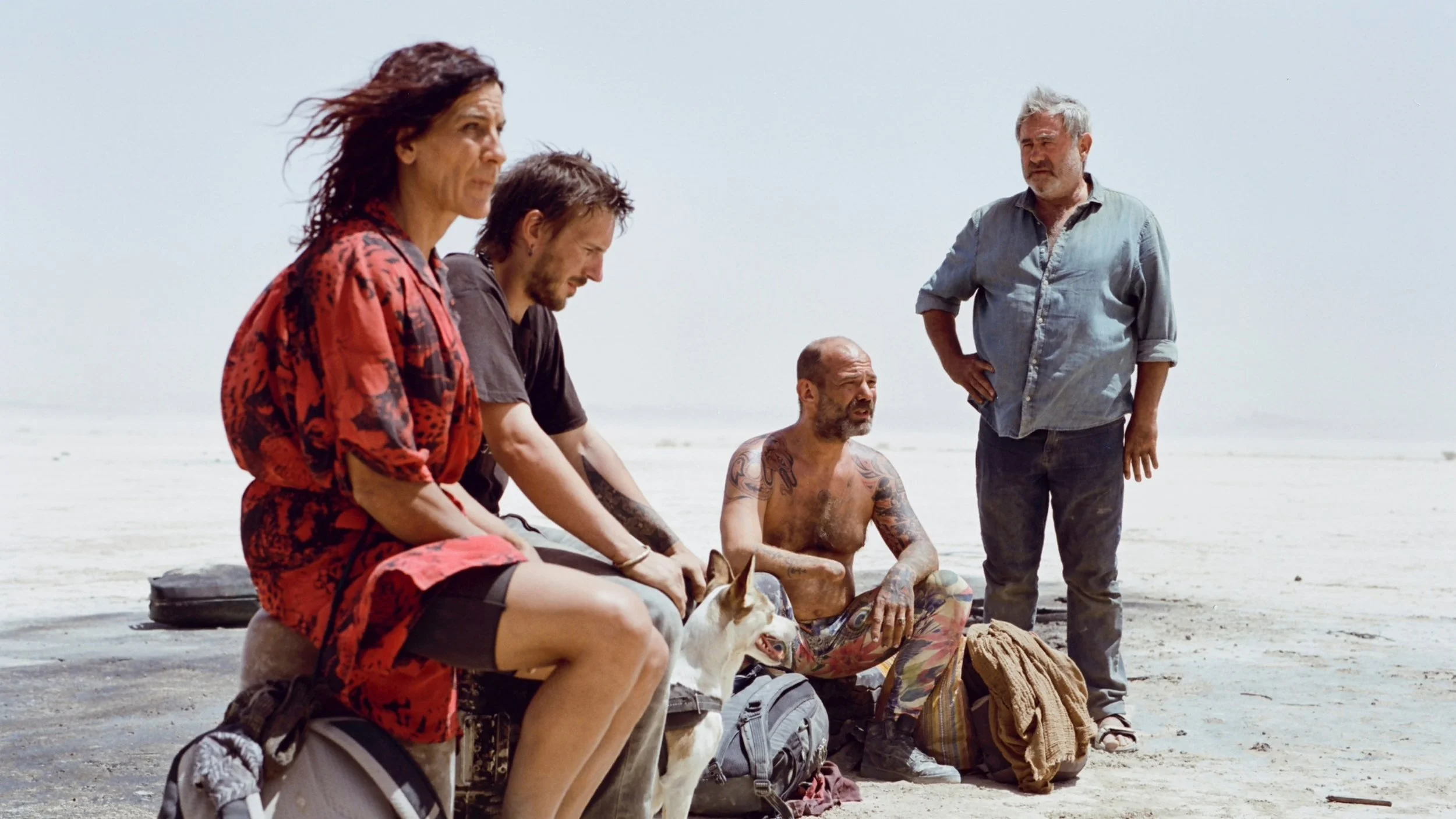
Image copyright (©) Courtesy of NEON
MPA Rating: NR
Runtime: 1 Hour and 52 Minutes
Languages: Spanish, French, English, Arabic
Production Companies: Los Desertores Films AIE, Telefónica Audiovisual Digital, Filmes Da Ermida, El Deseo, Uri Films, 4A4 Productions
Distributor: NEON
Director: Óliver Laxe
Writers: Santiago Fillol, Óliver Laxe
Cast: Sergi López, Bruno Núñez Arjona, Richard Bellamy, Stefania Gadda, Joshua Liam Henderson, Tonin Janvier, Jade Oukid
U.S Release Date: November 14, 2025 (NY & LA) | February 6, 2026 (Nationwide)
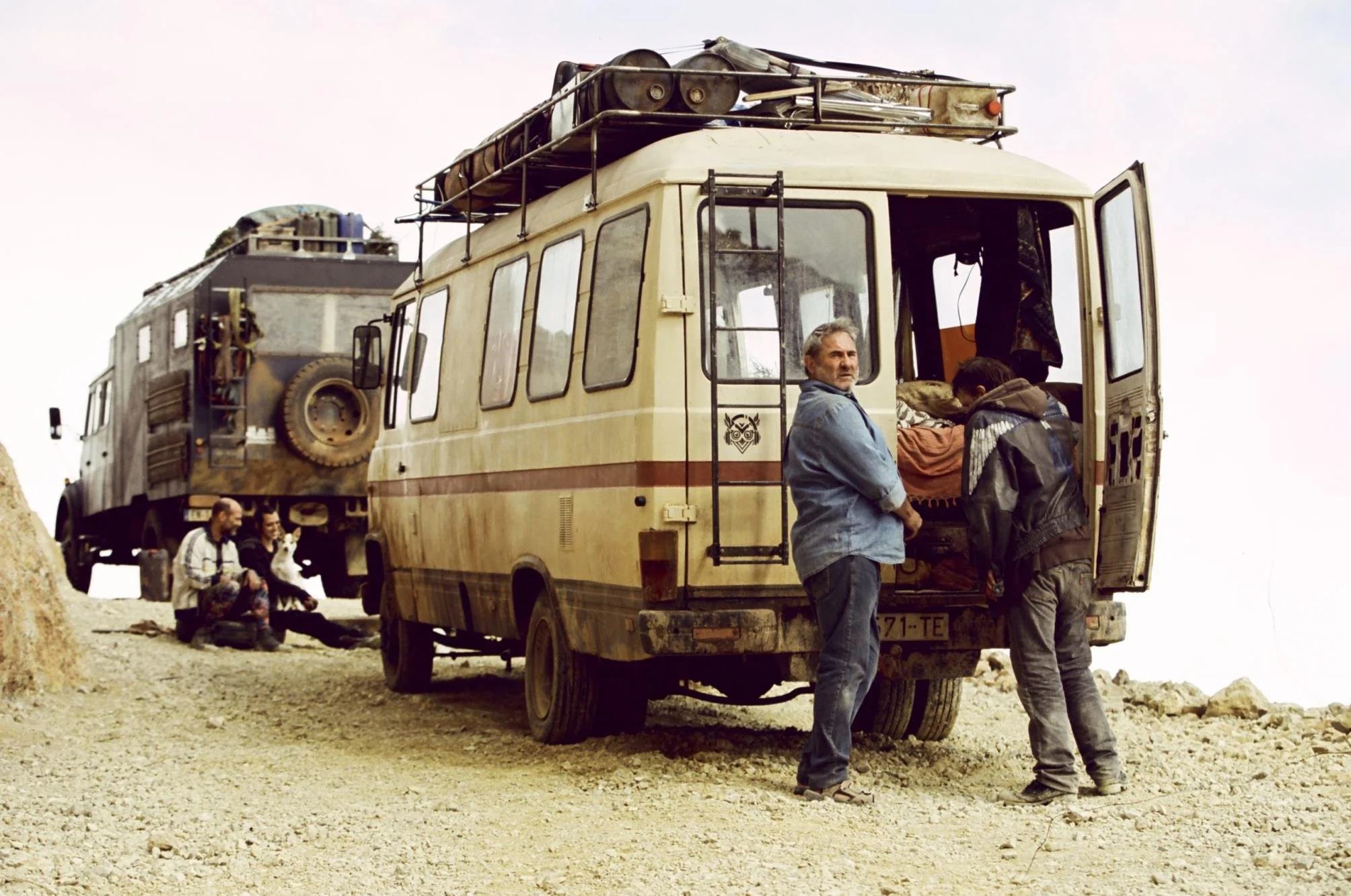
In Morocco, a father named Luis (Sergi López), his son Esteban (Bruno Núñez Arjona), and their dog Pipa go to a rave in search of Mar, Luis’s daughter, who has been missing for five months. From morning to night, they approach every raver with a “missing person” flyer. They meet a group of older ravers – Steff (Stefania Gadda), Josh (Joshua Liam Herderson), Tonin (Tonin Janvier), Jade (Jade Oukid), and Bigui (Richard Bellamy) – who inform them that they are on their way to one last party in the desert, and they can continue the search there. Military units arrive and force the entire crowd to disperse as the country prepares for a war. Luis and Esteban, in their busted-down van, follow the ravers. The old-school partygoers try to shake them off their tails but concede. Thus, they embark on a road trip across the West Sahara Desert. Their journey is one of heartfelt warmth, treacherous twists, and rocky turns.
Sirāt marks Oliver Laxe’s fourth feature, and despite this being my first exposure to him, I could tell this is his most ambitious work to date. With production in both Spain and Morocco to depict an end-of-the-world Morocco, Laxe's transformation is as epic as it is biblical; the title refers to it as a bridge between hell and paradise. As you follow the road trip with these two parties, each on-location set piece – from sweeping footage across terrains to driving up a narrow mountainside or through a ravine – astonishes with its emphasis on production practicality, sending shivers down your spine with its unexpected twists. The journey is wrapped in a realistic, grounded setting that gives you the impression that you are riding shotgun through this ride to hell, enhanced by the wonderful 16mm vérité camerawork of frequent collaborator DP Mauro Herce.
Sirāt is a pulse-pounding roller-coaster ride that is replete with humanity and musicality.
Sirāt. Courtesy of NEON.
Laxe and co-screenwriter Santiago Fillol illustrate a war-torn nation with hints of a pre-WWIII era, addressing how everyday people try to move and distract, if not cathartically release themselves, from the harshness in their lives. It’s important to note that Morocco does not have an ongoing conflict. Nevertheless, Laxe's unique portrayal of a militant-controlled environment is not unlike the reality that Americans can identify with. More police and militant-controlled areas are omnipresent in urbanized areas, and even though these ravers are a subculture, they're still everyday people. Everybody has a healing activity that highlights or responds to people's resilience, and for ravers, dancing is a way to let go of such aggressions and fears. The movie thrusts you into a Moroccan rave, where you can feel the community in the rhythmic movement of carefree bodies, as if shaking off the stresses of life.
Laxe's lens, musicality, and scope hypnotize you, which is as euphoric as it is loud and vivacious. Its sound, music, and design are materialized as distinct entities that transcend the confines of the rave environment. Kangding Ray's electronic score, which combines techno-house beats with ominous low brass, resembles the synthetic sound of The Legend of Zelda and something straight out of a Hans Zimmer score. It’s a powerful force that draws you to the rave setting while simultaneously manipulating your sense of ease during its bleakest scene.
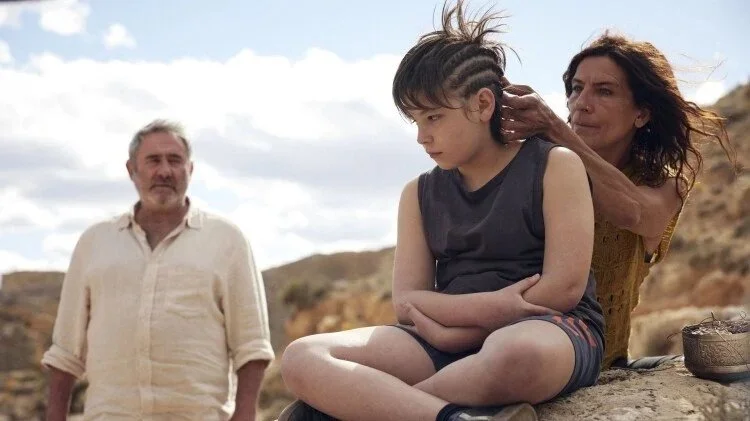
Professional actors (Lopez and Arjona) and non-actors (the raver crew) comprise the small cast; however, their exceptional sense of unity serves as the foundation of the film. I was taken aback by the affecting chemistry between Luis and Esteban, as you feel the weight of their grief regarding Mar. The humanity shown by the two parties helping each other with their car problems, paying for gas, or amusing the young Esteban balances out the film's overall edge-of-your-seat suspense and nail-biting tension, which increases as it progresses. But fucking hell, when it jerks the wheel in its latter half that feels so ethereally dense, the ensemble gives a haunting performance.
Sirāt will make your jaw drop so many times.
Sirāt. Courtesy of NEON.
Due to its grounded setting and tone, Laxe works as a stealth agent, capturing you in the moment of calm before shocking you in a way that breaks any hesitation or anticipation of what will happen. It's already immersive, but when these characters endure life-changing events, specifically by an off-the-rails midpoint and onward, it’s visceral. You will not find a theater that won't be responsive and filled with tense reactions. I, for one, had my jaw dropped, squirming in my seat, screaming “OH MY GOD” at the top of my lungs, and at one point, being unable to look at the screen. Kangding Ray's score oscillates between dictating the tone and juxtaposing it, adding to the tense atmosphere.
Nevertheless, all aspects of the narrative, including the most explosive beats, are indicative of the unparalleled moments of shock and vulnerability that define life. It’s not in a pessimistic or cynical way, but rather through a surrealistic prism that highlights the necessity of enduring.
Along with It Was Just an Accident, this is the second most daring filmmaking achievement I've witnessed this year.
Final Statement
Nothing else comes close to the intense feelings of hope, tension, and despair that this movie rips from your heart. It's like going to a rave and experiencing it through a maximalist, shroomed-up lens. Sirāt is told with a sense of realism that calms you before the most intense shock you'll find in cinema this year (or the next, considering that at the time of this writing it's out of its NY/LA Oscar qualifying run and is dropping in February 2026). Everything ultimately serves to personalize how uncertain life is; it’s a stunning yet visceral illustration of the film's fundamental humanity.
Please consider supporting Rendy Reviews. We’re an independent run, Gen-Z and Black-owned entertainment outlet. You can donate to our Paypal or Venmo to help keep our site running. Or become a subscriber for access to 13-years worth of reviews, exclusive interviews, and more! A free way to support is a sign up for the Rendy Reviews’ newsletter and get weekly emails about latest on movie reviews, interviews with film artisans, features, and more.
