
‘Sense and Sensibility’ Review: A Beautiful Austen Reimagining for a New Generation
Every generation should have a defining adaptation of Sense and Sensibility. I mean, after Ang Lee’s version, which Emma Thompson wrote, starred in, and won an Oscar for, no one even bothered to make another one. The sole focus was on Joe Wright’s 2006 Pride & Prejudice, which ran the gamut, and Autumn de Wilde’s 2020 Emma, still being discovered as a gem. But Georgia Oakley’s grounded, realistic adaptation of Jane Austen’s classic about two impoverished sisters searching for their ideal partners in a wealthy society – which follows her amazing debut feature Blue Jean – takes a story I’ve never seen before to a whole new level. Oakley’s sophomore film is not only a sophisticated, expansive advancement in her career as a filmmaker, but also a controlled and beautiful interpretation of Austen’s text. It’s an emotionally riveting and relatable journey about the pursuit of love and happiness that made my precious Pisces heart burst.
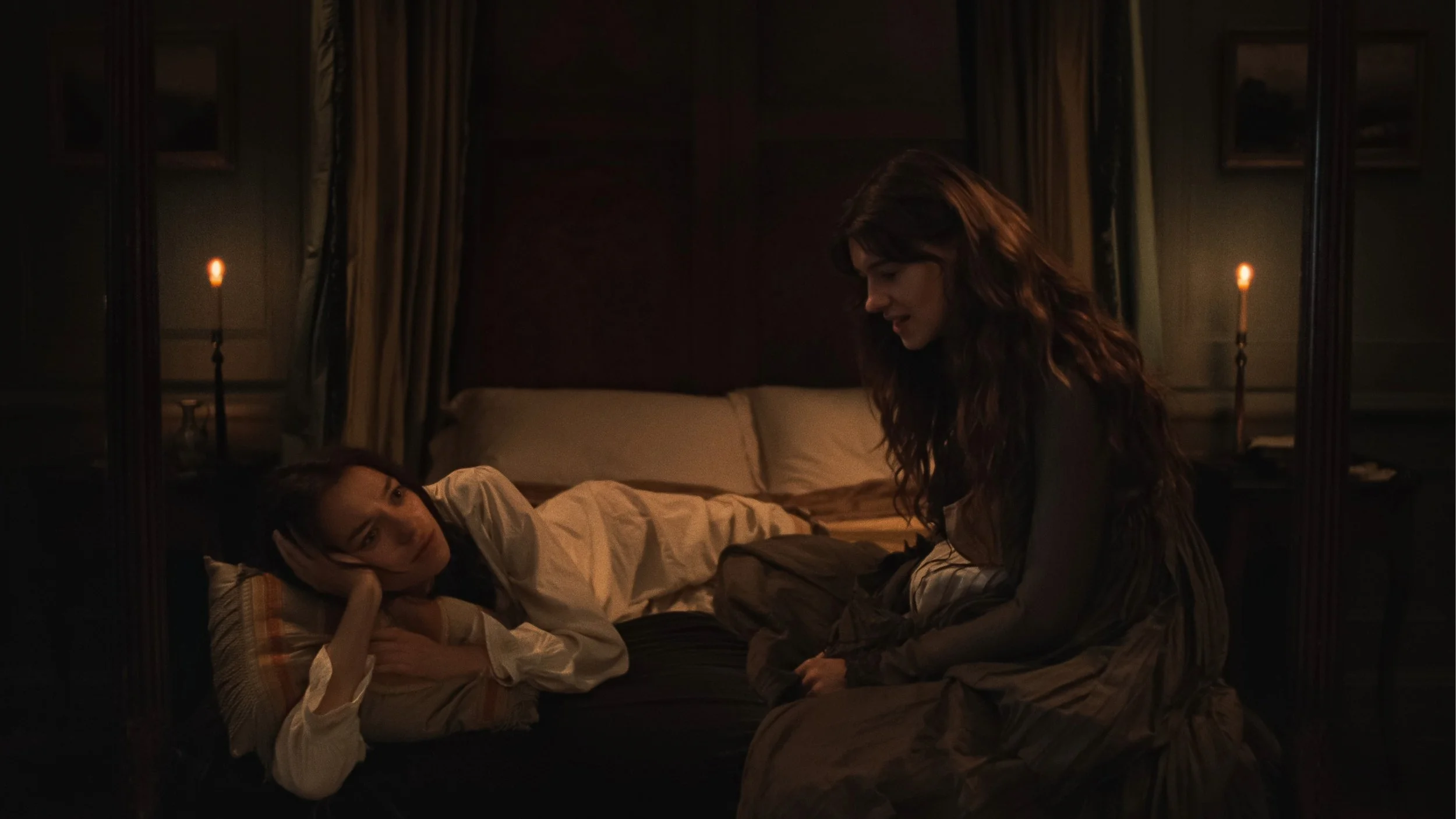
Image copyright (©) Courtesy of Focus Features
MPA Rating: PG (for some thematic elements, partial nudity and brief violence.)
Runtime: 2 Hours and 11 Minutes (131 minutes)
Language: English
Production Companies: Working Title Films, November Pictures, Kiddo Films
Distributor: Focus Features (Worldwide), Universal Pictures International
Director: Georgia Oakley
Screenwriter: Diana Reid (adapted from the novel by Jane Austen)
Cast: Daisy Edgar-Jones, Esmé Creed-Miles, Caitríona Balfe, George MacKay, Frank Dillane, Fiona Shaw, Herbert Nordrum, Bodhi Rae Breathnach, Tom Brooke, Stacy Martin
U.S Release Date: October 16, 2026
In Norland Park, after their father Henry’s passing, the Dashwood sisters – dignified Elinor (Daisy Edgar‑Jones), outspoken Marianne (Esmé Creed‑Miles), and youngest Margaret (Bodhi Rae Breathnach) – and his second wife (Caitríona Balfe) learn that the will left them with nothing. The inheritance goes to John (Tom Brooke), Henry’s firstborn from his first marriage, who moves in with his snooty wife, Fanny (Stacy Martin). Elinor grows close to Fanny’s brother, Edward Ferrars (George MacKay), but the family disapproves due to her modest wealth. Though the will asks John to care for his stepsisters, Fanny convinces him to displace them. Their cousin Mrs. Jennings (Fiona Shaw) persuades them to move to Barton Cottage in Devonshire. Jennings tries to pair Marianne with the neurotic Colonel Brandon (Herbert Nordrum), but Marianne is instead captivated by the sophisticated John Willoughby (Frank Dillane) – to Brandon’s dismay, given their shared history. As the sisters navigate their social status, their search for true love brings emotional distress.
Oakley’s Sense & Sensibility understands that longing is in the details.
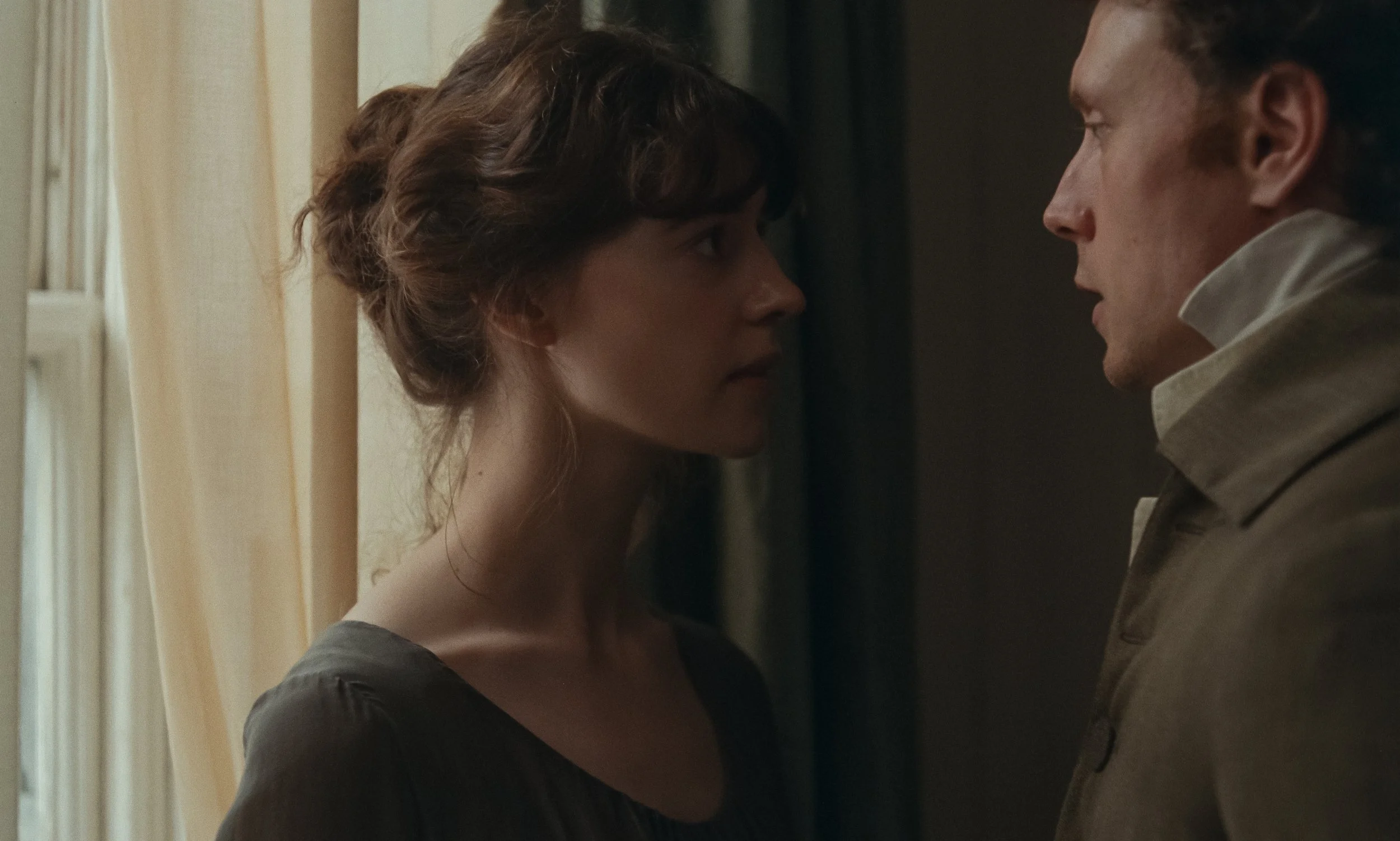
Daisy Edgar-Jones stars as Elinor Dashwood and George MacKay as Edward Ferrars in SENSE and SENSIBILITY, a Focus Features release. Credit: Alex Bailey / © 2026 FOCUS FEATURES LLC
The thing about the film that stands out most is the elegance of its practice and approach to tone rather than its visual spectacle. It mirrors the best attributes of Pride & Prejudice in terms of lived-in worldbuilding and patient direction, allowing the viewer to feel emotionally invested and attuned to these single ladies’ romantic plights amid financial limitations. Oakley’s sensitive direction and Arnaud Potier’s grainy cinematography, which deftly blends contemporary wide shots of the picturesque, realistic British locales with more realistic interiors, bolster the grounded mood. Oakley also incorporates an element from Blue Jean and subtle filmmaking cues that are excellent for the material; Marianne and Elinor’s viewpoints are intimately personalized through handheld cameras and controlled blocking, highlighting their unique personalities and romantic experiences. The close-up passing glances and grazed touches between Edward and Elinor, combined with their grade-A chemistry, capture an unabashed romantic sensation rarely seen in modern romances.
Diana Reid’s screenplay penetrates the inner workings of Austen’s characters, which exacerbates the pain caused by the economic conflict with love. It’s perfectly balanced in its attention to both Elinor and Marianne, ensuring that they’re given equal importance in their desires, displaying the classist chokehold restricting their pursuit, while also making their sisterhood so tender and captivating. Reid’s focus on mining depth across everyone, including that damn bounder Willoughby, adds to the film’s lived-in, tactile quality that perfectly matches (hehe) with Oakley’s grounded disposition.
The emotional repression experienced by Marianne and Elinor is profoundly felt and exquisitely conveyed by Daisy Edgar-Jones and Esmé Creed-Miles.
The Dashwood sisters’ down bad-ness has never felt this intimate.
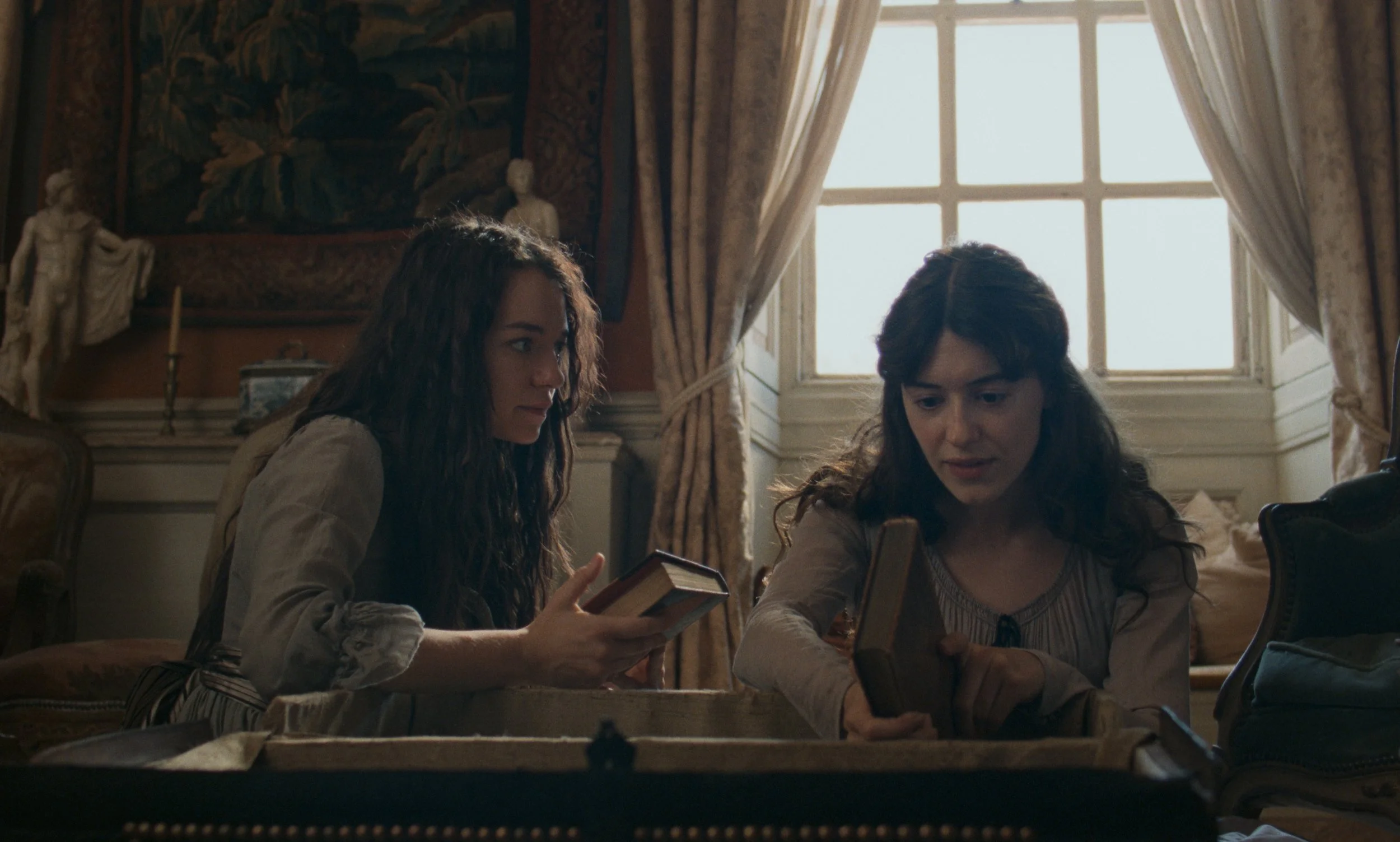
Esmé Creed-Miles stars as Marianne Dashwood and Daisy Edgar-Jones as Elinor Dashwood in SENSE and SENSIBILITY, a Focus Features release.
For years, I had been waiting for that one Daisy Edgar-Jones film performance to truly blow me away, and this one did. As Elinor, she displays the eldest daughter’s stoicism in her glances and attitude. Edgar-Jones channels that internalized pain through a poised persona, simply smiling and keeping on trucking. Her and Creed-Miles’ chemistry is radiant, as is George MacKay’s with the charming Edward Ferrars. God, you can feel the depth of their emotional romantic repression and the pain, particularly in their affectionate banter and eye contact, as they go through the year-spanning motions.
Esmé Creed-Miles is transcendent in her portrayal of Marianne, commanding the screen with her spirited, heart-on-sleeve, and passionate energy. For this being my first exposure to Creed-Miles (aka mini Samantha Morton), she delivers one of my favorite performances. She textures the headstrong energy that slowly grows corrupt, realizing chivalry is dead, especially with Willoughby. I started questioning if I’m a Jane Austen character. I, too, have vibed with someone, flirted for a long time, and traveled to see them… only to be played. Yes, this happened to me; it was very gender-validating but still ever so painful.
The supporting cast is sublime. Herbert Nordrum is peak neurotic as Commander Brandon, and his contrast with Creed-Miles is a delight; Fiona Shaw ate with each energetic line read. But Frank Dillane stole the show for me. He’s really Mike from Urchin again but in Victorian clothing; he weaponizes his charm, but when his dastardly true colors show, he’s a manic, mesmerizing gremlin who is so detestable. He’s not as bad as Stacy Martin’s Fanny, who never got her comeuppance in any capacity and constantly irked me, but close enough.
Sense & Sensibility is everything a modern Austen adaptation should be.
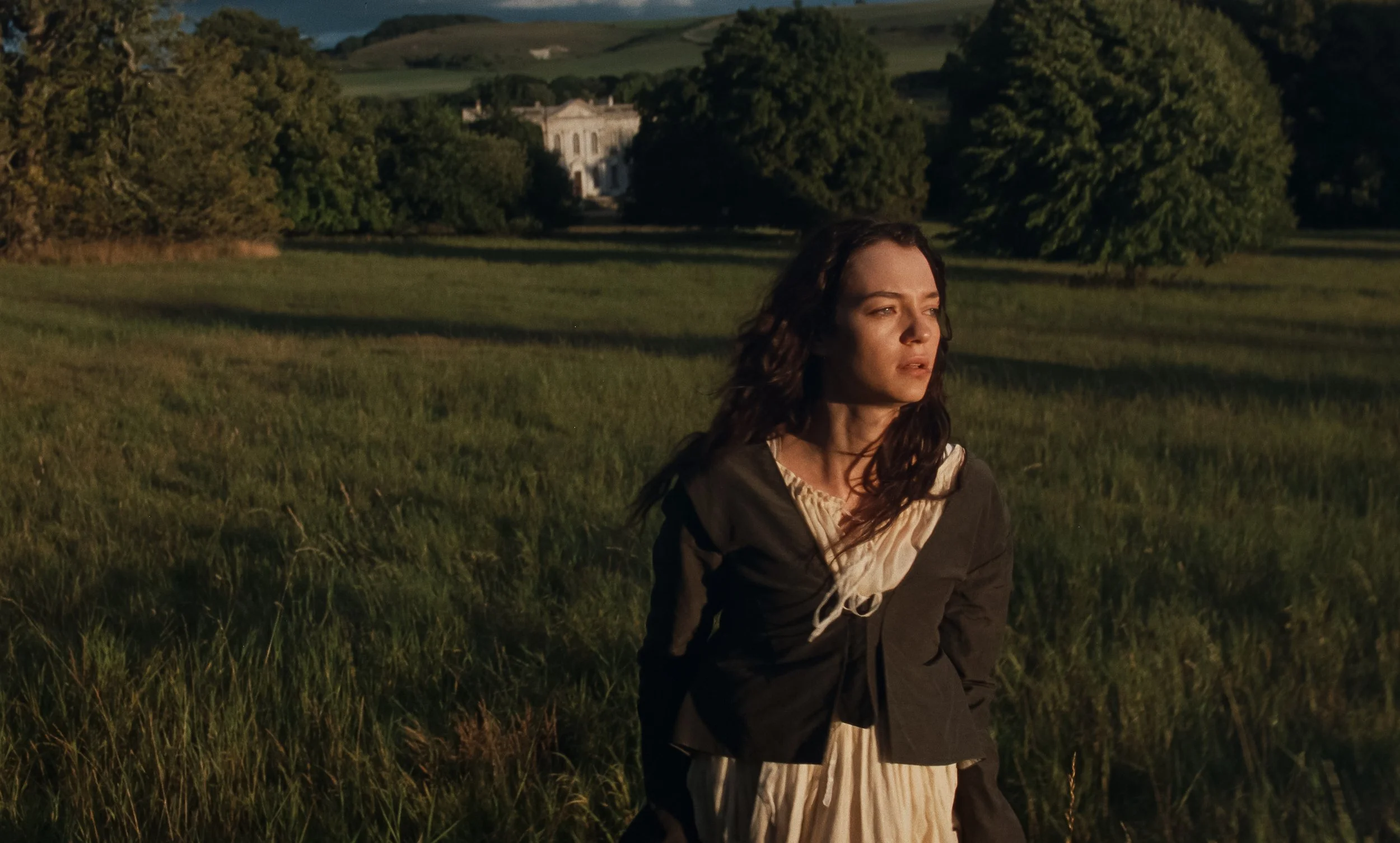
Esmé Creed-Miles stars as Marianne Dashwood in SENSE and SENSIBILITY, a Focus Features release. Credit: Courtesy of Focus Features / © 2026 FOCUS FEATURES LLC
While occasionally very funny, Sense and Sensibility’s self-seriousness keeps it from being as extravagant as its fellow 21st-century Focus-released Austen adaptations. It doesn’t have the silliness that made Emma a grand joy, and while I love the exercise in tonal earthiness, I needed something as brazen as Marianne in its romantic-climax writing to plant it as the perfect translation for a new generation. Stylistically, it’s more in line with a Brontë adaptation than Austen, but that’s no problem. I was always a Jane Eyre girlie growing up, so of course I ate this up.
It’s been about two months since I saw the film, and every day I look like any given character yearning to watch it again. How insane that it didn’t even bother to make the fall festival circuit with TIFF and NYFF, because it’s one of the best movies of the fall season, if not the year. I would’ve run back to experience it with a crowd because this is a true showstopper.
Proving why you get a sapphic filmmaker to do a real yearner’s job, Georgia Oakley gives Austen’s classic a grounded, gorgeous makeover, with Daisy Edgar-Jones and Esmé Creed-Miles delivering lovely performances in one of the most romantic films this decade thus far. It’s everything Wuthering Heights should’ve been and more.
