'Saint Omer' Review: Alice Diop's Riveting Courtroom Drama Explores Motherhood's Complexities
Saint Omer
NR
Runtime: 2 Hours and 2 Minutes
Production Companies: Srab Films
Distributor: Super
Director: Alice Diop
Writers: Alice Diop, Amrita David, Marie NDiaye
Cast: Kayije Kagame, Guslagie Malanda, Valérie Dréville, Aurélia Petit, Xavier Maly, Robert Cantarella, Salimata Kamate, Thomas de Pourquery
Release Date: December 9, 2022
In Theaters Only

At the Saint-Omer court of law, young novelist Rama attends the trial of Laurence Coly, a young woman accused of killing her 15-month-old daughter by abandoning her to the rising tide on a beach in northern France. But as the trial continues, the words of the accused and witness testimonies will shake Rama’s convictions and call into question our judgment.

There are layers of unexplored territory in the discussion of the complexities of motherhood. Motherhood is often depicted as a joyous time in a woman’s life. Every once in a while, a filmmaker pierces through the veil, goes in-depth, and speaks on the harrowing aspects of motherhood in a chilling and tragic fashion. Alice Diop’s debut narrative court drama Saint Omer does that in a way that choked me up for months, and it’s still challenging to craft a written review.

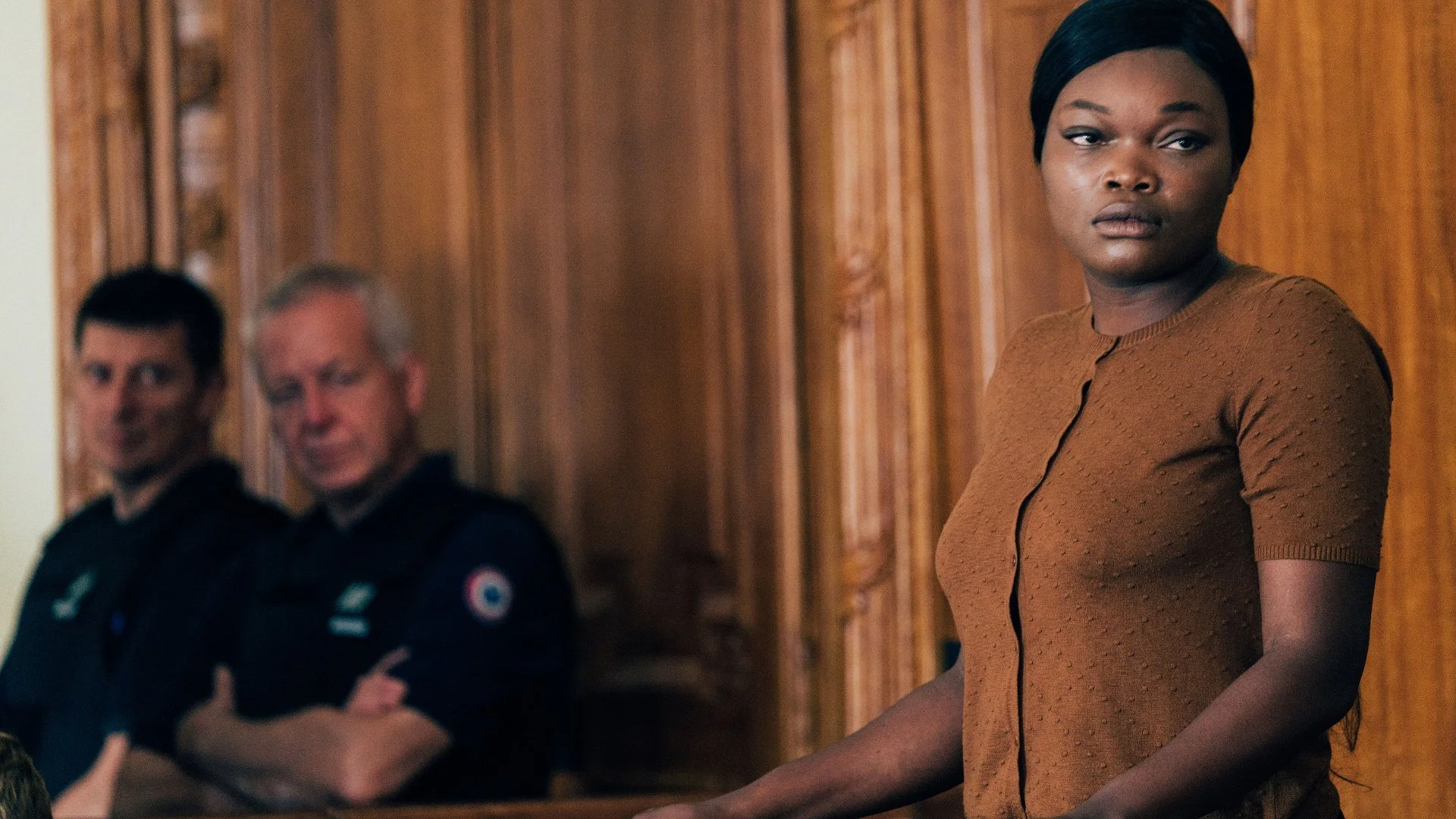
Inspired by Fabienne Kabou’s 2016 court case (which Diop attended), Saint Omer transports you to an airless French courtroom. Through the perspective of Rama, who travels to Saint-Omer to attend the court case of Laurence Coly, Diop displays her obsession with Kabou’s trial in rich, meticulous detail. Diop and DP Claire Mathon’s naturalistic portrayal of the French courtroom set in the titular city places the viewer in the room with Rama.
Mathon’s slow camera pans reveal the black-to-white ratio in the room. The judge, jury, lawyer, and accuser are white. Rama and the accused Coly are of Senegalese descent. She made this movie feel as if you were on jury duty. When Coly begins making her arguments, illustrating her background and tragic tale of love, loss, and motherhood, you solely rely on her dialogue rather than flashback moments. There are no extra theatrics, montages, or flashbacks incorporated. Just Coly’s voice and the echoes of each word.
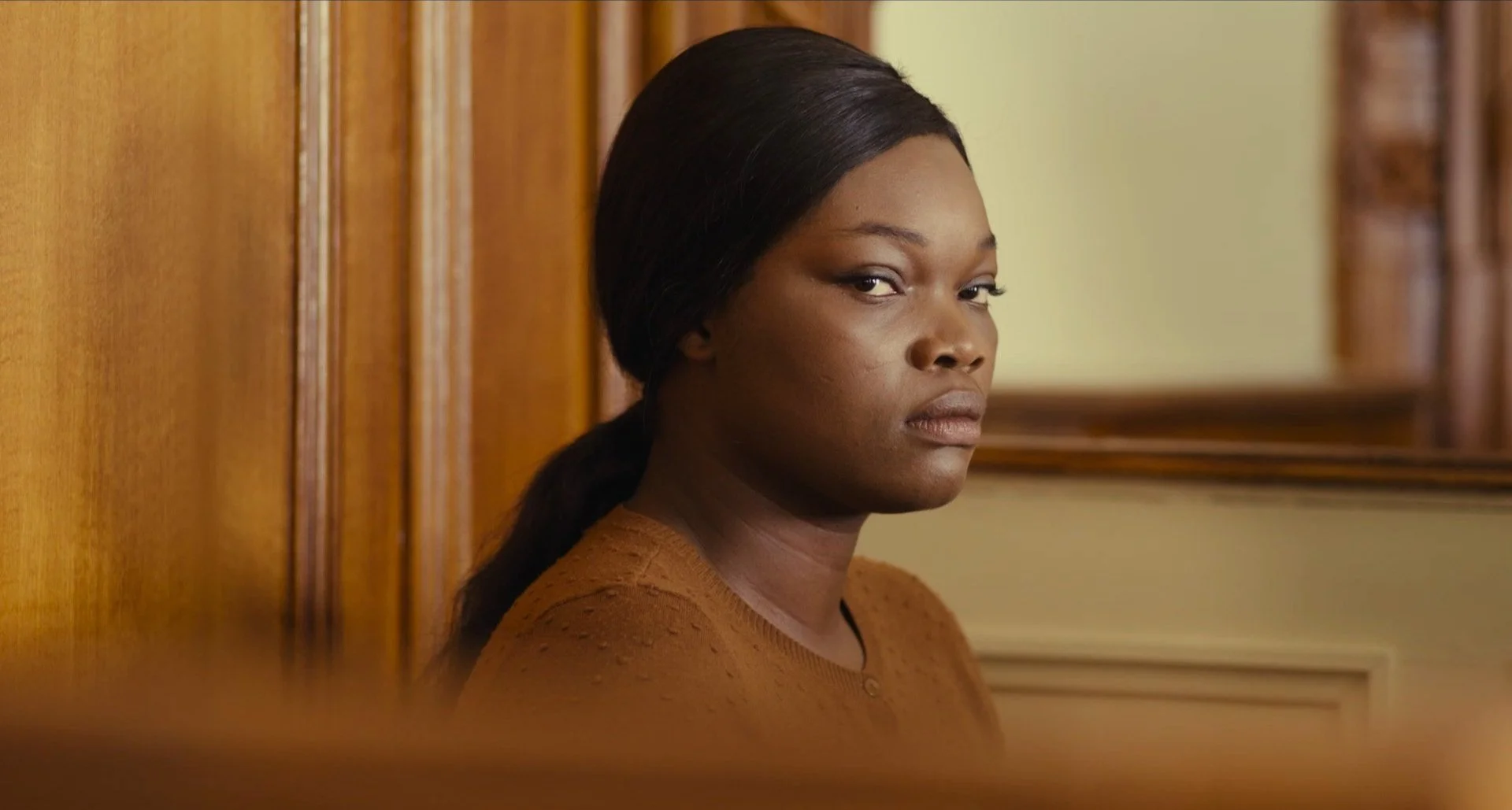
Writers Alice Diop, Amrita David, and Marie NDiaye's screenplay is possibly the most naturalistic depiction of a trial put into cinematic language, elevating the chilling, surreal atmosphere of the courtroom. When the trial starts and Laurence Coly must defend her case, the back and forth she shares with the rest of the room is grounded in reality. Malanda’s role requires her to be a storyteller and an empathetic person whose complex background is larger than her crime. Malanda is mesmerizing; you can’t take your eyes off her sullen demeanor as the pain, trauma, and exhaustion is present in her stiff body language and darting eyes.
Laurence Coly’s case speaks of the film’s searing theme of motherhood and the unspoken pain that comes with said responsibility. The film creates an emotional juxtaposition between Rama and Coly, who are both navigating interracial relationships and come from neglectful backgrounds with distant mothers. Diop’s handling of the theme may appear obvious, yet her subtle approach through snapshots of Rama attending the trial and reflecting on her upbringing in isolation choked me up ample times. It explores generational trauma and how neglect at an early age affects a broken soul’s perception of love. Rama wholeheartedly comprehends Coly’s plight, and actress Kayije Kagame expresses this with long, heavy reactions.
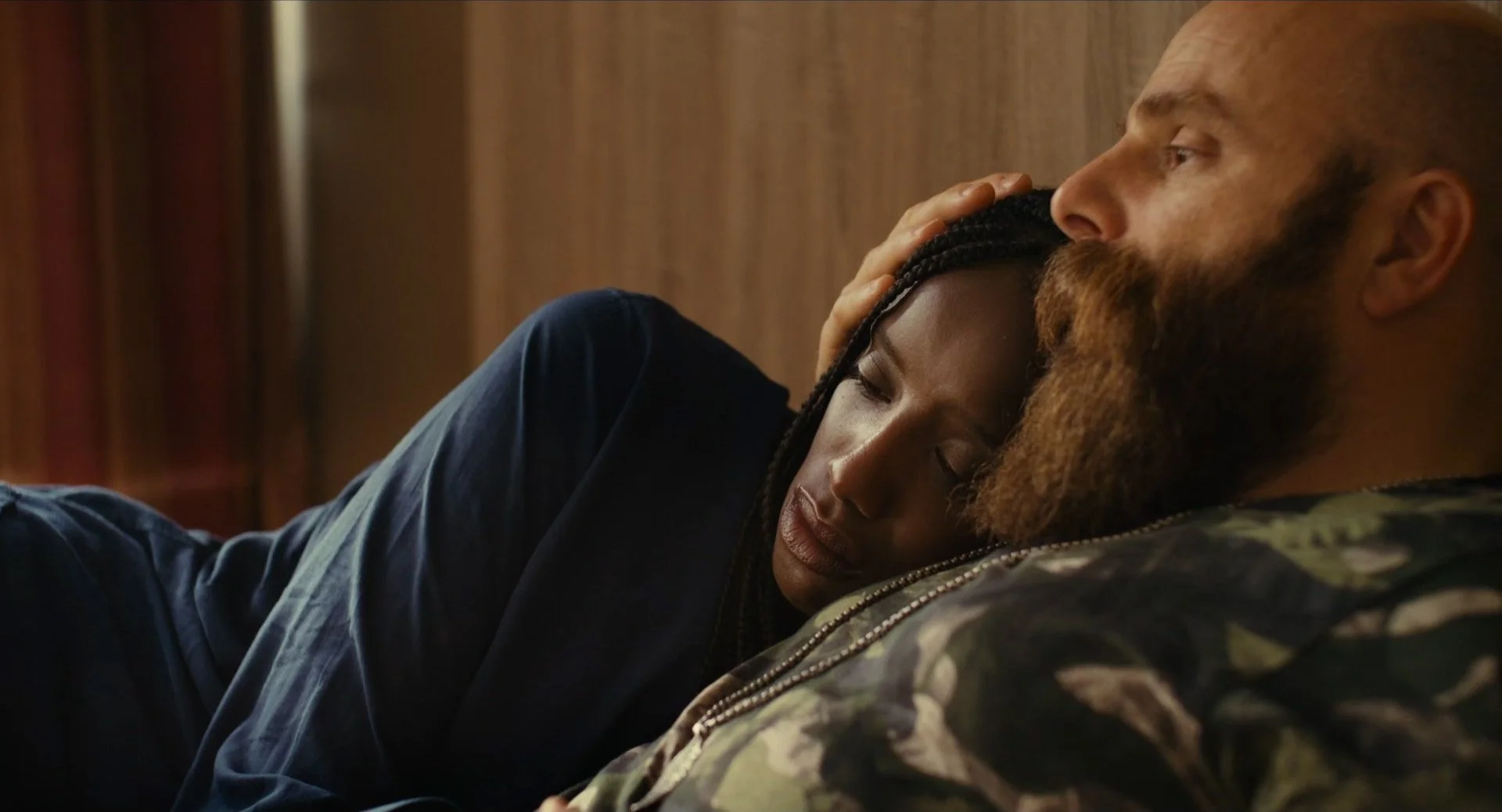
As straightforward and naturalistic as Diop’s narrative is, its examination of motherhood and the cycle of trauma hits close to home. Exploring the correlation between the two Black women hammers her theme with a subtle execution, drawing raw emotions that resonate heavily. One might expect an overly dramatic trial of a woman who killed her baby. Instead, it’s a complex study of a tortured soul who longed for love but looked in the wrong places. Alice Diop paints a portrait of the neglect Black girls from unprepared/unloving mothers must bear and how that weight carries to the next generation. Diop got me wanting to research the case that inspired this film and see how much of her reaction she put into this narrative.

Alice Diop’s searing story of motherhood and the unspoken layers surrounding it makes Saint Omer one of the year’s best pictures and one hell of a narrative debut for Diop.