
Rendy QUICKIE Reviews Vol. 2
Here at Rendy Reviews, we — well, mostly Myan and myself — try our very best to dedicate our time and care to every single film we review. But, sometimes we burn ourselves out. It’s August and I have churned out over 100 film reviews, and I still have many more movies to discuss that have been in my notebook since January. Now, with the Toronto International Film Festival around the corner and college classes starting once again for me, I feel this is the perfect time to do another volume of “Rendy Quickie Reviews,” something that I experimented with in 2017 when it was awards season and one too many A24 movies were being released that I never had the time to review. Now, the time has come to do it again, except I’m specifically discussing documentaries! Everything that I feel very favorable towards will be summarized in one paragraph discussing why you need to seek them out ASAP. As I said, I’m burnt out, but I still want to give these movies the time they deserve. SO, without further ado, please enjoy Rendy QUICKIE Reviews Vol. 2: Documentary Edition.
VISION PORTRAITS
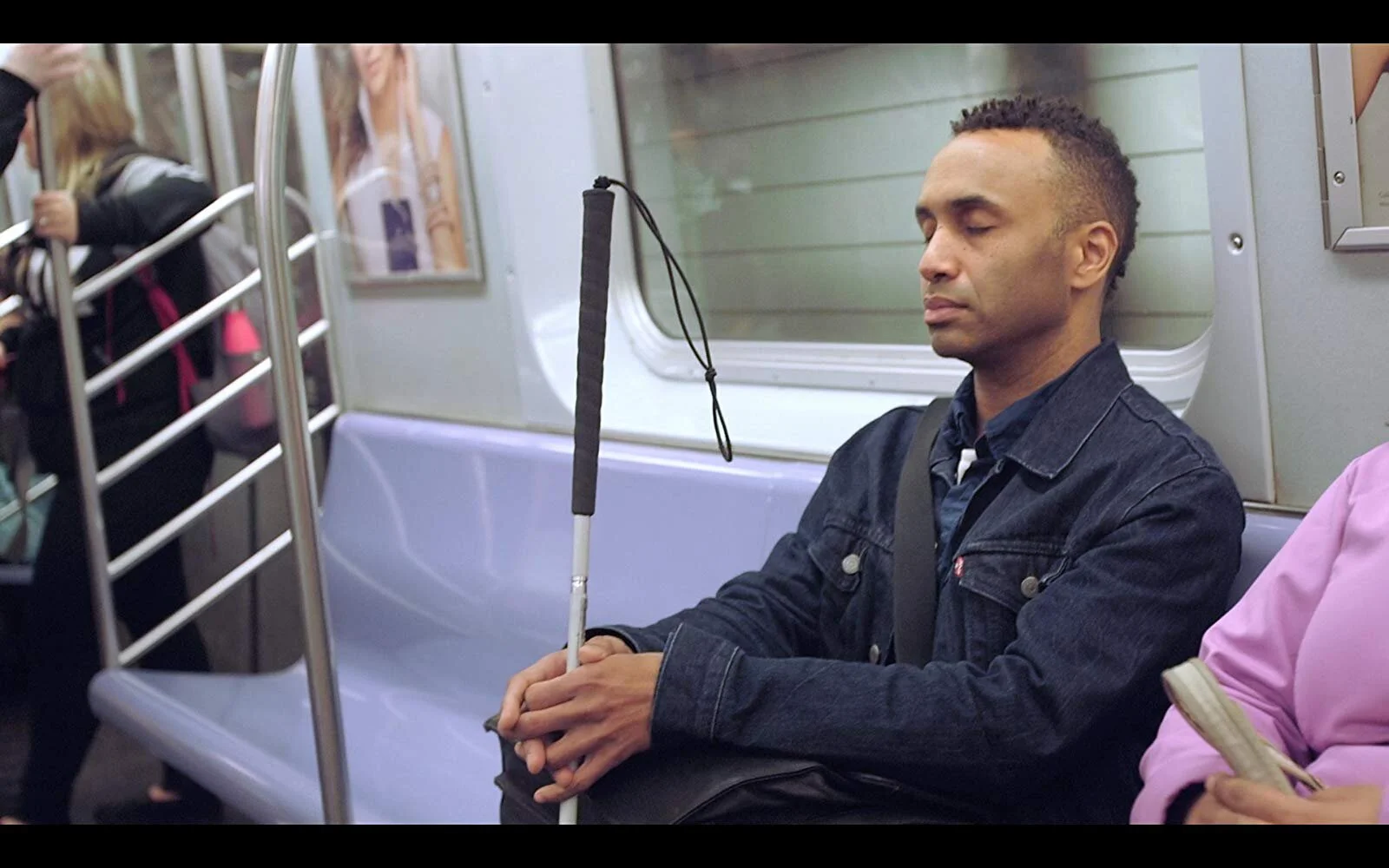
Vision Portraits is the personal story of filmmaker Rodney Evans as he embarks on a scientific and artistic journey, questioning how his loss of vision might impact his creative future. Through illuminating portraits of three artists: a photographer, a dancer, and a writer, the film looks at the ways each person was affected by the loss of their vision and the ways in which their creative process has changed or adapted.
One of life’s greatest idioms is, “Beauty is in the eye of the beholder,” meaning that beauty cannot be judged objectively, for what one person finds beautiful or admirable may not appeal to another. That phrase usually applies to a person’s perception of others, but in the case of the poetic experimental doc Vision Portraits it’s a reflection of the many artistic subjects of themselves in their blindness.
The film was made by Sundance award-winning independent filmmaker Rodney Evans (Brother to Brother, The Happy Sad) as he embarked on a personal journey of restoring his vision through international travels to areas breaking scientific grounds. Aside from that, it also focuses on portraits of various blind subjects in the field of visual art turning their impairment into their creative triumph. Vision Portraits is a feature where what you see is what you get. The title alone encapsulates what the entire film is about and it’s very moving. You’re set with all these creatives living in New York City trying to navigate through the mold in a contemplative manner that is so engaging to watch. As you watch the persistent human spirit triumph through the darkness, you’re completely invested in these people and their personal breakthroughs. Since this is director Rodney Evans’s personal journey, it’s also his cathartic release — he finds hope through the lens of his subjects. For 75 minutes you’re completely enthralled by these inspirational stories that boast nothing but hope, especially if you’re someone that is visually impaired.
Rating: 4/5 | 81%

AMERICAN FACTORY
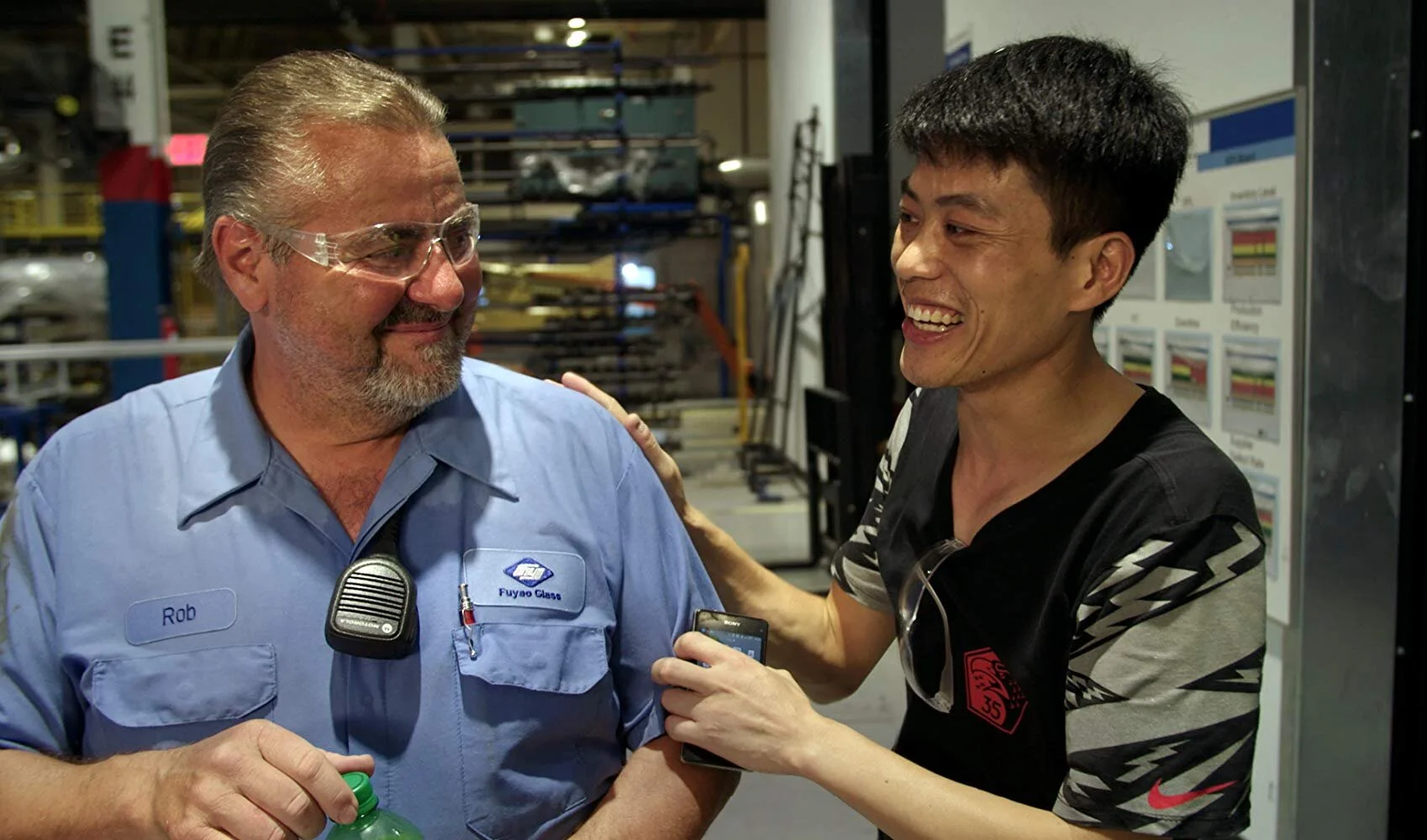
In post-industrial Ohio, a Chinese billionaire opens a new factory in the husk of an abandoned General Motors plant and hires two thousand blue-collar Americans. Early days of hope and optimism give way to setbacks as high-tech China clashes with working-class America.
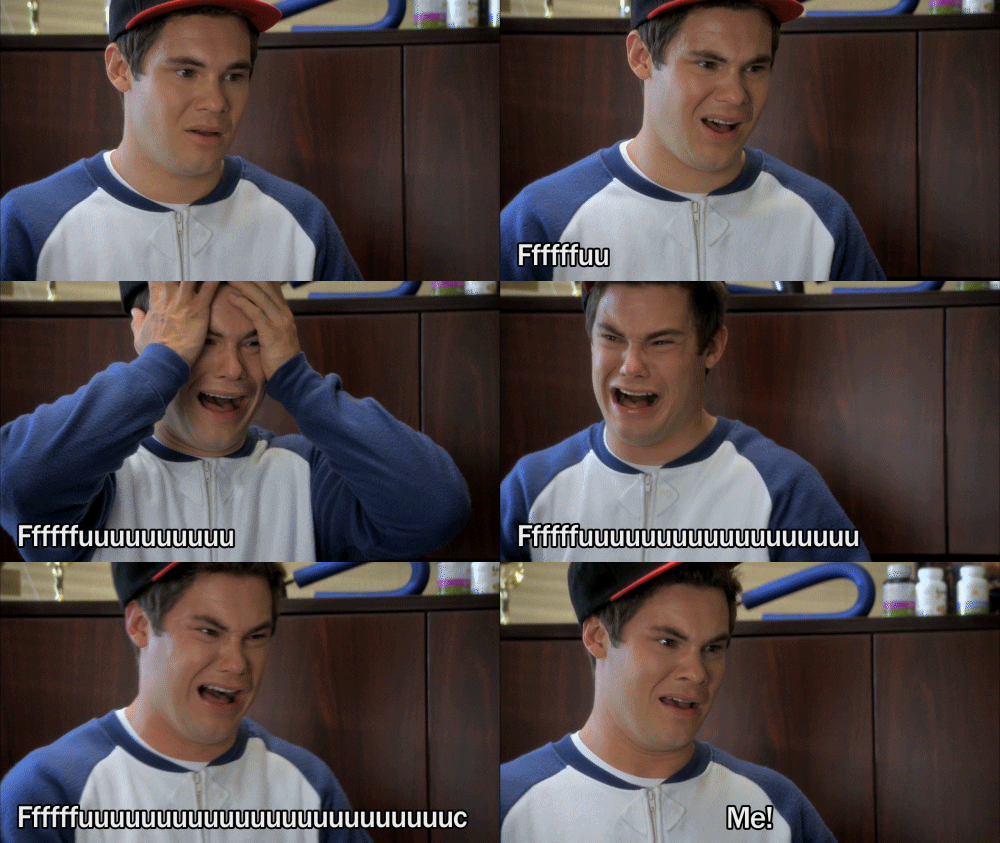
I have seen many docs this year. The majority of them have been four-star movies (or higher) to me. During Sundance, I saw the award-winning Knock Down the House, an inspirational and moving doc Netflix picked up that was undoubtedly a five-star movie for me. But what I didn’t get to see was American Factory, another award-winning documentary that Netflix picked up. While I missed it at Sundance, I caught it at Tribeca and by God is it the total emotional antithesis to Knock Down the House. Yet… it's also a five-star movie — a five-star movie that makes you go:
I’m not going to reveal much about its premise or even try to give you any details because it’s just a movie that you need to see to believe. The film synopsis is above the photo for a reason. All I will say is that it’s a powerful observation of the working class difference between the east and the west. Truly, it is cinéma vérité at its finest as you’re observing this slow burn of a collaboration between the working class of America and the Chinese, which starts off as a compromise that just gets downright frightening due to the disparity of their respective working practices, cultural values, and the inhumane working conditions that are normalized by the Chinese who rule the factory. The longer the film goes on, the more the poor working conditions escalate and it would make Upton Sinclair roll in his grave. American Factory is one of those soul-crushing docs that both fascinated me and fucked me up, making me question what exactly counts as a human rights violation, and if our American eyes perceive it differently from the Chinese who dedicate their lives to working nonstop without any social life whatsoever. It’s all about observing culture and how sometimes there are fields where co-productions don’t work at all. AMERICAN FACTORY.
Check it out on Netflix. It’s one of the most powerful, thought-provoking documentaries of this year that will challenged with your point of view.
Rating: 5/5 | 97%

COLD CASE HAMMARSKJÖLD
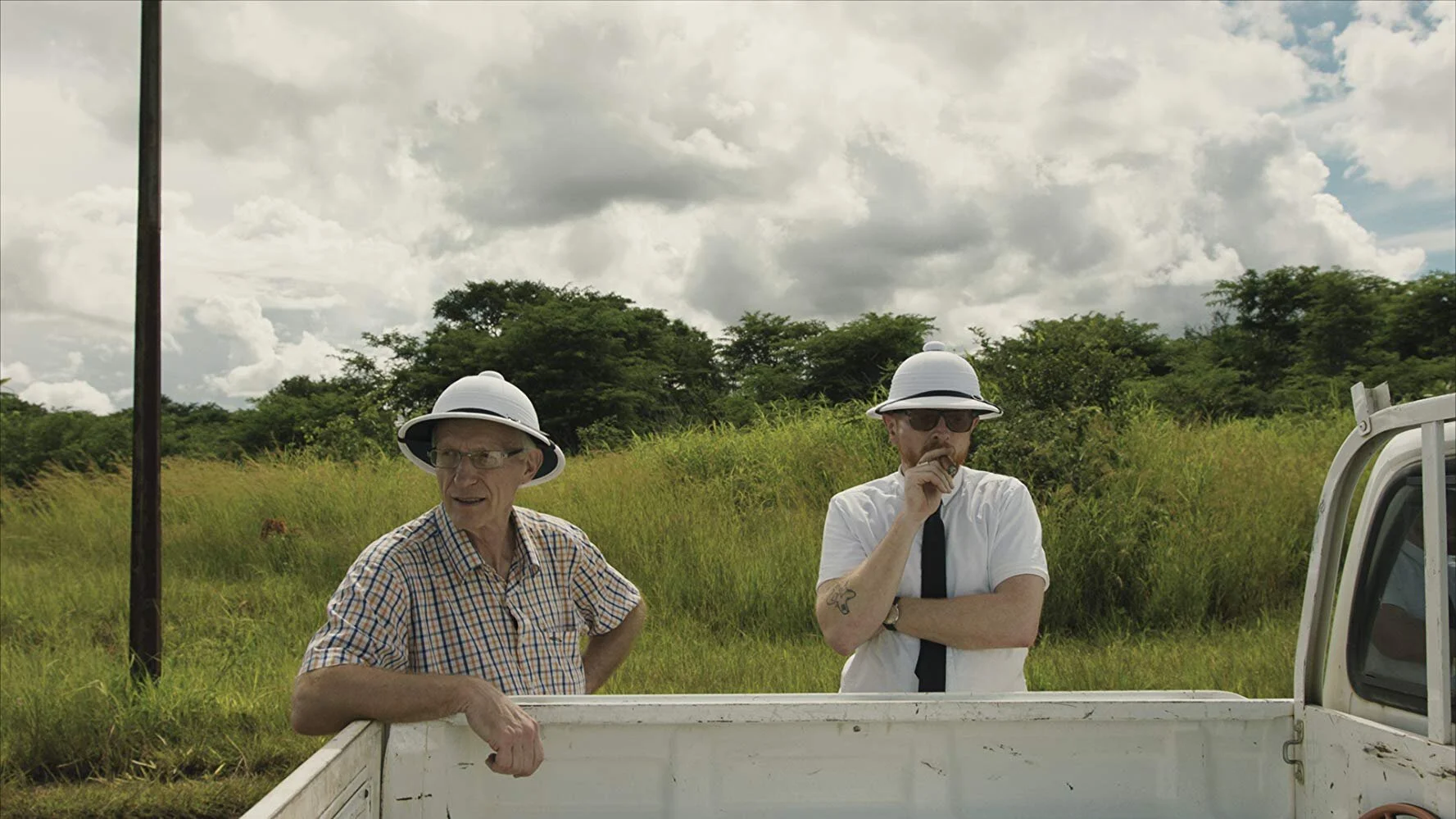
Another documentary I wanted to briefly discuss was Cold Case Hammarskjöld. It’s centered on the death of a UN representative that became one of the biggest unresolved mysteries of the 20th Century. Naturally, two filmmakers have attempted to dissect it themselves… nearly 50 years later. Danish director Mads Brügger and Swedish private investigator Göran Björkdahl are trying to solve the mysterious death of Dag Hammarskjöld. As their investigation closes in, they discover a crime far worse than killing the Secretary-General of the United Nations. Early on, a fellow passenger in Brügger’s cab asks him, “Why so long?” As in, how come this mystery took as long as it did to be resolved? As you watch this six-year-long journey of a mystery unfold, you begin to question the same.
Watching real life mysteries unfold in feature form is undoubtedly an enticing experience. The level of excitement elevates as you’re provided provocative clues and details that make you want to sip your tea, and Cold Case Hammarskjöld excels at that. It’s like the visual form of the podcast series Serial, but in a documentative feature form with personality and wit. In an unconventional light, the doc is often meta/self-referential where the director describes his project to subjects in his travels. He verbally notes how he wants the format of the film to be displayed, followed by those notes coming to fruition. An aspect that is enjoyable given its dark subject is the documentarian and the private investigator's sense of humor. Brügger’s persona is lively and he has a fun time getting to the bottom of the case at hand. They weren’t just filmmakers looking for a project; this was more of a curiosity that they just kept diving into, and you’re right in the passenger’s seat with them. The film has a bit of a pacing issue where some extended sequences linger on repetitive information, but the majority of the mystery is engaging and always holds your interest.
Rating: 4/5 | 80%
I know this is not a documentary, but while I’m here and ready to round up everything that I can, let me talk about a Sundance 2019 feature with such a compellingly problematic narrative that tried so desperately hard to be endearing, but managed to fail on many fronts. That movie is called Adam.
Adam
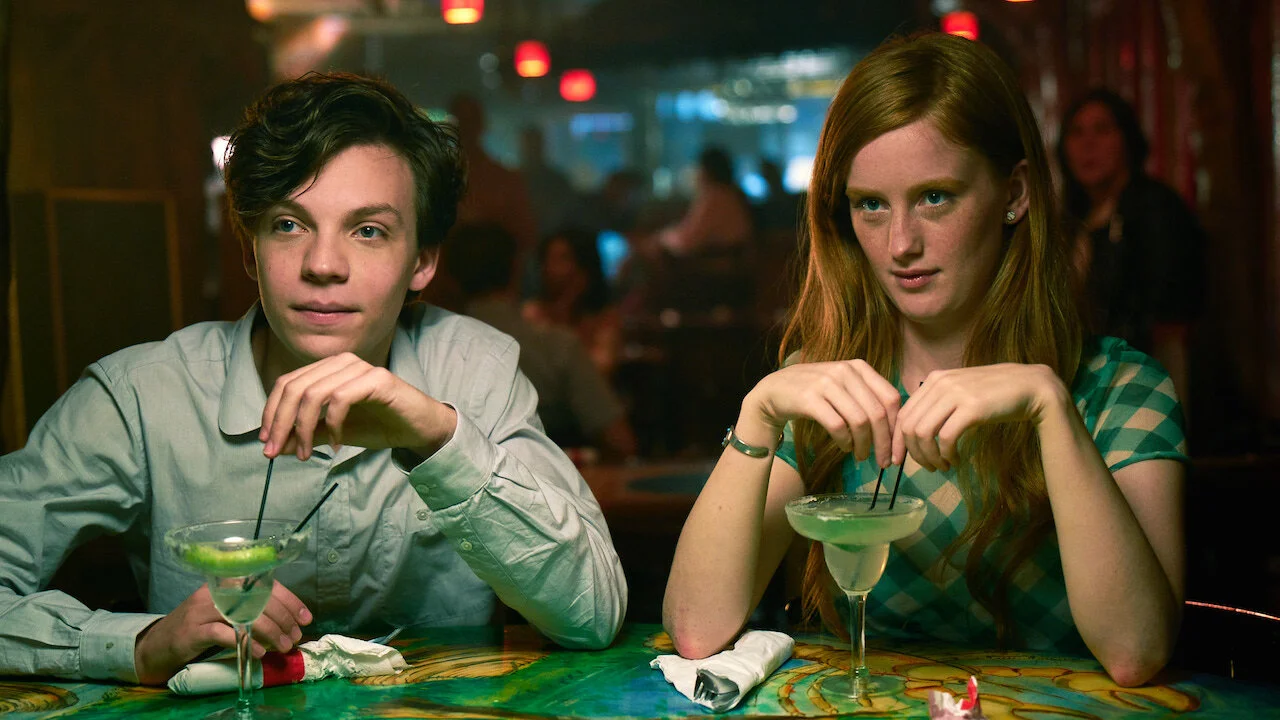
Awkward, self-conscious Adam Freeman (Nicholas Alexander) has just finished his junior year of high school in 2006. When his cool older sister Casey (Margaret Qualley) suggests he visits her in New York for the Summer, Adam has visions of meeting a girl and finally gaining some actual life experience. The fantasy doesn't materialize exactly as expected. Casey has enthusiastically embraced life amidst Brooklyn's young LGBTQ community and invites Adam to tag along with her to queer bars, marriage equality rallies, and other happenings. When Adam falls at first sight for Gillian (Bobbi Salvör Menuez), a smart, beautiful young woman in this new crowd, she mistakenly assumes he is trans. Flummoxed and enamored, he haplessly goes along with her assumption, resulting in an increasingly complex comedy — and tragedy — of errors he's ill-equipped to navigate.
This is one of those features that is a tightrope to walk, but due to transgender directory Rhys Ernst and gay screenwriter Ariel Schrag, the film slightly scrapes by as being a decent exploration. As problematic as the premise is, it’s on the same field of offense as that third Big Momma's House movie where Brandon T. Jackson goes undercover as a woman, attends an all girl’s school, and falls in love with a girl along the way. It’s conventional in the sense that you can read each narrative aspect beat for beat. That said, fuck Adam. Not the movie. The lead character. Throughout this coming-of-age queer story (based on the novel of the same name), this adolescent high school student is out for one thing and one thing only: PUSSY. Pardon my language, but that's this little virgin’s mindset and he doesn't even see queerness. He's only out looking for a hookup in the summer of ‘06, and when his older queer sister invites him to stay with her for the summer, he falls for a gay woman who mistakes him for being transsexual.
There could've been room for this comedy to be more than its distasteful premise, but because of how blandly conventional and transparent the characters are and how much their behaviors hinge on their own hypocrisies with little to no consequences for their actions, Adam is just a banal feature that adds no insight, even though it has good intentions to act as an exploration of queerness. What really holds the film together is the time in which this story takes place. While set slightly over a decade ago (which may seem recent), you must realize that LGBTQ visibility wasn't as progressive then as it is today, making the plot somewhat passable. It plays in the vein of other raunchy comedies such as Superbad or Wedding Crashers.
There are moments in the film that I do love, such as the sequences at the getaway camp in the third act where it gets earnest about queer representation. But the conventional route it takes, blended with its unlikable one-note characters, prevents this from elevating and becoming more than what its synopsis entails. Plus, it's not really funny either, so there's nothing favorable to recommend about it. See This is Not Berlin instead. That's a better LGBTQ coming-of-age story with a similar playbook that offers better detailed characters and cultural significance.
Rating: 2/5 | 47%

