
Don't Let Go Review
R: Violence, bloody images, and language
Studios: BH Tilt, OTL Releasing, Blumhouse Productions, Briarcliff Entertainment
Run Time: 1 Hour and 47 Minutes
Writer/Director: Jacob Aaron Estes
Cast: David Oyelowo, Storm Reid, Byron Mann, Mykelti Williamson, Alfred Molina, Brian Tyree Henry
Release Date: August 30th, 2019
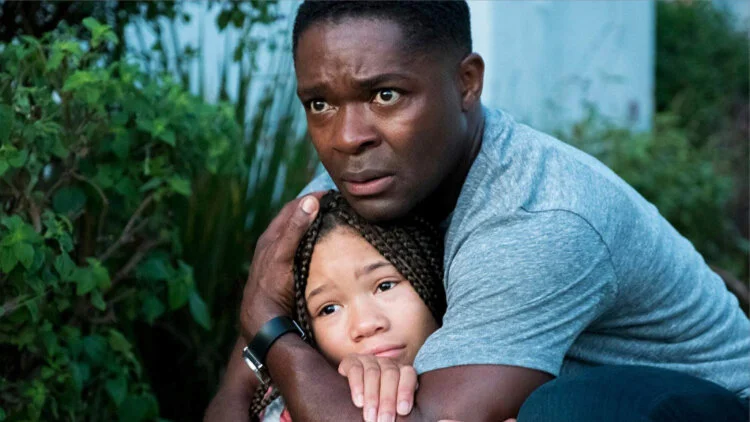
Los Angeles detective Jack Radcliff fields a distressed phone call from his niece Ashley and rushes to the rescue — only to find the girl and her parents dead in an apparent murder-suicide. Then, just as the police department declares the killings an open-and-shut case, Jack gets another call from Ashley. With the cellphone connection acting as a link between the past and the present, Jack urges Ashley to collect clues that will help him to solve her murder and change her fate.
Think back to when you were a student in a math class. Remember when you learned the method of cancellation where you had to cancel out common factors in the numerator and denominator, resulting in a number of a fraction that oftentimes ended up being close to ½? Now, in the case of Don't Let Go, a sci-fi mystery that premiered at Sundance under the title Relive (which is a better and less derivative title), you have a stupefying plot regarding the time loop concept and a stellar cast as the numerator. Then, overlay that with simplistic dialogue, the most formulaic mystery in the book, uneven performances, and a shoddy script that is so one-note that hiring an entire Black cast makes the narrative even worse as the denominator. With two strong positive elements hampered by four strong negative elements, you cancel those common factors and end up with ½ of a good movie. This entire analogy may be a bit of a stretch, but honestly… so is this movie.
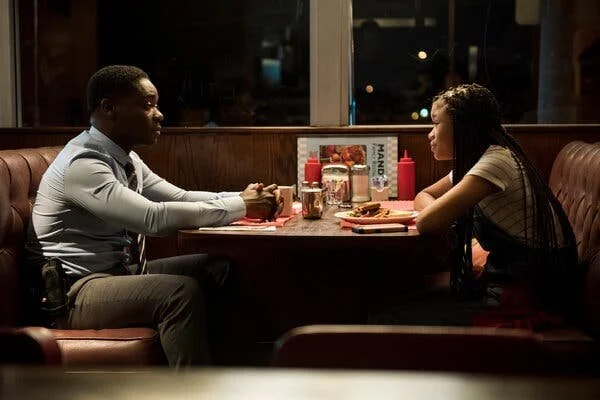
Rhetorically speaking, how can a movie be so smart yet so stupid at the same time? As enticing as the premise is, Don’t Let Go is a standard detective procedural narrative with a sci-fi twist where it kind of resembles some of the techniques of one of my personal favorite RPG’s, Life is Strange, where a girl is given the gift to control time but must uncover a mystery regarding her town’s fate before everything becomes too late. While Jack doesn’t have time bending abilities, he does become a product of a time loop and must uncover the mystery of his family’s death before they are killed—again. How director Jacob Aaron Estes incorporates his own vision of the time loop, where the actions made by Jack in the future and Ashley in the past controls their fate and affects the future, is the major captivator of the narrative. Each phone call between the two furthers the narrative where nothing ever traces them back to step one. Even when one of them respawns, you feel the earned progress of the mystery due to Ashley’s actions in the past shifting the timeline of events for herself, affecting Jack’s life in the future.
It’s difficult to remind myself that actor David Oyelowo is English because he delivers a strong American accent that is so deceptively convincing. It’s him and Daniel Kaluuya that I just can’t seem to wrap my head around. Oyelowo puts his all (as per usual) into his role of Jack whom you empathize with, mostly because of his family, but also because of the shock of being the centerpiece of this wibbly wobbly time-y wimey mystery. He’s not much of a complex person by any means, but Jack serves as the audience’s avatar and you ride alongside him on this journey of uncovering the true culprit behind his family’s murder. He’s the most proactive actor in the feature and his performance really carries the movie.
The other cast members are either wasted or not that good at all. I’m still waiting for the day when a good screenwriter writes Storm Reid a complex role that captures her age (because, aside from Bo Burnham, White male screenwriters have no idea how to write adolescents these days). The gumption and strength she attempts to display are undercut by her poorly-written dialogue or the weak story she’s put in. Reid has so much talent, but damn, she can only do so much to try to rise above the mediocre lines she’s given or the lack of direction where the directors are unsure of how to capture the emotional mindset of an adolescent, resulting in her delivery never being aligned with Oyelowo’s. There are moments where she’s great, as she displays on-cue breakdowns that are perfectly timed with the heightened/intense emotions of the audience, but they’re brief. Then, Brian Tyree Henry.

Henry is one of the hardest working actors of today that many can’t get enough of. Just in the last year alone he’s appeared in over eight projects in decent roles that allowed him to shine, especially in Spider-Verse as the voice of Miles Morales’s daddy. Now, he’s Storm Reid’s daddy and he gets caught up in a similar fate as one Uncle Ben, but multiple times. The AUDACITY to waste the talent of Brian Tyree Henry in a thankless role only to have him physically bashed around and murdered multiple times for the sake of plot.. THE AUDACITY!
Aforementioned, Aaron Estes utilizes the time loop variant of storytelling well on a structural level, but the simplicity of the mystery itself, resulting in a cliched reveal, prevents the sci-fi twist from adding any impressive significance to the overall product. At the end of the day, no matter what inventive twist you apply to your narrative, a mystery can only be as good as its reveal. And if your audience is able to point out the perpetrator of the crime without any actual challenge, the reception will be full of disappointment. The color-blinded writing makes the big reveal even worse. The characters are so one-note that it transcends through their complexion. Ashley, Jack, and their family are African-American characters living in LA, an area where their dialect would supposedly be urbanized. There is a contemporary cultural dialect they should have, especially in that area. In a world where homicidal crimes against African-Americans hold relevance, one would assume a screenwriter would understand societal perceptions of this topic and the significance it holds. Any Black screenwriter and director would take that into consideration, especially when writing the reveal of the mastermind…

Jacob Aaron Estes is a White filmmaker, and his writing shows the lack of thought and consideration when it comes to writing/portraying Black characters with distinctive personalities or consequential thoughts when writing his antagonist. You can’t just write Black characters as you would write White characters and assume it would result in the same consequences. That’s the definition of color-blinded writing.
It’s similar to when they made that all-Black Honeymooners movie starring Cedric the Entertainer, which was written and directed by White dudes who were focused on capturing the spirit of the source material without thinking about the consequences of how poorly it portrayed Black people. You could’ve just had a Caucasian cast and pulled off something that would’ve just been considered forgettable and mediocre, but the fact that the cast is Black makes it pathetically oblivious to its own banality. But hey, it had a diverse Black cast so mission accomplished, White?
Don’t Let Go adds a refreshed bone to a familiar skeleton, but its simplistic and generic storytelling aligned with one-note characters written in a problematic viewpoint makes this sci-fi mystery a bland time full of unexplored potential.

