
‘Purgatory’ Review: Catholic Girlhood Is Hell in This Hilarious, Tender Coming-of-Age
The journey of early adolescence as a child of divorce in a small town surrounded by a religious community is not for the faint of heart… unless you’re Beatrice Gravel in Purgatory — because “Are You There God? It’s Me, Beatrice” was too familar. The debut directorial feature from longtime producer Lindsay Lanzillotta, penned by Christine Speer, is a sincere charmer that blends the curiosity and neuroticism of a Kelly Fremon Craig character with the vacant, Midwest, dry‑witted atmosphere of a Jared Hess film; essentially Judy Blume in the way of Napoleon Dynamite.

MPA Rating: N/A
Runtime: 1 Hour and 44 Minutes (104 minutes)
Language: English
Production Companies: Brave Jayne Films
Distributor: TBA
Director: Lindsay Lanzillotta
Screenwriter: Christine Speer
Cast: Ruby McGurrin, Abby Elliott, Lauren MacRae, John Reynolds, J.K. Simmons, Jack Innanen, Mary Walsh, Julianne Arrieta, Marcus Ngo, Gemma Rosaria Rae
U.S Release Date: TBA
In 1983, 13‑year‑old Beatrice Gravel’s life is upended when her mother, Marianne (Abby Elliott), leaves her laid-back husband, Joe (John Reynolds), to find herself, stunning everyone, including Bea’s younger sister Chloe (Lauren MacRae). In an undisclosed small, seemingly Midwestern town where everyone knows everyone’s business, Marianne’s departure violates Catholic virtue, and the family instantly becomes social pariahs. At the start of eighth grade, the PTA moms, led by the snooty Mrs. Davies (Julianne Arrieta), gossip, and the students follow suit. To make matters worse, Bea’s vice principal, Richard (Jack Innanen in Paul Baker-coded himbo fashion), starts dating her mom. The only solace in her wacky, upside-down world comes from her kind‑hearted priest, Father Malone (a charming J.K. Simmons), and her soap‑opera‑loving best friend, Nigel (Marcus Ngo). All of this causes Bea to act out and attempt to reunite her parents Parent Trap-style. As Marianne tries to figure herself out, in her absence, Bea is forced to question who she is, especially as she becomes more aware of how not‑so‑heavenly her community is.
Purgatory turns eighth-grade girlhood into a quietly suffocating hellscape.

With The Parent Trap being integral to the film’s plot, Purgatory highlights the sparsity of divorce‑centric movies told from a teenage girl’s perspective. Lanzillotta and Speer craft a strong, girlhood‑driven tale that examines the negative aspects of Catholicism and the peculiar connection between faith and divorce, causing her to question her religion.
Following the same potent cues found in a Kelly Fremon Craig flick, Speer’s script is honest and grounded in Bea’s curiosity and the intersection of religion and gender roles. The conversations between her and Nigel during their intimate hangouts about grappling with their parents’ fragile morals are clever and witty. The story takes place over Bea’s eighth‑grade year, consisting of slice‑of‑life snapshots of her family structure coming undone and different sitcom-like scenarios firmly rooted in her character and growing emotions.
Lanzillotta employs a dry, directorial style that complements the film’s tone. The weight of Bea’s isolation is felt through distant wide shots, from long Catholic school hallways to the corridor between the kitchen and living room at her dad’s house. It slowly burns into a claustrophobic hellscape as the small town’s microscopic voyeurism intensifies. At a certain point, it becomes less a community of Catholics and more a prison full of assholes, giving me a heavier sense of dread than most Stranger Things seasons.
Speaking of the ‘80s period setting, thank God Purgatory is subtle with it. Production designer Jason Clarke and art director Joyce McPherson fill the world with pastiche of the era — geometric layered mall sets, neon‑infused VHS stores — without aggressively jingling nostalgia keys at you. The world pops on its own terms, allowing you to take in the ambiance of the craft. The costuming by Charlotte Reid, alongside the makeup team, adds color and texture to the atmosphere, making it feel like you’re watching a time‑capsule movie you’d pop into your VHS, rather than something made in the present.
Ruby McGurrin shines, making Bea’s religious rebellion as hilarious as it is heartfelt.
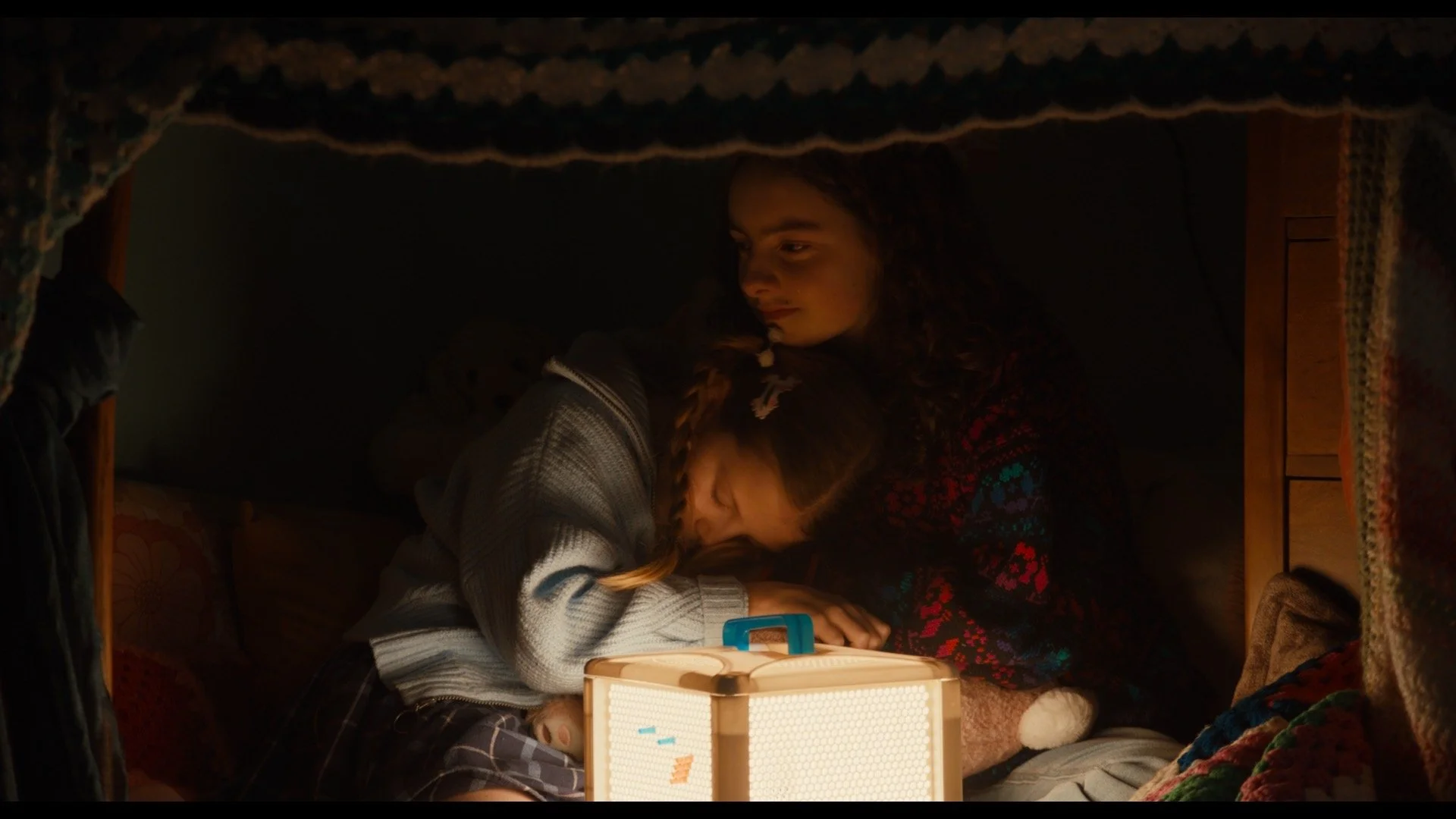
For her first feature debut, Ruby McGurrin is a revelation. She embodies the teen’s burgeoning rebellion, balancing innocence and angst at the drop of a hat. She carries the majority of the film, imbuing her character with whimsy, emotional isolation, and dry comedic timing. Man, sometimes she reaches Aubrey Plaza’s tier with her dry, hilarious clapbacks to every authority figure, except the confessional scenes featuring J.K. Simmons’ friendly Father Malone.
Bea and Malone’s scenes are the best and most heartfelt scenes. They shine the brightest heavenly light, riddled with hilarity. The filterless curiosity she sells over confessing her sins and actions, and Simmons’ defeated “Girl, you didn’t need to say all this” expressions got great laughs out of me. On top of that, she captures a riveting, inspiring portrait of religious liberation that I wish I personally had as a teen.
Abby Elliott brings nuance to a mother-daughter relationship the film never fully develops.
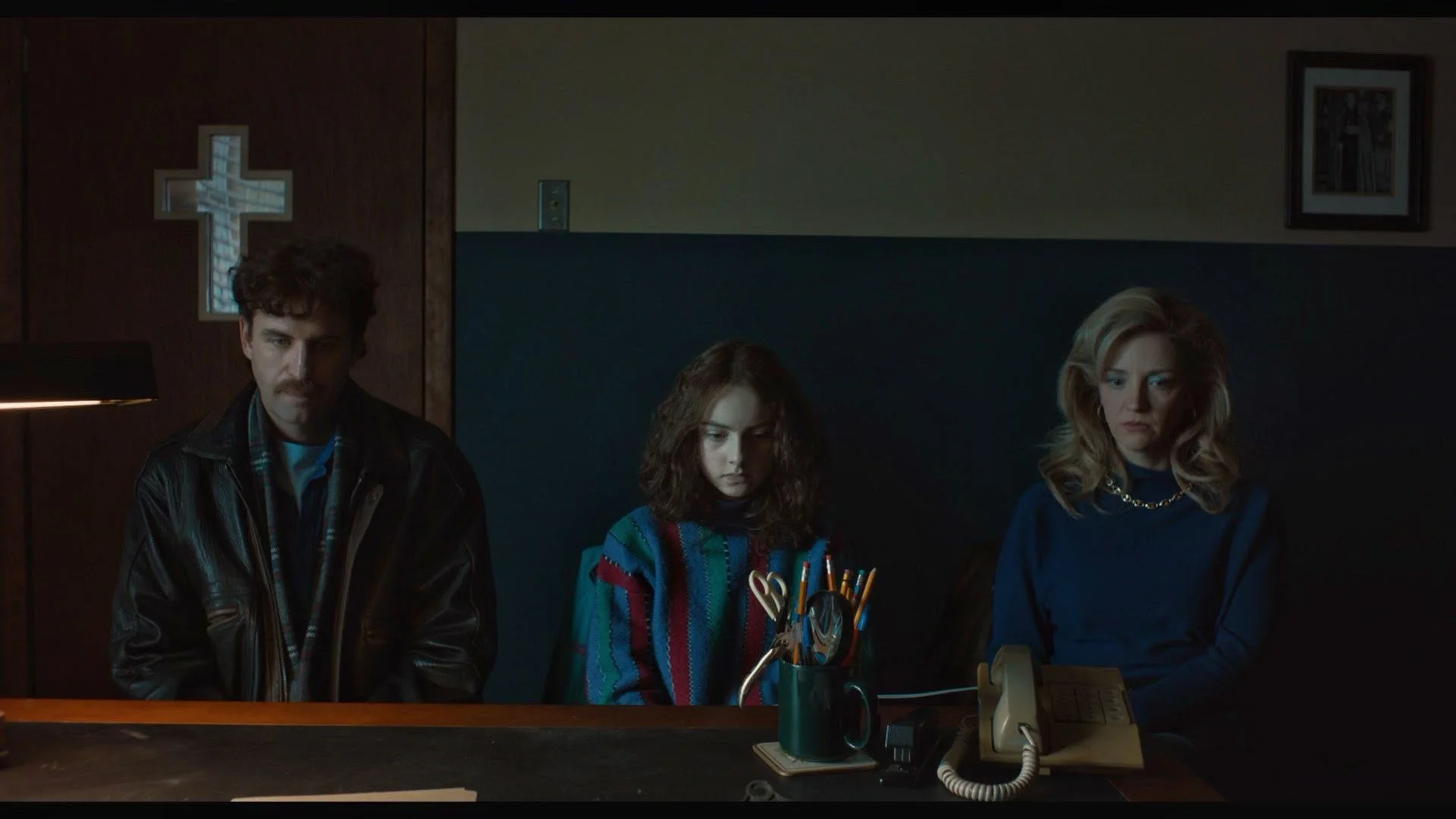
Purgatory is strictly set after the divorce from Beatrice’s perspective, but I feel the film missed an opportunity to illustrate how Marianne handled it on her end. The weight of her absence is felt in the movie. On one hand, it makes Bea’s resentment towards her completely understandable. On the other hand, the suffocating, hypocritical, puritanical small-town atmosphere wraps around your neck via Beatrice’s perspective, so you understand Marianne’s departure.
I was stunned by Abby Elliott for her part. Here’s my “I haven’t seen The Bear” stamp, but I did watch her tenure on SNL and her comedic television roles. So believe me when I say she blew me away. For this being her dramatic feature turn, while also serving as a producer, Elliott is remarkable, gracing Marianne with nuanced emotion, wearing her unfulfillment in a way that makes you feel her suffocation. I thought, “Honey, I do not blame you for dipping and finding your independence outside this cultish town.” She’s humanized so much with every appearance. But unlike Are You There God? It’s Me, Margaret, which gives Rachel McAdams’ Barbara near‑equal standing with the titular character, Purgatory lacks a solid foundation to build toward Bea and Marianne’s inevitable rekindling. The estranged relationship remains an integral yet underdeveloped emotional element, even with its drastic climactic turn.
At the end of the day, for a movie centered around God’s followers, Purgatory is a hell of a coming‑of‑age story. It’s a hilarious, tender, timely, and sharply observed portrait of a girl caught between childhood’s last remnants of innocence and the hypocrisies learned in adulthood, wrestling with faith and the people who weaponize it. With a breakout performance from Ruby McGurrin and a deft touch from Lanzillotta and Speer, it’s a Hail Mary worth saying.
