
'Oppenheimer' Review: Nolan's Historical Drama on the Atom Bomb Father Brings the Boom

Oppenheimer
R: Some sexuality, nudity, and language
Runtime: 3 Hours
Production Companies: Syncopy Inc., Atlas Entertainment
Distributor: Universal Pictures
Director: Christopher Nolan
Writers: Christopher Nolan
Cast: Cillian Murphy, Emily Blunt, Matt Damon, Robert Downey Jr., Florence Pugh, Josh Hartnett, Casey Affleck, Rami Malek, Kenneth Branagh
Release Date: July 21, 2023
Only in Theaters
This piece was written during the 2023 WGA and SAG-AFTRA strikes. Without the labor of the writers and actors currently on strike, the [series/movie/etc.] being covered here wouldn't exist.
Boom, baby! Nolan is back! It’s Oppy time! The review of the Heimer to the Barbenheimer. The man has range, and now he’s made a film about the father of the atomic bomb?! It sounds like an excuse to make a bomb with the blank check that Universal—who must’ve been ecstatic to snatch Nolan after his breakup with Warner Bros—provided for him. Well, it’s more than an excuse for Nolan to go boom on this hefty cinematic buffet and drop one of his best directorial efforts to date. It’s no Dark Knight, but it’s still exemplary filmmaking nonetheless.

At the heels of WWII, when the socialist vs. communist movement was rampant across America, physicist J. Robert Oppenheimer (Cillian Murphy), a genius, promiscuous, and egotistical UC Berkeley quantum physics professor, is enlisted by General Leslie Groves (Matt Damon) to make a bomb for the U.S. government. Framed through two investigative hearings: one with Oppenheimer and the United States Atomic Energy Commission (AEC) and the other with Atomic Energy Commission chairman Lewis Strauss (Robert Downey Jr.) and Congress, Oppenheimer dismantles the man behind the bomb and the myriad of obstacles he faced when under governmental employment.

The story of Robert J. Oppenheimer is one of complexity and devastation. Under Nolan's intimate storytelling with the dual AEC interrogation framing device, said devastation is depicted in narrative layers. Nolan defies the Wikipedia copy-and-paste structure rampant in recent studio bio dramas and thoroughly deconstructs Oppy's character and psyche. Nolan investigates Oppy’s genius clashing with his faults. Besides the fact that he was a real human being, Nolan's screenplay—based on Kai Bird and Martin J. Sherwin's biography American Prometheus: The Triumph and Tragedy of J. Robert Oppenheimer—textures Oppy with humanistic complexities more than focusing on his career and celebrity.
Oppy had a bunch of flaws long before he became complacent to the atomic bombings of Japan, one of which was that he was a fuckboi. He didn’t care if a woman identified as a communist or a socialist in the early ‘30s; he would mack with his quantum theoretical mind, wit, and rizz. Granted, he was a UC Berkeley professor, which explains everything. Cali dude-bro culture must be timeless in every field. The nerdy yet douchey Oppy has each facet of his personality on display, stripped in front of the audience, literally at times.
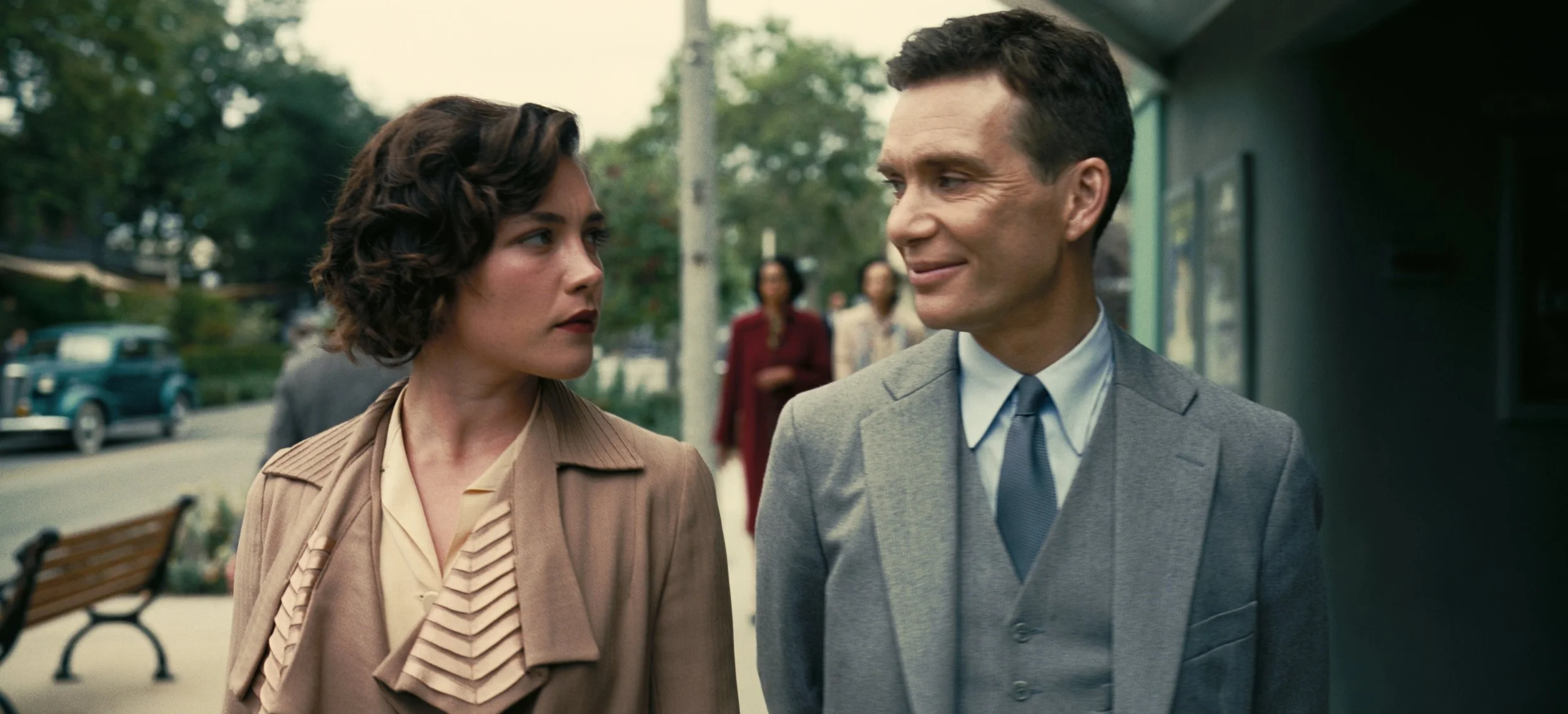
With a three-hour runtime, editor Jennifer Lame (second Nolan collaboration after Tenet) provides a snappy rhythm to each scene. Nolan crams so many details into this film, and Lame gets cracking, pacing every moment with speedy but steady energy, making it feel congruent. No sequence is drawn out or cut too short, for every aspect of this buffet of a story has a purpose.
The film dons different hats during each hour. The first hour is a typical bio-drama, the second hour is a spy-espionage psychological thriller, and the third is a courtroom drama. Though most of the runtime features men—played mainly by former Nickelodeon stars—in fancy business clothes talking science mumbo-jumbo, Nolan's screenplay retains a fiery personality. Once Matt Damon arrives as General Groves, a comedic element is introduced. The tone carries a Dr. Strangelove-like essence where Nolan plays up the comical irony of the American government's incompetence and pettiness interfering with the scientist's work, with many scenes regarding commanding militant characters conflicting with Oppy and his neurotic scientists.
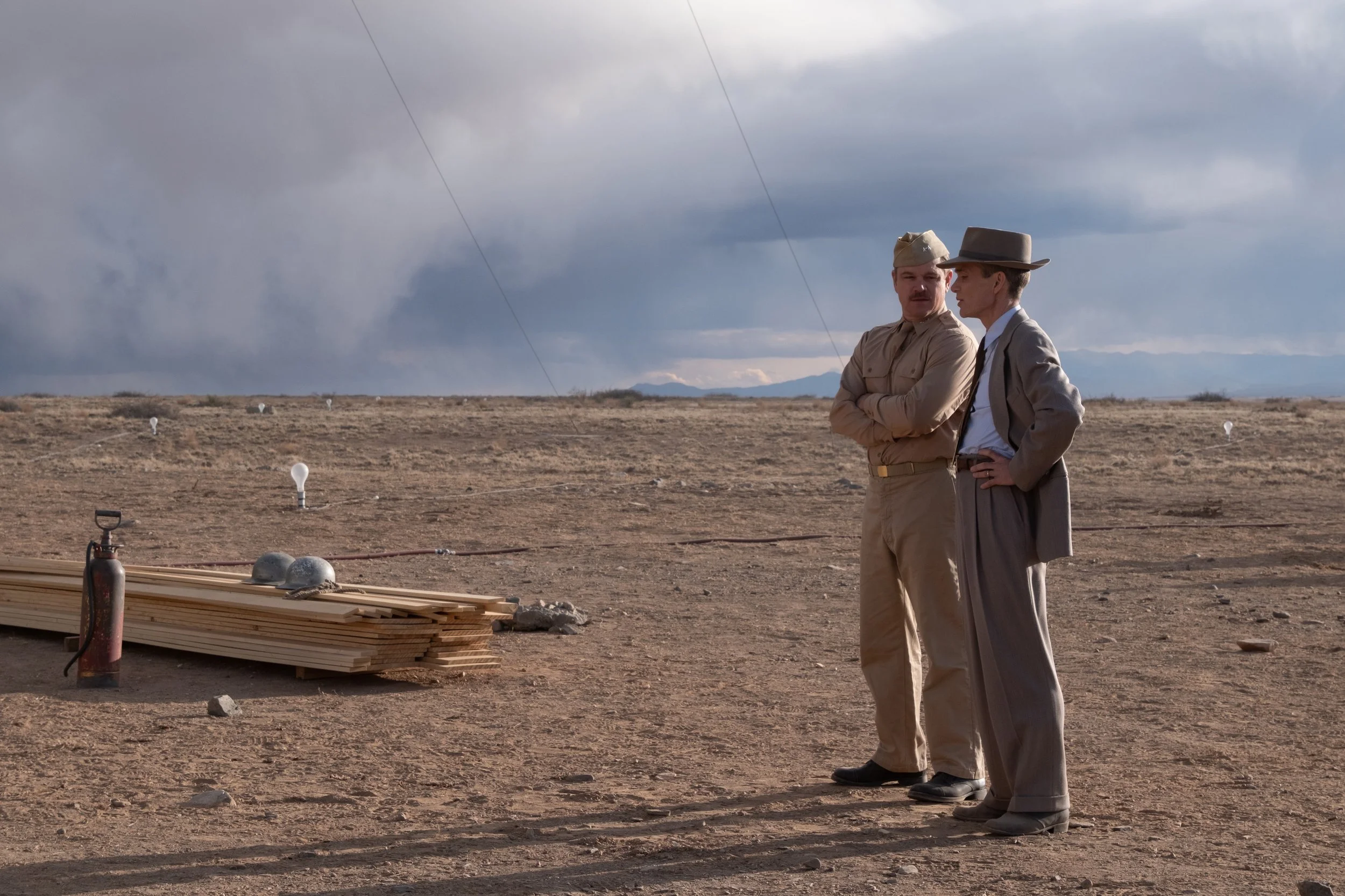
During the film’s second hour, which has some of the best scenes of dialogue, Oppy, his Berkeley physicist colleagues, and top students move to Los Alamos, New Mexico, to work on the bomb per the government's employment. These upper government officials, including Groves and his right-hand Kenneth Nichols (Dane DeHaan), try to sniff out a spy like a K9 unit dog, frequently belaboring the bomb's construction. WWII is happening at that very moment, and the government puts the physicists under a gigantic microscope because they mistook the word "collaboration" for "commie infestation."
After 20 years of making movies together, Nolan finally gives Cillian Murphy centerstage, and Murphy delivers a fantastic performance, as expected. Not to alliterate, but Murphy embodies a certain kind of cold, cocky contemplativeness in his approach to Oppenheimer that is endlessly hypnotic. His big blue eyes convey so much emotion that it works in his favor. He delivers Oppy's confidence with enough nuclear energy to power the film through its hefty runtime. Like Nolan's writing, Murphy brings resounding humanity to his Oppy take, rounding him out as an individual rather than a one-note character.
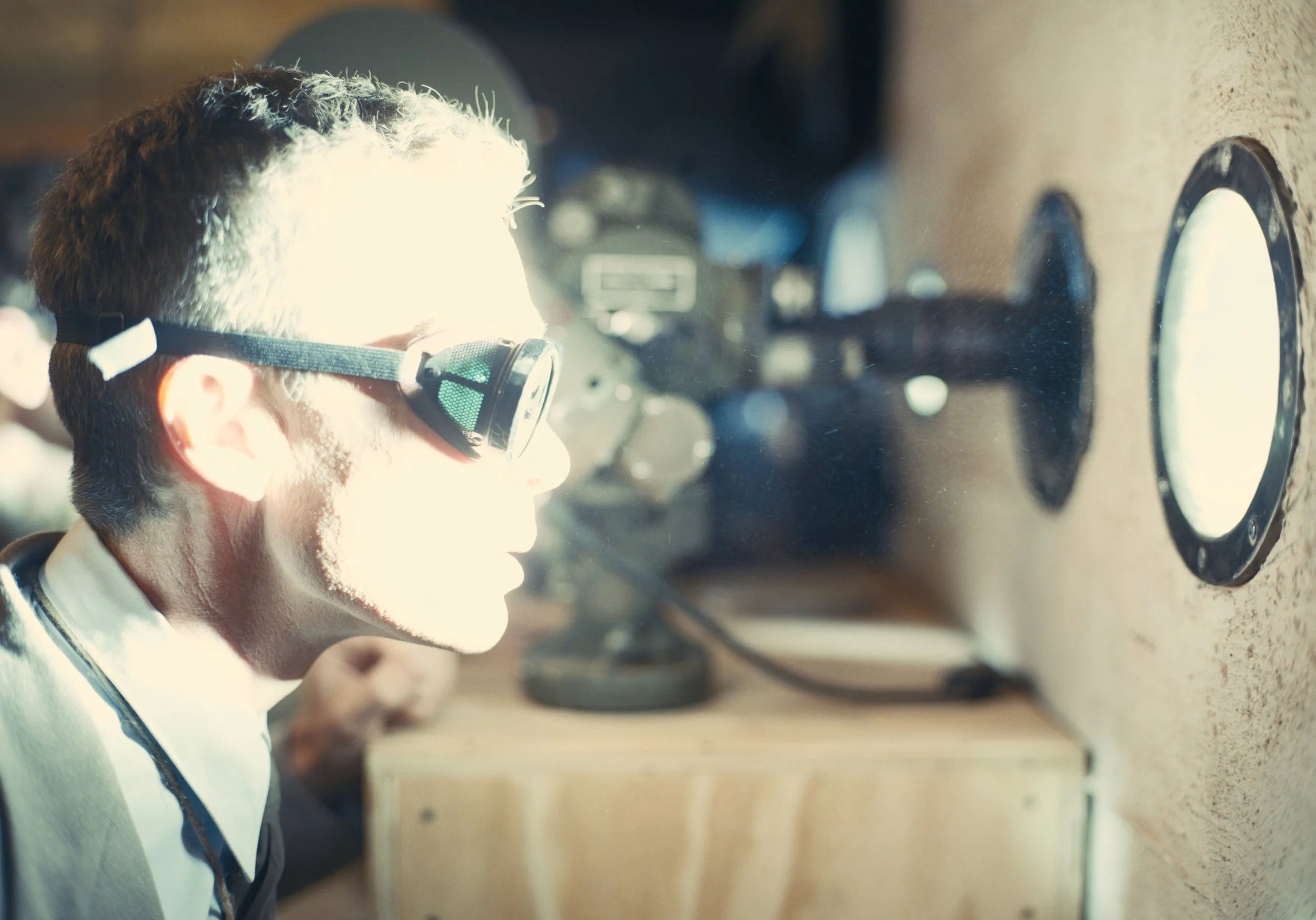
We all knew how hyped Nolan was about making that real ass bomb and capturing that shit on film. And goddamnit, it’s a marvelous technical achievement worth the price of an IMAX ticket alone. The bomb he and his team constructed is one thing, and you must commend the efforts of those who made it. But the sequence where Oppy and the government test the atomic bomb is simply masterful. Filmed with crisp cinematography, capturing each fire cloud in its natural orange color in the dead of night following the ear-rupturing earth-shattering kaboom sound exemplifies what cinema is all about.
The practicality of the bomb sequence only enhances the dreadfulness Nolan delivers to the audience about the atomic bomb's power and the evils that will come as a consequence. Being the father of the atom bomb, enacting the nuclear warhead race is a deep burden to carry, and the film evokes a lingering ghastly aura through intimate, cerebral imagery that feels like you’re traversing into his disturbed mind. Countless harrowing visual shots left me breathless.

Besides Murphy, RDJ steals the show as Strauss. For those who don't know his involvement with the AEC hearing, I'm not going to spoil it, for it's a significant pin-drop moment, but RDJ plays a key role and is magnetic when he becomes relevant in the film's final hour. He gives an eye-popping display of sheer pettiness and jealousy. MY GOD, it feels good to see Robert Downey Jr. act in a good movie again.

Christopher Nolan is still not beating the “can't write women” allegations. And at this point, I have to respect it as much as I expect it. There's an Inside Amy Schumer sketch that spoofed Friday Night Lights, and within it, there's a gag where every time Amy was present, she’s holding with an increasingly larger glass of wine. Albeit the glasses of wines aren't comically oversized, Emily Blunt's Katherine Oppenheimer is always on screen with a drink in hand, and it is comical how often she’s onscreen with it. She's holding a bottle of booze, a martini glass, or a whiskey flask at any moment. The in-your-face emphasis on Kitty's alcoholism is kind of hysterical. Granted, Blunt's Kitty has one great scene where she steals the show telling off a bunch of investigative men—like how in Tenet, Nolan has tall queen Elizabeth Debicki hitting the gas pedal from the back seat, despite her abused damsel in distress role—but it doesn't near how poorly Kitty is depicted.

Oppenheimer is both a technical marvel and a hell of a sociopolitical bio-drama. Offering a magnetic leading performance by Cillian Murphy, a textured screenplay full of wit, and phenomenal imagery that’ll stick with you, Oppenheimer is indeed a major Nolan banger.

