
'No Other Choice' Review: Park Chan-wook's Timely, Dark, Hilarious Comedic Satire That Slays with Style
I’ve never covered a Park Chan-wook – director Park, if you want to be culturally respectful – film before. I have slightly acquainted myself with his work over the past few years: Decision to Leave when it was released, and Oldboy when NEON handled its 4K restoration. Stoker and The Handmaiden, you’re next! His most recent film, No Other Choice, is a comedic social satire thriller that operates in a manner reminiscent of Charlie Chaplin's Modern Times. Adapted from Donald E. Westlake's 1997 novel The Ax and updated for a 2025 lens, it humorously critiques the current working-class culture. It reflects the desolate state of the world, but, you know, wrapped in a Park Chan-wook bow. In other words, it’s cheeky, it’s twisted, and one of the best films of 2025. Though it doesn’t reach his frequent S-tier heights, to me it's A-tier. And A-tier director Park is a higher seal of quality than most of this year's outputs.
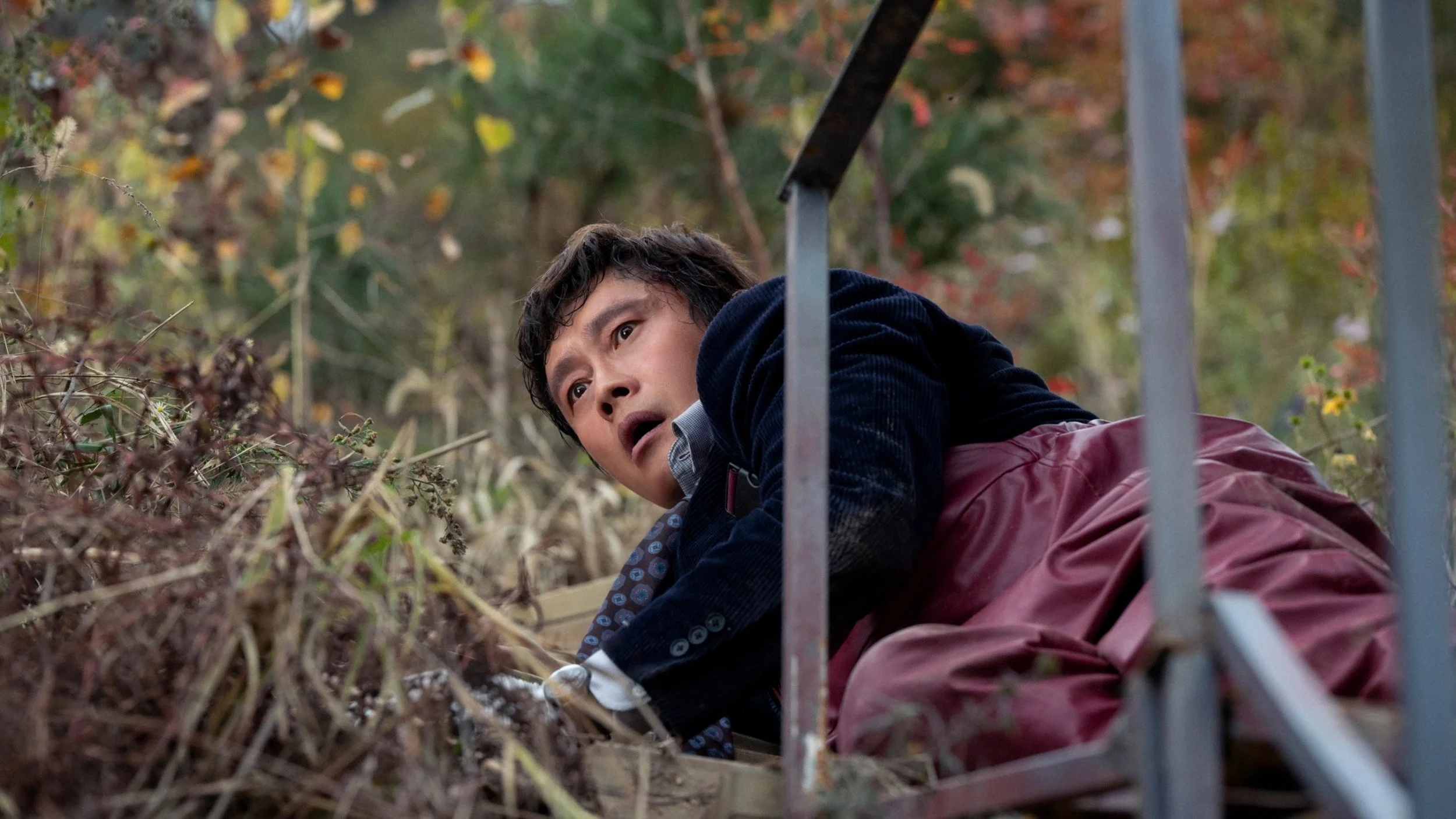
Image copyright (©) Courtesy of NEON
MPA Rating: R (for Rated R for violence, language and some sexual content.)
Runtime: 2 Hours and 19 Minutes
Language: Korean
Production Companies: CJ Entertainment, Moho Film, KG Productions
Distributor: NEON
Director: Park Chan-wook
Writers: Park Chan-wook, Lee Kyoung-mi, Don McKellar, Jahye Lee
Cast: Lee Byung Hun, Son Ye-jin, Park Hee-soon, Lee Sung-min, Yeom Hye-ran, Cha Seung-won
U.S Release Date: December 25, 2025
Solar Paper manufacturer manager Man-soo Yoo (Lee Byung-hun) lives comfortably within the lavish childhood house he worked so hard to reacquire with his wife, Mi-ri Lee (Son Ye-jin), his stepson, Si-one (Woo Seung Kim), his antisocial cello-prodigy daughter, Ri-one (So Yul Choi), and their dogs Ri-two and Si-two. All that comes crashing down when Americans acquire his papermaking company and lay off just about everyone, rendering his multi-decade efforts and hard work worthless, and he has no idea how to apply himself to any new jobs. Man-soo has to give away their dogs, screen the house for a potential sale, and cancel their Netflix subscription. He ultimately resorts to the most extreme measure when he discovers an opportunity to reclaim his position through a new employer at Moon Paper. He establishes a fictitious company and acquires information on other applicants competing for the same position, thereby eliminating them.
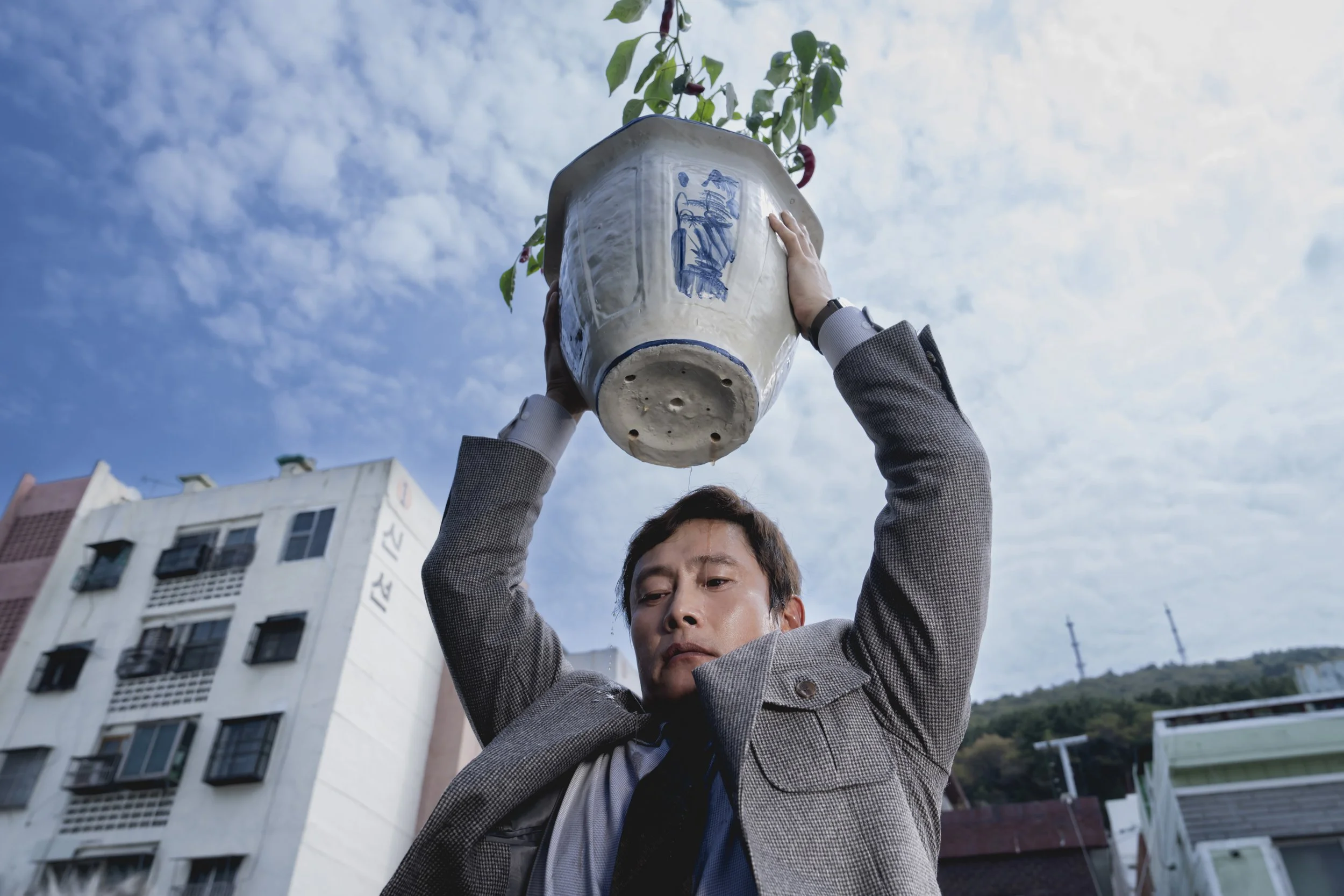
Park Chan-wook combines his signature razor-sharp wit with chic cinematography.
Lee Byung-hun in No Other Choice. Courtesy of NEON
Most people who have seen a few director Park movies will agree that he has one of the most creative and crazy minds out there. I’m happy to join the choir. This marks the 55-year-old filmmaker's inaugural foray into the Black comedy subgenre, although we are cognizant of his cheekiness.
Director Park's examination of the economic class structures in South Korea, as evidenced by Man-soo's dismissal, is as bleak as it is in any other urbanized capitalist nation. It is, after all, based on an American novel, but it exploits this premise to build a powerful Black comedy. With No Other Choice's straightforward plot, he deconstructs the conventions of masculinity under a capitalistic umbrella through a kooky but always funny atmosphere. One equally funny and depressing recurring gag is post-firing affirmations that many of the unemployed former breadwinners use as an excuse to continue their self-pity wallowing. Man-soo's dubious scheme reflects himself in his fellow compatriots, who share the same ill fate. They all neglect their loving families, becoming real-time losers to the significant impact of the capitalist culture on the common man. As the plot develops, Park explores the twisted but captivating development of this man regaining his sense of self and spine… You know, through murder.
As this social satire unfolds in dark, humorous ways, No Other Choice is a rare example of style and substance working together. Director Park throws every stylistic option he can at the wall, and almost everything sticks. Mainly because his imaginative lens – crossfades, dissolves, and memorable feats – is both visually captivating and enriching to Man-soo's mission. The film encroaches on noir-thriller sensibilities, especially with its modern setting. Man-soo’s choices become more engrossing and inventive, proving timely even in its most familiar beats while personalizing every supporting character.
Director Park and his reunion with director of photography Kim Woo-hyung from The Little Drummer Girl execute a distinctive vision that flawlessly captures the screwball comedy archetype with its own rhythmic precision and stunning visuals, particularly in contrast to the picturesque autumnal backdrop. Compared to Decision to Leave, it's more maximalist, but it still makes you think, "Wow, this is how movies should look." Nevertheless, the meticulous framework and blocking in the numerous chaotic sequences impart a unique dark-comedic tone that evokes a classic comedy from the height of silent era cinema, albeit in stunning Technicolor.
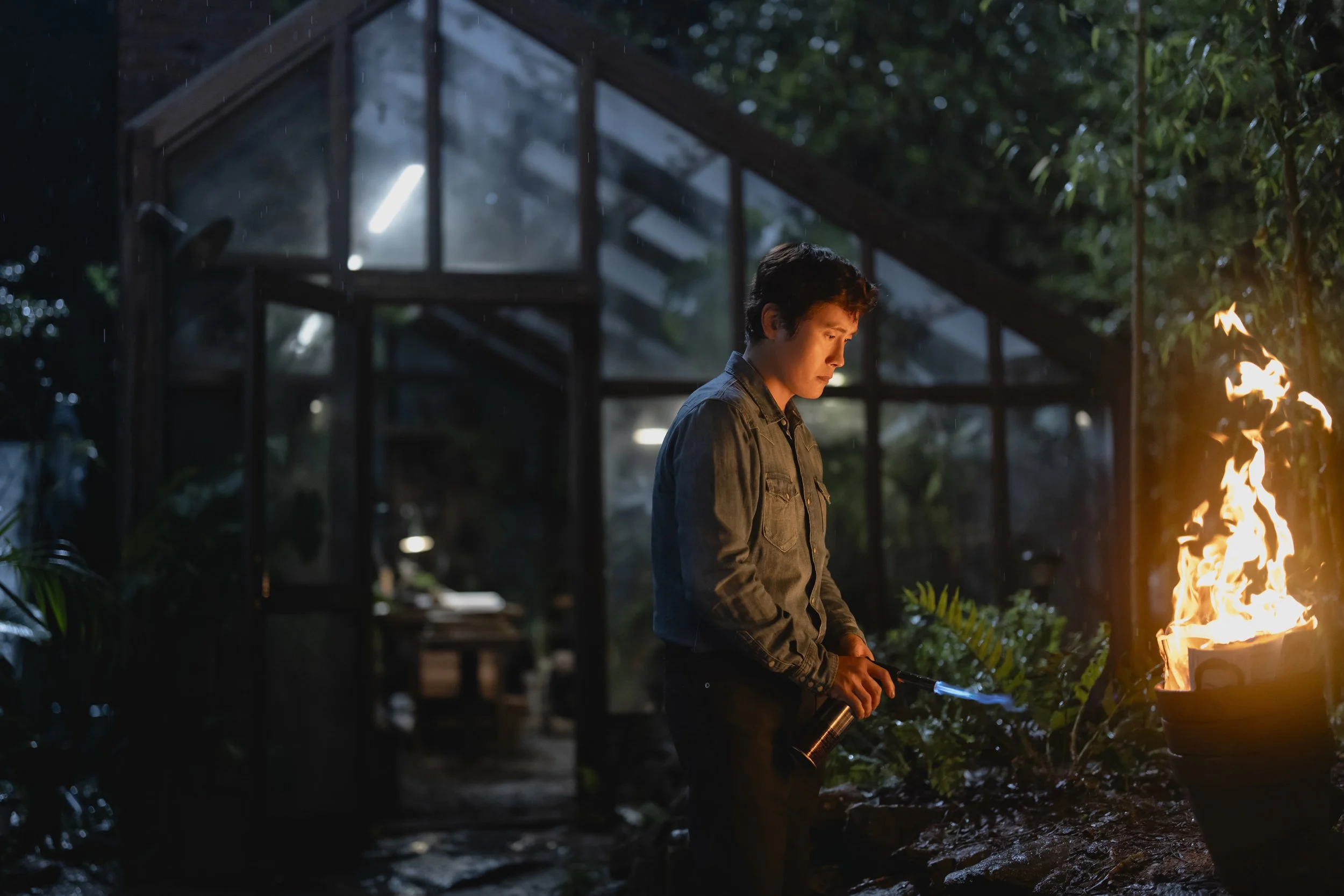
In an exceptional leading performance, Lee Byung-hun channels his inner Chaplin.
Lee Byung-hun in No Other Choice. Courtesy of NEON
Lee Byung-hun, best known stateside for Squid Game, makes his first foray into comedy in his reunion with director Park (the pair hasn’t worked together since 2000’s Joint Security Area). This new endeavor results in a career-best performance. Lee Byung-hun skillfully combines Charlie Chaplin-level physicality, fearlessly silly expressiveness, and complicated loserdom – Man-soo is unaware because his determination and capitalistic goal cloud his judgment. Byung-hun gives an enthralling and humorous performance comparable to the likes of Timothée Chalamet, Leonardo DiCaprio, and Tim Robinson – I'm talking comedic performances – this year.
The fact that this weak-willed man jumps right into murder without even feeling like a threat or an anti-hero is part of the entertainment value. His humanity is still intact, but his sharp turn is a result of his desperate attempt to survive. Furthermore, his natural navigation and response to witnessing the consequences of this market on the individuals on his hit list contribute to the thrilling suspense.
Much of No Other Choice is a slighter fare compared to director Park’s latest work. It takes a while for the story to really find its footing in tone before it gets going. Once it does, it’s a blast. Although it appears to play its cards familiarly, the ace card in the finale invokes a shock, shedding an aggressive poignancy that I don't think he’s tapped into since Oldboy. Not only does it contribute to my Modern Times comparison, but it also delivers a scathing critique of the systems that are destroying the job market in our current era. It's a funny conclusion that puts much of the objective and plot into perspective, but leaves you in a state of dread because of its relevance to our livelihoods. But truly, what else can one expect from one of the sharpest filmmakers to ever do it?
Please consider supporting Rendy Reviews. We’re an independent run, Gen-Z and Black-owned entertainment outlet. You can donate to our Paypal or Venmo to help keep our site running. Or become a subscriber for access to 13-years worth of reviews, exclusive interviews, and more! A free way to support is a sign up for the Rendy Reviews’ newsletter and get weekly emails about latest on movie reviews, interviews with film artisans, features, and more.
