
'Mother Mary’ Review: Anne Hathaway and Michaela Coel Ignite a Haunting Pop Fever Dream
Since A Ghost Story, A24's golden boy (one of many), David Lowery, has been in his adaptation bag. But as much as I've been entranced by his craft with more The Green Knight and less Peter Pan & Wendy, I've been waiting for "original Lowery" to return. That near-decade wait was worth it, as he now cuts a cloth with Mother Mary, a meditation on collaboration and identity, wrapped in a surprisingly sapphic, unmistakably supernatural melodramatic horror.
At its core, Mother Mary dissects the relationship between a musician and her estranged former fashion designer and best friend, with a shared, homoerotic past. They attempt to reconnect, hashing out their beef through the creation of a new fashion piece. Lowery filters all of this through his trademark phantasmagoria language, turning what begins as a two-hander for leads Anne Hathaway and Michaela Coel into something more spectral and emotionally fragmented.
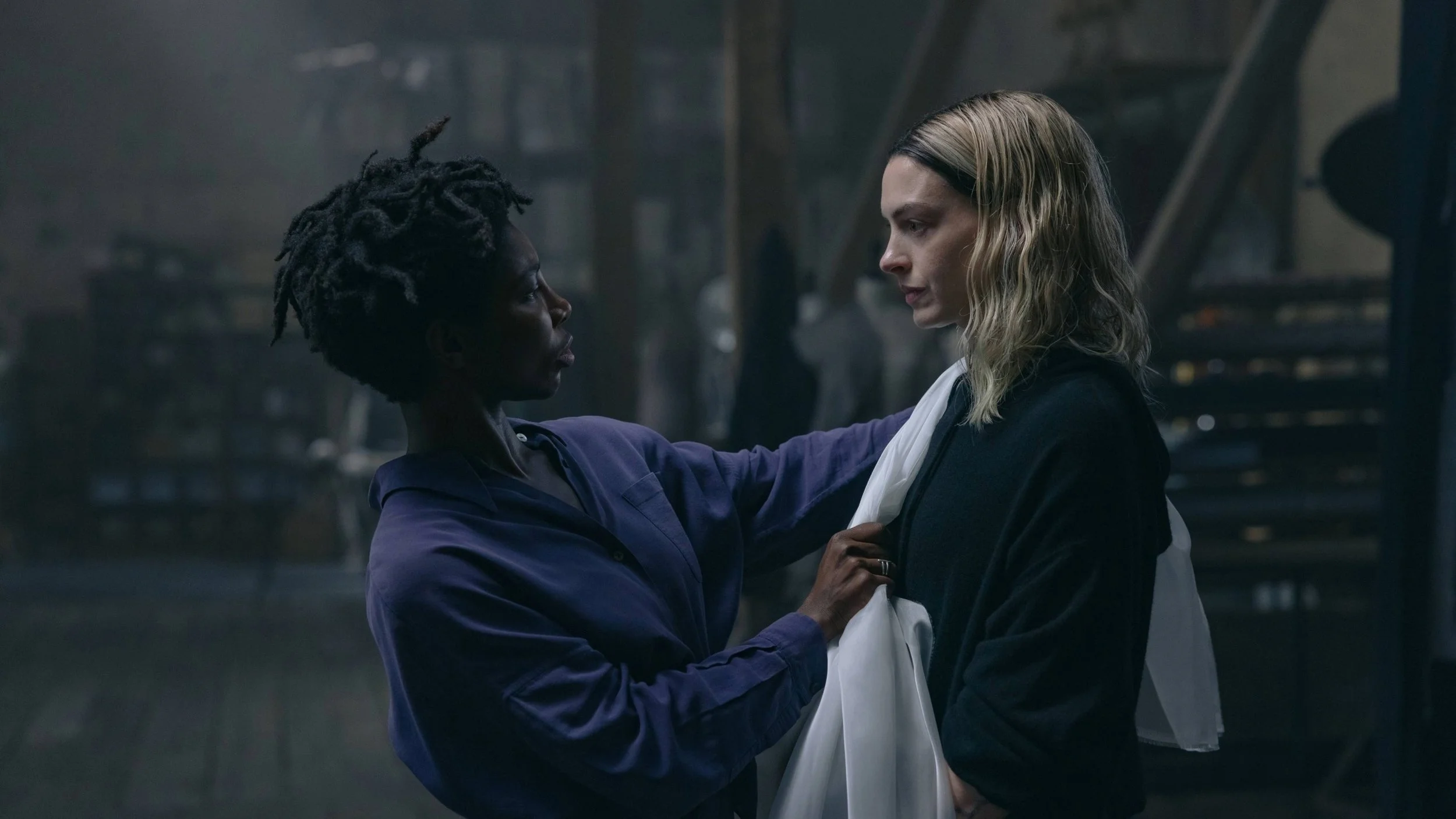
Image copyright (©) Courtesy of A24
MPA Rating: R (For some violent content and language.)
Runtime: 1 Hour and 50 Minutes
Languages: English, German
Production Companies: Homebird Productions, augenschein Filmproduktion
Distributor: A24
Director: David Lowery
Screenwriter: David Lowery
Cast: Anne Hathaway, Michaela Coel, Hunter Schafer, Atheena Frizzell, Kaia Gerber, Jessica Brown Findlay, Alba Baptista, Isaura Barbé-Brown, Sian Clifford, FKA Twigs
U.S Release Date: April 17, 2026
After an onstage incident, pop superstar Mother Mary (Hathaway) retreats to Berlin to reconnect with her former designer and best friend, Sam Anselm (Coel). Disheveled and desperate, she asks Sam to create a new dress on an impossible one-day deadline before her comeback show. Sensing something deeper at play, Sam agrees, and the two retreat to her work barn. There, old tensions from their intimate past resurface. As they unpack their history, it becomes clear that what’s haunting Mary isn’t just emotional, it’s something internal, and possibly supernatural.
Mother Mary stuns in its crafting of a fictional pop icon.
Anne Hathaway Credit: Photo by Frederic Batier. Courtesy of A24.
With Mother Mary, Lowery builds a world of high fashion and pop stardom that's thoroughly detailed in craft and decor but never feels impenetrable. He leans into emotion, visually dissecting how a modern artist’s identity is shaped and the true ownership of their architecture.
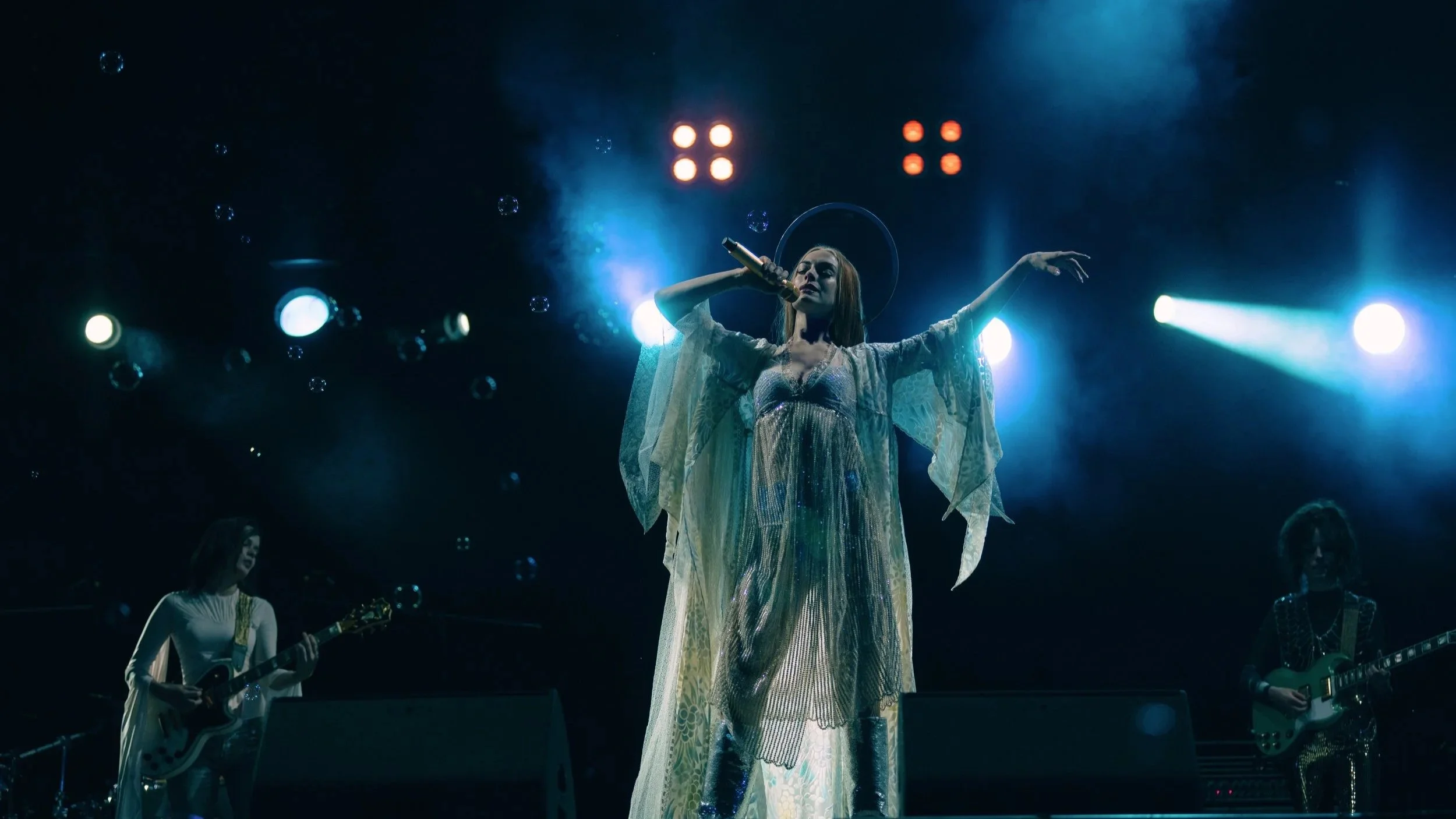
Like Brady Corbet did with Natalie Portman’s Celeste in Vox Lux, Lowery crafts Anne Hathaway’s Mary as a larger-than-life pop figure who could seamlessly exist alongside today’s biggest stars. She’s a pop Frankenstein, if not the epitome of the modern popstar, tatted up hand to hand like Ariana Grande, vibrantly costumed in electronic, leather-textured pieces and armor like Lady Gaga, and, funny enough, has the same effect as Taylor Swift. I'm paraphrasing from my bad memory, but Sam has a line like: "Your sad songs give people the humbling gift of giving a shit about your music."
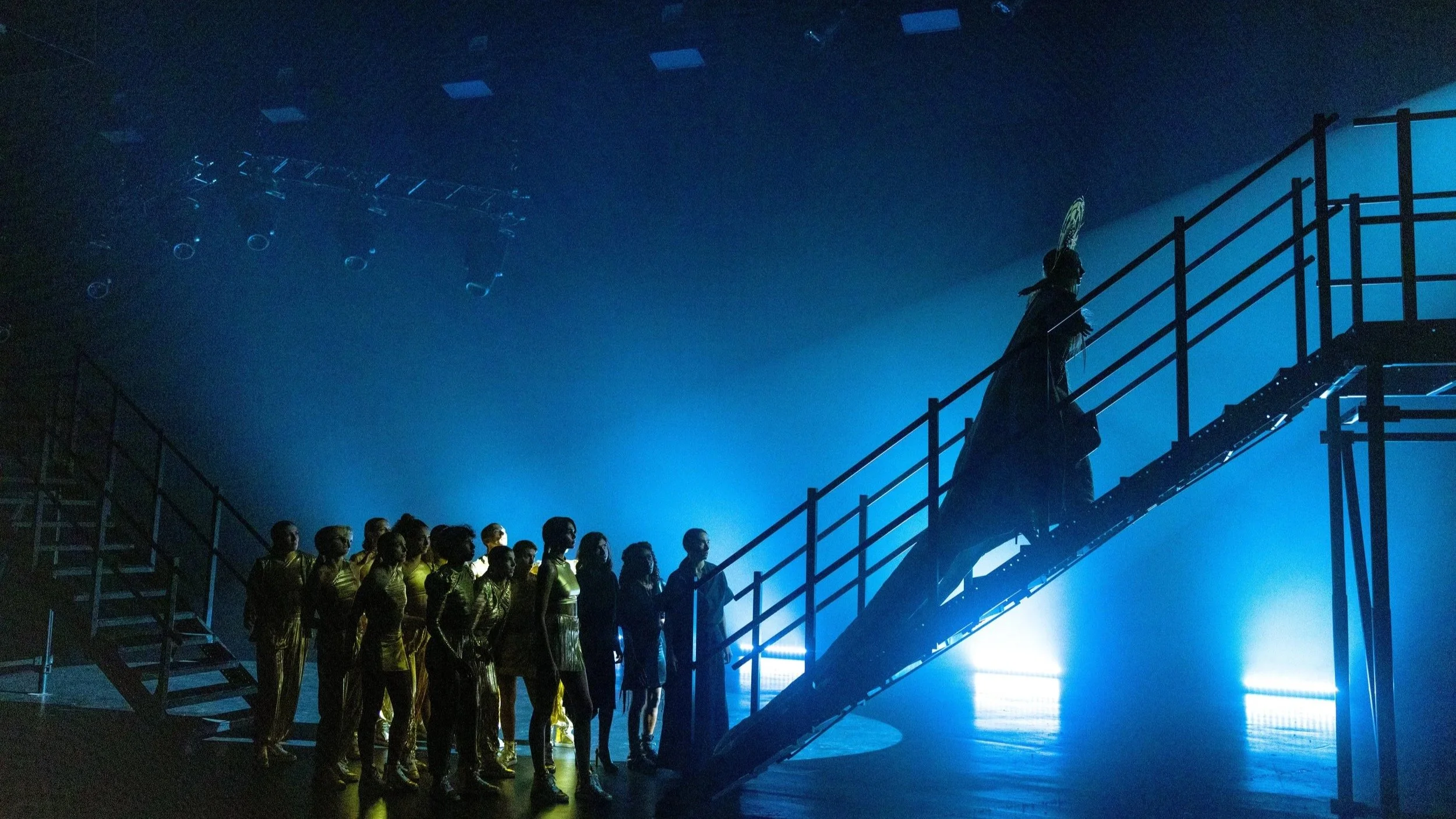
Hathaway commands the screen the moment she emerges onto the stage. I genuinely had to stop myself from yelling “mother!” as she performed her hypnotic tunes — written and produced by Jack Antonoff, Charli xcx, and FKA Twigs— that are undeniable bangers in their own right. Ever since Ella Enchanted, Hathaway’s wonderful singing voice gives me goosebumps. Lowery’s direction – complete with striking lighting and Dani Vitale’s electric, techno Gaga-like choreography – amplifies Mary’s star profile. Despite its brevity, he immerses us in Mary’s world, emphasizing the scale and longevity of her fame. Much like Sam, costume designer Bina Daigeler is just as essential in this film. The wardrobe reinforces Mother Mary’s thesis, tying identity to presentation as much as performance. Mary’s voice may be singular, but her image is just as carefully constructed. It’s as Connor4Real from Popstar: Never Stop Never Stopping said, “It takes a village to make me look dope.
Anne Hathaway and Michaela Coel sell a powerful two-hander of intimacy, power, and creative unraveling.
Michaela Coel Credit: Photo by Eric Zachanowich. Courtesy of A24.
While Mother Mary may initially sell itself as supernatural horror, it’s very much a film of two halves. The A-side plays as a theatrical, dialogue-heavy fashion drama between Mary and Sam. The B-side leans into David Lowery’s signature supernatural mode, rendered with striking imagery by cinematographers Andrew Droz Palermo and Rina Yang.
In the first half, Lowery settles into an intimate chamber piece – just the two of them in the barn, trying to “work it out on the remix.” Sam dissects who Mary has become since their fallout, unpacking a shared past where they essentially built Mother Mary together. Sam’s designs – rooted in either angelic or medieval iconography – elevated Mary into something mythic, until the image overtook the individual, and even the music itself didn’t match that image.
Rather than broad industry commentary, Lowery keeps the focus tightly on their relationship. The tension lives in the details: glances that linger too long, cold silences, and charged physical proximity. Their dynamic – creative, codependent, and quietly pseudosexual – unspools in real time, giving the film a captivating and deliciously enthralling emotional weight. It’s all contained within the single space, but it never feels small.
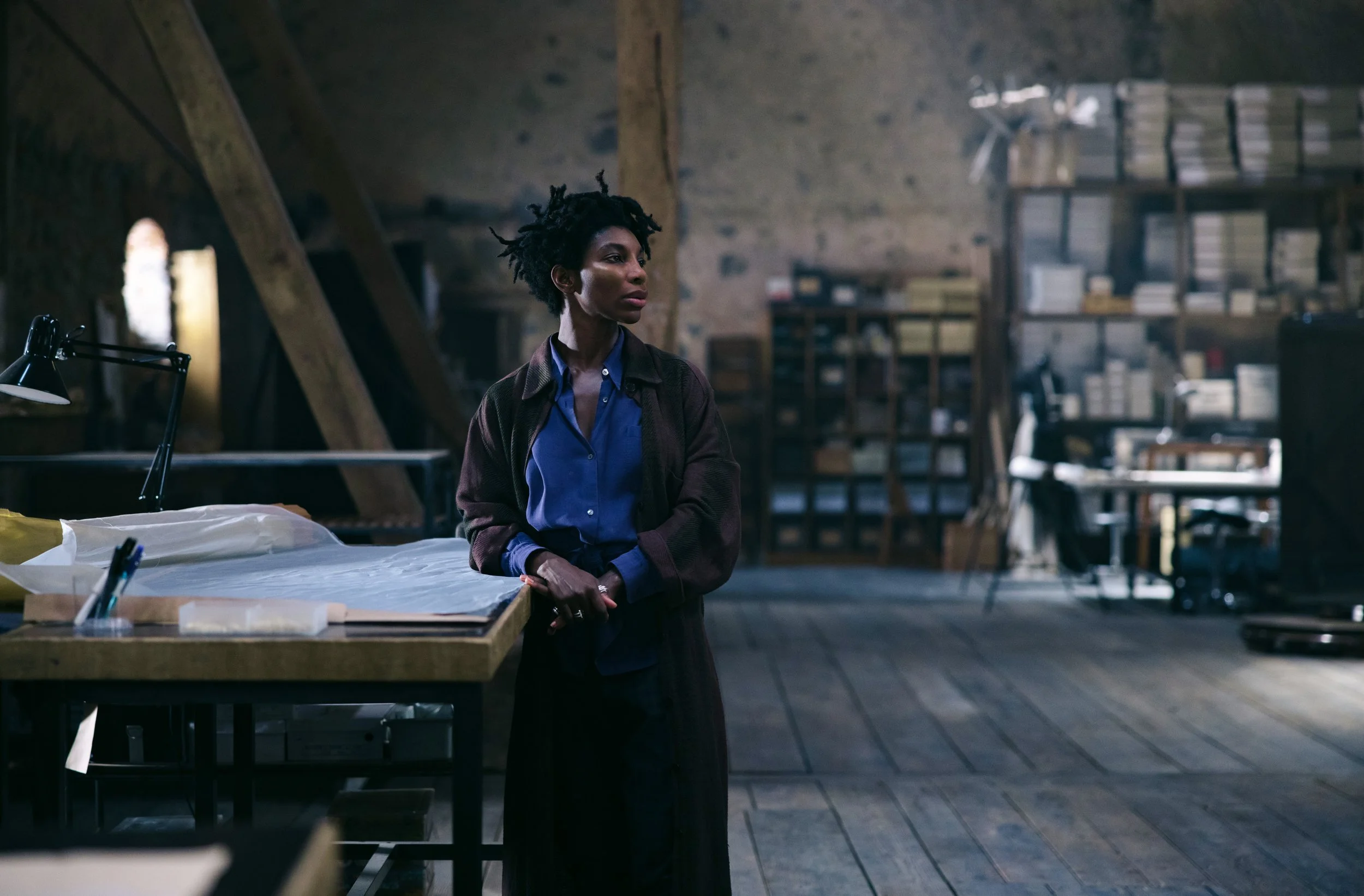
Michaela Coel and Anne Hathaway’s mesmerizing on-screen chemistry elevates the narrative. Hathaway operates at a high level, but Coel absolutely devours Lowery’s material; her line deliveries cut deep, quietly seizing control of the power dynamic with an icy precision that only softens when she feels Mary earns it. She’s a mixture of Lydia Tar and Reynolds Woodcock. Yes, she’s as eccentric as she is precise and scary. Coel and Hathaway’s chemistry textures the weight and resentment of their 20+-year-long history in just a matter of seconds. It’s tense, intimate, and unsettling, like you’re eavesdropping on something you shouldn’t be witnessing.
The longer we sit with them biting Lowery’s sharp dialogue, the more tragic this portrait becomes. Mary’s unraveling, tied to the pressure of reinvention and the suffocating expectations placed on aging artists, feels almost possession-like. There’s a standout moment where Sam challenges her to recall choreography, and Hathaway snaps into it with something feral and desperate. The precision is still there, but it now feels mechanical, cursed, like muscle memory betraying her.
Mother Mary shifts from intimate precision to uneven phantasmagoria.
(L-R) Kaia Gerber, Sian Clifford, Anne Hathaway Credit: Photo by Eric Zachanowich. Courtesy of A24.
For its first 40 to 50 minutes, Mother Mary feels like one of the year’s best. I honestly could’ve stayed in that chamber-piece mode. But this is David Lowery, and he can’t resist turning his metaphors literal in his dive into phantasmagoria.
The back half is where Mother Mary stumbles. A symbolic piece of cloth becomes central, and through drawn-out yet visually striking, descriptive recollections, the film drifts away from the tightly wound character portrait it built so well. The shift is bold, but uneven. What begins as a compelling two-hander ultimately loses its cohesion, diluting the sharp thematic focus that made Mary so singular. It’s familiar terrain for Lowery – visually stunning, with fluid, storybook-like imagery and exquisite editing – but less disciplined.
Ironically, when Mother Mary leans into a giallo-tinged horror atmosphere, it works on a sensory level. The problem is that what should remain atmospheric and metaphorical becomes overly literal, flattening the thematic ambiguity. I felt that The Green Knight was too esoteric, but this film overcorrects. There are still highlights, especially a magnetic, scene-stealing moment from FKA Twigs as a medium, but the loss of focus is hard to ignore. It dulls what made the first half so gripping in the first place.
Mother Mary continues my overarching frustration with recent Lowery films: he exercises in atmospheric aura and effective dialogue, yet the moment he brings something apparitional into the foreground and threads it to the conversation, it often alienates. He just can't seem to unify his main ideas and concepts with the horror elements he's so keen to integrate with. Not everything needs to be a ghost story, buddy.
FINAL STATEMENT
Visually intoxicating and haunting, David Lowery's Mother Mary offers brilliantly performed and crafted music commentary, elevated by the raw, electric chemistry between Hathaway and Coel—even if its second half swaps ghastly metaphor for literalism.
