
‘Left-Handed Girl’ Review: Shih-Ching Tsou's Kaleidoscopic Solo Debut Sharply Satirizes Taipei's Cross-Generational Family Structures
Shih-Ching Tsou and Sean Baker have collaborated on numerous unforgettable films, starting with their co-directorial effort, Take Out, in 2004. Since then, they have collaborated on various endeavors, including Starlet, Tangerine, The Florida Project, and Red Rocket. Tsou has served as the costume designer, a producer, or made a cameo, sometimes all in one go. With Left-Handed Girl, Tsou takes that directing chair for her solo debut. Similar to other films she has collaborated on with Baker, it’s a slice-of-life perspective on the working class's efforts to survive and prosper. This one sees her return to her roots in Taipei, Taiwan, and utilizes the working-class nightlife scene as a catalyst to address cross-generational social class structures within family units.
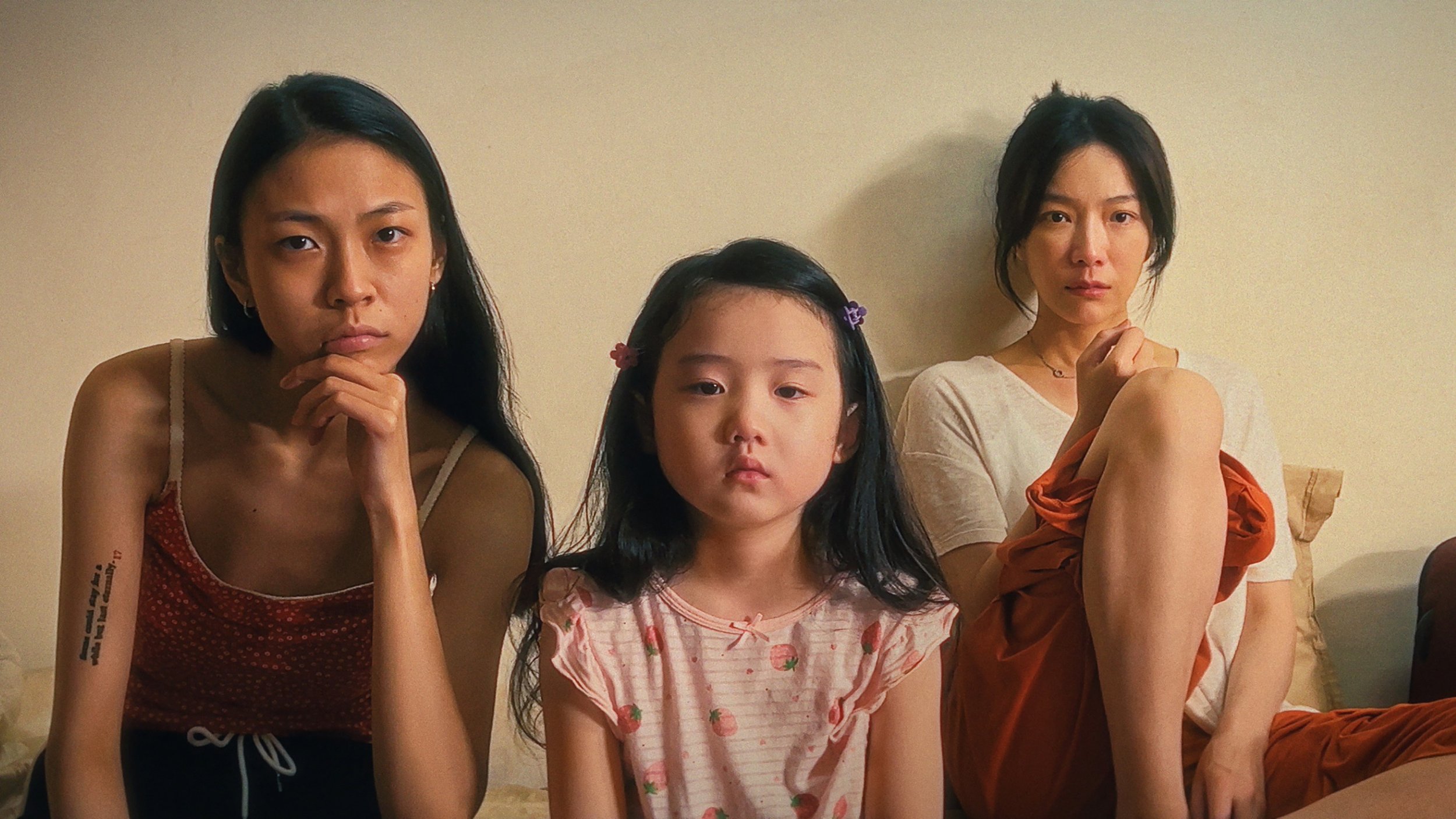
Image copyright (©) courtesy of Netflix
MPA Rating: R (for sexual content and language)
Runtime: 1 Hour and 48 Minutes
Language: Mandarin
Production Companies: Left-Handed Girl Film Production, LHG Films LTD, Good Chaos, Le Pacte
Distributor: Netflix
Director: Shih-Ching Tsou
Writers: Shih-Ching Tsou, Sean Baker
Cast: Shih-Yuan Ma, Janel Tsai, Nina Ye, Teng-Hui Huang
U.S Release Date: November 14, 2025 (theatrical) | November 28 (Netflix)
Shu-Fen (Janel Tsai) moves into the busy streets of Taipei with her two daughters – a bratty, rebellious young adult, I-Ann (Shih-Yuan Ma), and precocious little I-Jing (Nina Ye). Shu-Fen opens a noodle stand at the night market right next to a sweet, bowl-cut sponge salesman, Johnny (Brando Huang). I-Ann begins working at a betel nut stand, and I-Jing is often left to her own devices, running around or helping out at I-Ann's place. At home in their cramped apartment, a general air of discontent surrounds Shu-Fen and I-Ann. While hustling, a family tragedy occurs, and Shu-Fen leaves I-Jing to her judgmental mother and a mean, traditional grandfather. Upon observing that she is left-handed, which he refers to as the “devil’s hand”, Grandpa (Akio Chen) demands that I-Jing exclusively use her right hand. What follows is a series of trials and tribulations the trio must face at the hands of I-Jing's left-handed disposition.
Left-Handed Girl's familial portrait is propelled by the central acting trio.

Left-Handed Girl. (L-R) Janel Tsai as Shu-Fen, Nina Ye as I-Jing and Shih-Yuan Ma as I-Ann in Left-Handed Girl. Cr. LEFT-HANDED GIRL FILM PRODUCTION CO, LTD © 2025.
Urbanized communities share the same struggles but with different architectural structures. Many can instantly identify with Shih-Ching Tsou's illustration of Taipei's concrete jungle, which she presents with a grounded directness and heightened sense of bustling energy. Given that a large portion of the story takes place at night, with the family working as merchants, the neon-lit backgrounds surrounding its nightlife are especially stunning. Ko-Chin Chen and Tzu-Hao Kao’s cinematography textures the film with a vivid, immersive, and kaleidoscopic nature. It’s driven by a handheld style — either iPhones or rigged cameras — personalizing the landscape these three girls navigate in Taipei. Stylistically, it aligns with The Florida Project, but is more claustrophobic given the class status and the enclosed spaces where the trio lives and works.
Unlike Baker's fare, which mostly follows its protagonist coming down a brief apex, Tsou sees this family already at their lowest and trying to find joy. The film starts with their countryside past, but that’s only a piece of a larger picture behind the characters' hopelessness. There is an underlying distance between the mousey mom, Shu-Fen, and her outspoken daughter, I-Ann. I-Ann's bratty nature may initially be overbearing. However, as Tsou and Baker's script gradually reveals pieces of her past, you resonate with, or at least understand, the root of her harshness. Shih-Yuan Ma, the sole actress between Janel Tsai and the young Nina Ye, who did not have an acting background, delivers a standout performance. For I-Ann, sometimes being the most frustrating character or the most progressive one, she pours a vigorous spirit and a captivating punk attitude into her performance.
Shih-Ching Tsou and Sean Baker pour familiar chaos within cross-generational social commentary.
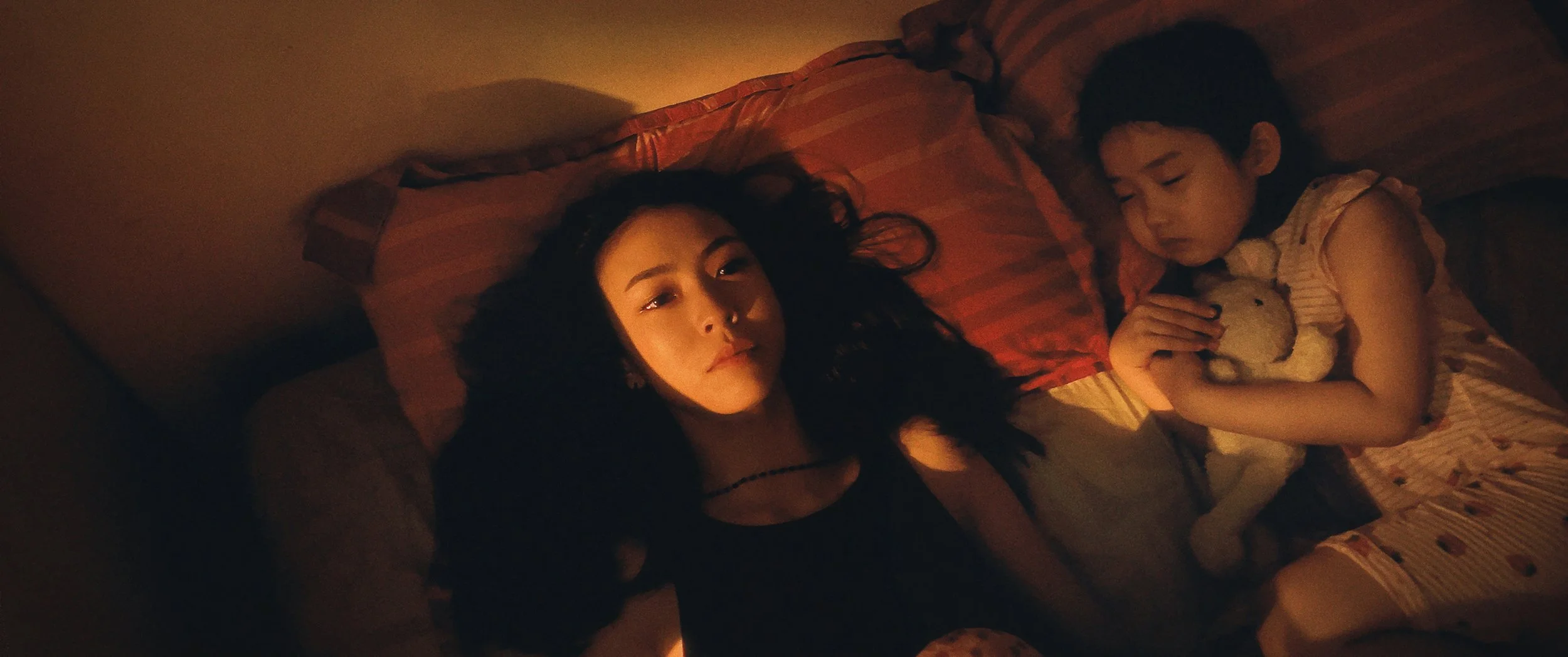
Left-Handed Girl. (L-R) Shih-Yuan Ma as I-Ann and Nina Ye as I-Jing in Left-Handed Girl. Cr. LEFT-HANDED GIRL FILM PRODUCTION CO, LTD © 2025.
Despite the somber tone of Left-Handed Girl, it is significantly comedic. It shares the same tone as The Florida Project and Red Rocket, leaning towards screwball comedy. The majority of the film's humorous elements are derived from I-Jing and her mischievous behavior with her left hand when she's unsupervised.
Although it may appear comical, each aspect of its madcap energy is infused with heartbreaking commentary on Taiwanese social familial structures. It may be 2025, but there's a hard transition of breaking the barriers of matriarchal expectations. Neglect, hardships, and struggles are inevitable if you are not the male member of the family. Shu-Fen is affected by that, and the first indication of generational ties occurs when she visits their mother, who occupies matriarchal power despite living in her own state of hypocrisy. Shih-Ching Tsou builds and destroys that cultural cross-generational structure, and it’s very reminiscent of Rungano Nyoni's On Becoming a Guinea Fowl. Although that film follows a different subject, the rage is very specific, and a particular dramatic and twisted banquet scene within the climax comes with a strong catharsis.
That said, there is an unevenness when unveiling the past threads these girls lived in and the present. The film takes a long time to unravel, sometimes going nowhere with comedic vignettes or becoming more stressful and chaotic. Of course, any movie with Baker's writing involved will do so. However, their present is burdened by the weight of the past, which calls for further information, if not at least more scenes exploring it. The same goes for the climax, where a major twist is revealed – one that shakes that family tree – and instead of exploring the new norm that follows, it decides to wrap itself in a bow. Even when the film is at its most underdeveloped, Baker, who also served as the film's editor, continues to prove he's a master of this specific slice-of-life portrait formula, with an impeccable pacing that maintains your interest in the family's welfare from start to finish.
Final Statement
Shih-Ching Tsou's Left-Handed Girl is a stylish, briskly paced, and entertaining portrait of generational social status and class divides in a familial unit that is specific to Taipei but universal to many cultures.
Please consider supporting Rendy Reviews. We’re an independent run, Gen-Z and Black-owned entertainment outlet. You can donate to our Paypal or Venmo to help keep our site running. Or become a subscriber for access to 13-years worth of reviews, exclusive interviews, and more! A free way to support is a sign up for the Rendy Reviews’ newsletter and get weekly emails about latest on movie reviews, interviews with film artisans, features, and more.
