
'Highest 2 Lowest' Review: Spike Lee and Denzel Washington's Exciting Modern Reimagining of a Kurosawa Classic
Oh no, Spike Lee did another remake. Everybody run! Just kidding. I’m not going to do Bed-Stuy's best filmmaker like that. Besides, the ill-conceived 2013 remake of Oldboy (that Lee himself disowned) is nothing like Highest 2 Lowest, a reimagining of Akira Kurosawa's 1963 High and Low. High and Low itself was based on the 1959 novel King's Ransom by Ed McBain. Although I will not pretend to have watched Kurosawa's High and Low, I did see Mo' Better Blues, the first of five collaborations with Denzel Washington, earlier this year for the first time. I bring that up as Highest 2 Lowest, while in many ways utilizing the basis of its source, plays like a spiritual follow-up to Mo' Better Blues in numerous facets. Despite the somber character drama, this is a blast of a bustling crime thriller that's so excitedly capital-N New York.
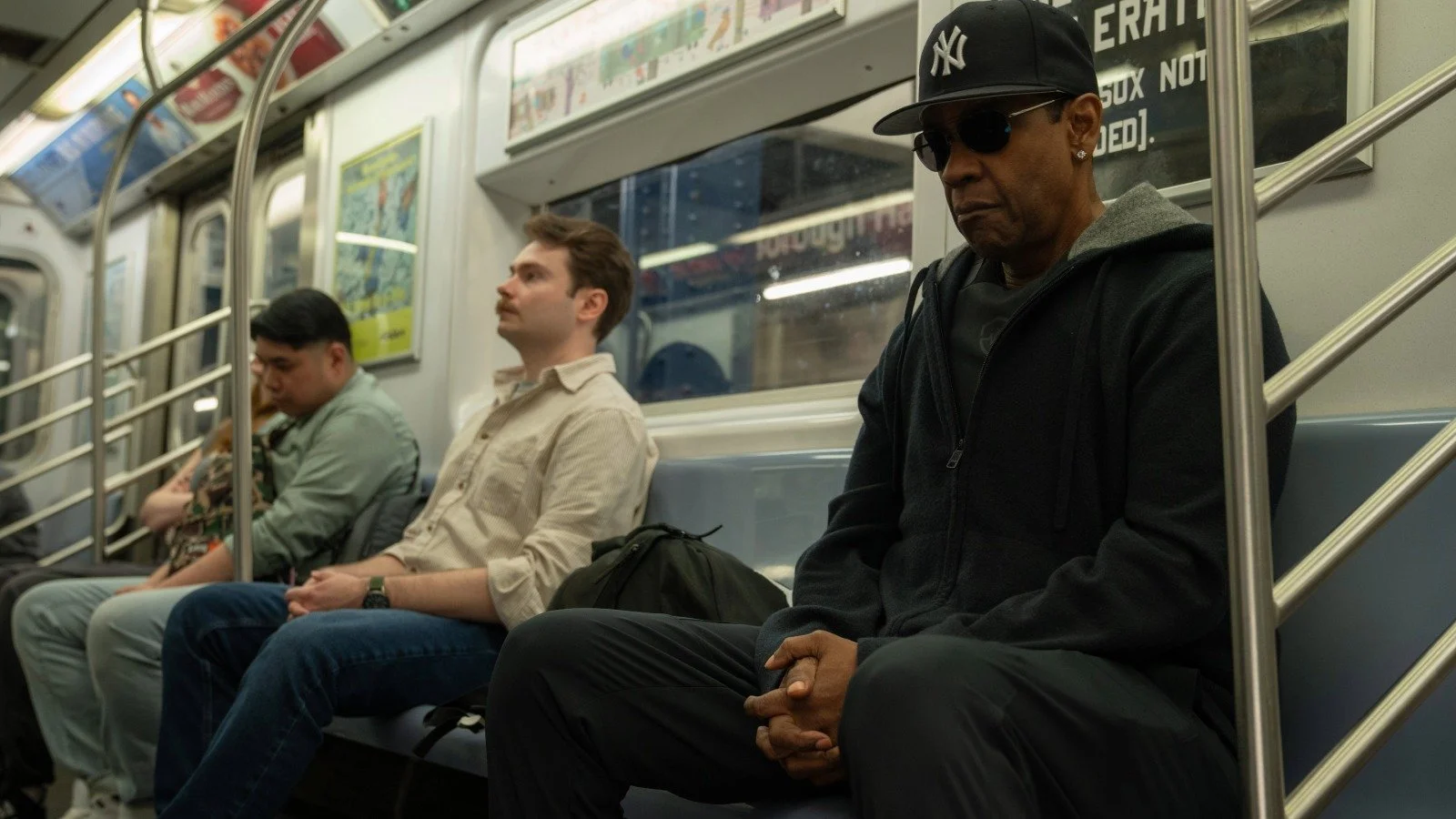
Image copyright (©) Courtesy of A24
MPA Rating: R (For language throughout and brief drug use.)
Runtime: 2 Hours and 13 Minutes
Production Companies: A24, Apple Studios, Escape Artists, Mandalay Pictures, 40 Acres and a Mule Filmworks
Distributor: A24, Apple Original Films
Director: Spike Lee
Writers: Alan Fox
Cast: Denzel Washington, Jeffrey Wright, Ilfenesh Hadera, ASAP Rocky, Ice Spice, Dean Winters, John Douglas Thompson, LaChanze, Aubrey Joseph, Michael Potts, Wendell Pierce, Elijah Wright
Release Date: August 15, 2025
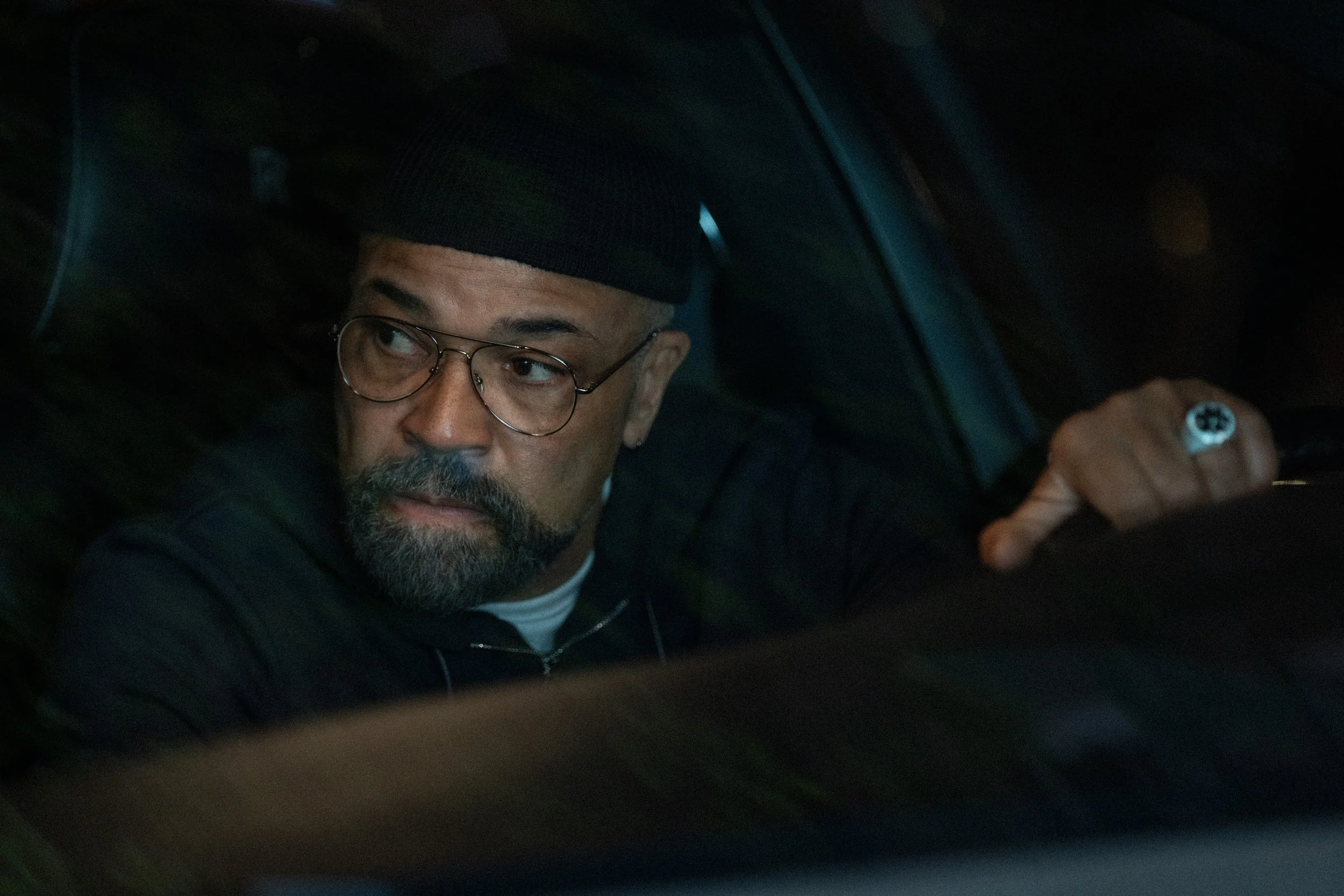
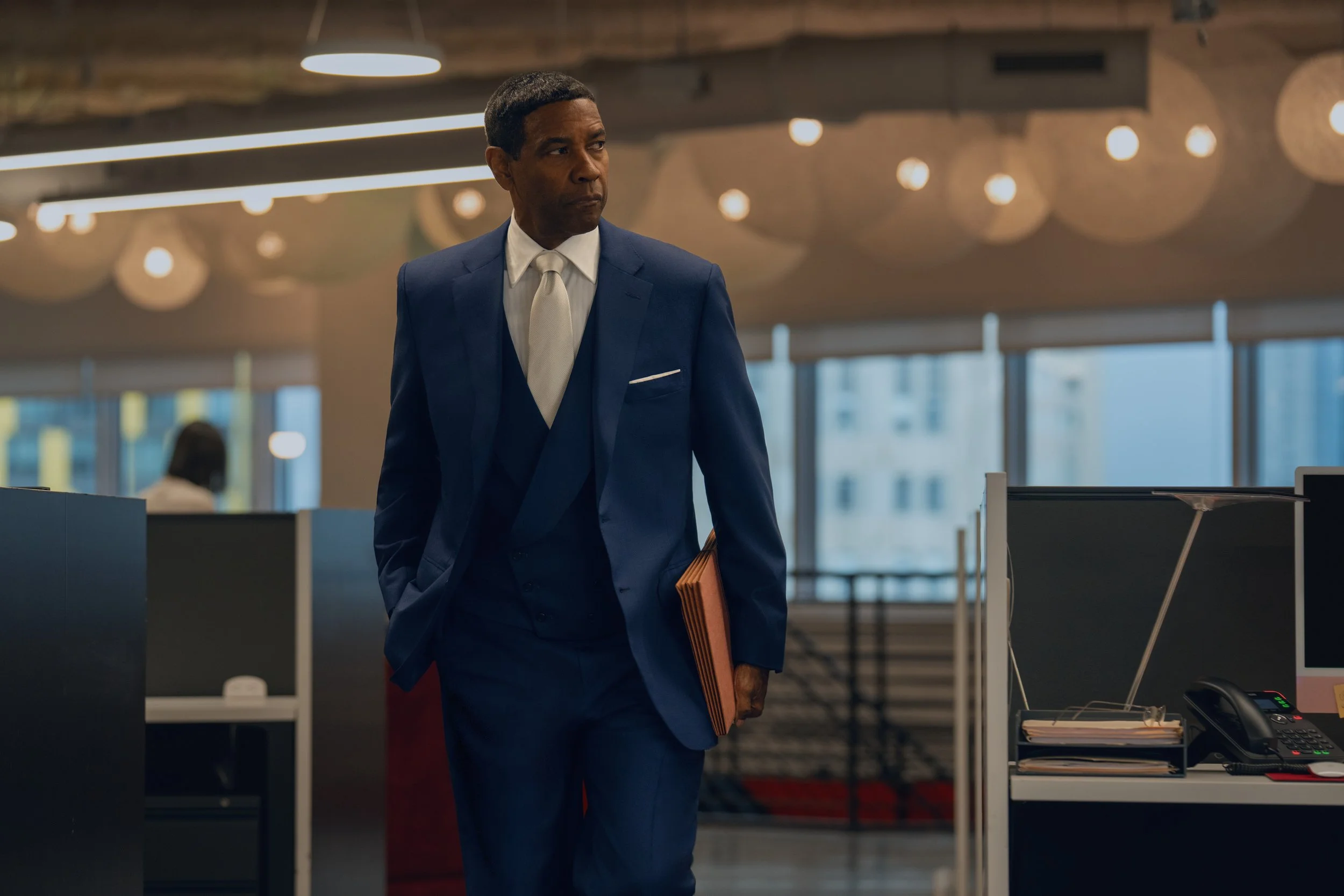
David King (Denzel Washington) is a music business mogul who no longer cares about the musicians themselves, focusing solely on how to increase his company's profits. He lives in luxury, comfortably high in a Dumbo, Brooklyn apartment complex with his wife, Pam (Ilfenesh Hadera), and son, Trey (Aubrey Joseph), and is driven around by his best friend and ex-convict Paul Christopher (an always exceptional Jeffrey Wright). King's company isn't as financially sound as it once was, but he's on the verge of taking a big gamble to accumulate more money. All that crashes when one day, Trey and his best friend, Kyle Christopher (Elijah Wright), are kidnapped. Trey is saved, but Kyle isn't. David and Paul discover that Kyle is being held hostage by a mysterious man (A$AP Rocky) who demands that King cough up $17.5 million. King finds himself in a predicament: should he save Kyle or not? Finally caving in, he collaborates with the FBI for the drop in his former Bronx neighborhood. When things don't go as planned, David and Paul take matters into their own hands.
Spike Lee Cleverly Plays With Your Expectations With His Overwrought First Act

Contemporized re-imaginings of Kurosawa flicks are a dime a dozen. Just last week, Zach Cregger's Weapons used the Rashomon effect. Highest 2 Lowest essentially contemporizes High and Low, bringing the story to New York City. As a New York-based critic, there's an interesting part where he utilizes the anthropology of class within King and his Big Apple kingdom geographically. The film establishes its rich realm, from his home being decorated with original Basquiat paintings, to his son, Trey, and his best friend Kyle being coached in basketball by Rick Fox. The film is just shy of putting King courtside at a Knicks game like Lee does. While entertaining, there's a concerning amount of low energy that emanates in the first act’s atmosphere.
You'll likely see many others bring up how slow and off-rhythm the first act feels as it leans excessively into the basis of its source material with a simplistic New Yorker coat of paint. The orchestral score by Howard Drossin blares too much into the background and emphasizes keyboard work during the dramatic moments, making it feel like a Hallmark Channel original. Even I wondered if Lee lost the juice. “Is he doing this for a paycheck?” Then, as the second act erupts, you realize he's playing 4D chess.
Highest 2 Lowest, while penned by Alan Fox, is a metacontextual representation of Lee's career and pursuit of the artist in an ever-growing, evolving industry. The lack of Lee-isms in the film's drawn-out first act is reflected in Washington's David. He's grown less interested in the music, though he knows how to spit game and give hard notes when needed, like a reflex. People are currency, making him a monotonously cold person, and Lee's direction layers a composition of wide shots to encapsulate that isolation. That's not to say that the first act is sometimes rough due to its outright corny demeanor that feels like it's on autopilot despite its galaxy-brain intent and Washington's effervescent performance.
New York Caper, Baby! Skyscrapers and everything
There was space for that first act to do its own thing rather than applying Kurosawa or King's Ransom to its core. However, when the catalyst hits and David has to rescue someone who is not his son, Lee's direction kicks into high gear, providing the thrilling spectacle of the summer. Spike transitions back to his signature style (Lee's double dolly shots are instant serotonin to my system) as David takes action. He finally capitalizes on the city in a manner that transcends mere window dressing and modernization. Spike's thrilling cinematic experience is unparalleled by any other NYC-set film released this year, and an Apple TV+ subscription doesn't do this justice. Par for the course, he wears his love for NYC on his sleeve, cleverly texturing different locations as pulse-pounding set pieces. The film's centerpiece is the exchange that transpires between the Bronx and a cameo-filled Puerto Rican Day. As a born and bred New Yorker, I had to restrain myself from smashing the five-star button after seeing the Woodlawn-bound 4 train line I grew up taking utilized as a heist and Western-style set piece in two separate junctures within the same movie.
The adrenaline rush triggered by the second act never hits the brakes, mostly attributed to the technical artists working their magic alongside Lee, reminding us that he still has the power. Editors Allyson C. Johnson and Lee's longtime collaborator Barry Alexander Brown infuse some of the set pieces involving David in pursuit with a meticulous rhythmic energy and constant anxiety that is reminiscent of classic old-school thrillers. The partnership between Lee and longtime DP Matthew Libatique, while not as impeccable as their other efforts together, still retains that bustling, eye-catching magic.
Highest 2 Lowest is a Metacontextual Ballad of Music and other Motifs
Earlier this year, I saw Mo' Better Blues in 35mm for the first time. It's drastically different in genre and character. However, that film is very introspective in its character study of a man consumed by ego and success, an artistry that, while more grounded in character, showcased the consequences of being too lost in the sauce. That story feels like a response to the corruption of capitalism, and Highest 2 Lowest feels like a contemporary response to that. If Bleek Gilliam wound up at the opposite end of that film and became too successful for his own good, he'd become David King. The metatextual component resurfaces as David and his adversary face off. Through their power dynamic, Lee revisits the intelligence and thematic weight he demonstrated in his sophomore feature, and with another pitch-perfect Denzel Washington performance, to boot.
Additionally, A$AP Rocky astounds in a brilliant acting showcase as a perfect foil to Washington – which is crazy because he's one of the best living actors right now – as he delivers a blend of malice, dissolution, and grounded insecurity.
In contrast to Mo' Better's psychological character study, which was driven by a grounded examination of ego, obsession, and loyal enablement in the context of success, Highest 2 Lowest is fueled by a thrilling power struggle of class. While Lee's themes draw back to the source material, he confidently makes it his own by walking in the same path as his 1990 flick with a modernized lens. Denzel's portrayal of King is like a layer of his experiences in the filmmaking industry, expressing the frustrations and insights he has gained from being lost in the muck onscreen. Indeed, David's high class makes the story less relatable, but serves as a potent commentary on the contemporary music—hell, or even entertainment—industry, which values wealth and social status over artistic merit and passion.
Final Statement
Spike Lee's Highest 2 Lowest is a thrilling and personalized contemporary reimagining of a Kurosawa classic that tackles its iconic themes with a nuanced coat and lively musicality.
For full access to all articles on the website and member-only content, such as the complete archive and the Award Artisan Interview Series, sign up for a Rendy Reviews membership.
