
‘Father Mother Sister Brother’ Review: Jim Jarmusch's Endearing and Somber Family Triptych
As a lover of Paterson, Only Lovers Left Alive, and parts of The Dead Don’t Die, I anticipated Jim Jarmusch's most recent feature, Father Mother Sister Brother, to be his finest work to date. After it won the Golden Lion at the Venice Film Festival and was made NYFF63's centerpiece, it had to be the most Jim to ever Jarmusch. It won against No Other Choice, The Voice of Hind Rajab, and The Testament of Ann Lee, after all. It's as if there was someone like, say, Alexander Payne, who is buddies with Jarmusch, assigned as main competition jury president to give him the award on some "bros before art hoes” bias. You know, like how last year Isabelle Huppert gave it to Pedro Almodóvar’s The Room Next Door. Seriously, that pridefully prejudiced juror shit has to stop.
In any case, the rather quiet, dryly funny, and intimate Father Mother Sister Brother is a triptych anthology family portrait about the pain of returning home amid loss. It's very charming, but not one of Jarmusch’s best works.
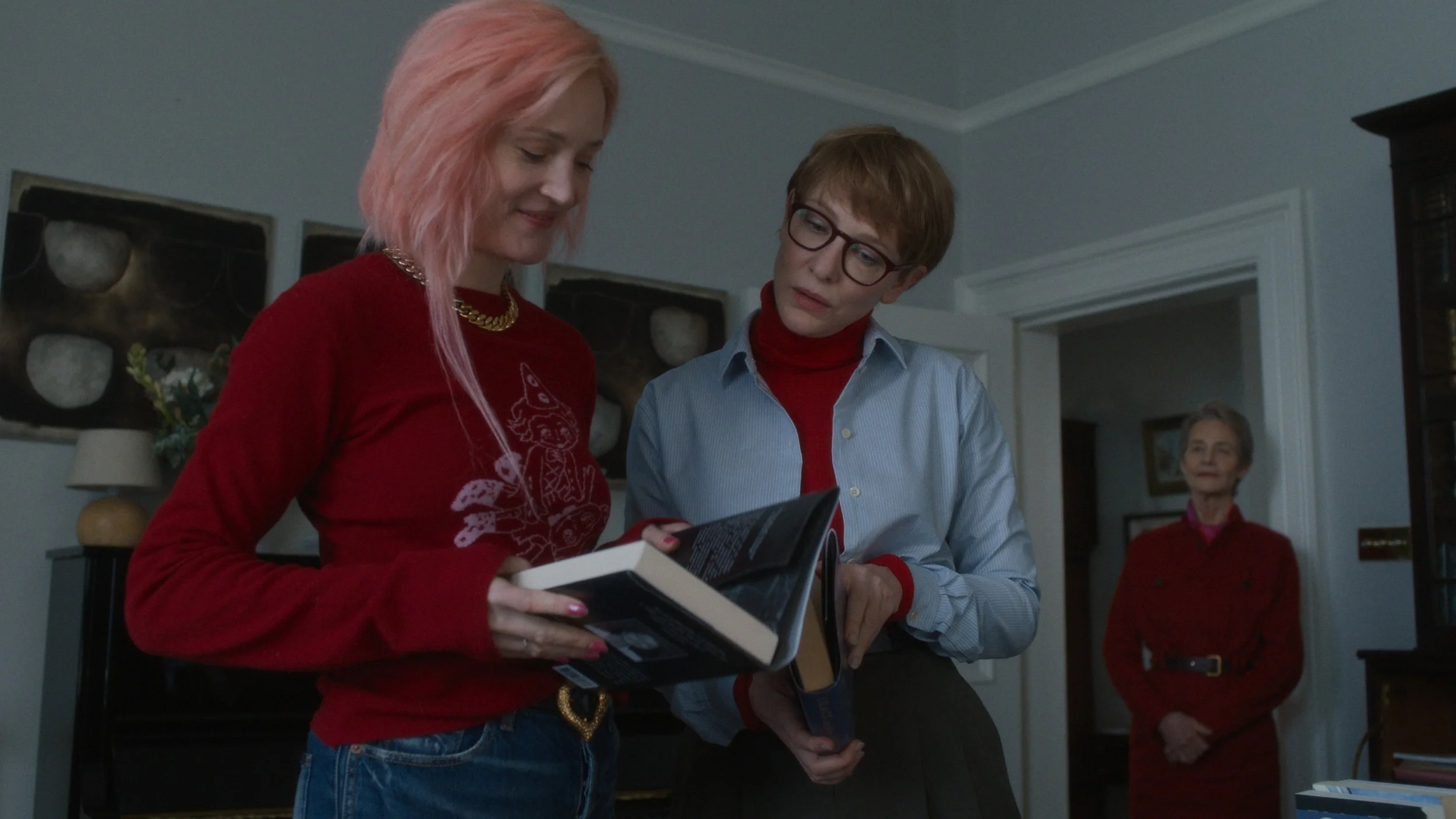
Image copyright (©) Courtesy of MUBI
MPA Rating: R (for language)
Runtime: 1 Hour and 50 Minutes
Language: English
Production Companies: Saint Laurent Productions, Badjetlag, CG Cinéma, The Apartment Pictures, Fremantle, Les Films du Losange, Weltkino, Cinema Inutile, Fis Éirann / Screen Ireland, Hail Mary Pictures
Distributor: MUBI
Director: Jim Jarmusch
Writer: Jim Jarmusch
Cast: Tom Waits, Adam Driver, Mayim Bialik, Charlotte Rampling, Cate Blanchett, Vicky Krieps, Sarah Greene, Indya Moore, Luka Sabbat
U.S Release Date: December 24, 2025
Father Mother Sister Brother is split into three chapters, seamlessly linked by kaleidoscopic green filters that transition between each story. The first, "Father," tells of two neurotic siblings, Jeff (Adam Driver) and Emily (Mayim Bialik), who visit their enigmatic father (Tom Waits) in his remote cabin shortly after their mother's passing. This leads smoothly into the second chapter, "Mother," where sisters Timothea (Cate Blanchett), who is composed, and Lilith (Vicky Krieps), who is free-spirited, visit their successful author mother (Charlotte Rampling) in Dublin for their annual tea. Finally, "Sister, Brother" follows adult twins Skye (Indya Moore) and Billy (Luka Sabbat) as they return to their late parents' Paris apartment to retrieve belongings, discovering more about their Bonnie-and-Clyde-like criminal past.
Jarmusch’s trademark smallness allows for strong claustrophobia and comedy

Indya Moore, Luka Sabbat in "FATHER MOTHER SISTER BROTHER ." Credit: NYFF
Jarmusch deploys his signature static minimalist approach. The chapters are all fairly idiosyncratic in nature, with none of them feeling like a retread due to how he imbues peculiar personalities of the adults, children, or occasionally both, in his writing. The dryness of the interiors as these siblings tread carefully in their conversation captures the universal experience (at least for those who have siblings) of visiting an estranged parent. He depicts how this mundane truth of life is a claustrophobic horror, awkward humor and all.
In the first two chapters specifically, Jarmusch subtly illustrates the masking of one's authentic identity through his actors' pauses or expressions. They hold their cards close to protect their peace or save their loved ones from the music that they don't want to face just yet. Since it's Jarmusch, I frequently laughed heartily at the film's dry wit, rooting from the unique family dynamics on display.
The film peaks at the second chapter. It’s the most interesting character study with extroverted yet somber performances. It's also amusing to see a pink-haired Vicky Krieps as someone who’s not in a position of authority after recently rewatching Phantom Thread, and Cate Blanchett not portraying a mother when she is "mother." The most striking aspect is how, upon returning home, their behavior reverts to a certain youthfulness as the Rampling matriarch dictates the mood during tea time.
Jarmusch's meditation of familial connection amid grief is slight and surface-leveled.
The triptych is knit together by a variety of threads, including recurring gags or lines that revolve around Rolex (which appears to be product placement) and the act of toasting with tea. Yet, the vignettes express the strangeness of visiting a parent following loss and that notion placing a wedge between them. The absence of one parent can cause the surviving parent to feel absent in their own way. All three stories are interesting and entertaining, but they feel like they're skimming the surface of a larger conversation.
Jarmusch's final chapter, "Sister, Brother," is a major tonal departure from the first two segments. It shifts into a self-serious drama that, while retaining some of the symbolic threads, feels like an entirely different film. The twins connect and discover the crime-ridden background of their parents who died in a plane crash. Though smaller and more focused, it still captivates you enough to want to watch the entire film. Jarmusch retains the minimalist style, yet the dramatic atmosphere, shifting from comedy, makes it come across like an NYU student's first movie at Sundance. What keeps the segment cohesive is Indya Moore and Luka Sabbat's loving, familial chemistry.
Final Statement
Although its heart is in the right place for at least ⅔ of Jim Jarmusch's Father Mother Sister Brother, this triptych film falls short of giving a complete picture of the familial bonds that are on display and only scratches the surface of unrealized potential.
Please consider supporting Rendy Reviews. We’re an independent run, Gen-Z and Black-owned entertainment outlet. You can donate to our Paypal or Venmo to help keep our site running. Or become a subscriber for access to 13-years worth of reviews, exclusive interviews, and more! A free way to support is a sign up for the Rendy Reviews’ newsletter and get weekly emails about latest on movie reviews, interviews with film artisans, features, and more.
