
‘Edward Said: Between Worlds’ Review: A Timely Portrait of a Palestinian Scholar Who Refused to Stay Silent
It seems the people who were once “vocal” about the war on Gaza and the genocide fell silent sometime after 2024. Or they’re not as outspoken as they used to be. Some fear for their careers or are focused on American issues at the height of the Trump 2.0 administration. Some simply do not care. I, myself, have fallen prey to this; I’m not using my platforms as much as I used to and am furthering education mostly as a means of protecting my peace, to prevent the weight of existentialist nihilism that’s already at large. At times like these, where performative activism runs rampant and where even the term “Zionist” is often used as a hollow insult for rabid fanatics of one artist insulting another out of its proper context, we need someone like Edward Said.
Who is he? I asked the same question before watching Maiken Baird’s Edward Said: Between Worlds, an enlightening bio-doc that uncovers the history of Palestinian displacement and is narrated solely by a Palestinian scholar who dedicated his life to advocating for coexistence at a time when no one else would. And a fierce political spirit is urgently needed now more than ever.
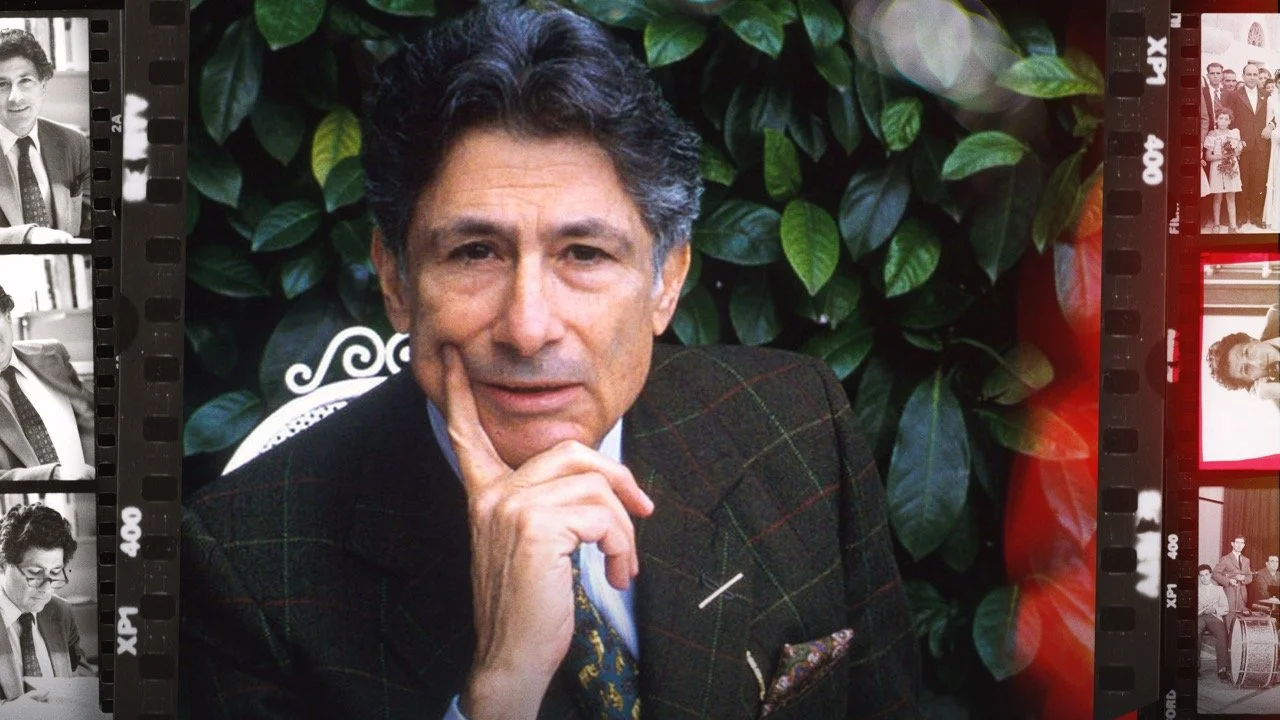
Image Credit: Courtesy of TIFF
MPA Rating: Not Yet Rated
Runtime: 1 Hour and 47 Minutes (107 minutes)
Language: English, Arabic
Production Companies: Baird Films, Impact Partners, Louverture Films, Jigsaw Productions
Distributor: To Be Announced (Cinetic Media handling domestic sales, Dogwoof handling international)
Director: Maiken Baird
Screenwriters: N/A (documentary)
Cast: Edward Said (archival footage)
U.S Release Date: TBA
Pieced together with archival interviews, Palestinian activist Edward Said narrates his life story: a Jerusalem-born Palestinian who moved with his family at the start of the Palestinian War, when the Zionist nationalist movement was on the rise. He eventually made his way to America, where he attended high school and devoted himself to philosophical literature. As an adult, he began to be critical of Western, racist depictions of his people and penned books like Orientalism in 1978. As the Israel-Arab war reached a turning point across the West Bank, he utilized his academic knowledge and became a public figure, traveling nationwide to television programs to speak for his Palestinian brethren.
Between Worlds resurrects Said’s voice and lets history speak for itself.
Between Worlds balances educating the novice and reintroducing the impact he had during his tenure. As someone who fell into the former camp, I found the documentary to be a potent crash course/deep dive of the subject’s career and Palestine’s timeline from then to now.
The film’s endpoint is in 2002, in Said’s final extensive interview a year before his passing from leukemia. Nevertheless, one can easily use context clues and string everything from the film to the country’s current depressive stance.
With thousands of hours of archival footage crammed into a 105-minute runtime, editors Jay Arthur Sterrenberg, Plummy Tucker, and R.A. Fedde naturally mix various videos and interviews to string a full, broad, digestible narrative across the decade-spanning story with a level of intimacy with the figure. Said’s calm yet expressive demeanor and articulation truly drew me to him. He carries himself with diligence, and his studiousness is both very inspiring and genuinely motivating to pick up some of his books.
The assemblage is a standard bio-archival procedure. However, I found myself captivated by restoration and visions of 1930s-era Palestine. Seeing the lives led by the people and the bustling community, long before that evil, eyepatch-wearing Zionist commander Moshe Dayan and the British forces waged war on the innocent people. How infuriating it is that during the pioneering of television and photography across Said’s early life, Palestine’s colonization would be the first to be televised on a global scale, and one can’t help but draw similarities to today. The only thing they lacked was the massive voices of people like Ms. Rachel and (not to get too in the moment) Macklemore.
The film skillfully oscillates among the length of Said’s work, the historical political events in occupied Palestine, and his efforts to advocate for his birthplace while in America, all without incorporating a talking head interview. A nationwide tour where he publicly dispelled myths and firmly rebuked American-Zionist critics made for some infuriating scenes. The way my blood boiled and Kill Bill sirens blared over a segment featuring current Israeli Prime Minister/genocide leader Benjamin (or Bitchamin) Netanyahu, who refused to appear at the UN when he was Israel’s ambassador, appeared with the excuse, “I have to be in another building because Said would kill me.” Meanwhile, you look at Said, and the only thing this man will kill you in is a chess tournament or a debate.
Between Worlds leaves you wiser, angrier, and wishing there were more hours.
Therein lies my issue with Between Worlds: as exceptional as it is, cramming decades of history into less than two hours of runtime comes at the expense of the movie itself. Its strong structure falters at certain points, meandering to another topic. As the first documentary with full access from Said’s estate, I’m convinced the project would’ve been better suited as a limited miniseries.
This film serves as a timely reminder of what voicing opinions as a scholar can do. Said teaches so much, allowing you to get closer to a figure whose humanity and spirit should inspire more to do something. While the film doesn’t touch upon the modern-day genocide of the Palestinian people, the existential fear lingers. Truly, Between Worlds had me sitting up at a cafe, reflecting on the cycles of Palestinian oppression and colonialism that are captured on candid camera and continue to display, if not worsen, in the current decade.
We need more modern scholars of Said’s breadth to continue his legacy. Or perhaps there are many, and I’m just ignorant of this, as I haven’t researched as much as I should. I learned a lot from Edward Said and felt worse after this newfound knowledge. Given that this movie is about to hit major festival circuits, stopping at NYFF after its TIFF premiere, it should radicalize and inspire all to strive to be outspoken for the oppressed, especially from an academic point of view.
