'Devotion' Review: Jonathan Majors and Glen Powell Soar in Nuanced War Bio-Drama
Devotion
PG-13: For strong language, some war action/violence, and smoking
Runtime: 2 Hours and 18 Minutes
Production Companies: Columbia Pictures, Black Label Media
Distributor: Sony Pictures Releasing
Director: J.D. Dillard
Writers: Jake Crane, Jonathan A. Stewart
Cast: Jonathan Majors, Glen Powell, Christina Jackson, Thomas Sadoski, Joe Jonas
Release Date: November 23, 2022

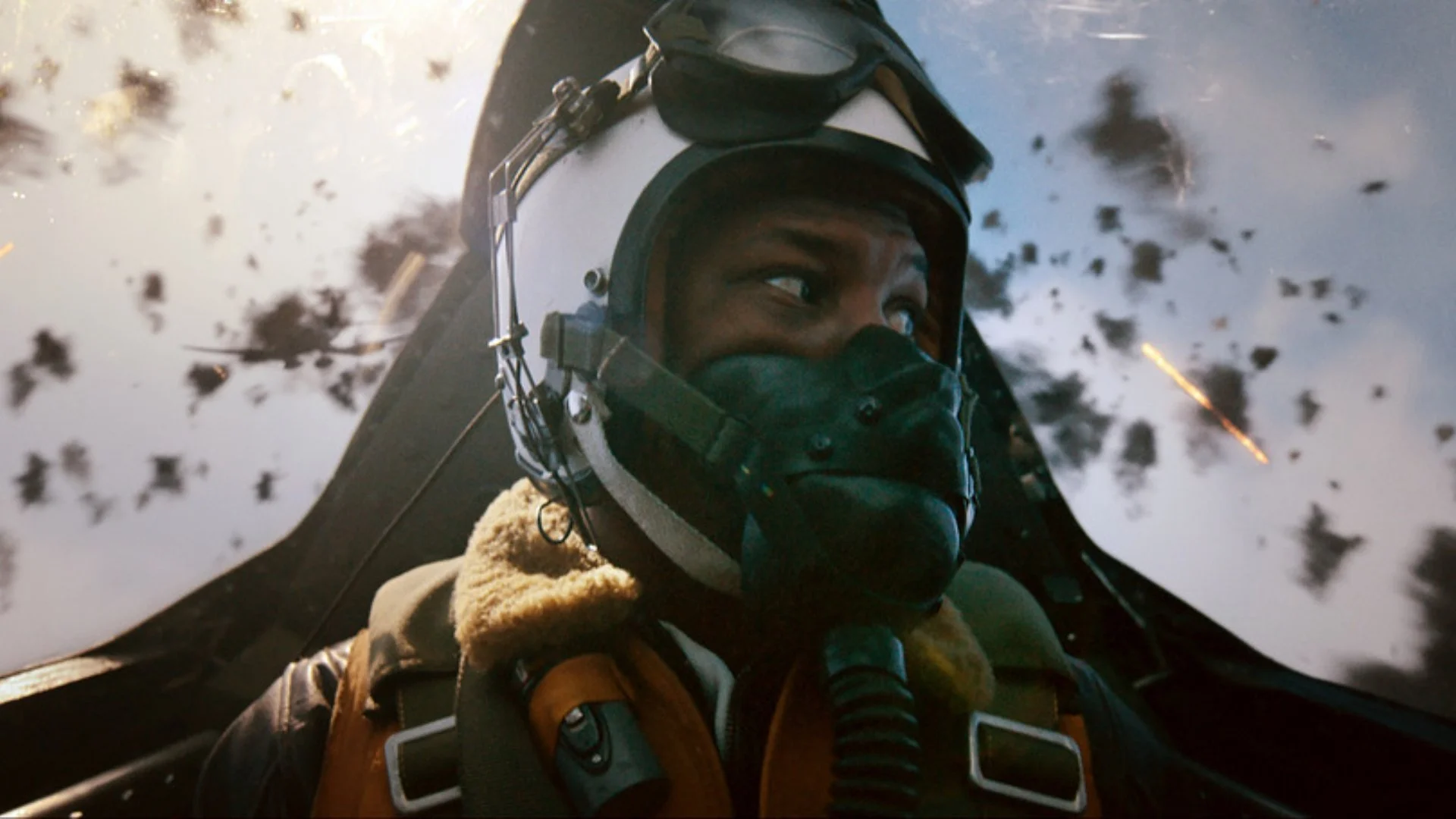
Devotion, an aerial war epic based on the bestselling book of the same name, tells the inspirational true story of two elite U.S. Navy fighter pilots who helped turn the tide in the most brutal battle in the Korean War: Jesse Brown, the first Black aviator in Navy history and his fellow fighter pilot and friend, Tom Hudner. Their heroic sacrifices and enduring friendship would ultimately make them the Navy's most celebrated wingmen.

Look! Up in the sky! It’s a bird! It’s a plane! It’s the world’s first African-American Navy aviator!
It’s been a long time since a studio bio-drama made it feel like history was unfolding on screen rather than a Hollywood spectacle meant to sweep awards. I’m no stranger to movies that do the latter (1917 lol), but from time to time, it’s nice to get educated on war figures that history books hardly spotlight. Case in point, Devotion is a bio-drama about the first Black aviator in Navy history, Jesse Brown.

Director J.D. Dillard must’ve listened to criticisms of recent Black films as a guide on what to do and what not to do. Devotion doesn’t fall into tired tropes from the Green Book “here’s the story of my Black best friend” approach, nor does it emphasize gratuitous racial influence to reiterate a well-known period in history. The focus is on Jesse Brown (Jonathan Majors), with the story told mostly from his perspective. In the hands of any other filmmaker, Tom Hudner (Glen Powell) would’ve been the lead with Jesse as a supporting character. Thankfully, the white man stays in his lane—something Hollywood often fails at when it comes to telling these stories.
The narrative acts less like an action flick and more like an intimate study of Brown’s identity as a devoted husband and an aviator. Jonathan Majors, who has always been exemplary in every role, showcases Brown’s multifaceted character at work and home. Majors delivers subtle intuitiveness with his expressions, conveying Brown’s mentality in both settings. The most unsettling scenes stem from Brown looking at his reflection in the mirror and reciting every slur he’s called in the U.S. Navy program to motivate himself. When around his wife Daisy (Christina Jackson) and daughter, he’s tender, loving, and full of life. When he’s at work amongst his predominantly white peers, some of whom are full-blown racists, his apprehension takes over, and the emotional wall is erected. Of course, this doesn’t apply to his wingman Tom Hudner, who is eager to be Brown’s ally.
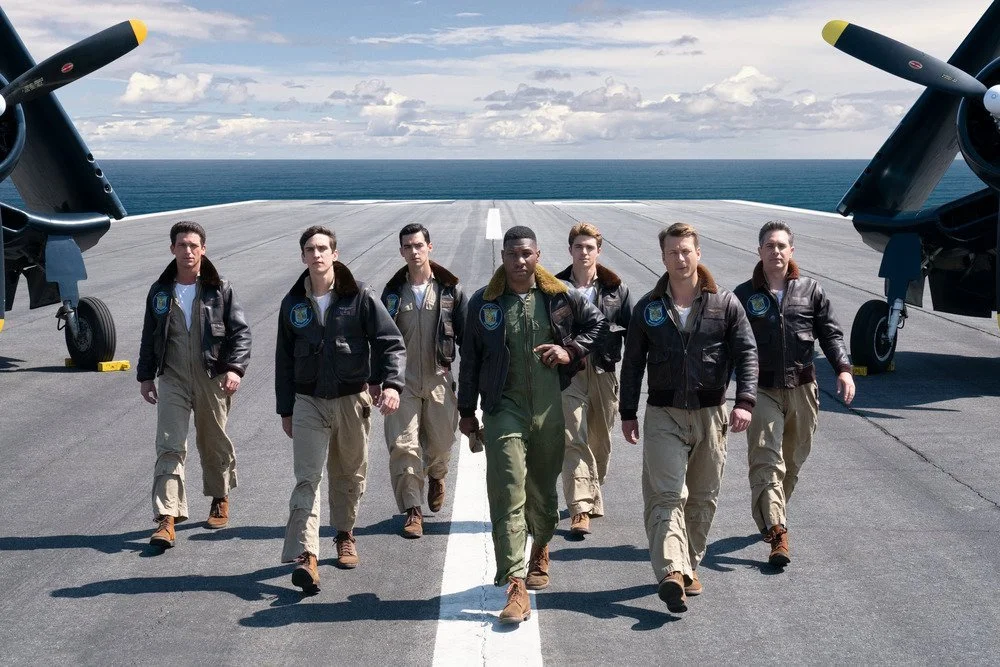
Glen “I’m never gonna leave this fighter jet” Powell is amazing as Hudner. Yeah, this is Powell’s aviator year, but Hudner and Hangman’s personalities couldn’t be any more different. Hudner is a quiet, charming character who doesn’t have much in life outside of his occupation. When he meets Brown’s family and promises his Daisy to stay beside him, Hudner bears that responsibility throughout the film. Majors and Powell have remarkable chemistry as their characters’ budding friendship is developed and given nuance. Brown prefers recognition for his work as an aviator rather than for his race. But when discrimination arises, Hudner is at the ready with a left hook. Any other movie would've glorified Hudner’s white savior complex, but Brown often calls him out on his condescending bullshit. This script is a good exploration of white allyship without throwing said white person on a pedestal.
While this is Dillard’s first major studio production, he knocks it out of the park with his direction. Apart from giving the film a surprisingly warm atmosphere, the aviation sequences are also gripping. Dillard goes full spectacle and delivers some of the most intense oners I’ve seen in a film all year. There’s an ambitious shot in the finale that goes from POV to a wide shot and then handheld all in one swoop, and it’s breathtaking.

Similar to Top Gun: Maverick––I’m sorry to make this comparison like most critics will lazily do––Devotion features several practical effects for the aviation and flight sequences. For the most part, it looks and sounds incredible, especially in IMAX. However, the CGI is often noticeable and rough around the edges in quality.

Most of my criticisms are towards the Battle of Chosin Reservoir finale where the CGI is a tad incomplete, and the editing is loose during the dogfight. But the big emotional centerpiece is riveting. For the most part, I had a wonderful time watching Devotion, which exceeds the quality of many middling Black bio-dramas that tackle civil rights figures, white allyship, and war. Even though its cheesiest elements are overly familiar, I was swept up by how vulnerable and warm the story is. It’s weird how Devotion and Top Gun: Maverick, the two aviator films of the year, focus on themes of teamwork and empathy.

During my academic upbringing, the variety of historical features we got was few and far between. The only Black historical drama to tackle a niche subject was Red Tails, which we don't speak about. Devotion is one of those movies that history teachers of predominantly Black schools should show their students to witness a piece of history that often goes unseen.
Like Jesse Brown, Devotion soars higher than any expectation. With a warm and nuanced story approach, incredibly directed aviation sequences, and charming performances by the ensemble, this bio-drama is a wonderful study of an American hero whose story deserves to be seen by everyone.