
'Brother' TIFF 2022 Review: Boyz in the Borough
Brother
NR
Runtime: 1 Hour and 59 Minutes
Production Companies:
Distributor: Elevation Pictures
Director: Clement Virgo
Writer: Clement Virgo
Cast: Lamar Johnson, Aaron Pierre, Marsha Stephanie Blake, Kiana Madeira, Lovell Adams-Gray
Release Date: N/A

Propelled by the pulsing beats of Toronto’s early hip hop scene, Brother is the story of Francis and Michael, sons of Caribbean immigrants maturing into young men in a housing project called The Park. The brothers’ bright hopes are thwarted during the summer of 1991 when escalating tensions set off a series of events that change the course of their lives forever. Based on David Chariandy’s celebrated novel, Brother crafts a timely story about the profound bond between brothers, the resilience of a community, and the irrepressible power of music.
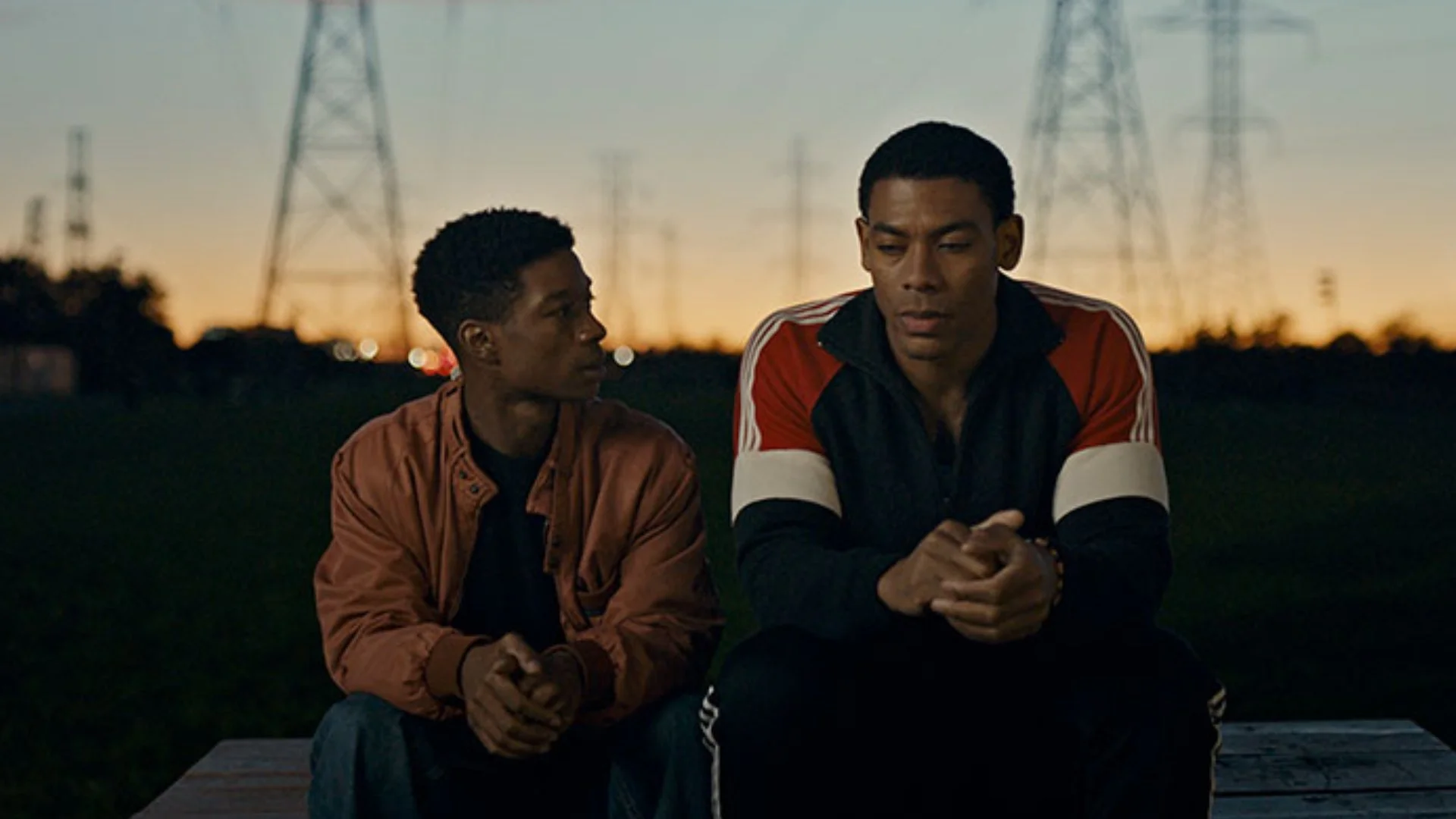
Based on David Chariandy’s novel of the same name, Brother finds writer/director Clement Virgo paying tribute to Scarborough through the lens of Caribbean brothers Francis (Aaron Pierre) and Michael (Lamar Johnson) during the ‘90s. Virgo meticulously illustrates the harsh realities that plague the city while never vilifying it. Scarborough is presented as a character through naturalistic establishing shots and characters shouting, "Borough represent!" wearing the pride of their neighborhood at all times. He adds intimate details of their Caribbean-Canadian culture, from the set dressing in their home to their local barbershop.
Virgo's screenplay excels at deconstructing Francis and Michael's brotherhood while balancing their identities and lifestyles. Francis is as stoic as he is physically built. Unafraid to look death in the eye, he’s a model protector of his brother. Michael, on the other hand, wears fear on his sleeve and doesn't hold the same bravado as Francis. I’m a sucker for the macho older sibling and timid younger sibling dynamic, so it’s not surprising that I was swept up by their brotherhood. Their contrasting personalities juxtaposing their ghetto community is frustratingly surface-level, but Lamar Johnson and Aaron Pierre share spectacular chemistry. The two wear their respective character’s identities with confidence and intimate subtlety where their expressions speak louder than words. That sentiment also applies to Marsha Stephanie Blake as their hard-working single mother, Ruth.
Pierre is the standout, for the weight of the world is on his shoulders. Francis’ character arc plays like a Black Greek tragedy as he bears various responsibilities that have him bursting at the seams. His existential crisis stems from abandonment issues (having an absent father) and masking his true identity. This is an incredible showcase of versatility given how Pierre can wear his vulnerable emotions on top of his masculine presence.

I am required to watch one prestigious Black drama per year that discusses grief, poverty, and of course, race. Most of these films, Brother included, are passionately crafted in both their writing and direction. However, the substance differentiates Brother from the works of Jenkins and Baldwin. The emotions are mostly faux due to its unflinching emphasis on graphic content and its unnecessary non-linear format that drags the pacing down.
The narrative bounces between the early ‘90s and the early ‘00s to explore how Francis' presence and absence influenced Michael. Its themes and storytelling format bear similarities to The Tree of Life as the brothers grapple with their traumatic childhood during their journey into manhood. In Brother’s case, the non-linear format attempts to paint an abstract portrait of an important familial figure’s presence and impact, but its execution is inadequate. The atmosphere is bleak no matter what timeframe is onscreen. The snapshots of the past aren’t fleshed out as the film always cuts back to the present, forcing you to hop aboard another bleak journey to coordinate Michael’s arc. This could’ve been done in chronological order. Trying to set up a predictable “mystery” about what happened to Francis is a major disservice to the story.
Around every corner you’ll find another checkbox within the umbrella of Black trauma needing to be filled and it’s displayed through graphic imagery. Brother's depiction of violence borders on gratuitous and, like its non-linear story format, it feels unnecessary. The graphic imagery beats you over the head about how these young Black men are, indeed, Black and how dangerous their world is. They’re devoid of experiencing joy, and when they do, it's fleeting.
Yes, this film presents a reality that many people across the world face, but there comes a time when a Black writer must draw a line for how their prestigious Black drama narratives are regurgitated. The pile of familiar Black trauma movies is so vast that I’m now numb to them all. It’s exhausting to be forced to digest these stories on an annual basis. I hate that I have to crown a “Best Black Trauma Drama” every year. Even if this content comes from a Black filmmaker, it’s baffling that it takes such explicit visuals to appease white audiences. It feels so dishonorable for a Black filmmaker to resort to that when these stories are a dime a dozen.
Can we get a Lady Bird? Can we get a Turning Red? When will we get a light-hearted coming-of-age slice-of-life film that doesn’t involve the ghetto or police brutality or whatever social issue checkbox we go through? Why are the stories we put on a pedestal also the bleakest? Call me when someone decides to offer that story that evokes a sense of hope instead of marinating in our pain.

Stabilized by stellar performances from Lamar Johnson, Aaron Pierre, and Marsha Stephanie Blake, Brother is an overly familiar Black drama with frustrating storytelling that prefers to wring the emotions from viewers who don’t share our skin color, while alienating the ones who do.

