‘Belfast’ Review
PG-13: Some violence and strong language
Runtime: 1 Hr and 37 Minutes
Production Companies: TKBC; Northern Ireland Screen
Distributor: Focus Features
Director: Kenneth Branagh
Writer: Kenneth Branagh
Cast: Caitríona Balfe, Judi Dench, Jamie Dornan, Ciarán Hinds, Colin Morgan, Jude Hill, Lewis McAskie
Release Date: November 12, 2021
In Theaters Only

Belfast poses Branagh at his most scaled-back in scope and intimate in tone to transport viewers to the titular city in 1969, during the height of The Troubles, a class war that pit the Protestants and Catholics against each other. As you’re thrown into this specific backdrop, the film focuses on Buddy (Jude Hill), a wee nine-year-old lad living with his mom (Caitríona Balfe), dad (Jamie Dornan), older brother (Lewis McAskie), and not so far off from his grandparents (Judi Dench and Ciarán Hinds). Due to this being a heightened time where a revolution is taking place and militant action and surveillance are taken to his rather quiet neighborhood, Buddy tries to navigate life as a child his age should. Meanwhile, his Ma is forced to hold down the fort while Pa travels from Ireland to England for work as they both are pensive on their stance regarding living in the city during these complicated times.

Within the past decade, actor/writer/director Kenneth Branagh has primarily helmed multi-million-dollar studio films that ranged in quality. The man played himself in both the past and the future in Artemis Fowl, plus the unreleased Death in the Nile film is already cursed due to it starring a cannibal, an anti-vaxxer, and a zionist… all in one ensemble. Once wearing nothing but big-budget productions, Branagh tries on some new clothes to deliver an original and personal slice-of-life love letter to the place of his upbringing.
To keep it plain and simple, this is Kenneth Branagh’s best movie in ages. For the first time in a very long time, you hear his voice in a poignant and nostalgic recreation of a childhood he’s personally familiar with. Belfast is described as a semi-autobiographical film and it’s felt through the intricate amount of detail he put through his lens and presentation. Be warned, many people will describe this as Branagh’s Roma due to it being another slice-of-life period piece presented in black and white during a revolution in the filmmaker’s country of origin. But as far as thematic storytelling goes, this is like if A Christmas Story was directed by Richard Linklater with a dash of Spike Lee’s Do the Right Thing; it primarily centers on nine-year-old Buddy in a series of snapshot vignettes doing child-like activities, such as playing, having first crushes at school, and getting into trouble. During all of this, the tension between the opposing sides of the war brims in the background of the neighborhood. Through Buddy, we get a glimpse of the world he inhabits and his navigation, which is the perfect portrayal of being a nine-year-old. Even if you’re unfamiliar with the period, the film makes you want to be a kid again. It has a natural sense of humor where minuscule episodic events happen throughout and Buddy tries to find guidance through his family — mostly his wise and loving grandparents. It may be small in scale but boy does the film wear its heart on its sleeve. As much as you try to be a grinch towards it, it truly finds a way to warm your heart.
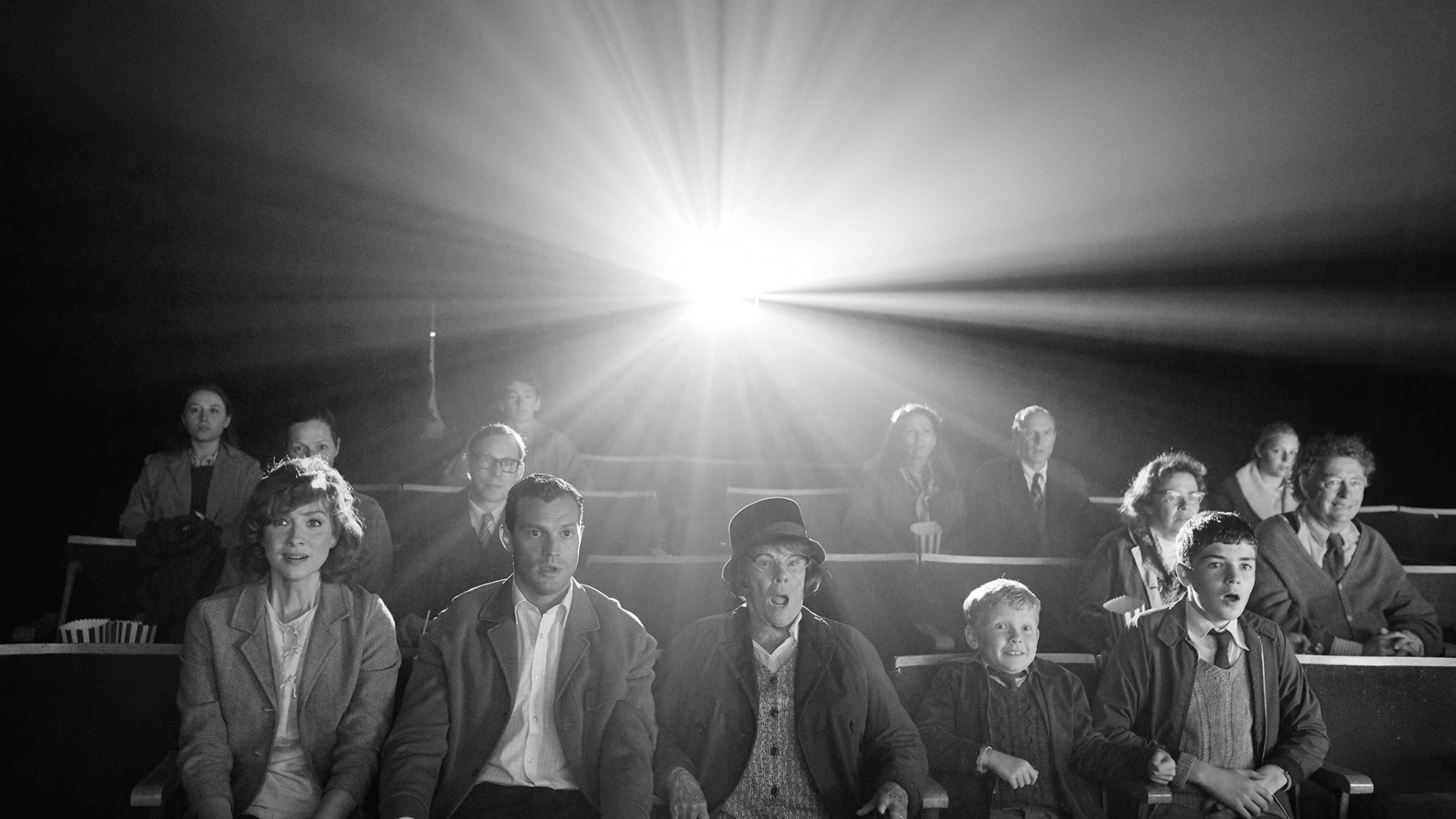
Much like other international slice-of-life period dramas, such as Roma and Cold War, Belfast is shot in black and white to make the recreation of this time in Northern Ireland feel like it’s being screened from an old school projector but with crisp cinematography. Branagh bridges the use of color in his black and white world during scenes of Buddy’s family visiting theater spaces and witnessing art, whether it be a stage production of A Christmas Carol or watching Chitty Chitty Bang Bang in a theater and you see the love for cinema in little Buddy’s eyes. I know Oscar voters are going to eat this up because nothing tickles their fancy more than a movie that finds a way to tribute other movies.
Branagh does his best to accurately depict the anxiety-inducing reality of the time while balancing it with a child-like point of view. This is the story of Buddy and his family trying to live a normal life under rough conditions. Though I don’t have the authority to say whether this moment in history is depicted accurately or not, I was completely immersed in the setting, even when the militant occupation was present and you could feel the tension bubbling. The screenplay accomplishes a genuine form of anxiety on a small scale, for the family doesn’t know if they should stay or go.
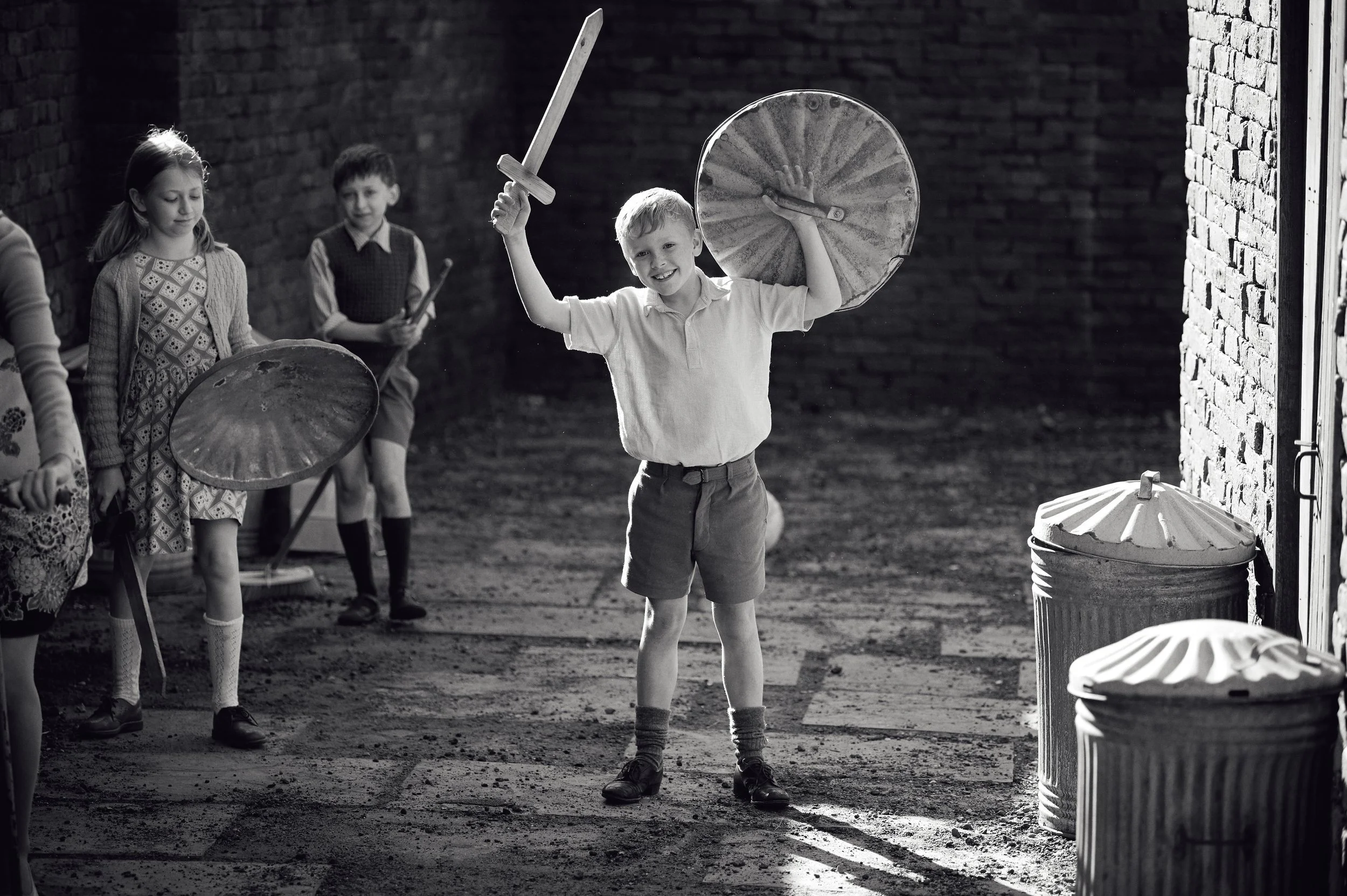
The cast delivers fantastic performances but it’s newcomer Jude Hill who wields the film’s baton. It’s this kid’s debut and he delivers one of the most powerful and natural performances I’ve seen a child actor do since Jacob Tremblay ran the gamut during the 2010s. He’s cute, witty, has a natural charm with great comedic timing that walks the fine line between curiosity and confusion without going overboard. He’s written so well where his dialogue, actions, and reactions to whatever scenario he’s positioned in stay in their rightful lane. You feel as if you’re in his shoes throughout the film and there are moments where you go, “Man, that takes me back.”
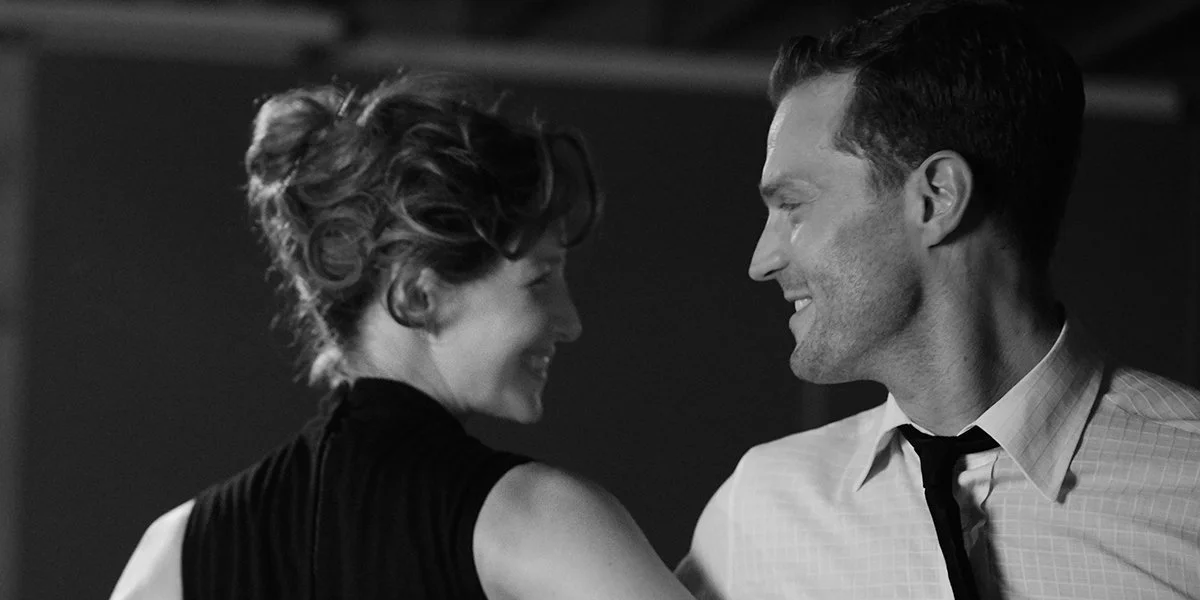
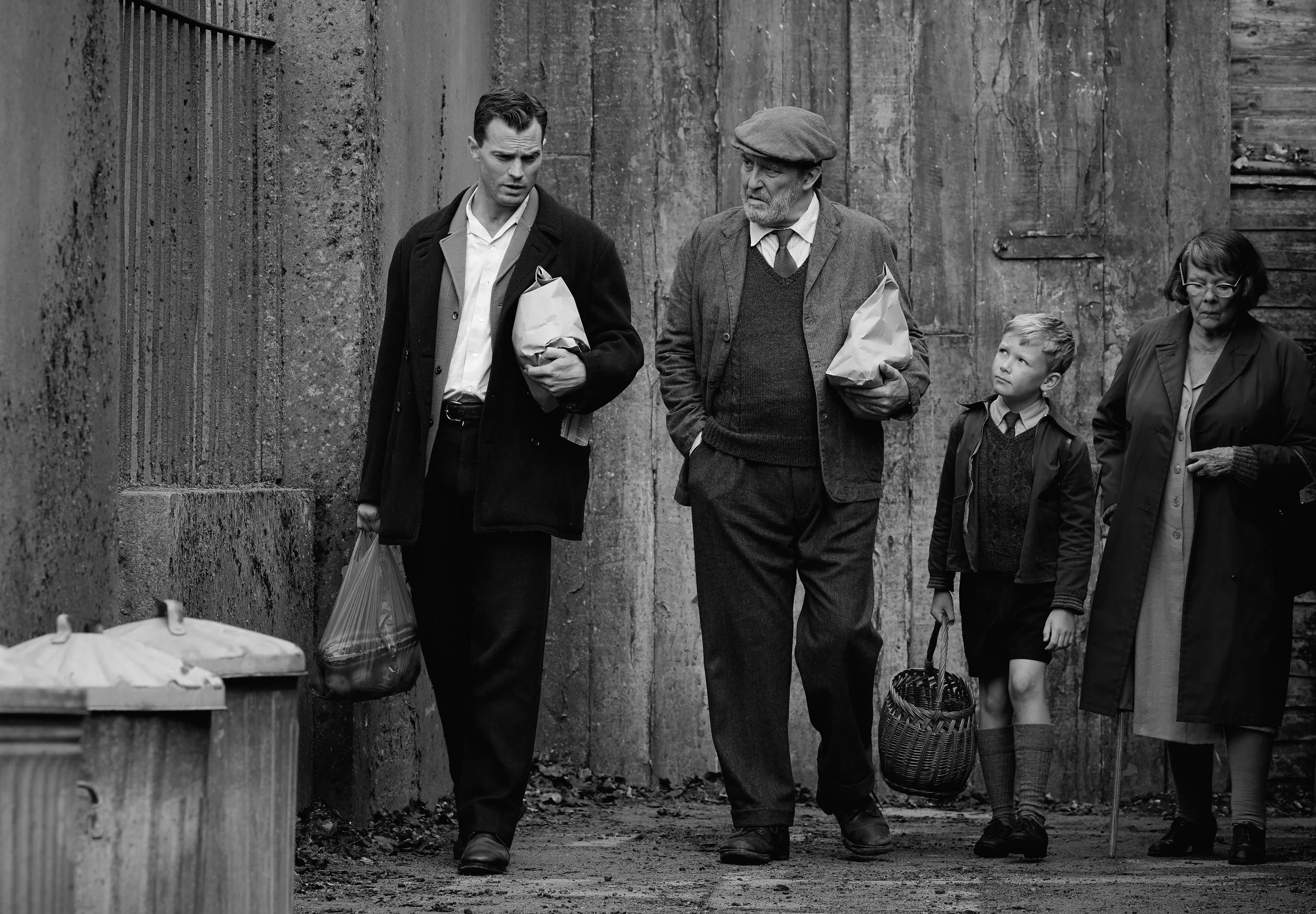
It’s great to see Caitríona Balfe display her natural skill in a feature film and she kills it as the mom who’s trying her best to keep it together while raising two kids. Jamie Dornan is utterly delightful as a loving dad with so much on his plate, from working in another country to being present for his sons and being a good husband. He has such sweet and down-to-earth chemistry with Balfe that you feel the love (and distress) they experience. However, the movie shines best when you’re with the grandparents, played by Ciarán Hinds and Judi Dench. Those scenes stand out because that’s where Buddy goes to get advice and Hinds is so tender and perfect as this wise and smooth grandfather, while Dench is a foil for him to playfully talk trash to his face. That old married couple dynamic is amazing. I haven’t even thought of the term “Best Supporting Actor” this year, but man, Hinds is gripping in every scene as he brings such sweet granddad wisdom.

You know I adore short movies, especially during this time of the year where we’re given nothing but excessively long dramas. Yet, due to its short runtime, you feel that Belfast’s pacing doesn’t correspond with the intended gradual build-up to make the most emotional beats hit heavily. The film is 97 minutes long and many of the episodic vignettes move like a breeze where most moments feel too short… and then sometimes too long. It opens threads that don’t get as much time and attention as they deserve. Many family members in Buddy’s unit are given their time to shine, except his older brother Will, who gets the scraps. His role is practically non-existent while his bad-egg older cousin (Lara McDonnell) uses him as bait and influences/forces him to join her on her petty crime sprees. I felt bad for the guy because he’s just there for the sake of being there and lacks a proper story. How is he dealing with navigating through all of this?
Since Belfast takes place in a year, Branagh could’ve padded out the time a bit to flesh out the overall narrative instead of taking snapshots at rapid shutter speed. At times, the film feels repetitious, for it features nothing but Van Morrison songs and constant montages. The songs are fine and all, depending on how you feel towards Morrison (do a “try not to cringe challenge” with his most recent album, I dare you), but you know there are so many other Irish artists they could’ve pulled music from. There’s so much Van Morrison present when this movie is the cinematic equivalent of Stevie Wonder’s “I Wish”. I could cut up an AMV with that song, match it to this movie, and it would be a natural fit.
Speaking of natural (or unnatural) fits, the film features an antagonistic character (Colin Morgan) who exudes major West Side Story energy and feels like a character from an entirely different movie. From the moment he shows up, you already know the role he’s supposed to play in the third act but he still felt so out of place for me.
The cracks start to show in the third act, for all of the intricate pieces that were built up in varying degrees are thrown at a wall when you know it had enough potential and mileage to be more organic. By the time the final reel comes around, you feel the movie lost track of time. “Oh boy, we gotta tie up all these threads right now. This movie needs to wrap up.” The film doesn’t give you any time to breathe through its grand finale. Scenes just happen where the tone switches on a dime and you don’t know how to respond to it. Moments of tragedy and dark intensity jump right into a moment of levity and joy in a snap and it feels like some scenes were left on the cutting room floor.
Belfast is a nice change of pace for director Kenneth Branagh as you feel him passionately getting something meaningful off his chest. It’s certainly flawed, especially with its storytelling, which is too short for its own good that it disrupts the natural flow for pacing. It’s no secret that Belfast is a feel-good crowd-pleaser, and it may be the best of its kind this year that fills you with genuine hope. It’s something I’d even recommend families to see. It’s minimal in scope and storytelling, but it’s huge in heart, and boy does it creep up on ya.