
‘Wuthering Heights’ Review: A Fifty Shades Reskin for the Insipid “I Can Fix Him” Audience
Emerald Fennell’s “Wuthering Heights” seems as if it were thawed from an ice block 15 years past its expiration date. The filmmaker’s adaptation, sorry, “reimagining” – hence the title's use of, and insistence on referring to it with, its quotations – of Emily Brontë’s classic romance deconstructing love in conflict of inner desire under class and racial disparity arrives as if it were meant to come out around the 2010s. Remember when studios were going for the Hot Topic/Twilight crowd with Red Riding Hood, Beastly, Beautiful Creatures, etc.? Around that same time, another piece of Twilight-influenced media, Fifty Shades of Grey, dropped, and female-gaze smut made a resurgence in the mainstream.
Fennell’s third directorial effort, following the divisive (for others; I, myself, don’t like them) Promising Young Woman and Saltburn, is a beautiful combination of the two trends. Frankly, it’s a chaotic mess and the epitome of beautiful gowns.
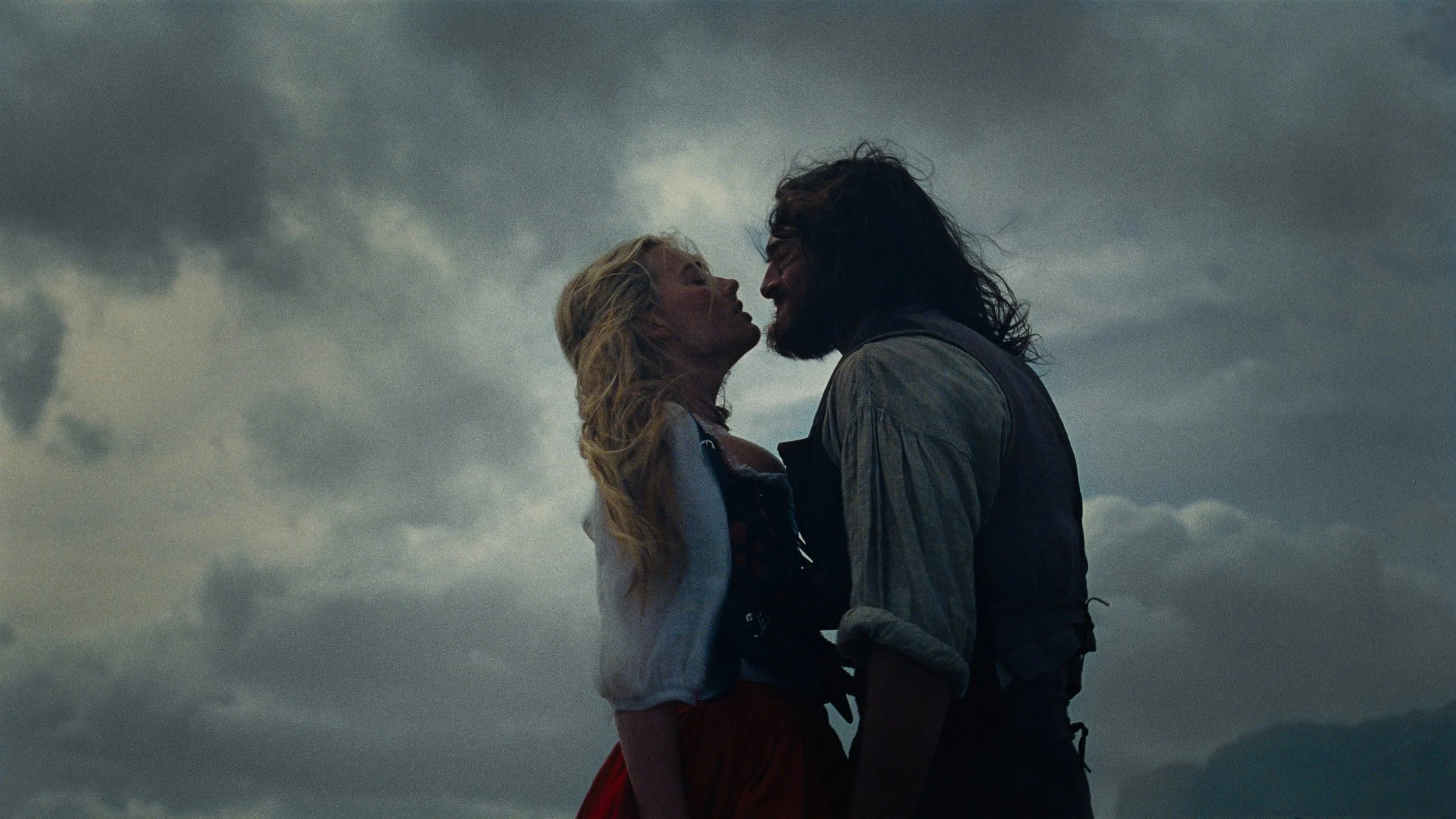
Image copyright (©) Courtesy of Warner Bros. Pictures
MPA Rating: R (sexual content, some violent content and language.)
Runtime: 2 Hours and 16 Minutes
Language: English
Production Companies: MRC, Lie Still, LuckyChap Entertainment
Distributor: Warner Bros. Pictures
Director: Emerald Fennell
Writer: Emerald Fennell
Cast: Margot Robbie, Jacob Elordi, Hong Chau, Shazad Latif, Alison Oliver, Martin Clunes, Ewan Mitchell
U.S Release Date: February 13, 2026
In Wuthering Heights lives carefree Catherine Earnshaw (Charlotte Mellington), her vain, abusive, alcoholic father (Martin Clunes), and her only companion, servant Lady Nelly (Vy Nguyen) – Hindley, who? An orphaned, nameless boy is rescued, and Mr. Earnshaw takes him in as Cathy’s “pet.” Cathy names him Heathcliff, and he becomes a stable boy who lives in the attic. They form an unbreakable bond, but Cathy's pride gets them into trouble, and Heathcliff selflessly takes the brunt of her lashings.
As adults, Cathy (Margot Robbie) and Heathcliff's (Jacob Elordi) relationship intensifies as her sexuality kicks in and she starts thirsting for her brother-bestie-person-man. Torn by her love for Heathcliff, she doesn't want to leave her high-class belongings, especially as Earnshaw’s gambling and alcoholic debts are starting to pile up. That all changes when Edgar Linton (Shazad Latif) and sis – oh no, now ward – Isabella (Alison Oliver) arrive at the moors next door. Cathy gets entangled with them. Nelly (Hong Chau), who tires of seeing Cathy act far too bratty for her age, is instrumental in their affair, resulting in Heathcliff leaving the Heights and Cathy marrying Edgar. Five years later, Heathcliff returns stinking rich and with that new class pompousness, wanting to earn Cathy’s love back. All this stirred into a secret affair full of lust, desire, and betrayal.
Well, “Wuthering Heights” is indeed stunning.
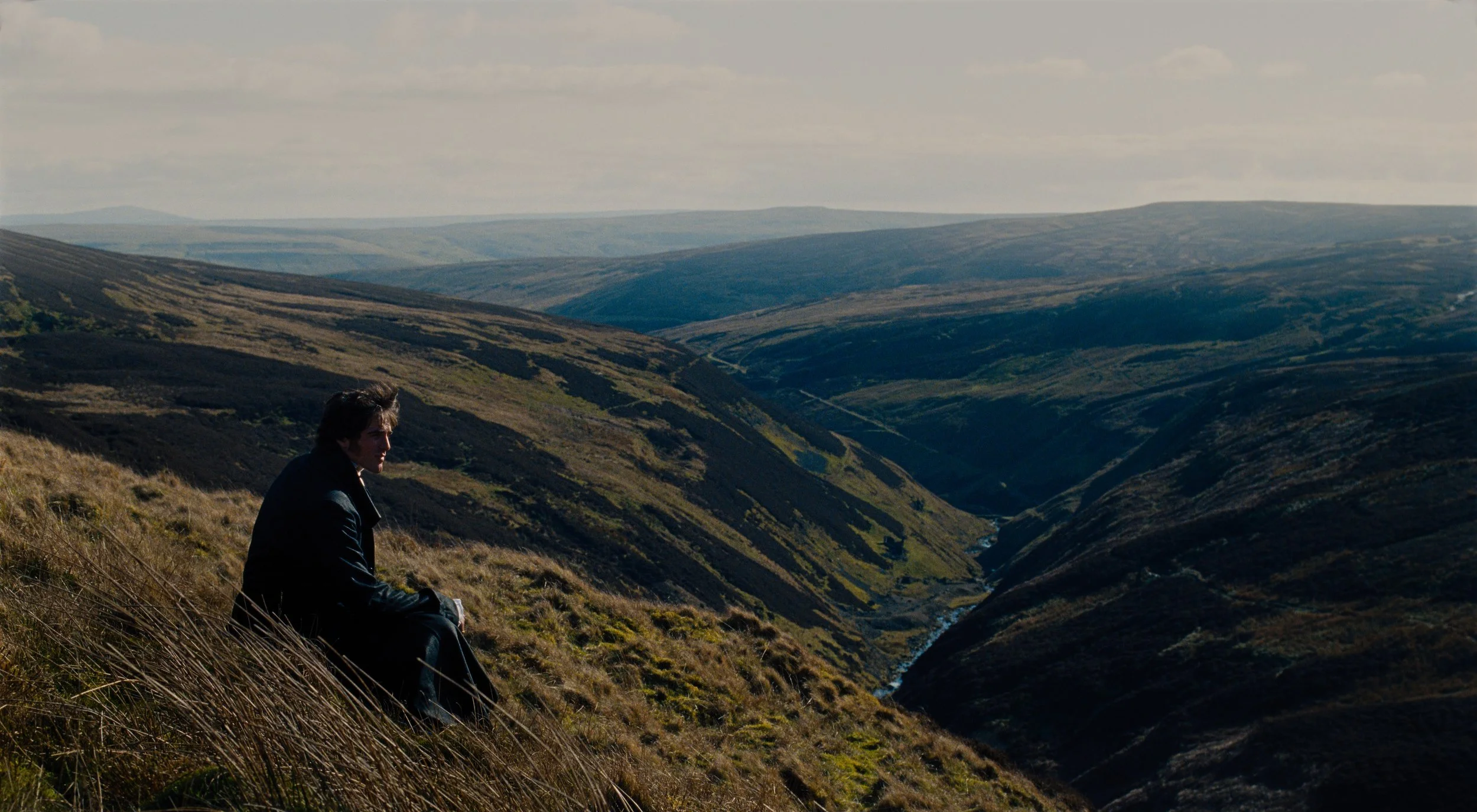
JACOB ELORDI as Heathcliff in “Wuthering Heights,” a Warner Bros. Pictures Release.
If there’s anything Emerald Fennell is going to do, it's make a movie look good. She employs strong artisans, remarkable in their skills, to bring her large-scale, classy, vibrant vision to life. She reunites with her Saltburn team, including production designer Suzie Davies and cinematographer Linus Sandgren, who amplify a striking gothic atmosphere in their respective areas. Sandgren’s immersive camerawork and shot composition emphasize the scale and sweeping vistas of the Yorkshire moors, paired with cloudy lighting, making some of the romantic moments between Heathcliff and Cathy effective by design. Davies touches on the colorful Linton interiors and decor, giving the film a vibrant pop. This is par for the course with Fennell’s works, as it is a stunning, well-crafted production visually. The original Charli xcx tunes, which act as a non-diegetic narrator, are also solid.
As Fennell’s third directorial outing, it’s become clear that these are mere sheens to rattle your eyes. She hopes that it's enough to distract from the vapid writing that she has convinced herself is prestigious, with such an inflated ego that her words – or in this case, reinterpretation considering the quotations – are greater than what the content of her films are.
Miscast from moor to moor.
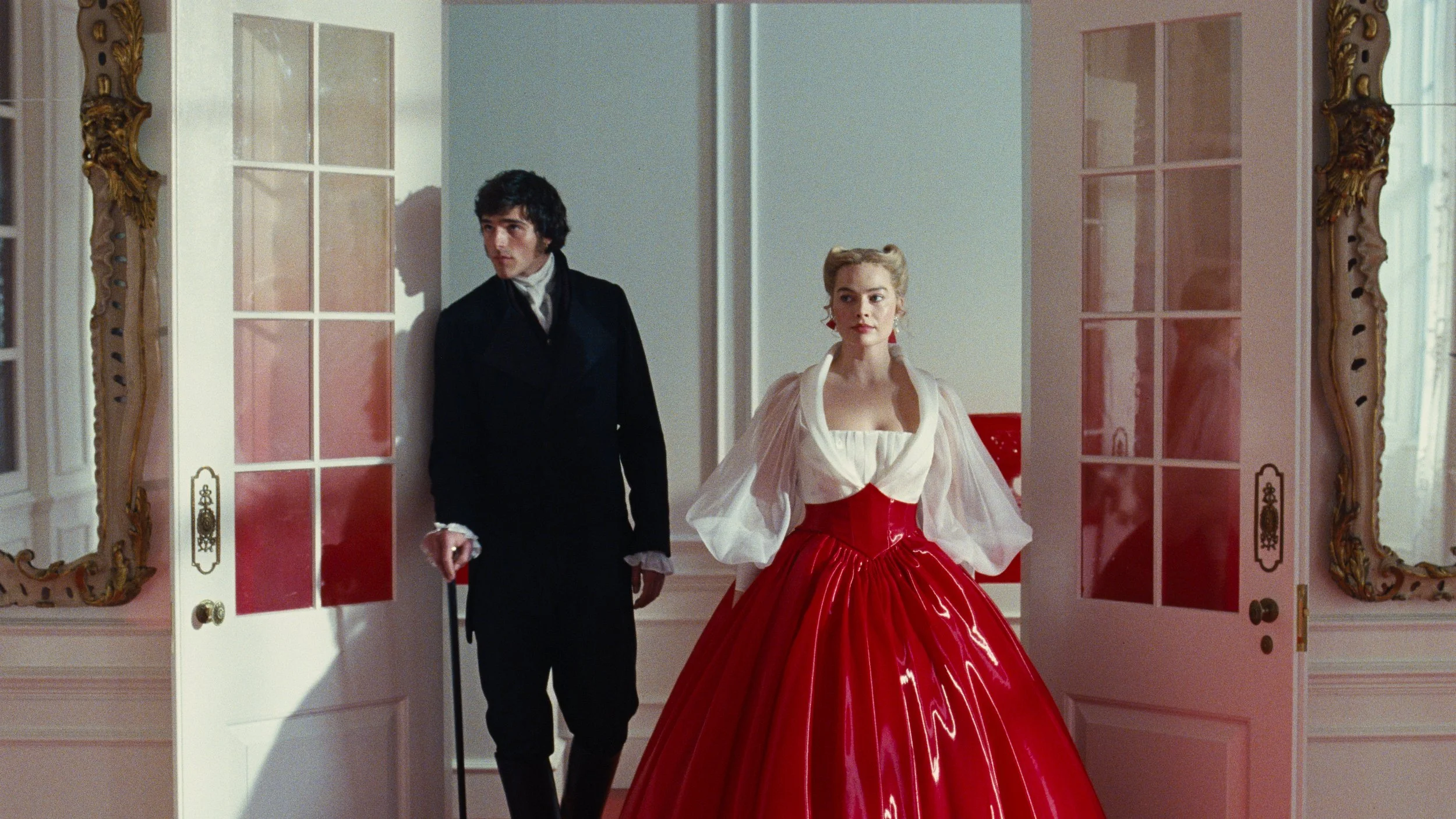
(L-r) JACOB ELORDI as Heathcliff and Actor, Producer MARGOT ROBBIE as Catherine Earnshaw in “Wuthering Heights,” a Warner Bros. Pictures Release.
As always, Fennell’s old habits die hard, and there are many horrendous updates Fennell imbues in her translation. Its entire ensemble is miscast for distinctive reasons, to the extent that it creates a further issue omnipresent throughout Fennell’s overall career. The sole exception is Alison Oliver, whose Isabella is now made a breathy, diminutive weirdo, but the only standout cast member to show fine acting range. Hell, she should’ve been Cathy. Everyone else…
Starting with her leading duo, “reimagining” moniker be damned, Robbie is too old for the aged-up Cathy, and Elordi is too white for Heathcliff. Both miscast decisions hindered my demeanor to even care remotely throughout. It doesn’t help that their dialogue comes off as theatrical, like a playhouse production, falling as flat as a teen girl’s first Victorian fan-fic.
Fennell illustrates this version of Cathy as an adult with severe arrested development, acting as her father’s keeper – and subject of implied molestation? – which stunted her mental growth and sexuality. As the film’s desire and sexuality emphasis, Cathy experiencing her nature for the first time is seemingly liberating, but it goes beyond believable with her being aged up to her late 20s/early 30s. Robbie’s presence added nothing and had me thinking, “Cathy, girl, you are too old for this shit,” at every instance of her selfish attitude and even her liberation.
Elordi, while fine in performance and adding to Fennell’s sexual fervor (tongue work), is simply Nate Jacobs LITE. He’s just a generic, psychopathic, obsessive white man who will capture the “I can fix him” crowd of girls. Stripping him of his race, you lose much of the thematic strength and overall conceit of Brontë's social commentary. At least William Wyler’s 1939 Oscar-nominated film acknowledged the character as “gypsy” whilst casting the whitest man alive in Laurence Olivier. Even the last theatrical version in Andrea Arnold’s 2011 iteration was considerate enough to honor the source by casting a biracial actor in James Howson.
Poor racial optics in “Wuthering Heights” extend beyond Heathcliff's whitewashing.
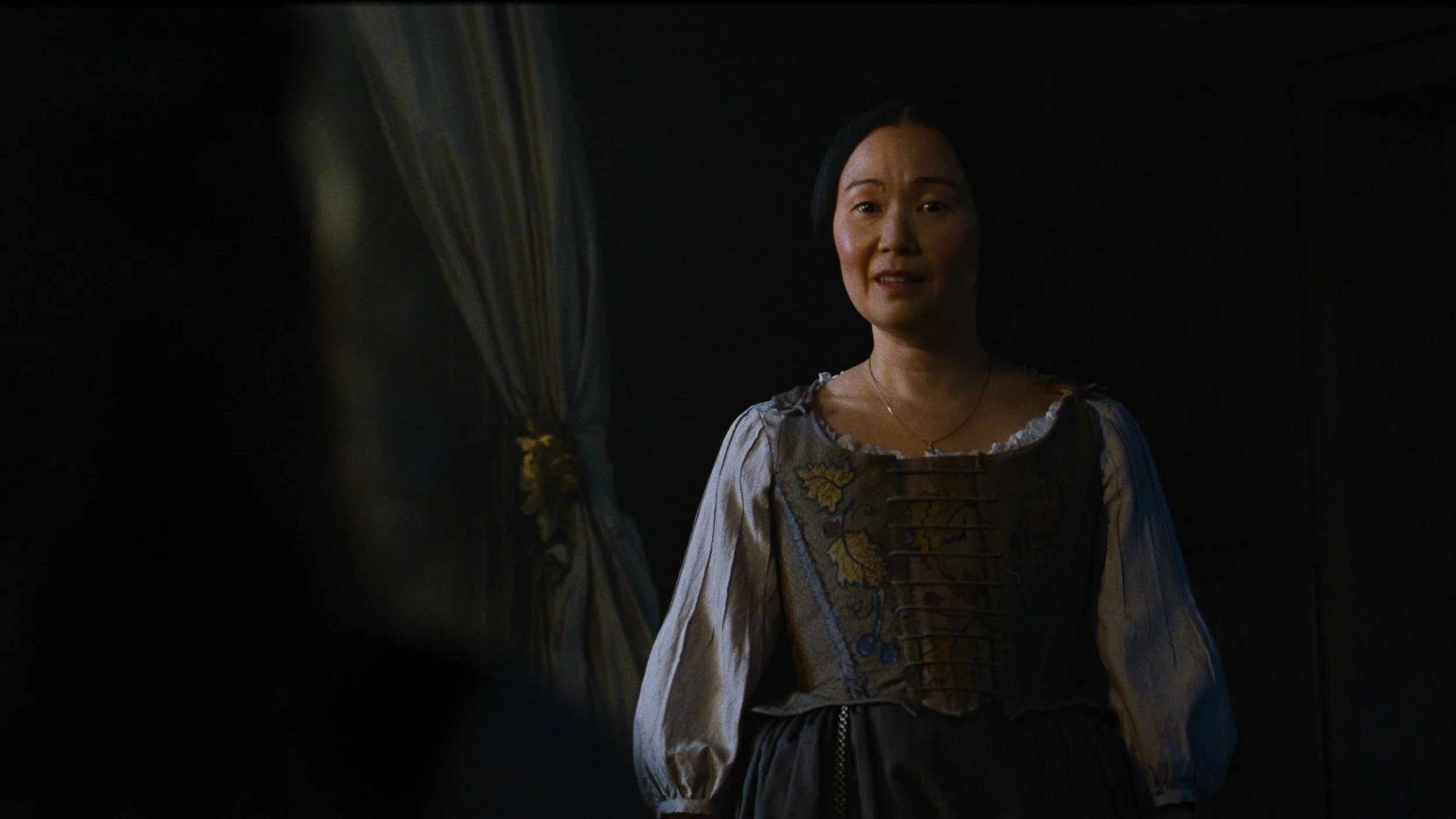
HONG CHAU as Nelly Dean in “Wuthering Heights,” a Warner Bros. Pictures Release.
Fennell has always been negligent in characters she have people in color cast in – Laverne Cox was the token black BFF in PYW – but “Wuthering Heights” might be her worst instance yet. There are no Black people to be found in this cast, but this time, AAPI bear the brunt of her ignorance. Shazad Latif, who is of mixed-Pakistani background, is the rather wealthy but cuckolded Edgar Linton, the man Cathy marries out of security. God forbid Linton, should be anything but an object of desire.
My main issue is Hong Chau’s Nelly. I have nothing against Chau. She is excellent at being both sympathetic and cunning, having me mostly on her side when she stirs the pot to Cathy’s despair. Nelly, who is not even a narrator but is framed more antagonistically, is so muddled in depiction. Cathy often pushes her buttons mean-spiritedly despite being her only companion, even setting up a queer attraction — as far as I read—towards her as she becomes envious of her desire for Heathcliff. She also becomes more of a participant in her suffering. She’s unclear and confusing in depiction, and what seemed like the only person to root for, not knowing her overall intentions.
However, both Asian cast characters are obstacles to Cathy’s happiness, mostly exempting her from her own toxic behavior.
Why make a Wuthering Heights when you can’t even get the source’s classist themes right?
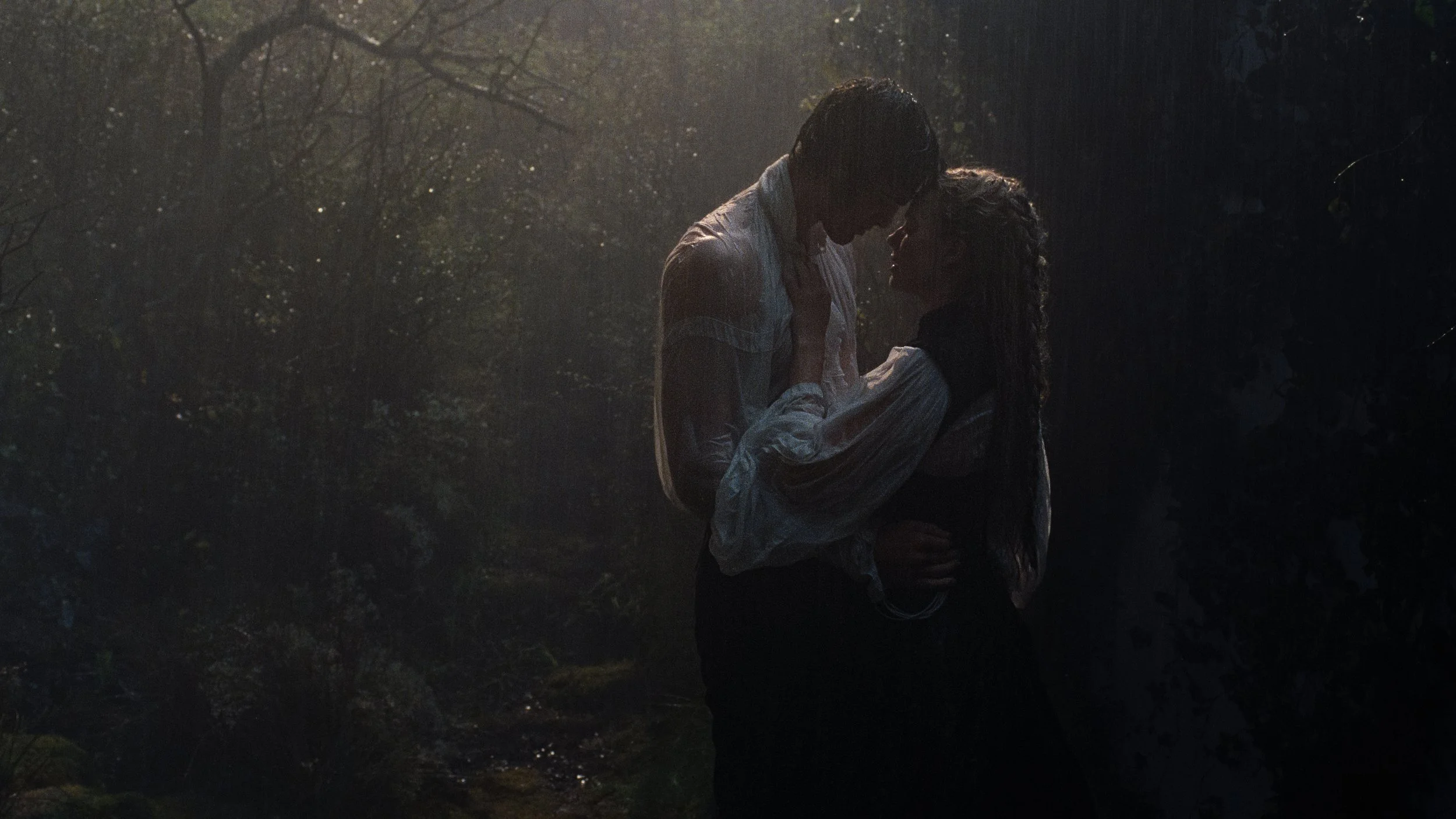
(L-r) Actor, Producer MARGOT ROBBIE as Catherine Earnshaw and JACOB ELORDI as Heathcliff in “Wuthering Heights,” a Warner Bros. Pictures Release.
Beyond the incompetent race optic, the script omits any meaningful conversation about class in preference for being a Fifty Shades reskin of Wuthering Heights.
It’s often sidebarred and even surface-level because, as evident in Saltburn or her nepo-baby upbringing, she’s incapable of painting a sharp portrait about class. Class division is integral to the source, and you don’t even bother to hit the required criteria?!
Disregarding those elements, its emphasis on sexual desire to frame it as an epic romance is also oddly depicted. I can only speak to my sapphic nonbinary-ness, but the female gazing is bizarre, as every extreme close-up shot of flesh and obvious sexual metaphors comes across as Cronenbergian body horror rather than anything remotely resembling sexiness, let alone the cramming of sex representation itself is so… vanilla. I see people on HBO’s Industry acting like true freaks on a weekly basis. The raunchiness is as tame as a Amish married couple who decide to have sex once every three months. Yet, much like everything else Fennell does, she acts as if it’s provocative.
What is Fennell's excuse for all these failures to even resemble the text beyond the film’s title quotations? It begs the question of the adaptation's existence in the first place beyond letting your inner horny teen run free? This all could’ve been prevented if Ao3 was made in Fennell’s youth.
FINAL STATEMENT
Despite its breathtaking production and art direction – enough to make cottagecore-obsessed Tumblr users and Pinterest board makers go mad – Fennell's “Wuthering Heights” is a completely hollow misinterpretation of the source. It’s too dull, tame, and frustrating in her substance enough to make Emily Brontë roll in her grave.
Please consider supporting Rendy Reviews. We’re an independent run, Gen-Z and Black-owned entertainment outlet. You can donate to our Paypal or Venmo to help keep our site running. Or become a subscriber for access to 13-years worth of reviews, exclusive interviews, and more! A free way to support is a sign up for the Rendy Reviews’ newsletter and get weekly emails about latest on movie reviews, interviews with film artisans, features, and more.
