
‘Wildwood’ Review: LAIKA’s Brutal Fantasy Epic Recaptures the Magic of Childhood
The words “Handmade in Oregon” show up near the end of Wildwood’s credits. This was never said in any of LAIKA’s previous works, the Portland‑based stop‑motion studio behind Coraline, ParaNorman, and Kubo and the Two Strings. They never had to specify. But generative AI now runs rampant, and filmmakers like Ava DuVernay and Danny Boyle praise its use. Thankfully, Wildwood arrives like a forceful rebuttal, as urgent as ever.
Based on the YA trilogy by The Decemberists’ frontman Colin Meloy and illustrator Carson Ellis, LAIKA’s most ambitious project — 16 years in the making — is worth every second of the wait. It’s an unparalleled handcrafted marvel full of magic, grit, and Pacific Northwest panache: a folksy, masterful work of art and a great mic drop on every AI‑loving airhead today.
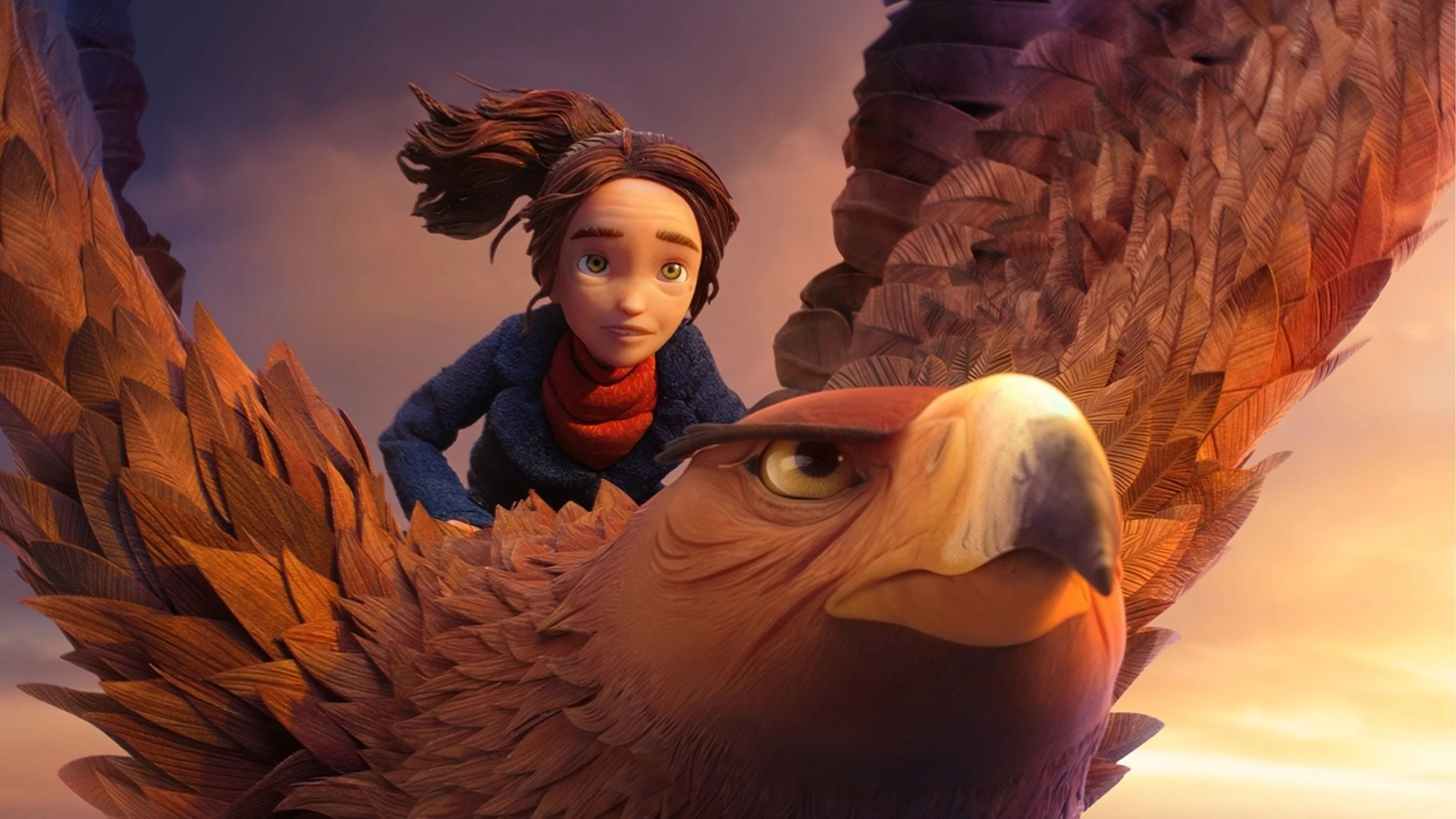
MPA Rating: PG-13 (for strong fantasy violence/bloody images, thematic material, suicide-related material, brief partial nudity and language.)
Runtime: 2 Hours and 12 Minutes (132 minutes)
Language: English
Production Companies: LAIKA Studios
Distributor: Fathom Entertainment (U.S.), FilmNation Entertainment (International Sales)
Director: Travis Knight
Screenwriter: Chris Butler
Cast: Peyton Elizabeth Lee, Jacob Tremblay, Carey Mulligan, Mahershala Ali, Angela Bassett, Awkwafina, Jake Johnson, Charlie Day, Amandla Stenberg, Jemaine Clement, Maya Erskine, Tantoo Cardinal, Tom Waits, Richard E. Grant
U.S Release Date: October 23, 2026
In Portland, Oregon (seemingly the early 2010s), hyper‑independent, angsty preteen Prue McKeel (Peyton Elizabeth Lee) claims she’s too old for folksy fairytale stories, much to her parents’ (Jake Johnson and Maya Erskine) amusement. Her dad regales her infant brother Mac (Arthur Knight) with tales of the dangerous, impassable wilderness and all that lies within it: bloodthirsty animals, bandits, and the powerful spiritual force known as The Ivy that controls the land. Her parents have one rule with Mac: he’s never to leave the house. But when Prue is tasked with babysitting him, she takes him out anyway. While riding around Portland, her anxiety‑ridden, nerdy, socially awkward classmate Curtis (Jacob Tremblay) tags along to her dismay. When they stop at an empty playground, a group of crows grabs Mac and takes him into the woods past the St. John’s Bridge.
Prue and Curtis go into the woods, only to discover they are “Outsiders.” They find themselves at the center of a conflict between rival groups: the bandits, led by King Brendan (Mahershala Ali), talking birds called the Avians, and Alexandra (Carey Mulligan), a vicious witch and former governess grieving her lost son, who commands a coyote army under Maxsim (Tom Waits). While searching for Mac, Prue is forced to face her denial of magic, and Curtis his fears as they must play pivotal roles in the burgeoning war between Alexandra and the world.
Wildwood is the kind of fantasy epic Hollywood doesn’t make anymore.
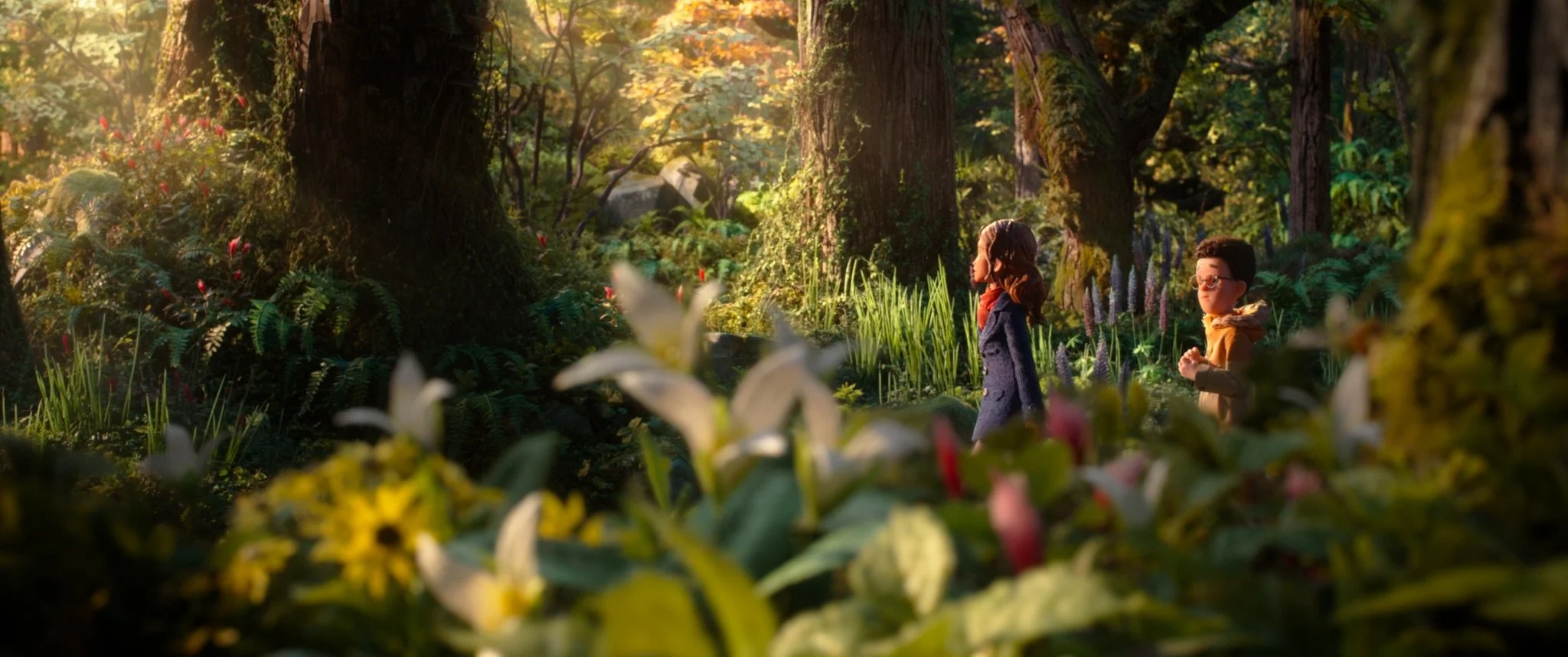
Peyton Elizabeth Lee as Prue McKeel and Jacob Tremblay as Curtis in LAIKA’s Wildwood | Courtesy of Laika
LAIKA has shown phenomenal hands (aha) at assimilating every storytelling genre in each production — Japanese folklore in Kubo, swashbuckling adventure in Missing Link — but with Wildwood, they upgrade their entire skill set for rich dark fantasy. The film harkens back to the dark fantasy adaptations that ran rampant in the ‘80s (The NeverEnding Story, Labyrinth), spiked in the ‘00s during the Harry Potter run (The Chronicles of Narnia, The Golden Compass, The Spiderwick Chronicles), and fizzled out in the 2010s when sci‑fi dystopias became all the rage. Studio head and director Travis Knight and writer Chris Butler recognize the drought and achieve a terrific family feature as whimsical, majestic, and violent as those generationally beloved films.
Wildwood doesn’t reinvent the wheel. You might see it as an amalgamation of every aforementioned fantasy epic and even various LAIKA titles: the plucky, reluctant protagonist having to discover her inner magic, her cowardly, awkward sidekick having to find courage the hard way, and a burgeoning war awaiting in the climax. Perhaps this is a downside of its source material’s style translated to screen. But kids today don’t have films like this, and considering the studio’s wide appeal, it transports its older adult demographic back to when they didn’t care and were enraptured by worlds of the same ilk. The narrative’s unraveling is like a random fantasy book from a Scholastic Book Fair coming to life through breathtaking stop‑motion. Knight’s direction and Butler’s script make Wildwood’s worldbuilding digestible without drowning it in too much exposition. It’s efficient and patient, with each faction and its players given adequate characterization and a folk, gothic personality.
Once in the woods, “transportive” is the word that circumvents the mind in each frame. Between the forestry fantasia and recreation of contemporary Portland locations (Dripster Coffee, Voodoo Doughnut), depicting the city’s seasonal color palette against its lush backgrounds, this is among the finest architecture the studio has done to date. The love and passion that permeate the characters, their true-to-life yet expressive character acting, and Nelson Lowry’s lush production design are palpable in the 132 practical sets in 117 unique locations. Wildwood’s director of photography, Caleb Deschanel, who also served as cinematographer for The Spiderwick Chronicles, enhances the beauty and underlying dread of the forest terrains under Alexandra’s witchy control. Sometimes I forget I’m watching an animated movie as it becomes a full-fledged epic odyssey akin to even Nolan’s works and Jackson’s achievement in The Lord of the Rings.
LAIKA lets the bodies hit the forest floor.
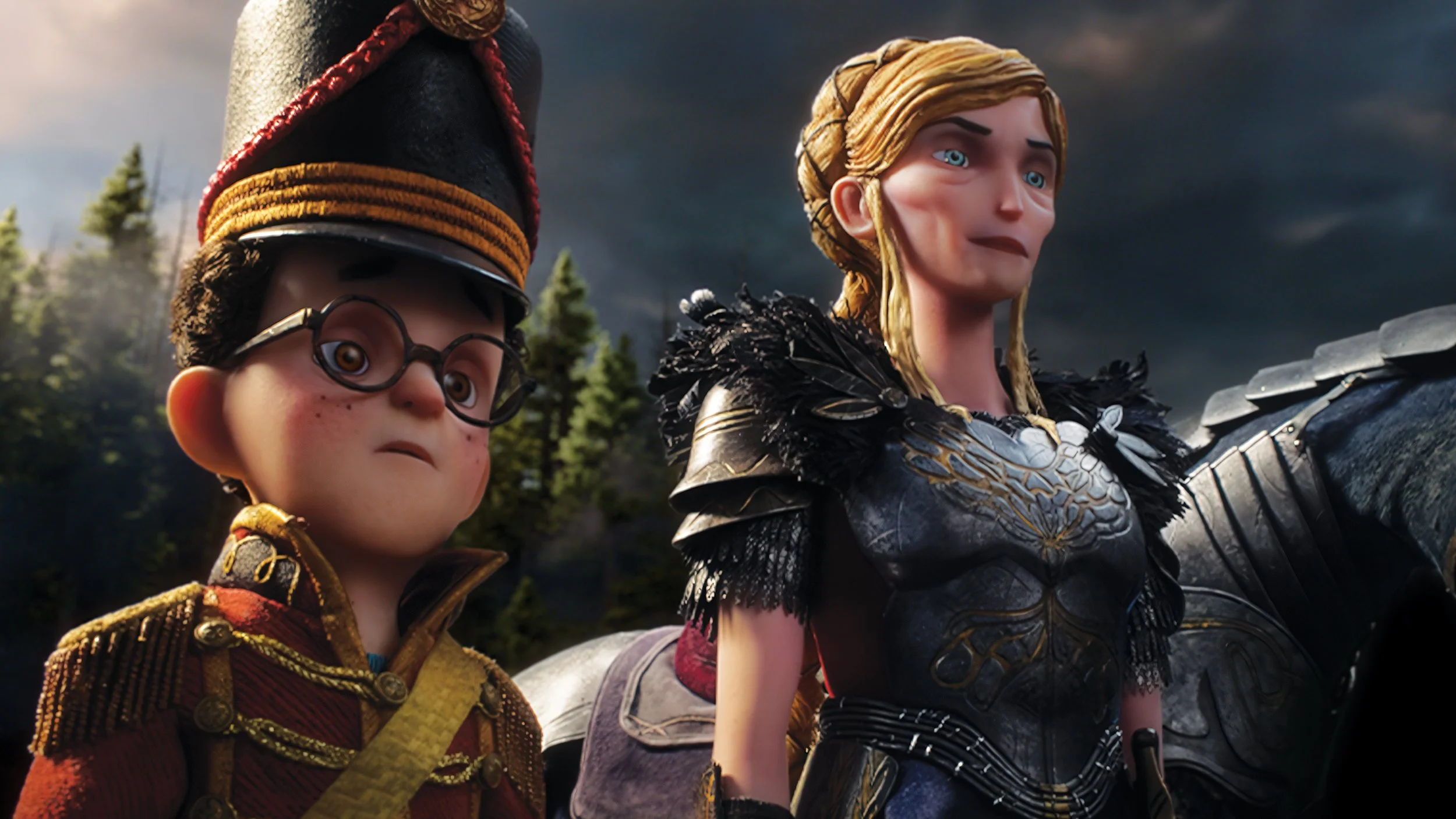
Carey Mulligan as Alexandria and Jacob Tremblay as Curtis in LAIKA’s Wildwood | Courtesy of Laika
Wildwood’s narrative tone strikes an exquisite balance; even its comedic detours land with hilarious, character-centric precision that feels distinctly grounded without ever diluting the underlying darkness. The pacing unfolds with a creeping sense of dread, remaining relentless in its high stakes — characters can perish in an instant, leaving us stunned by the suddenness of their demise. In one harrowing sequence, captive bandits and Curtis call out to Prue while she stands alongside Alexandra at her nearby stronghold. Coldly intent on making an example, the witch orders her coyote forces to execute someone on the spot, hushing the crowd so she can continue her manipulation over Prue in peace. Her sheer ruthlessness is astonishing, terrifying enough to make even Narnia’s White Witch look like a girl scout.
The PG-13 classification it bears is nothing to scoff at — explicitly merciless and graphic in its violence, with people and anthropomorphic animals getting viciously mauled, impaled, and shot, the camera lingering on the bloody injured and the deceased. The first scene depicts a suicide, and that’s somehow tame compared to everything that follows. The handmakers are aware that the people who fell in love with their work are adults now, some with kids of their own, and it plays to the former rather than the latter. This isn’t for the Bluey and Paw Patrol crowd.
Everything culminates in the Battle of the Plinth, where Knight’s visionary direction and every creative department hit unbelievable heights. The set piece arguably rivals the iconic grandeur of Narnia’s Battle of Beruna or Return of the King’s Battle of the Pelennor Fields. Leading up to this moment, the narrative handles mortality with such agonizing weight that the immense tension of the preparation induces tears. Dario Marianelli’s sweeping, majestic score amplifies every ounce of the sequence’s epic sensation.
Wildwood rekindles the childhood magic that adulthood took away.
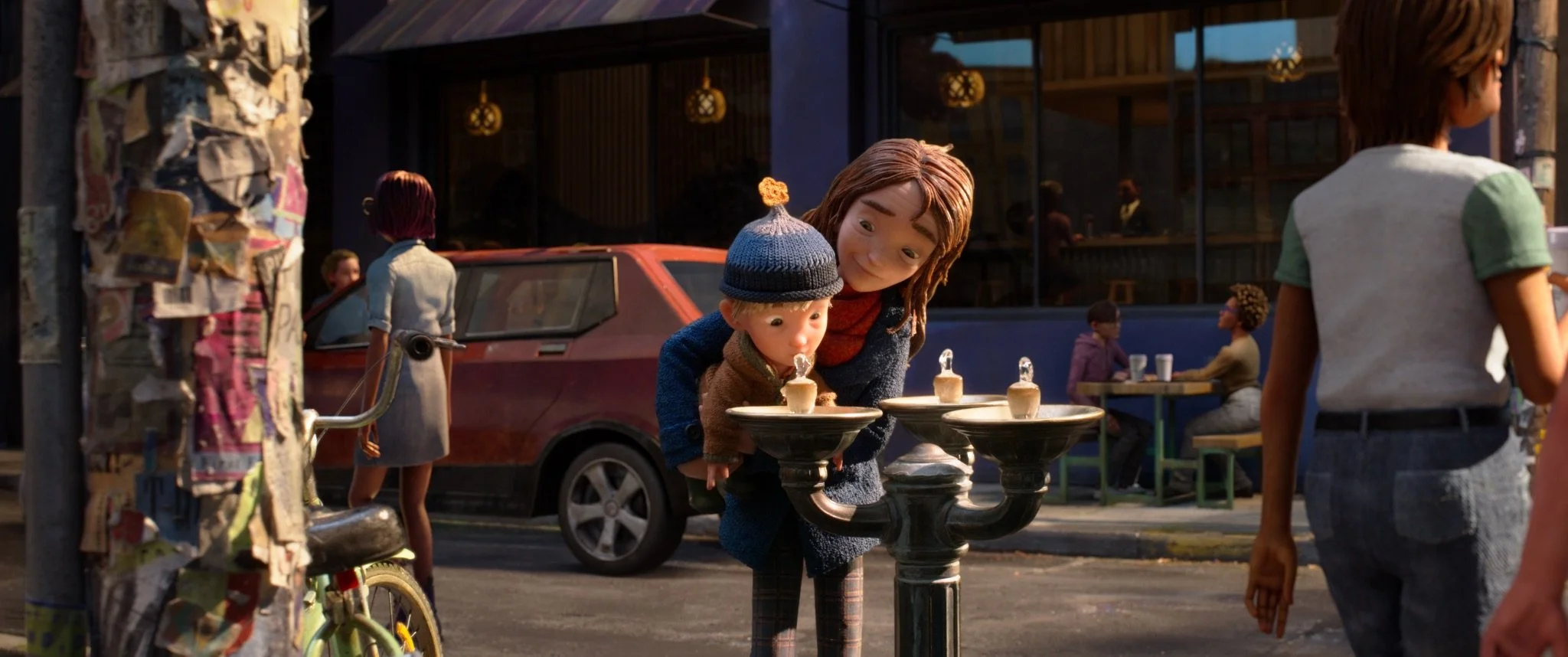
Peyton Elizabeth Lee as Prue McKeel and Arthur Knight as Mac in LAIKA’s Wildwood | Courtesy of Laika
Negatively speaking, Prue is more a passive than active participant in her story for a good chunk of it. She’s more of a reactionary force as the story unfolds around her, and given that she and Curtis have separate plots, he’s given more to do. Sometimes the film gets caught up in its majesty, forcing some inorganic beats of whimsy.
Otherwise, Wildwood is LAIKA at the apex of their prowess, cultivated since Coraline. It’s a generational epic for blossoming young viewers mature enough for films of this depth, and a life‑affirming masterpiece for the adults who grew up with their earlier works. The Coraline crowd — the ones who kept returning to each Fathom Event encore (thank God this is A‑List accepted) — nostalgic for simpler times, are feeling cynical and nihilistic toward an unforgiving world as dour as the wilderness. Yet, thematically, the film imbues hope and the magic we once lost. I’m 28, out here on my laptop, looking like Coraline’s dad. This threw me back to the childlike innocence I felt when I first watched Coraline as a youngling, even down to the nightmare fuel that had me jolting in my seat, the way I did at 11.
Wildwood, goes to show what rich excellence and magic can stir through handcrafted, hardworking effort, painstakingly crafted amid every frame. Even if its storytelling doesn’t have the emotional depth of their best work, it’s the biggest and finest feature they’ve delivered. The Best Animated Feature is inevitable with this, but golly, it deserves a Best Picture nomination not only for its remarkable filmmaking achievement and the push for the medium, but also for its rich storytelling that proves there’s no magic stronger than movies that make you believe in it.
