
‘Ugly Cry’ Review: Emily Robinson’s Claustrophobic Descent Into Identity and Image
LA media culture has been the subject of many recent psychological thrillers or horror movies, such as The Substance and Lurker. Both share the shallowness that stirs within people in pursuit of social climbing and our beauty-obsessed culture. Emily Robinson's incisive psychological-horror directing/writing debut, Ugly Cry, serves as a link between the discussions sparked by Substance and Lurker. Its premise, when an actress gradually loses herself due to having an ugly cry, may sound like a new-age Black Swan or even a Dee Reynolds-centric plot. Yet, Robinson makes this powerful psychological rollercoaster ride to hell her own, punishing tf out of the lead (played by herself), and harshly criticizing clout-chasing in LA’s social media-obsessed landscape.
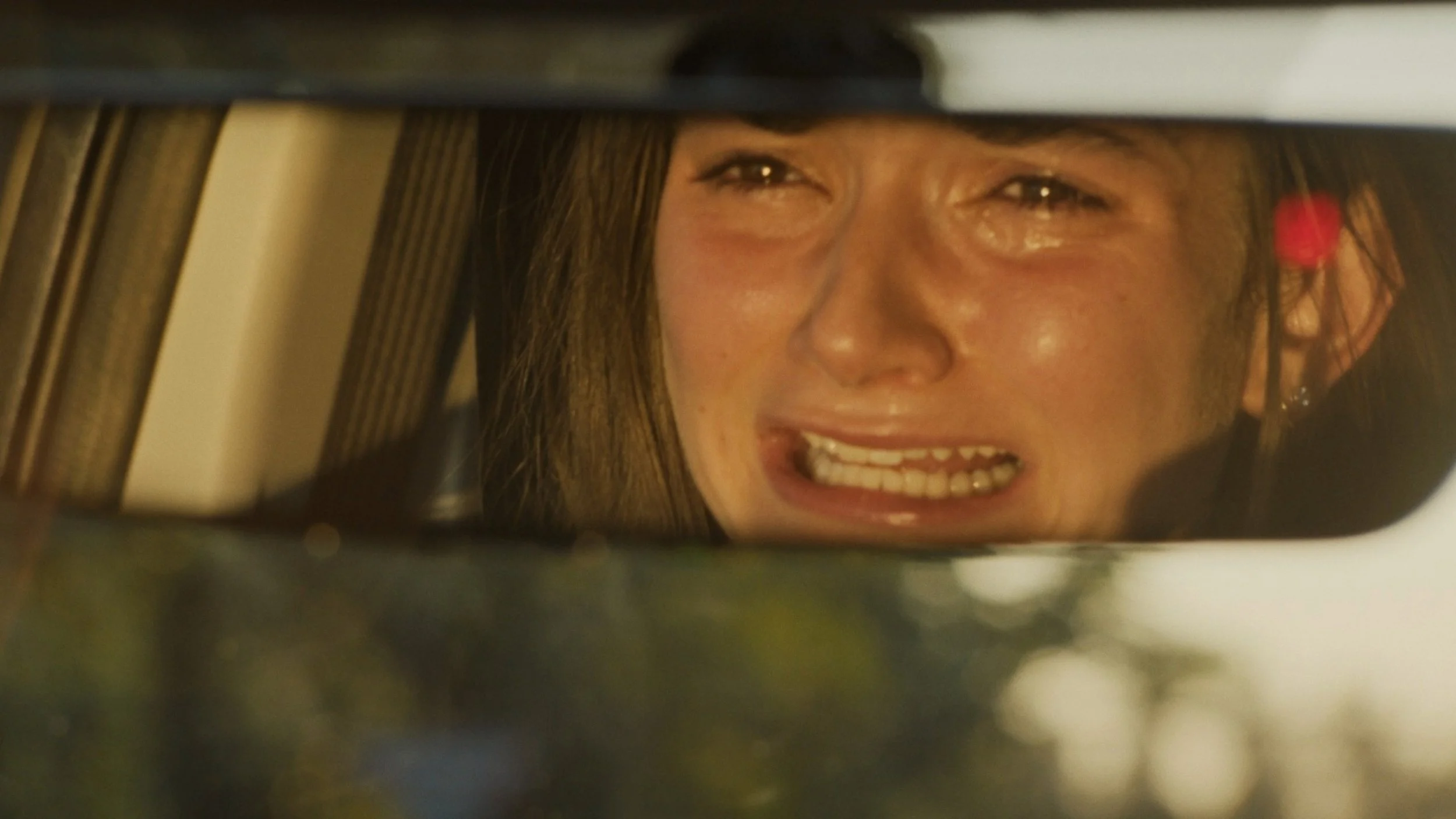
Image copyright (©) Courtesy of SXSW
MPA Rating: N/A
Runtime: 1 Hour and 34 Minutes
Language: English
Production Companies: More Avenue, Neon Heart Productions
Distributor: N/A
Director: Emily Robinson
Writer: Emily Robinson
Cast: Emily Robinson, Ryan Simpkins, Aaron Dominguez, Robin Tunney, Andrew Leeds, Heather Morris, Chalia La Tour, Ray Abruzzo, Sophie von Haselberg, Josh Ruben, Melinda McGraw
U.S Release Date: N/A
Delaney (Robinson), a budding actress from Los Angeles, is eager to appear in a film. Her longtime boyfriend, Miles (Aaron Dominguez), just left town to shoot a movie, and she’s on her own with nothing lined up. She’s on her wannabe Instagram influencer shit in between taking acting classes at a black box theater, babysitting the sons of an actor couple, and filming self-tapes with the assistance of her acting class friend/competition Maya (Ryan Simpkins). Delaney secures an audition for a monster movie, but one of the producers notes that she has an ugly cry. However, Delaney's obsession with her one acting flaw leads her to spiral downward, unraveling all of her insecurities with each self-destructive decision.
Ugly Cry marks a stellar horror debut for Emily Robinson.
Robinson, who has had a lengthy acting career since childhood – you might know her from Eighth Grade – crafts a powerful debut through a cathartic release. It’s a warped cautionary tale for young women navigating the LA acting scene, and a scathing takedown of the personalities that Tinseltown stirs. Delaney’s slow descent is elevated by Emily Robinson’s unfiltered honesty about the rising actress lifestyle, stripping her location's glossy appeal in exchange for rawness.
In many ways, Ugly Cry echoes the punishing nature of Drag Me to Hell, as Robinson puts her lead (herself) through a relentless emotional gauntlet. It’s a bold, creative choice, especially given her triple role as writer, director, and star, and one that adds an extra layer of vulnerability to her captivating performance. The world is Delaney's stage, and all of her actions serve as prep for her to get to the next role. Behind the lens, she crafts a dry, surreal, harrowing atmosphere, where watching the downward spiral becomes both unsettling and strangely compelling. Robinson places the viewer uncomfortably close to Delaney’s experience through a claustrophobic composition, plopping into her mindscape.
Long before she fully loses her grip on reality, it’s clear Delaney is already operating within a distorted, self-constructed world. Robinson doesn’t show how many followers Delaney has on social media, but you get the sense that it’s nowhere near enough to warrant her influencer behavior.
The body horror is more internal as it speaks into mental health, disillusionment, and the fragile search for identity within the pursuit of success. The longer it progresses, the more the portrait becomes a woman's loss of identity. Her inability to cry on command is perceived as a failure to form her identity. In a time when everyone is chronically online, trying to copy others’ mannerisms and styles for their own gain, Delaney is one of those people. I found it to be a brutal takedown of the people operating within the industry, compulsively obsessed, desperate, and thirsting for success, burning bridges and damaging themselves in the process. A large part of her descent involves seeking plastic surgery. While I can’t emotionally relate, I recognize the impact of our current digital age, where you need to be on Ozempic or get plastic surgery for no reason, affecting even the youngest women. Man, it’s horrifying to see plastic surgery obsession cause it’s, to me, the same intensity as a heroin addiction depiction.
Robinson's confident grip never loosens, even when story threatens to.
It’s not just the culture, but the individuals who are chronically online like Delaney. I appreciate Robinson throwing supporting anchors like Dominguez’s Miles and Simpkins’ Maya, who have fantastic chemistry. Simpkins is portrayed as secure enough in her identity to offer solidarity and friendship. Despite being “rivals” she provides a good friendship that may seem transactional but is mostly sincere.
I feel that the movie is oddly paced. It settles in Robinson immersing you into her lifestyle a little too long during the set-up. Much like every other movie in this year's SXSW, its premise wears itself thin the longer it progresses. The slow-burn pacing undercuts the strength of its tumultuous build-up and sharp turns. However, Robinson's confident claustrophobic direction and unsettling imagery keeps you completely engaged.
FINAL STATEMENT
Critical on its subject matter, darkly funny, and confidently directed, Ugly Cry is a potent and bold horror debut for actress-turned-writer/director Emily Robinson.
