
‘Toy Story 5’ Review: Jessie Takes the Reins in Pixar’s Heartfelt Tech-Age Sequel
2010 marked several major milestones: the first wave of Gen‑Alpha babies were outta their mama's wombs, the first iPad was launched, and Toy Story 3 was released in theaters. Fifteen years later, we have a whole generation of children being raised by those iPads, and playtime has taken on a whole new definition.
Say what you will about Toy Story 4—but not to me, because it's great; argue with the wall—the moment Pixar unveiled Toy Story 5 at D23 2024 with toys facing off against tech, I was all in. And come on, it's friggin' Toy Story. Pixar always locks in when it comes to these toys. To everyone's relief—though not particularly surprising—Toy Story 5 remains a fantastic straight-hitter, no-misser that skillfully balances its commentary on toys and tech in the digital age while doubling down on what the series has always done best: turning plastic into poetry and making us weep over a cowgirl's trauma.
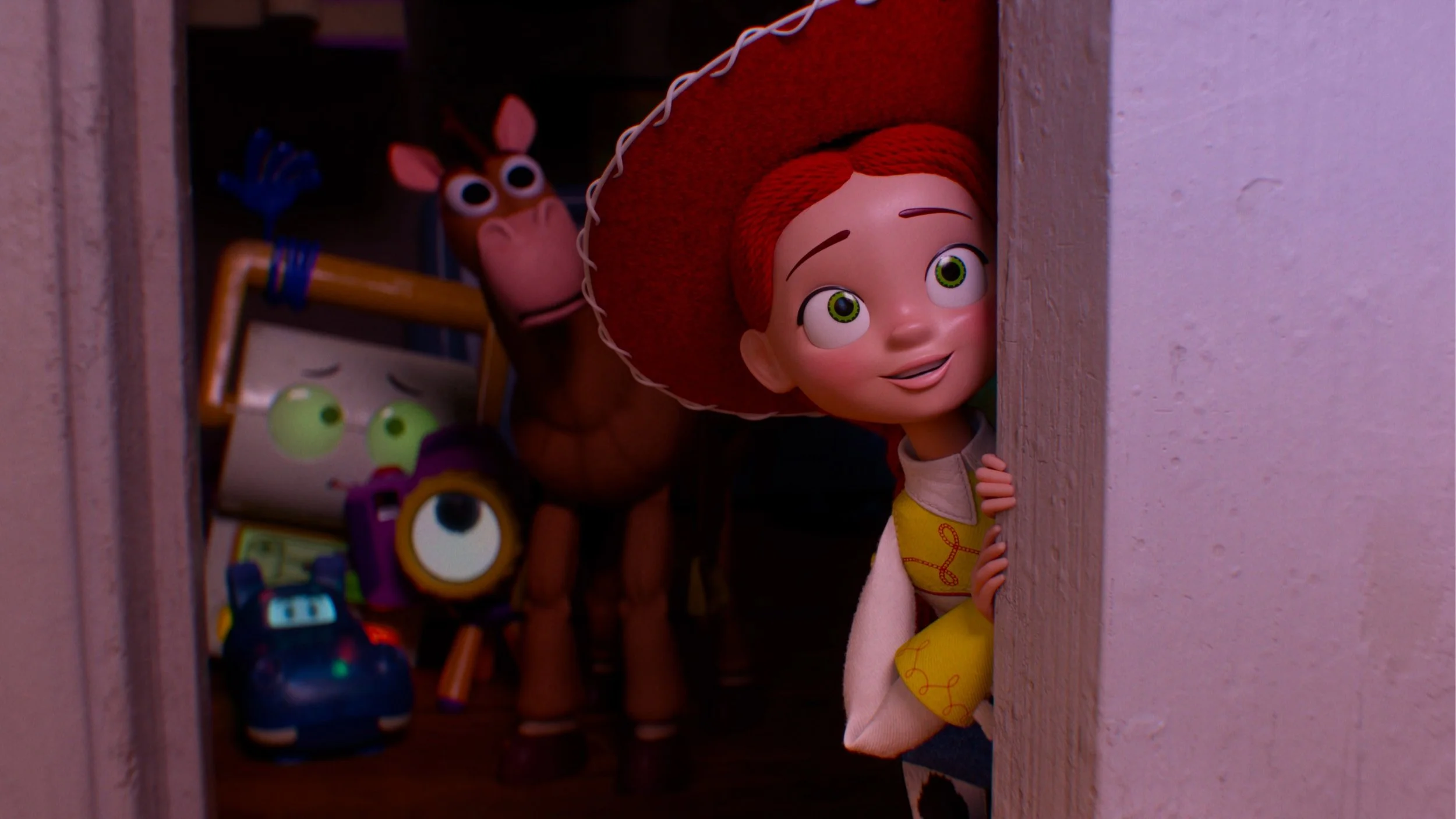
Image copyright (©) Courtesy of Disney
MPA Rating: PG (for some thematic elements and rude humor.)
Runtime: 1 Hour and 42 Minutes
Language: English
Production Companies: Pixar Animation Studios, Walt Disney Pictures
Distributor: Walt Disney Studios Motion Pictures
Director: Andrew Stanton, Kenna Harris (co-director)
Screenwriters: Andrew Stanton, Kenna Harris
Cast: Tom Hanks, Tim Allen, Joan Cusack, Tony Hale, Greta Lee, Conan O'Brien, Craig Robinson, Annie Potts, John Ratzenberger, Wallace Shawn, Blake Clark, Jeff Bergman, Anna Vocino, Ernie Hudson, Bad Bunny, Alan Cumming, Scarlett Spears
U.S Release Date: June 19, 2026
Several years after Toy Story 4, Jessie (Joan Cusack) leads Bonnie's room as top sheriff, while Woody (Tom Hanks) has been living as an abandoned-toy rehabilitator. Bonnie (Scarlett Spears), now eight, struggles to make friends in a neighborhood where every kid is glued to their tablet. Desperate to help her connect, her parents buy her a Lilypad/Lily (Greta Lee)—a Leapfrog-meets-iPad device. Jessie feels threatened, and the two clash over the same goal: getting Bonnie a friend. When Lilypad scores Bonnie a sleepover invite, their rivalry escalates—Jessie pushing Lily's buttons, literally. Desperate, she calls Woody for backup, putting him at odds with Buzz (Tim Allen) as he tries to prove his worth to Jessie and finally confess his feelings.
But the mission goes sideways, landing Jessie and Bullseye back at Jessie's original owner Emily's farm—now home to a spirited horse girl named Blaze (Mykal-Michelle Harris). Reluctantly joined by a trio of digital toddler toys—Smarty Pants (Conan O'Brien), Snappy (Shelby Rabara), and Atlas (Craig Robinson)—Jessie must find her way back to Bonnie, take down Lilypad, and secure her owner a real friend.
Toy story 5’s smartest decision is letting Jessie lead the rodeo.
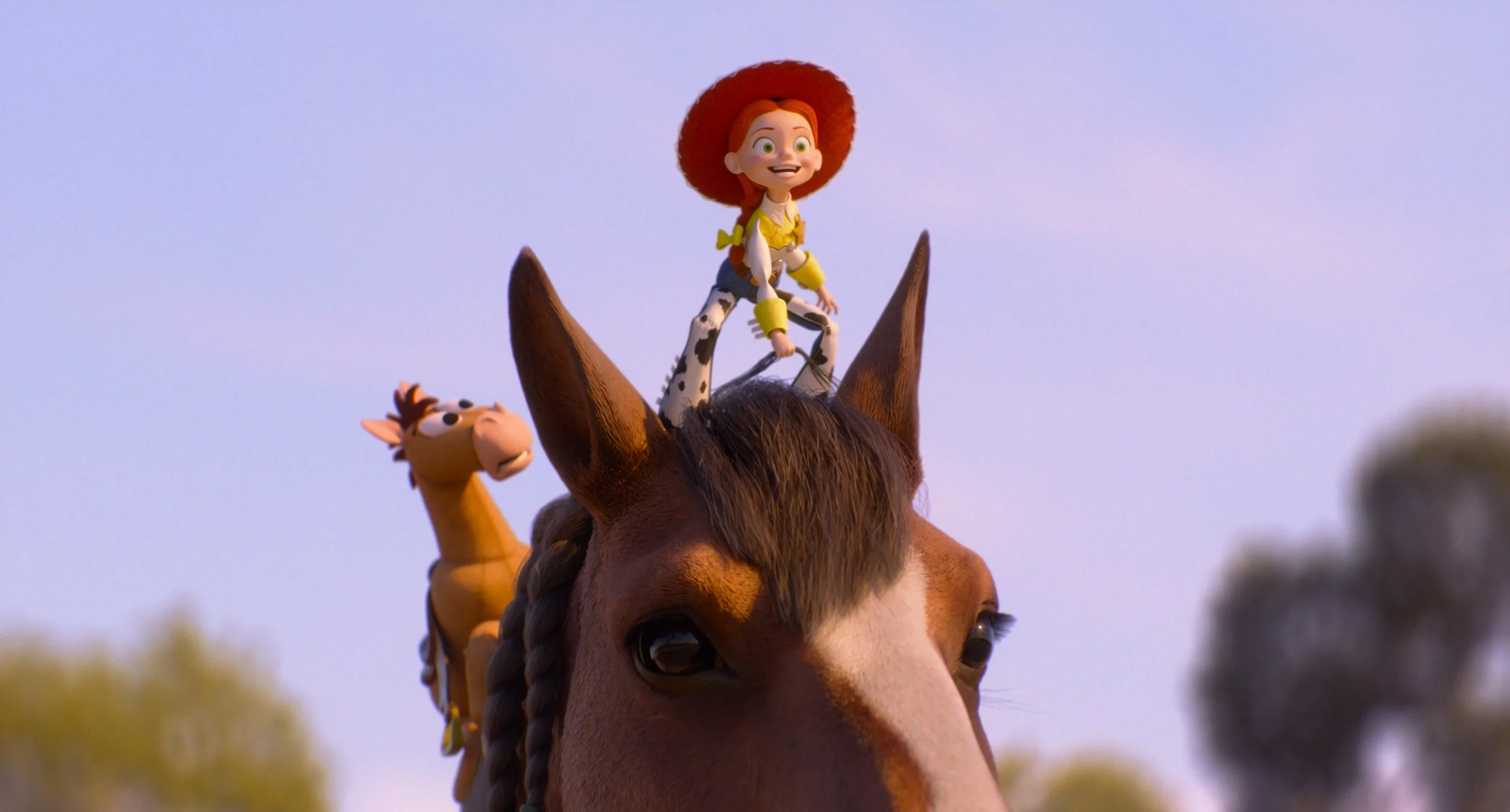
Caption(L-R): Bullseye and Jessie in Disney and Pixar's TOY STORY 5. Photo courtesy of Pixar. © 2026 Disney/Pixar. All Rights Reserved
In my upcoming Pixar ranking, I came to the conclusion that my favorite Toy Story installment is 2—partly due to Jessie herself, and how masterfully the Pixar team pulled off applying human traits to a child's plaything. The multi-generational heartbreaker "When She Loved Me" not only enriched the sophistication of Pixar's storytelling at the time but also distinguished Jessie from the other toys, as she endured trauma from Emily's abandonment, which diminished her self-esteem. If you're also part of the "2 is the best Toy Story" hive, you'll be delighted to hear that this is essentially Jessie's movie.
Unlike other Pixar sequels where a supporting player has to hold their own, Jessie stepping into the spotlight feels entirely natural—quite a bit more than Finding Dory, and light-years beyond Cars 2. Bonnie's clear preference for her in Toy Story 4 made elevating her to the lead a logical progression. I'd argue Toy Story 5 sees veteran director Andrew Stanton (in his first helming of Toy Story) reapplying some of Finding Dory's best qualities. It naturally expands on Jessie's character by taking her back to her past, letting her headstrong, excitable nature take the wheel—while Woody and Buzz take the backseat. The film concentrates on reconciling with her trauma and deepening her relationship with herself through her adventure. But it does so in a Toy Story way, meaning the magic is still potent and will have you sobbing like you did when you first met her in '99 (or whenever you first watched TS2) all over again. He and co-director/co-writer Kenna Harris (the first non-binary director at Pixar—let's go Pride Month!) strikes a balance between the central idea of gadgets upending the toy world and its connection to Jessie's identity, as she struggles with purpose and self-worth, tied into the day Emily got her first telephone and after laying dormant under her bed, it was on-sight for all electronics for her.
The creative team does a remarkable job of poignantly tying together unresolved aspects of Jessie's past and present while acknowledging her unique significance as a toy. And, as always, Joan Cusack puts her all into this rag doll. Say what you will about Hanks and Allen, but something about how Jessie has been written since TS2—and even in the Toy Story of Terror special, the only other time she truly took center stage—combined with Cusack's passionate voice work, makes her feel more humanized to me than Woody and Buzz ever have.
Toy story 5 finds a surprisingly thoughtful way to talk about toys as social lifelines.
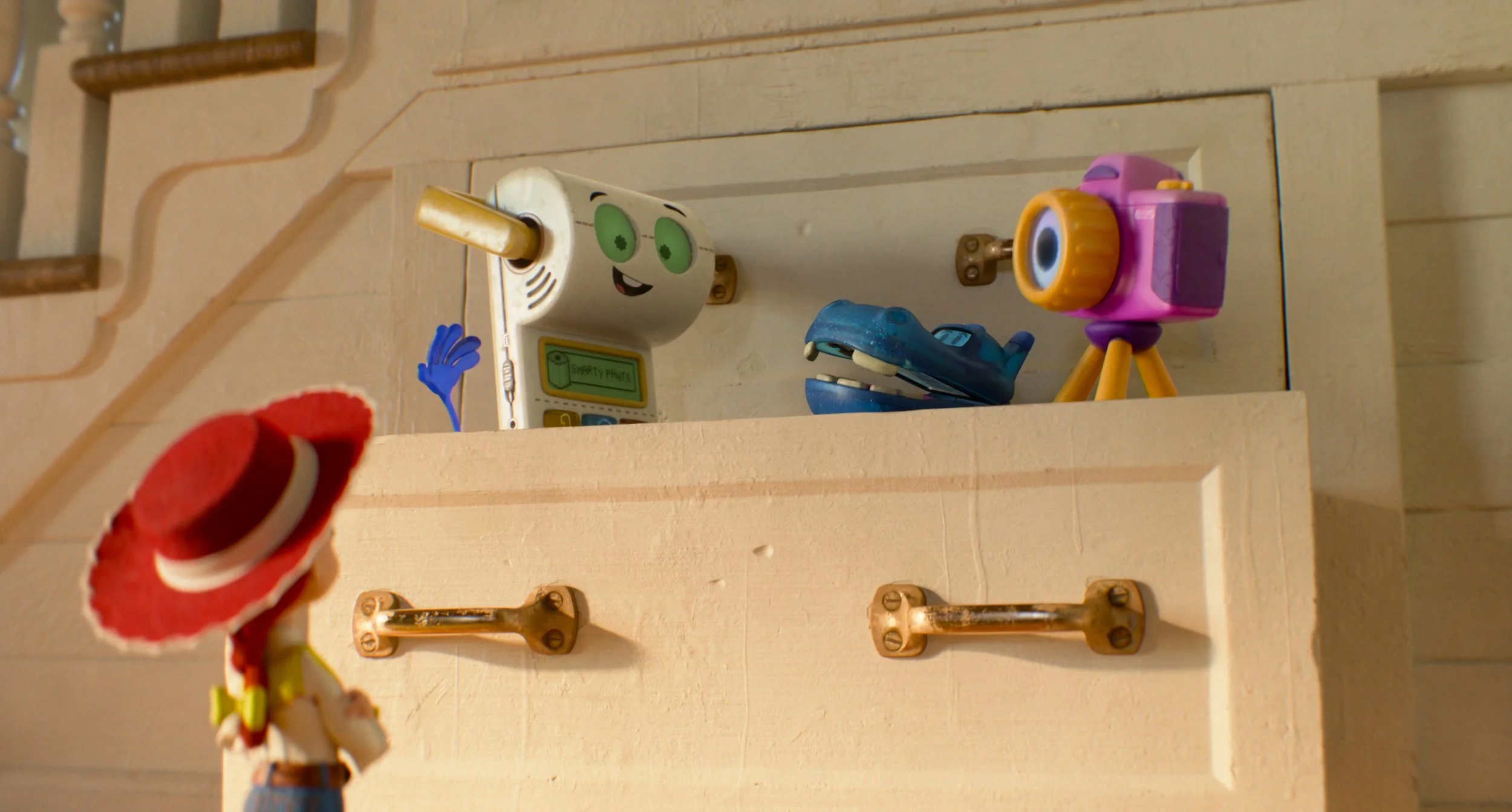
(L-R): Jessie, Smarty Pants, Atlas, and Snappy in Disney and Pixar's TOY STORY 5. Photo courtesy of Pixar. © 2026 Disney/Pixar. All Rights Reserved.
Though the beats are altered, the setup echoes the 1995 original—Jessie beefs with a new toy, Lily, full of sass, who takes center attention, much like Woody did with Buzz thirty years ago. Stanton and Harris adjust to the Gen Alpha crowd very solidly, confronting the toys with a terrifying transitional period while also finding their own fresh nuance. Unlike its predecessors, this is the first Toy Story that shifts its framework to highlight how toys are more than just companions—they're pillars of child development, particularly when it comes to social competence. Making friends is as hard for kids as it is for adults, and Bonnie—spirited but isolated—embodies not just a new age, but an entirely new mode of socializing.
The film acknowledges tech as unavoidable, using the Jessie-Lily conflict to show how much children's socialization has shifted—they go about helping Bonnie like two divorced moms, one "reject modernity, embrace tradition," the other the inverse, arguing over how to raise their kid. It doesn't outright demonize tech but finds a nuanced conversation about its integral role in the new generation, while also critiquing how restrictive it can be for kids' social skills and behavior (and lowkey calling out adults too in playful gags). Where it falters in not being more critical—because, I guess, iPad sales need to stay up—it compensates with its new characters, like Greta Lee's Lilypad and Conan O'Brien's gloriously ridiculous potty-training toy Smarty Pants, all solidly written with genuine care for their owners. Granted, Jessie spends more time with Smarty Pants than with Lily, which creates a contrast that complicates things—those toddler fodder toys are a different ballpark than a screen device, and the film sometimes conflates them when it really shouldn't, complete with a touch of toy racism (Jessie calls them "your kind" and it feels like a slur). But man, when it hones in on the importance of human connection being the fabric of all good friendships, done in that classic Toy Story way, it's nothing short of true magic and excellent storytelling.
Too many toys, not enough breathing room.
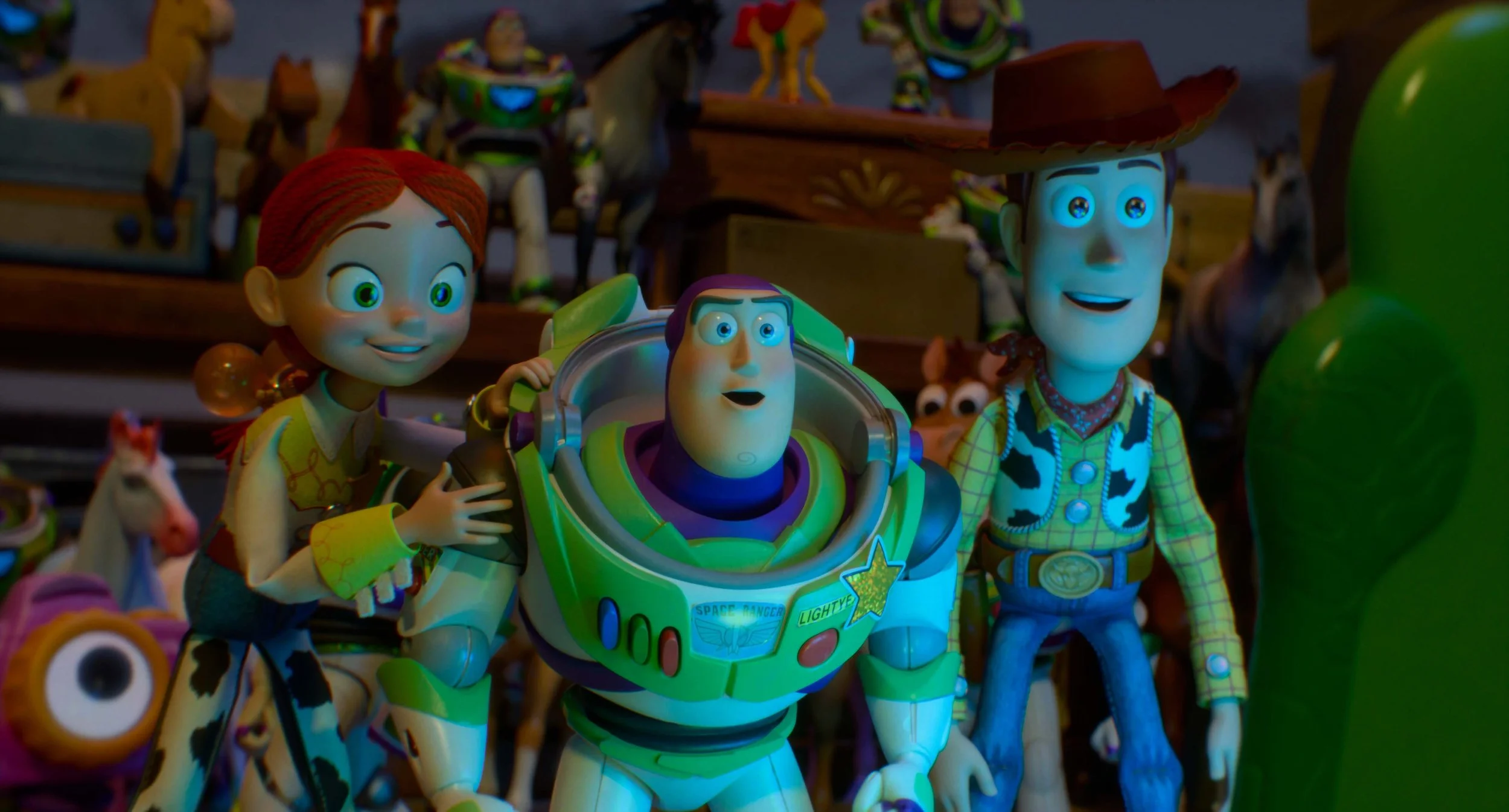
(L-R): Jessie, Buzz Lightyear, and Woody in Disney and Pixar's TOY STORY 5. Photo courtesy of Pixar. © 2026 Disney/Pixar. All Rights Reserved.
Toy Story 5 improves on some gripes I had with 4—Buzz feels more return to form than the off-character dumbed-down behavior he had then; now he's a they/he babygirl (in a way that made me feel so seen) rom-com character, tired of that near-three-decade slow-burn and wanting to finally earn Jessie's love. They also emphasize Bonnie's individuality, and I love how her imagination is represented through gorgeous, stylized watercolor sequences—a nice contrast to the epic scope of Andy's play in TS3 and illustrating the creative visual push Pixar is willing to embrace with their franchises.
Comedically, it's the silliest the series has been—and very much welcomed. It gets massive mileage out of absurd, inventive humor, like a whole B‑plot about shipwrecked Buzz Lightyears in demo mode, essentially Pikmin searching for Star Command, leading to gut‑busting sight gags that stay delightfully disconnected until the perfect moment to collide. Thirty years in, and they're still finding fresh spins on the "real space ranger" bit. Throw in every "bald‑ass, old af Woody" joke, every horse bit, and my favorite Big Hero 6‑originated gag of a device on low battery acting drunk—and you've got the funniest Toy Story entry since 2.
Negatively, the film is far too busy for its own good when it hits its middle act. Three subplots run concurrently—Jessie and Bullseye on the farm, the multi-Buzzes finding star command, and Woody and Buzz rescuing Jessie—with so many characters and variables that the pacing feels hyperactive, like it's trying to appeal to iPad kids rather than settle into its own rhythm. All your favorite other side character toys are thrown to the garage, literally even at a certain point.
Fine for Toy Story to experiment, and the sophistication and emotional ingenuity are still there, but it doesn't know how to relax. Lily is decent but underused—we spend more time with Conan O'Brien's Smarty Pants than with the new antagonistic force. O'Brien himself teeters on annoying with the sheer frequency of potty jokes (a large percentage of his dialogue and likely why this is the first PG rated Toy Story). But because it's Conan, a damn beloved national treasure, cancels it out. I wonder what the casting conversations were like when they knew they OD'ed on poop jokes and needed a galaxy-brain casting choice to overpower their amount.
FINAL STATMENT
Five installments in, and Toy Story still hasn't missed. This is the weakest of the bunch, but even a lesser Toy Story is still a fantastic film: intelligent, funny, and heartbreaking in all the right places. It justifies its existence by digging into Jessie's arc and using the toy-vs-tech conflict to explore what connection for kids really means in a digital age. It's classic Pixar that never ages—reaching for the sky while never losing sight of the emotional core that made us fall in love with these toys in the first place.
