
'The Super Mario Bros. Movie' Review: Mario's Animated Adventure is in Desperate Need of a Power-Up
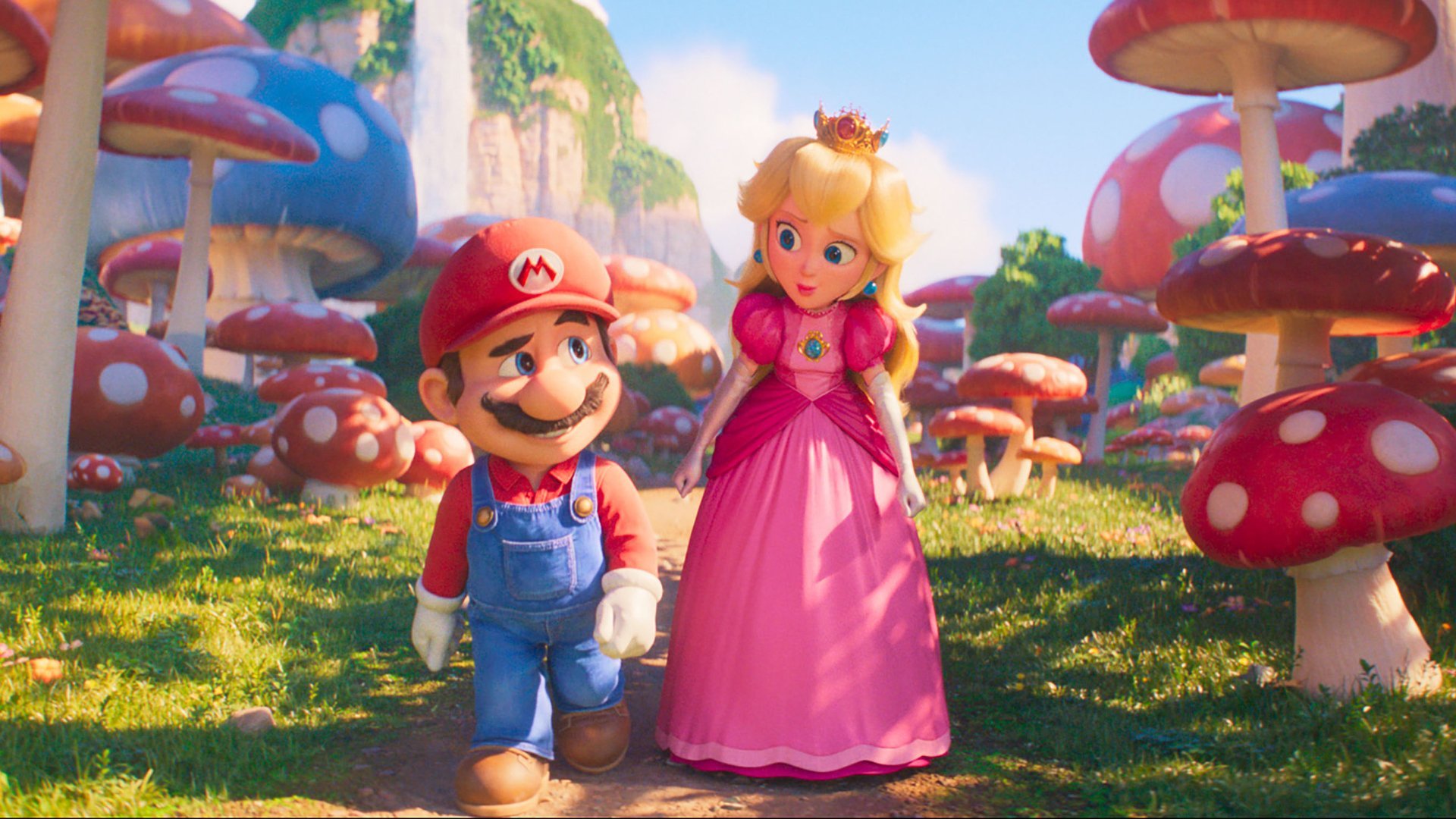
The Super Mario Bros. Movie
PG: Action and mild violence
Runtime: 1 Hour and 32 Minutes
Production Companies: Illumination, Nintendo
Distributor: Universal Pictures
Directors: Aaron Horvath, Michael Jelenic
Writer: Matthew Fogel
Cast: Chris Pratt, Anya Taylor-Joy, Charlie Day, Jack Black, Keegan-Michael Key, Seth Rogen, Fred Armisen, Sebastian Maniscalco, Charles Martinet, Kevin Michael Richardson
Release Date: April 5, 2023
Exclusively in Theaters
When Shigeru Miyamoto announced that Chris Meledandri and Illumination would be producing a Super Mario Bros. animated movie, I heard Charles Martinet’s iconic Mario voice echoing, “Oh no,” in my ears. Whatever Illumination was going to make would be better than the infamous 1991 live-action adaptation by default, but entrusting the animation studio known best for their mediocre family films with Mario was disheartening. It didn’t help when the internet collectively cackled at Chris Pratt’s casting as the titular Italian plumber. Now it’s time for the world’s most famous plumbers to hit the big screen and deliver exactly what we expected: a mediocre family film in desperate need of a power-up.
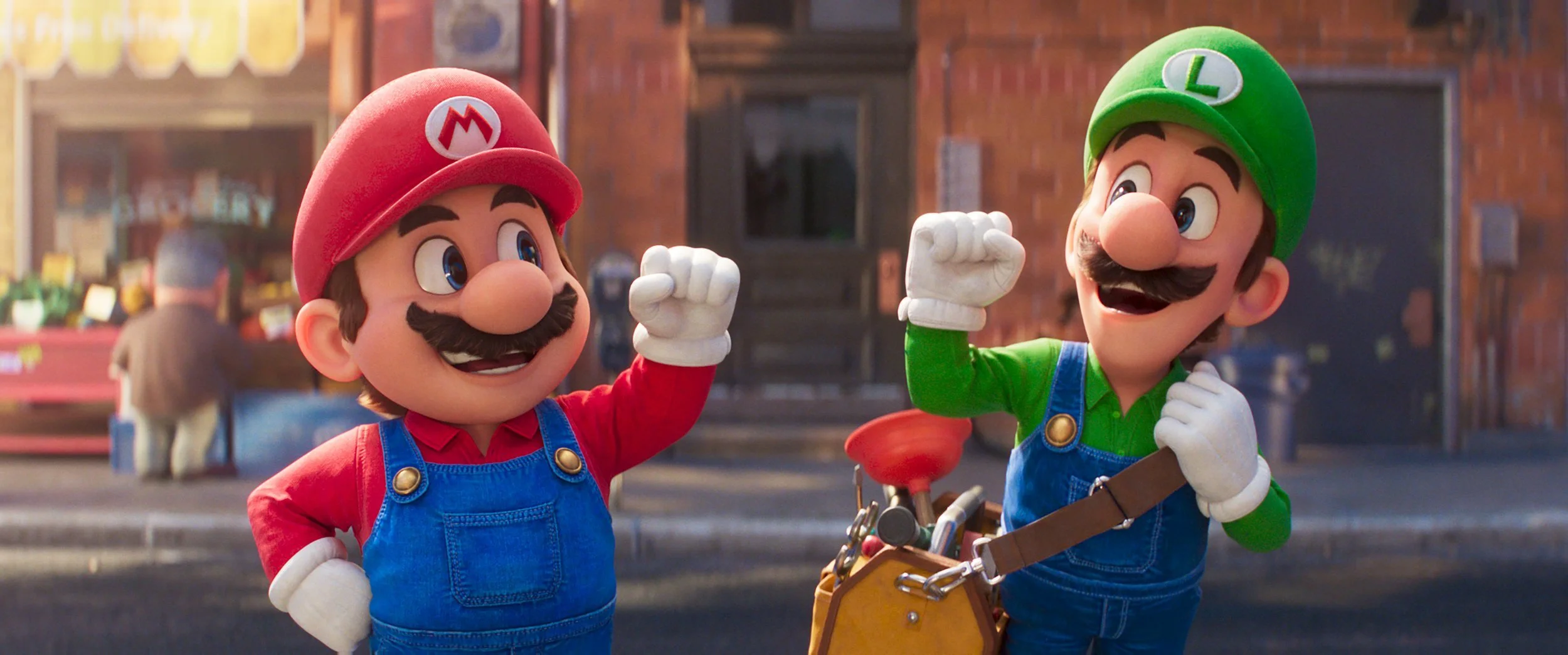
Brooklyn-based Mario (Chris Pratt) and younger brother Luigi (great and underused Charlie Day) launch an independent “Super Mario Bros. Plumbing” business together. Everyone from their former boss Foreman Spike (Sebastian Maniscalco), to their father (Charles Martinet) ridicules Mario for the job transition, especially following their first busted job. Mario, down in the dumps, sees on the news that a sewage water pipe in Brooklyn requires fixing. It’s the perfect opportunity to redeem his business. When he and Luigi enter the sewer, they follow a giant green pipe that warps them to different areas. Luigi lands under evil Koopa king Bowser’s (Jack Black) tyranny, while Mario winds up in the Mushroom Kingdom. A courageous Toad (an unrecognizable Keegan-Michael Key, in a high octave) guides Mario to the fearless Princess Peach (Anya Taylor-Joy) and requests her help to rescue Luigi. Peach recruits and trains Mario to gather leaders of allied nations—including King Cranky Kong (Fred Armisen) and his son Donkey (Seth Rogen)—to stop Bowser.

From the (let’s a) get-go, Mario’s first animated outing bursts with colorful visual deliciousness, giving the beloved gaming icon the big-screen epic adaptation he deserves. Illumination’s animation quality has always been of rich colors and brightness to appeal to a broad audience but The Super Mario Bros. Movie is the widest the studio has gone in scope to date. Countless iconic game locations from Mario’s (and Donkey Kong’s) extensive history thrive in a fully realized 3D space, and it’s breathtakingly gorgeous.
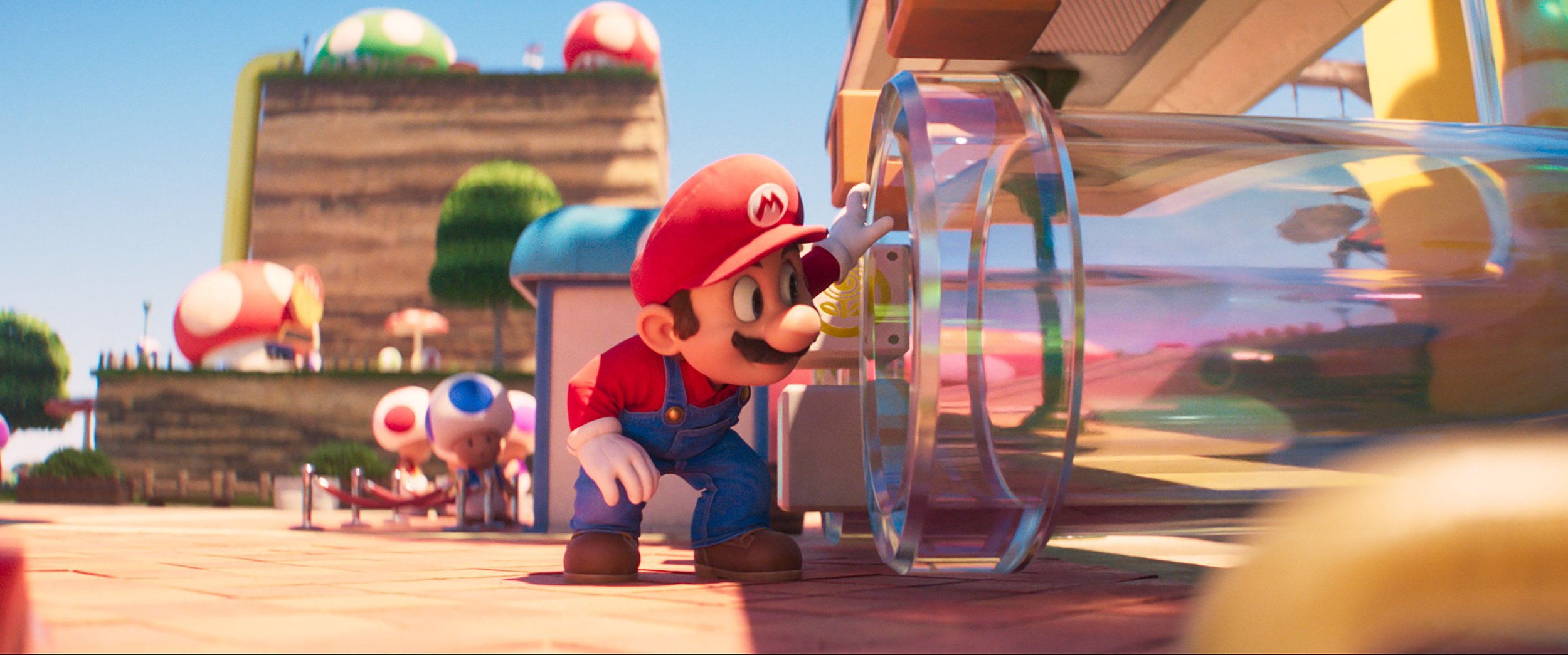
The talented artists pour their passion for the franchise into every facet, like the countless Easter eggs and fan service, sight gags, and the rich detailing on the textures of every character. Mario is (surprisingly) the first Illumination feature to lean heavily into squash-and-stretch physics, adding weight to the slapstick and action sequences. The animators apply an array of cartoonish expressions to the characters’ designs, powering up the comedic beats with their reactions.
Filmmakers Aaron Horvath and Michael Jelenic (Teen Titans Go! creators) take an action-oriented approach and give Mario the can-do attitude of an ‘80s action hero (i.e., Indiana Jones, Luke Skywalker, Mad Max). Sure, Mario’s Type-A personality leaves much to be desired. But his character arc of perseverance in the face of failure is heartfelt, lovingly nodding to the most universally shared gaming aspect. When Mario Bros. emphasizes its action-adventure aspects, its direction shines with inventive camerawork and fast-paced movement. They utilize everything from oner side-scrolling shots to fast-paced 3D camera movement, making it an exhilarating roller-coaster ride. Most action sequences take inspiration from other movies and toss a Mario coat of paint over it. The direction on the action-based set pieces is stunning, with the thrilling “Mad Mario Kart: Rainbow Road'' set piece taking the cake.
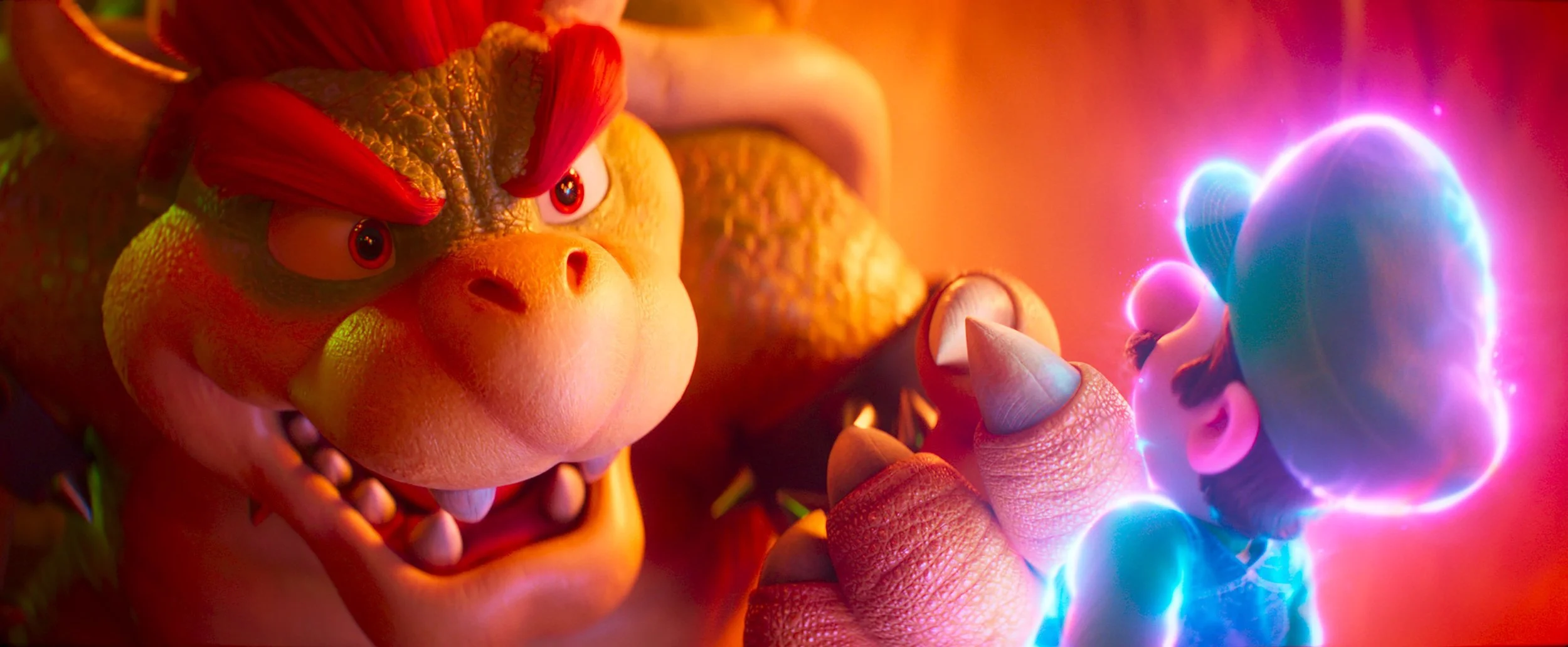
Chris Pratt’s Mario, while still miscast, is tolerable. His high-octave Brooklyn accent sounds more like Linda Belcher, yet Pratt’s voice is far from being one of the film’s issues. If anything, it’s serviceable. Most of the cast falls into the “serviceable” camp, with Anya Taylor Day, Charlie Day, and Keegan-Michael Key’s voices being excellent standouts despite being cast in relatively weak roles. However, Jack Black’s voice performance of Bowser is worth the price of admission alone. Black balances being a menacing threat and a downright hysterical comic relief who steals the show. His characterization leans into the Koopa King’s incel-like behavior from the source material and utilizes it as both the base of humor and motivation. Bowser is the most original, innovative aspect of Mario Bros. because everything else encapsulates what frustrates me about Western animated movies.

Despite the solid visuals and action direction, the Illumination touch on the story (or lack thereof) prevents Mario from reaching the top of the goalpost. Matthew Fogel’s (Minions: The Rise of Gru) screenplay is transparent in its redundancy, following a diluted Star Wars blueprint and dressing it in blue overalls. Mario’s origin story hits the same beats as every hero’s journey archetype without much individuality to set it apart. The story is constantly going from set piece to set piece, making slapstick gags along the way, leaving no room for character development. In an era when video game movie adaptations have gotten ambitious, Mario is too focused on assimilating to the mediocrity of CG Western animation tropes to achieve the heights of better fare. Say what you will about Pokémon: Detective Pikachu, the Sonic movies, and the Angry Birds movies, but they all had a thematic heft of sorts to make them feel like features rather than calculated commercials. Mario Bros. lacks a thematic backbone. The film starts strong by focusing on the brotherly dynamic between Mario and Luigi. Once Luigi trades roles with Peach, becoming the “kidnapped princess in another castle,” the story completely forgets about him. He barely appears during the second act as the Star Wars-based plot takes over.
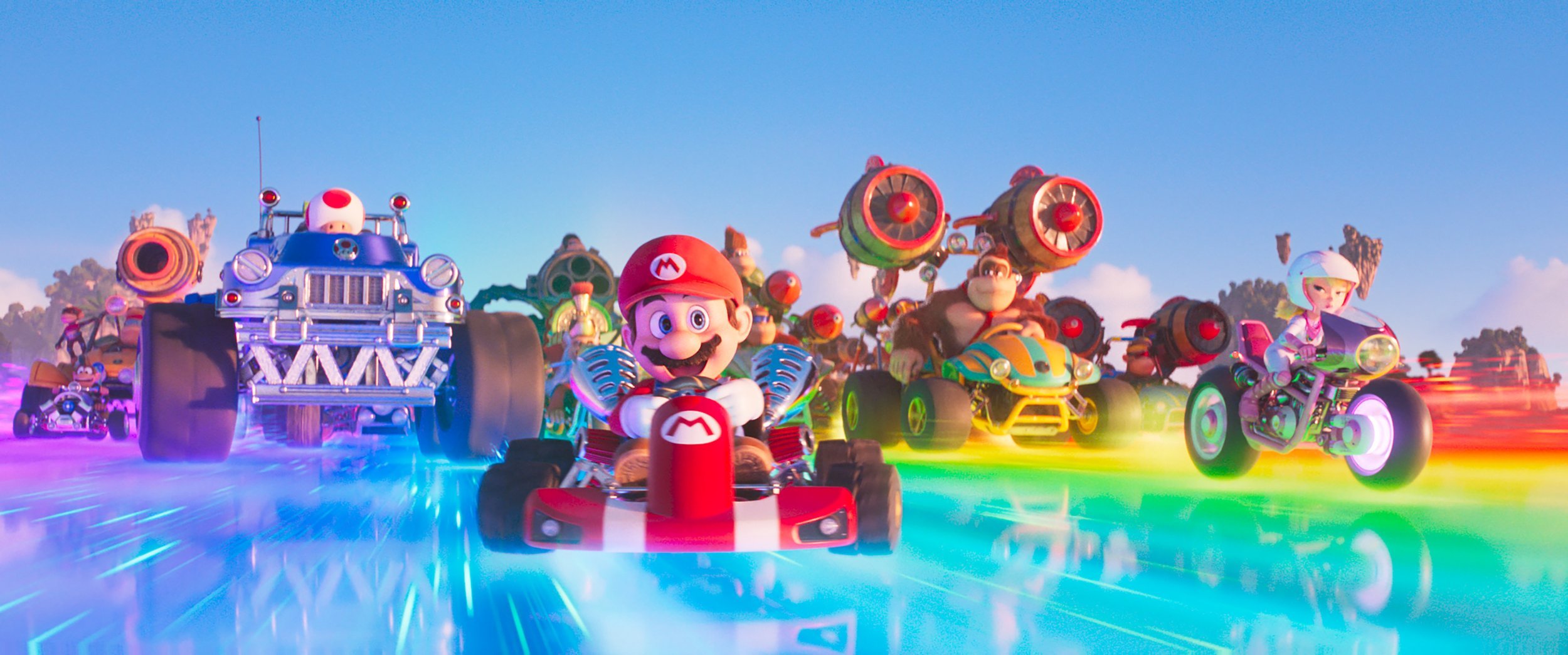
As the story flies further down the drain, Fogel presents several interesting concepts to add some semblance of weight to the characters. When Seth Rogen’s Donkey Kong banana slams onscreen, Fogel tries to make a buddy picture with him and Mario, bonding over their shared daddy issues. As Mario and Peach develop a platonic friendship (because they have little chemistry), an intriguing idea for Peach's origin is briefly mentioned. Sadly, you can hear the echoes of either Meledandri or Miyamoto conforming to the Western animated movie commercialized machine.
Mario Bros. hits all the bullet bill points. It has a Hollywood celebrity voice cast that hardly leaves much of an impression, a rushed and unfocused story, a tight runtime for ample plays in theaters to max out its profits, and (the most egregious one) the throwaway ‘80s soundtrack that never quite fit the scene. Fogel’s screenplay is riddled with those issues, including lame, outdated jokes and references to other movies. Donkey Kong screaming, “It’s on like Donkey Kong,” and, “Is this not what you came for?” during the Gladiator-inspired battle sequence are the worst moments. When it’s not lazy in dialogue, it’s recycling Fogel’s previous product. No joke, the Mario Bros. climax hits the same beats and level of destruction as Minions: Rise of Gru.

Illumination's The Super Mario Bros. movie fails to hit the top of the goalpost. It succumbs to the lazy animated feature tropes its studio is known for but gets a mushroom power-up through its breathtaking animation and imaginatively directed action set pieces.

