
'The Place of No Words' Review
NR
Runtime: 1 Hr and 35 Minutes
Production Companies: Mythical Films, Wide Awake Cinema
Distributor: Gravitas Ventures
Screenwriter/Director: Mark Webber
Cast: Mark Webber, Teresa Palmer, Bodhi Palmer, Nicole Elizabeth Berger, Eric Olsen, Sarah Wright Olsen, Phoebe Tonkin
Release Date: October 23, 2020

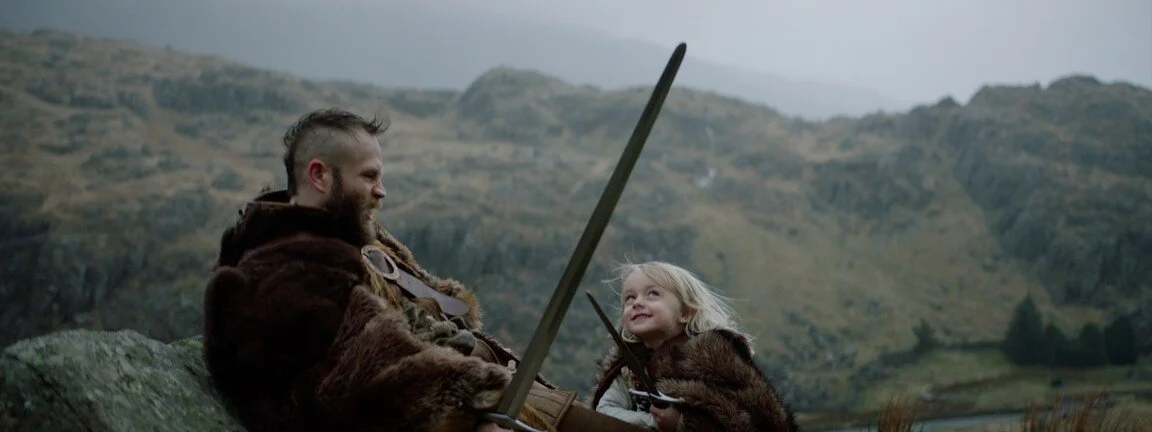
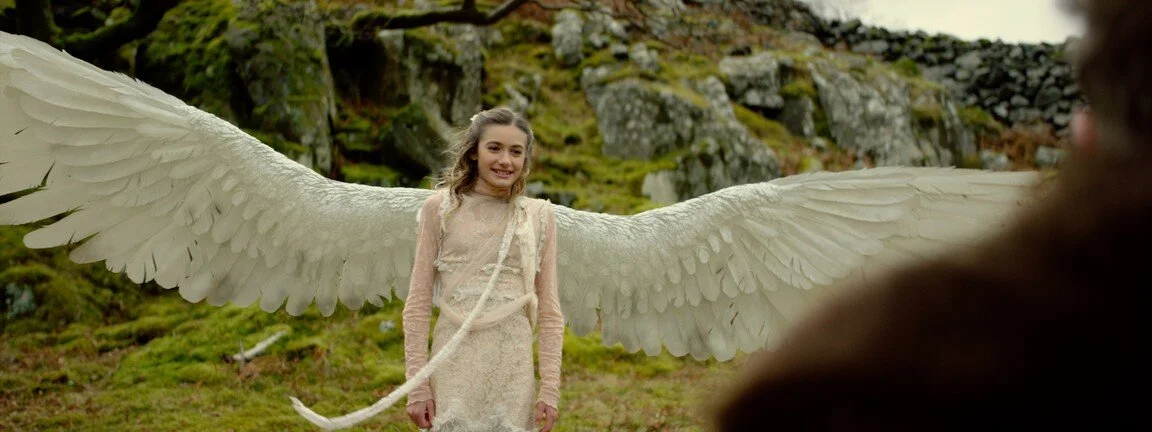
“Where do we go when we die?” It is this simple, but unanswerable, question from a precocious three-year-old that kicks off an epic journey as the small lad leads his family on an imaginative adventure through fantastic lands filled with mythical creatures. Told through the eyes of both the father (Mark Webber), battling a terminal illness, and his young son (Bodhi Palmer), The Place of No Words story moves seamlessly between the world as we know it and a shared fantasy, exploring the laughter and pain, fear and wonder that people experience as they confront and cope with death.

When you’re the son of two stars, of course you’re bound to inherit your parents’ talents. But when you’re able to show off that talent at age 3, God have mercy on future Hollywood. I don’t know if it’s because he’s acting amongst family where he’s able to just be himself, but Bodhi Palmer delivers an amazing breakout performance.
This kid is undoubtedly going to be a star. I know it. At such a young age, his performance captures innocence and delivers the heart and humor which serves as the backbone of this movie. And he’s not just cute. He can act and exhibit a surprising range of emotion that never seems forced or manipulative.
He always has a curious notion with his father’s struggling preparation for death. The scenes he shares with Webber are the fundamental bases of the movie and they shine with every second they’re on screen together. You can’t help but go—

as Bodhi and Mark embark on their journey. It’s a cute father and son story as it presents a tender relationship that will trigger a lot of dads. This might as well be the film version of the Will Smith song, “Just the Two of Us.”
The film lacks a score, for a lot of the scenes rely on ambient noise, and it fully works as it perfectly accompanies the harrowing theme of death.
Speaking of death, one of the reasons I love Bodhi is because of how lowkey sadistic he is. He’s a sadistic little savage who keeps talking about death and killing long before it becomes the central theme of the narrative. At first it’s cute and funny, but as it goes on, he gets more murderous in his intentions and it’s kinda frightening. He’s like a little Aubrey Plaza in the making.


I wish I had enjoyed The Place of No Words as much as I should’ve. The film is means well, but I couldn’t seem to pin down who it is truly made for. Considering Webber made films in the past, this is his most experimental feature yet. The story switches back and forth between modern times where Mark is in the midst of a terminal illness and preparing for his inevitable death while still being a father to his wife and kid, and the medieval times in a fantasy world where Mark and Bodhi must embark on a journey.
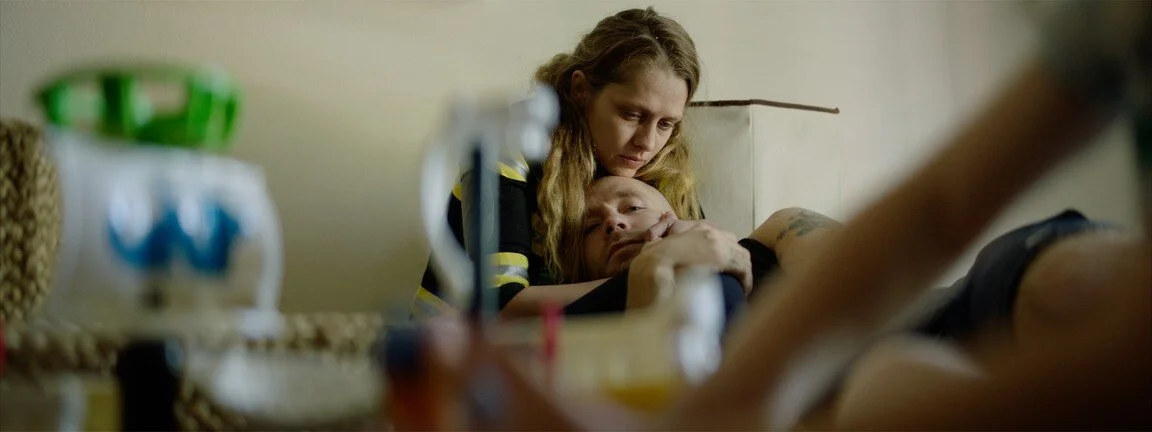
At first, it feels as a means to juxtapose the emotion and tone, but the overall picture never seems to correlate and it comes off as confusing. The two different stories being presented feel as if you’re watching two separate movies that never bridge themselves together. I can’t tell who it was made for because there are so many scenes of bliss between Mark Webber, Bodhi Palmer, and Teresa Palmer as a family that are cute, but after a while you question where the substance is. I know Webber and his family are playing fictionalized versions of themselves, but even then it doesn’t provide much significance to make their story stand out as it plays so similarly to a family home video. I’m impressed that he shot many of the fantasy scenes on location with his son and the level of production work he put in to bring Bodhi’s imagination into reality. My main issue is that it never really connects to the big picture Webber attempts to convey. One moment we would see Mark in a hospital bed, and the next thing you know Bodhi is surrounded by large trolls with a huge booger situation. The tone is never consistent enough to capture the grim and whimsical take the film tries to express. The messy non linear structure prevents the audience from investing in a scene as it keeps abruptly going back and forth to each set of characters in different locations.
Once we get to the root of the inspiration for Bodhi’s imaginative world, the film becomes less interesting and slightly overblown. As the film progresses, the story seems to lose its thread.
The best way to describe The Place of No Words is if Robert Rodriguez made an experimental family film for his kids. Seriously, Mark Webber kind of pulled a Robert Rodriguez where he made a movie strictly for his kid in hopes that it would appeal to others as well. Robert Rodriguez has done it so many times, but his most infamous project was Sharkboy and Lavagirl.
This is Mark Webber’s Sharkboy and Lavagirl but with a well-intentioned love letter attached. While he wants to make a statement on death and existentialism, he never commits to it enough to tell a strong and meaningful story.
And after you understand the film’s intention and the point it makes, it just keeps going and never seems to conclude. The pacing is slow enough as it is for a 97 -minute runtime, but when it approaches towards its finale, it really does slog. At a certain point you just want to say, “I get it. Your family is cool! Can we go home now?”
The Place of No Words is cute and means well, but the lack of connection between its ideas through its structured format prevents this family drama from being enjoyable. But Mark Webber and Teresa Palmer’s son, Bodhi, is bound to be a star.
Rating: 2.5/5 | 50%

