PG-13: Some bloody images and brief strong language
Runtime: 2 Hrs and 02 Minutes
Production Companies: Smokehouse Pictures, Anonymous Content
Distributor: Netflix
Director: George Clooney
Writer: Mark L. Smith
Cast: George Clooney, Felicity Jones, David Oyelowo, Tiffany Boone, Demián Bichir, Kyle Chandler, Caoilinn Springall
Release Date: December 11, 2020 (Theaters) | December 23, 2020 (Netflix)
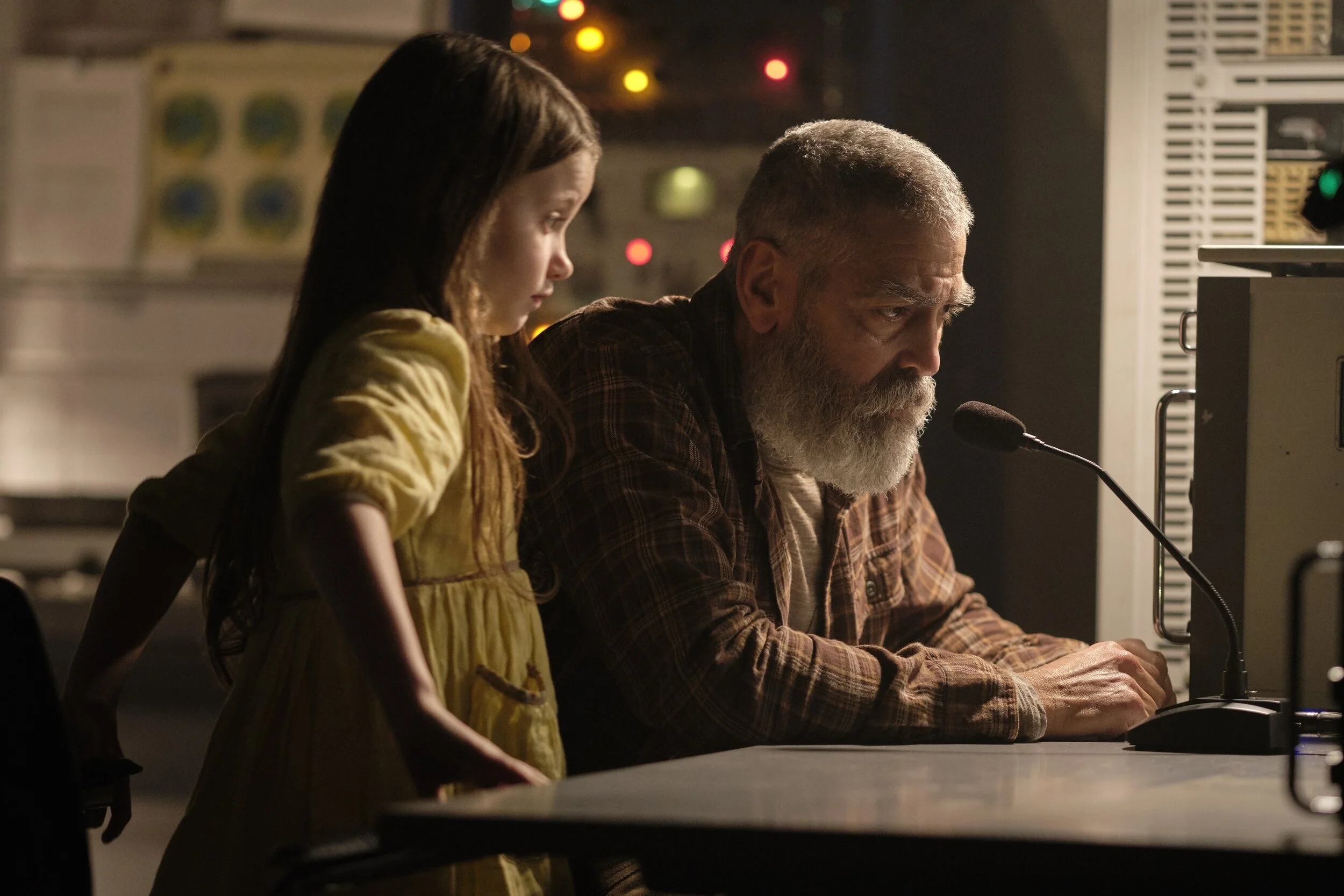
This post-apocalyptic tale follows Augustine (George Clooney), a lonely scientist in the Arctic, as he races to stop Sully (Felicity Jones) and her fellow astronauts from returning home to a mysterious global catastrophe.

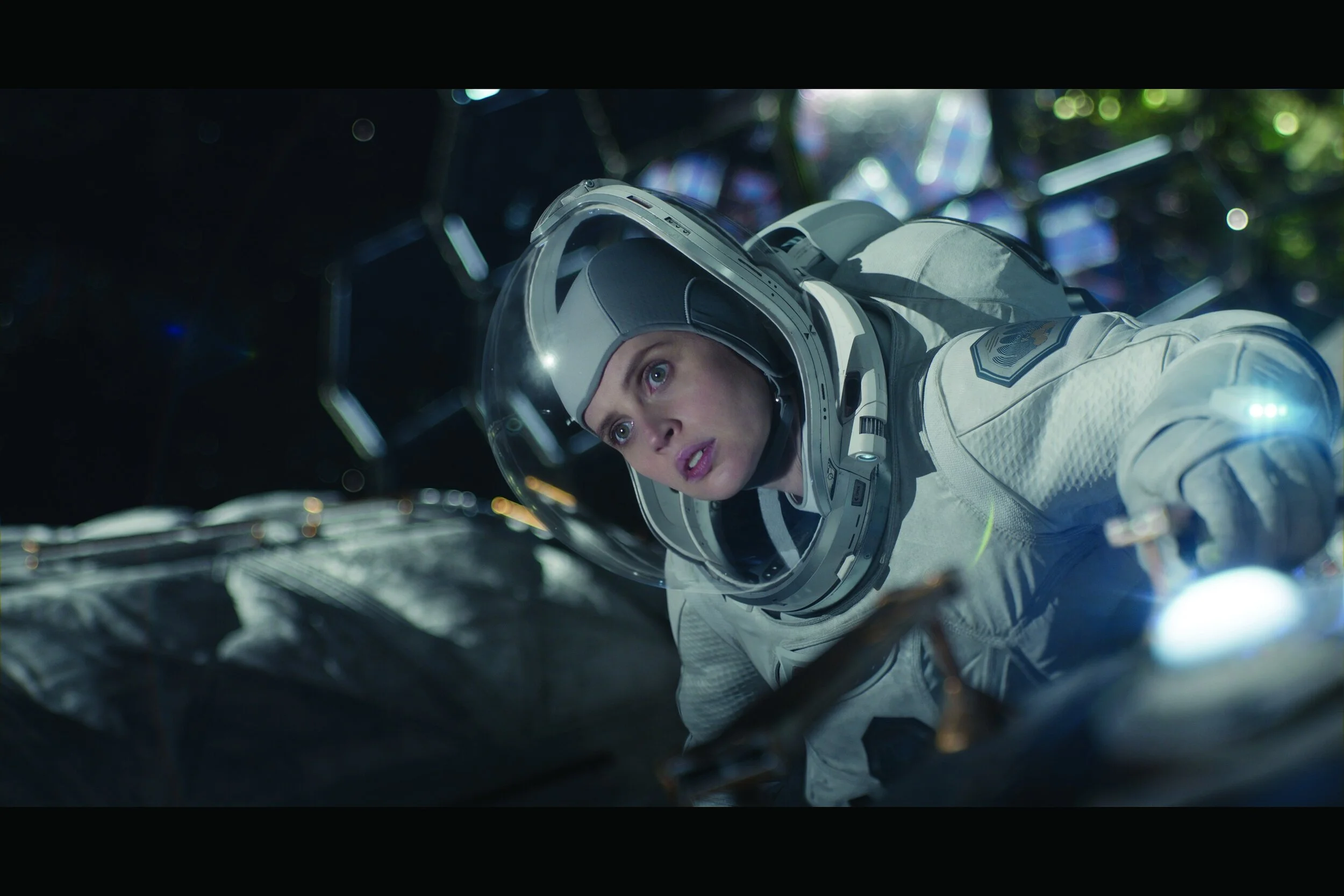
Out of all the movies he’s helmed, The Midnight Sky is indisputably George Clooney’s most ambitious project as a filmmaker. It comes seven years after he starred in Alfonso Cuarón’s Gravity, which is the most visually striking sci-fi/space movie I’ve ever seen (it was my first IMAX 3D movie experience). Clooney has now created his very own $100 million sci-fi spectacle — something he had never done before — and, surprisingly, he succeeds from a visual standpoint. The Midnight Sky is a gorgeous movie to look at. Since the narrative takes place in the year 2049 on both the icy terrain of the Arctic and in space, you get an abundant amount of stunning visual effects with the two environments. The futuristic spacecraft is a beautiful set in both interior and exterior design. The CGI is heavily detailed and makes you feel as if you are with Sully (Felicity Jones) and her astronaut crew. There are brief moments where the green screen background is visible, especially during close-up shots, but for the most part, the VFX are outstanding. Aside from the fact that we didn’t have many big-budget blockbusters this year, The Midnight Sky is surely a frontrunner for Best Visual Effects during the upcoming award season.
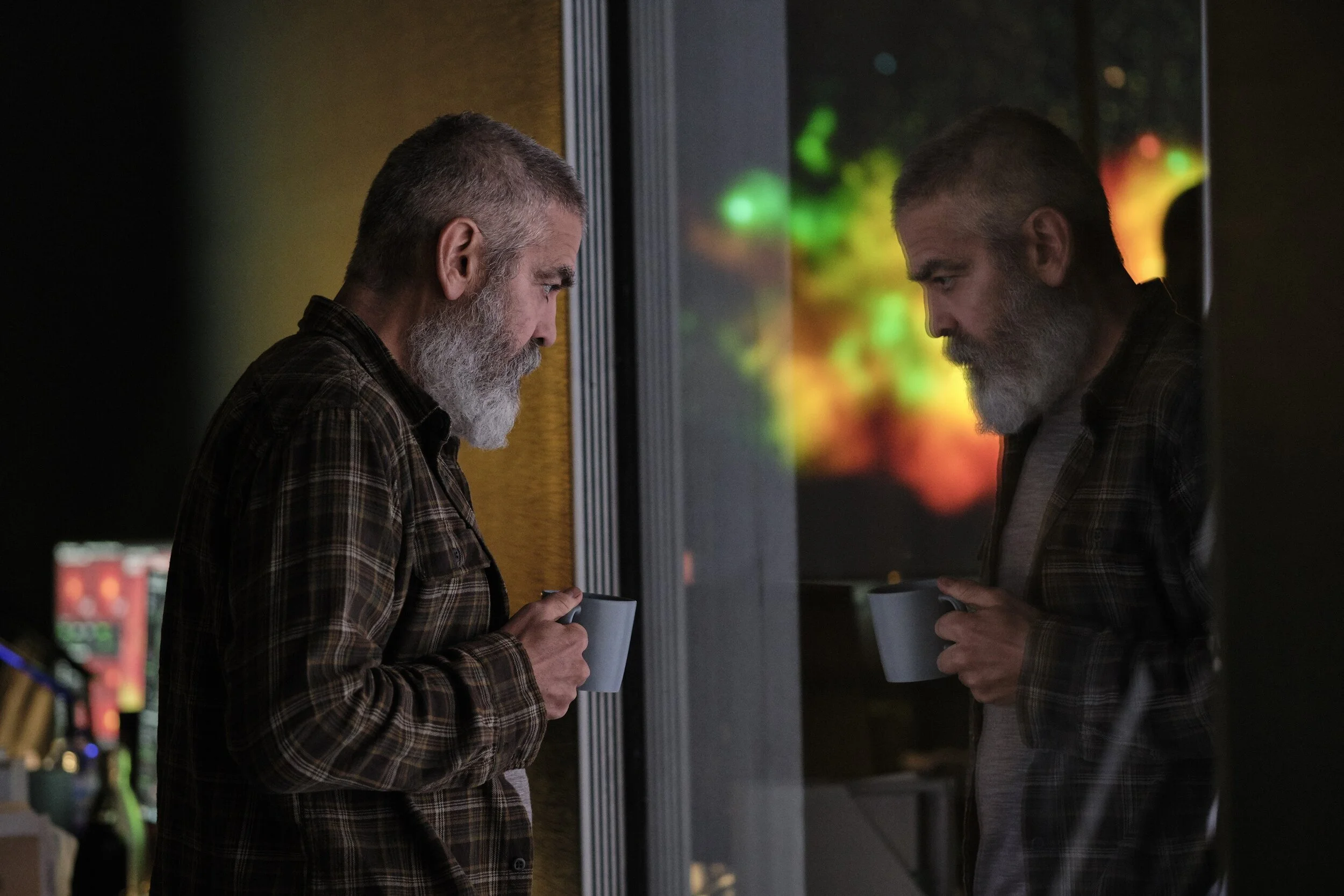
This is Clooney’s first big project as an actor since Jodie Foster’s Money Monster (2016). He grew out his beard, bears major baggy eyes, and growls in a low raspy voice like he’s going through it. In the year 2049, Augustine looks how most of us look right now in 2020. Clooney provides a quiet and somber performance that I gravitate towards (away from all the space mumbo jumbo). Clooney aside, the rest of the star-studded cast is also great. For what it’s worth, the space ensemble, which includes Felicity Jones, David Oyelowo, Tiffany Boone, Demián Bichir, and Kyle Chandler, does a good job delivering honest, down-to-earth performances that sort of help you get on-board with the story. The performances aren’t anything to write home about, but for what it’s worth, the ensemble is really good with the material they are given.

I love how every time George Clooney directs a movie, Hollywood immediately rallies behind it and tries to market it just in time for some Oscar buzz simply because he’s George Clooney. Yet, for nearly a decade now, whenever he gets behind the camera, Clooney delivers nothing but misses. It’s as bad as the New York Jets’ losing streak. While I personally dig The Ides of March, which was his last good movie as a director, his batting ratio is terrible. Despite the incredible visual effects work, The Midnight Sky’s story doesn’t work as the compelling sci-fi narrative that it thinks it is.
For starters, the narrative is a convoluted mess. On a post-apocalyptic Earth, you follow scientist Augustine Lofthouse, the last man on Earth who has to trudge across Arctic terrain to contact a spacecraft and tell them not to return to Earth. During his journey, he encounters a quiet little girl and becomes her guardian of sorts. On top of that, he reflects on his younger days and how he lost the love of his life due to his dedication to his work. It doesn’t end there though, for it’s a dual narrative that also centers on Sully, a pregnant astronaut who — along with her crew — is planning a course to go back home to Earth… while trying to find a good name for her baby.
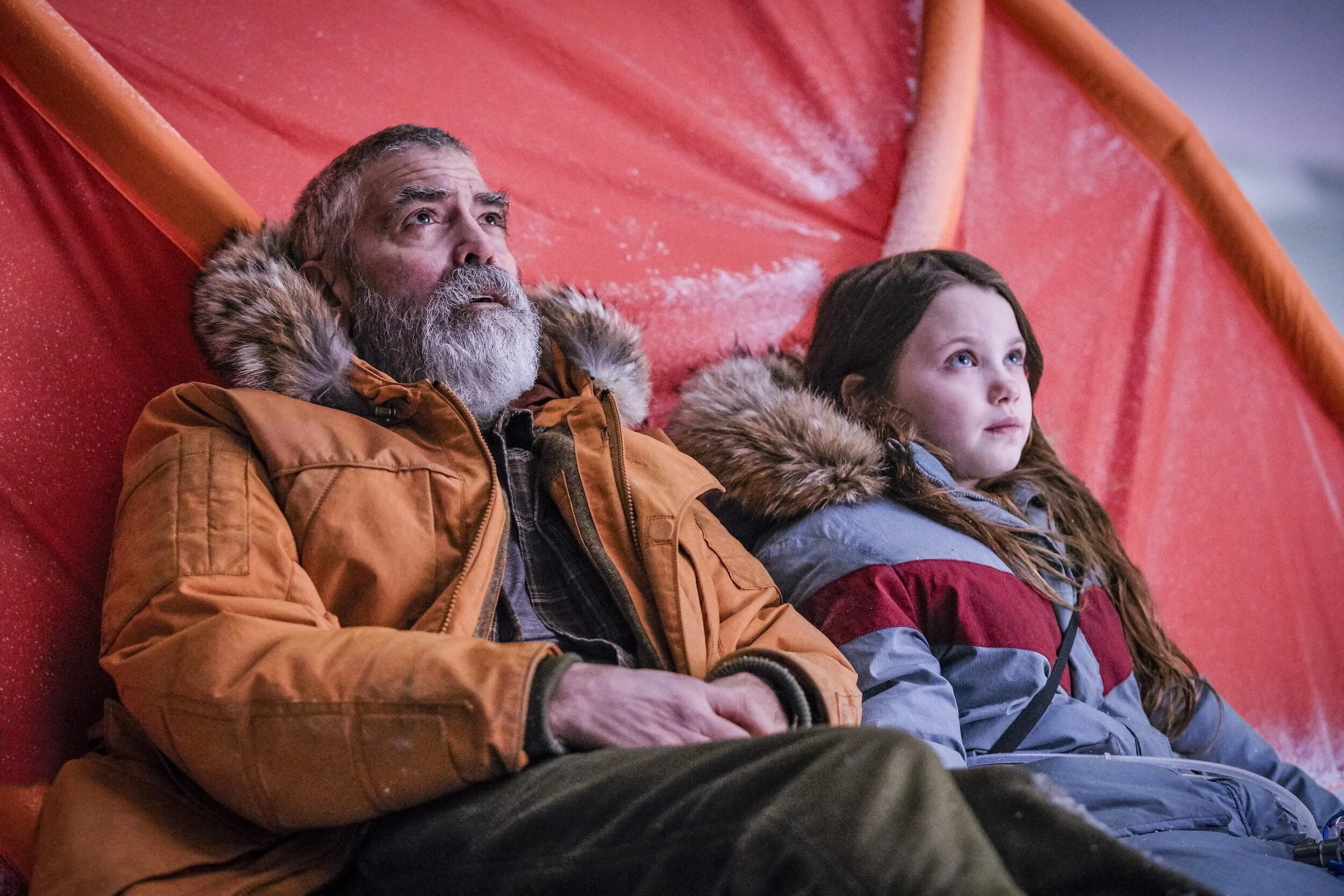
Though the film attempts to add duality to these two contrasting narratives, it lacks a clear structure, which affects the pacing as a whole. One part of the narrative is a solo survival journey mixed with a generic character study. The other part is a basic sci-fi drama that looks pretty but lacks any genuine substance. The contrasting stories hardly bear a natural connection; it’s as if they’re two different movies mashed together into one. With each cut from Augustine’s arc (which is unbearably sentimental) to the astronauts’ narrative (which is extremely light, for the most part), the tonal shifts move back and forth like a pendulum so you don’t know what exactly the story as a whole is aiming for. Because of the messy structure and lack of a central focus, the film moves at a sluggish pace. The film is overstuffed with one too many characters that it ends up feeling very one-dimensional.
With the narrative being too disjointed to comprehend, The Midnight Sky attempts to pull a last-second plot twist that is so bad, it actually knocked my rating down. You’d think it’d have an intriguing, thought-provoking plot twist but instead, it comes off as a silly Shyamalan-style moment that’s so damn stupid, it’s literally hilarious. I laughed my ass off. Aside from the astounding visual effects, there’s nothing much to praise about The Midnight Sky. The plot isn’t cohesive, its tone is unbalanced, and the story feels like two completely different movies packed into one. It tries to be a sentimental piece about what little is left of humanity, but it takes silly routes that build up to an even sillier, unsatisfying conclusion. It’s not one of the worst movies of the year, but damn, it’s pretty bad. Hey, at least George Clooney learned how to work with a $100 million dollar budget as a director… so… good for him, I guess.