
I don't play about The Hunger Games. Suzanne Collins’ dystopian sci-fi future series as a response to the Iraq War launched a generational phenomenon that lives close to my heart. Binge-read the entire mainline series as a kid. The whole fam went out on each movie. One of our late turtle’s names was Peeta. Hell, I did an entire interpretive dance to Taylor Swift’s “Safe and Sound” in front of my middle school body when the first movie was coming out and then lived to tell Swift that myself very recently. Since the Games are over in the present but our fascist reality (but like dumber) seems very close to pre-Everdeen Panem itself, it's prequel time baby! Collins writes a new book, Lionsgate froths at mouth and fast-tracks a movie, series director Francis Lawrence returns to up his kids kill count, and I’m seated and ready to be radicalized.
With Sunrise on the Reaping we finally learn the origins of disgruntled, drunken Haymitch Abernathy (Joseph Zada here, Woody Harrelson in the mainline movies)— how he not only became the second winner of the district and a disillusioned drunken recluse, but what sparked the flame to participate in the uprising against the Capitol. How his Hunger Games was a rehearsal for the revolution.
As much as I love returning to Panem and am a sucker for this world, I appreciate this entry demonstrating the Capitol’s unabashed cruelty and ruthlessness, making this undoubtedly the bleakest entry yet. But also the formula fatigue, mixed with bigger franchise spectacle and textbook-prequel-requisite stuff more Hollywood coded than before, frustratingly inflates this as well.
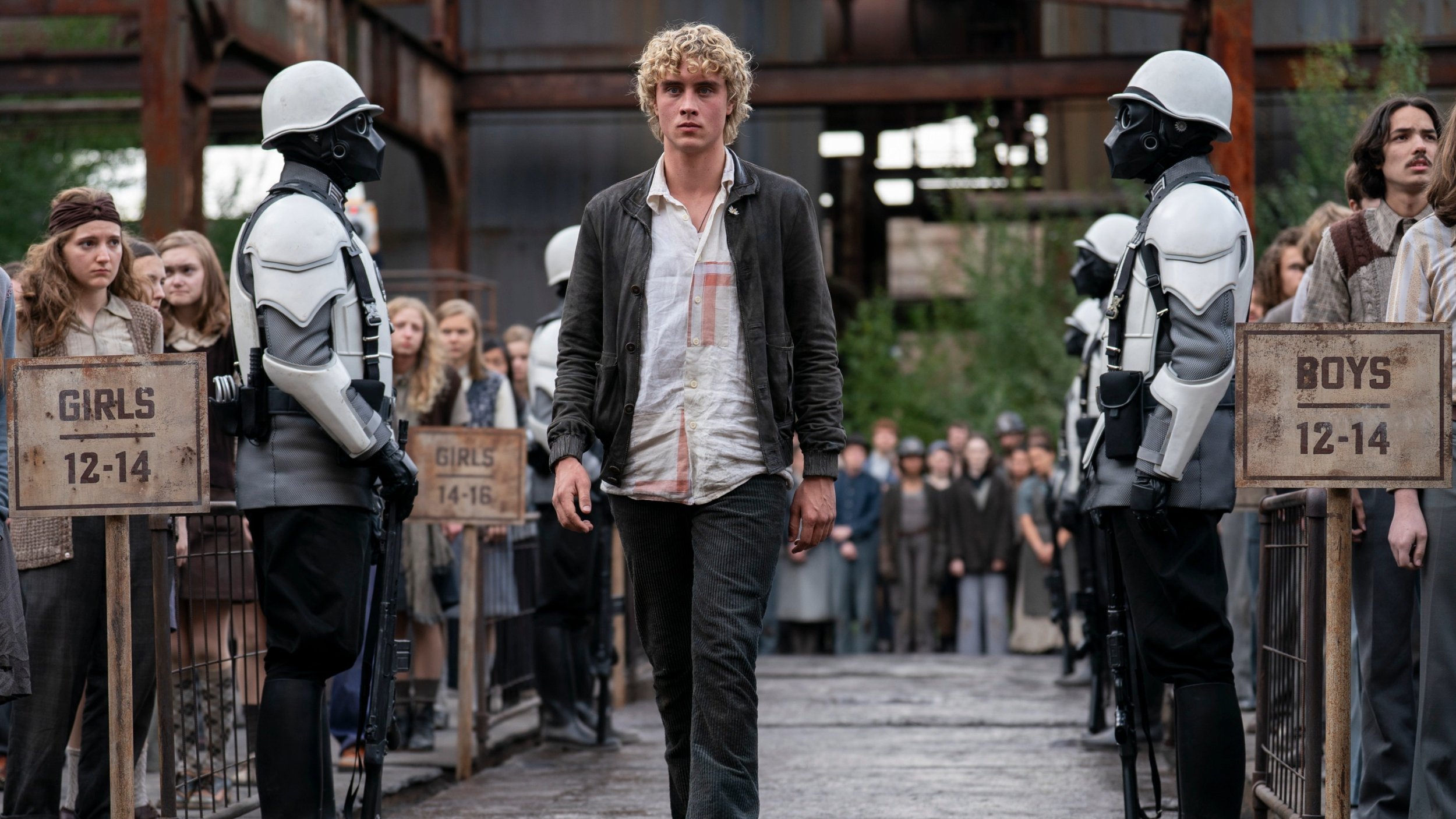
MPA Rating: PG-13 (for strong violence, bloody images, disturbing material, some smoking and teen drinking.)
Runtime: 2 Hours and 30 Minutes (150 minutes)
Language: English
Production Companies: Lionsgate Films, Color Force
Distributor: Lionsgate Films
Director: Francis Lawrence
Screenwriter: Billy Ray
Cast: Joseph Zada, Whitney Peak, Mckenna Grace, Jesse Plemons, Kieran Culkin, Elle Fanning, Ralph Fiennes, Glenn Close, Billy Porter, Maya Hawke, Kelvin Harrison Jr., Lili Taylor, Jennifer Lawrence, Josh Hutcherson, Woody Harrelson
U.S Release Date: November 20, 2026
A 16-year-old Haymitch Abarnathy lives life implicit to the Capitol’s regime. He’s a “that’s just the way it is” kind of guy, though a little fire of unseen potential sparks within him. His Covey member girlfriend Lenore Dove Baird (Whitney Peak) suggests to him to see her way where they can speak up against tyranny and rebel. Their chemistry carries the same YA genericism where dialogue is more of a thesis statement than a telling of character.
Haymtich’s origin unfolds like a never ending tragedy. Every day on his birthday, the reaping for the Hunger Games happens. On District 12’s reaping on the 50th Hunger Games — aka the Second Quarter Quell, where 50 participants have to fight to the death — calamity occurs, forcing Haymitch to represent 12 alongside Wyatt (Ben Wang), Maysilee (Mckenna Grace), and Louella (Molly McCann). Upon sensing his resilience, Capitol television director Plutarch Heavensbee (Jesse Plemons) and various companions and former Games victors and mentors — Wiress (Maya Hawke), Mags (Lilli Taylor), and Beetee (Kelvin Harrison Jr.) — and Beetee’s son Ampert (Percy Daggs IV), forced as a tribute, attempt to convince Haymitch to break the Games’ machines from inside.
Sunrise on the Reaping depicts Panem at its most brutally authoritarian.
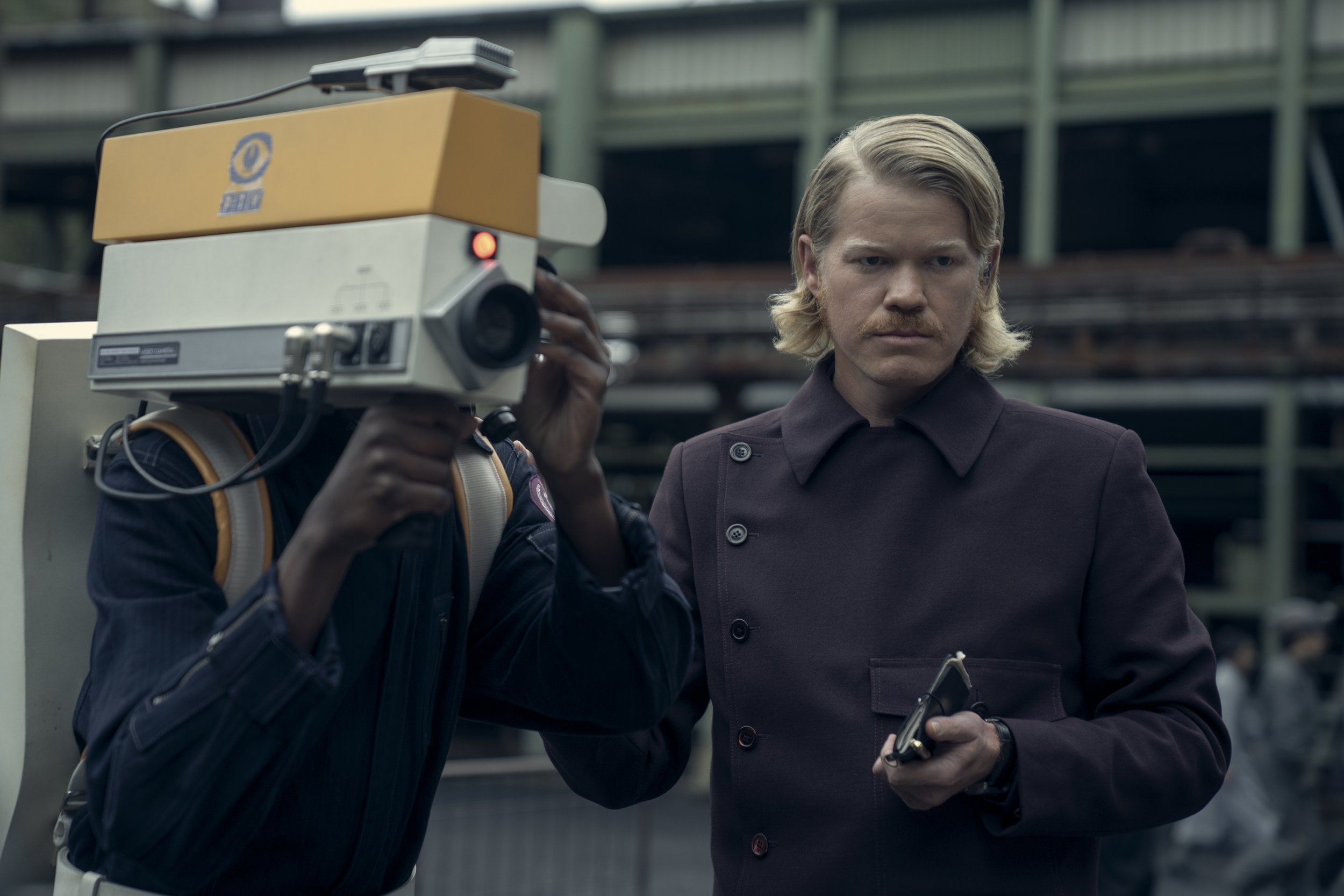
Jesse Plemons as Plutarch Heavensbee in The Hunger Games: Sunrise on the Reaping. Photo Credit: Murray Close/Lionsgate
Our first real return to Panem in nearly a decade, 2023’s Ballad of Songbird and Snakes, did a fine job texturing a younger Coriolanus Snow (Tom Blyth in that movie, Donald Sutherland in the mainline series, and Ralph Fiennes here), his malfeasance and cunningness, and what led to him becoming the heartless fascist bastard we all love to hate. It also excavated his eternal beef with District 12 (thanks, Lucy Gray). Sunrise on the Reaping may be Haymitch’s movie, but it's blunt and brutal in depicting Snow’s cruel leadership at the height of his tyranny. Ruthless Capitol crowds pelt tributes with rocks. Glenn Close stuns in a canary-colored, Third Reich-styled Cruella de Vil fit as fashionista Drusilla Sickle, whipping kids with batons and delivering kill orders. An erratic, younger Caesar Flickerman (Kieran Culkin) in full early-year jitters is insufferably mean. Ralph Fiennes’ take on Snow is calm and collected, but when making threats comes across as so cold and chilling. And this is all before Haymitch enters the arena. Most notably, Sunrise centers on the weaponization of media and how easily propaganda can be constructed to maintain control. Jennifer Lawrence learned how vital propaganda was to the Second Rebellion in Mockingjay Part 1 , so seeing it used to inflict trauma and pain on the ones trying to start the rebellion — hell, to torture the kids — is so fucking depressing.
Francis Lawrence’s work on The Long Walk might as well have been an exercise in treading darker material because this is the bleakest the series has been. Haymitch’s Hunger Games is the epitome of, “you kids don’t know how bad it was back in my day.”
Haymitch struggles to stand out in his own origin story.

Joseph Zada as Haymitch Abernathy in The Hunger Games: Sunrise on the Reaping. Photo Credit: Courtesy of Lionsgate.
Because we already know Haymitch’s fate, the film mostly interrogates how he became the broken man we knew him as, and how he joined the revolution amid Catching Fire. The film busies itself with the integral, recognizable players throughout, showing us how their influence turned Haymitch’s flippant spark into a rebellious flame. It’s a good message for younger fans today, and the mentors’ espionage plot spins this installment into something of a techno-spy flick — but all the mechanisms occurring around Haymitch make him more reactionary than an active participant. It’s maybe fucked to say, but man, this boy doesn’t get interesting until he becomes a jaded drunkard. Sunrise throws in so many new and old characters that barely anyone gets to make an impression. All except for McKenna Grace as Maysilee, who is full of conviction and fiery spirit: her shared goal with Haymitch makes for some of the film’s best scenes.
Haymitch, meanwhile, barely stands among the top five most interesting people within his own movie. It took a while for me to warm up to him, despite having an innate rugged charm and mysterious aura. Over time, as this boy is just going through the wringer, Zada sells Haymitch’s pain and anguish impressively. He also holds his own against even his veterans, like a fantastic Jesse Plemons as Plutarch.
Sunrise unfolds like Solo and Rogue One (both in its positives aaaaaand negatives). As Haymitch’s submissiveness is tested, series screenwriter vets Billy Ray and Michael Lesslie do a fine job chronicling the tiny stepping stones towards a burgeoning revolution Sunrise also brings viewers back to the radicalist spirit and vigor that captivated fans in the first place. The visceral bloodthirst I felt as a teen for Snow’s dismantling returned in full force; my sister had to hold me back from going, "Let me at ‘em. Let me at ‘em."
I am also fond of how the point of technological time in Panem looks here. Production designer Uli Hanisch paints the capital in a cool brown-paletted retro futuristic style with some art deco features and then in the arena featuring a rich, luscious greenery, like something straight out of Midsommar. If Midsommar had a giant ass volcano ready to erupt.
Sunrise on the Reaping lets blockbuster spectacle overshadow its revolutionary spirit.

lona Bell as Lou Lou, Ben Wang as Wyatt Callow, Joseph Zada as Haymitch Abernathy, and Mckenna Grace as Maysilee Donner in The Hunger Games: Sunrise on the Reaping. Photo Credit: Murray Close / Lionsgate
Sunrise leans heavy in spectacle and that sometimes diminishes parts of the integral radicalist themes it aims to impart. From the outset, I was distracted by how “beat” Haymitch and Lenore’s faces were, so clean and polished despite coming from the most impoverished district. That’s an aspect of how commercialized these movies have become: “Oops, we’re all blockbusters!” Lawrence still retains the spirit of the mainline series, but like with the weaker components of Mockingjay, is excessive and bombastic on effects-heavy fatalities, done with weak CGI. The game arena is less of a battleground for kids to kill each other but more of a Roald Dahl’ed death trap. The fatalities are environmental, and animatronic machinery causes the teens’ demise, but with a colorful pop and disturbing nightmare fuel.
Considering it’s the direct leadup to The Hunger Games, it succumbs to every exhausting prequel trap under the sun to a frustrating extent. While fast-paced, particularly given its 2 hr and 38 min runtime, the Hunger Games fatigue is hitting. After six movies, we’re treated to the same formula in different outfits and levels of bleakness. I appreciate that this one is intrinsic in how one activates their rebellious spirit and the fucking, depressive bloodshed that it wrought. But with such inflated directional choices and annoying prequel panache, Sunrise on the Reaping left me underwhelmed. It’s a capital-A adequate Hunger Games prequel but far from the fiery arrow its predecessors shot. Having finally reached my limit for these movies, I’m hoping that Collins explores Panem outside the games next — give me that District 13 civil war movie.
