
‘The Bride!’ Review: Maggie Gyllenhaal’s Stylish Monster Movie is a Chaotic, Half-Formed Feminist ‘Joker’
Man, if Mary Shelley were alive, she’d be raking in the residuals with the way there are so many Frankenstein movies lately. Guillermo Del Toro’s affecting Frankenstein compelled me to write about being non-binary, Yorgos Lanthimos' Poor Things gave us a new kind of Disney princess, and Zelda Williams' Lisa Frankenstein remains criminally underrated. But what about the Bride of Frankenstein? Well, in comes Maggie Gyllenhaal and Jessie Buckley to pull the switch and bring Frankenstein's often-overlooked companion to life with The Bride. Following her impactful and somber directorial debut, The Lost Daughter, Gyllenhaal’s gothic, ambitious follow-up promises a bold reinvention – reuniting her with Jessie Buckley as the Bride and pairing her opposite a tattered Christian Bale as Frankenstein in what initially suggests a Bonnie and Clyde-style monster romance.
In practice, however, it plays as the white woman's Joker. Everything Todd Phillips failed to do with his shallow portrayal of the lonely male psyche in Joker, Gyllenhaal repeats with The Bride, only this time with a fourth-wave feminist gloss focused on sexual violence and gender equality. However, it more closely resembles Joker: Folie à Deux, given its freak-for-freak romantic stance. The comparison runs deeper as Joker DP Lawrence Sher and composer Hildur Guðnadóttir return for this film, so Gyllenhaal really bagged 'em from Phillips' set. Nevertheless, despite its striking visuals, The Bride collapses into an electrifyingly erratic, incomprehensible mess.
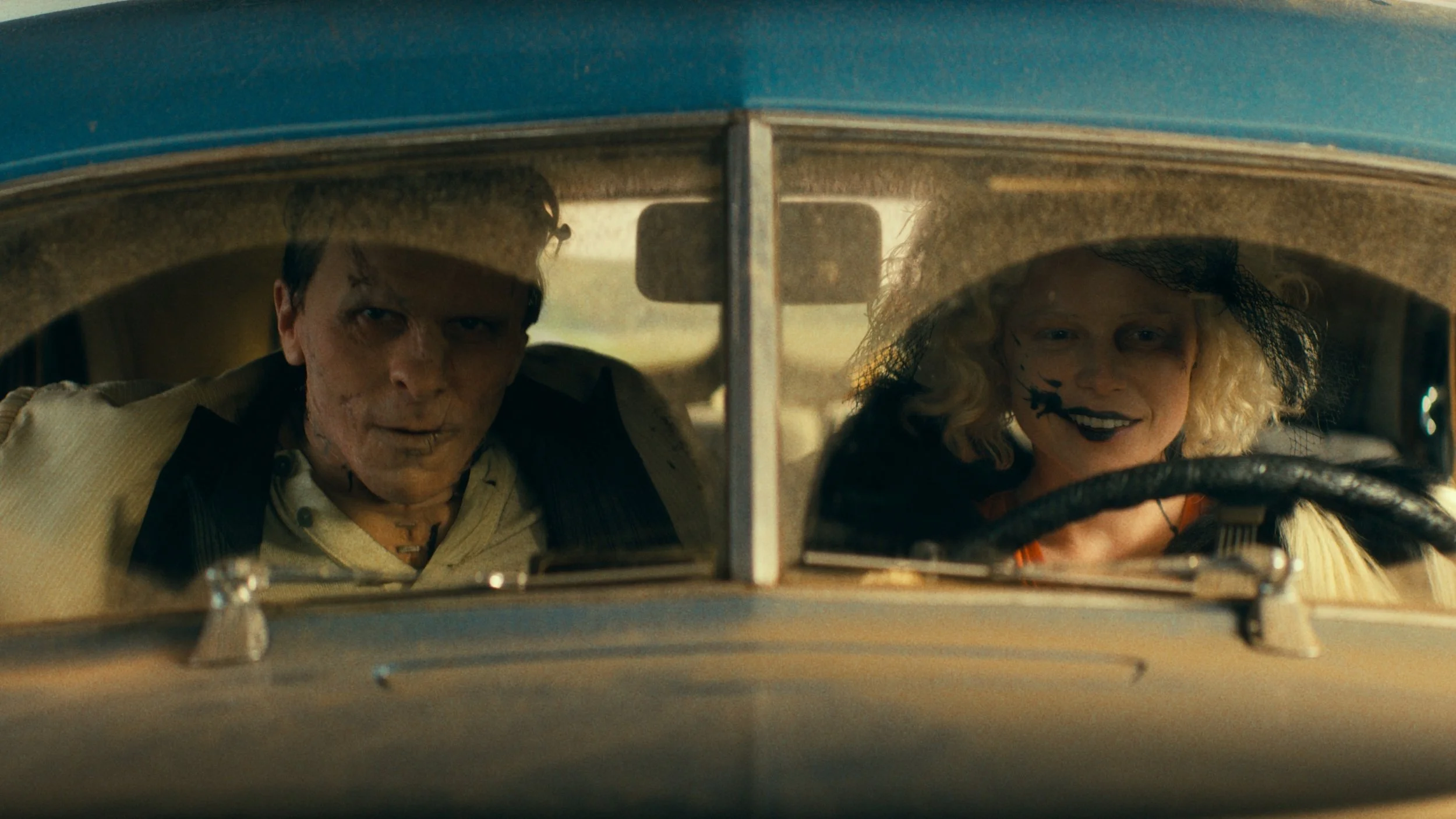
Image copyright (©) Courtesy of Warner Bros. Pictures
MPA Rating: R (for strong/bloody violent content, sexual content/nudity and language.)
Runtime: 2 Hours and 6 Minutes
Language: English
Production Companies: First Love Films, In the Current Company
Distributor: Warner Bros. Pictures
Director: Maggie Gyllenhaal
Writer: Maggie Gyllenhaal
Cast: Jessie Buckley, Christian Bale, Peter Sarsgaard, Annette Bening, Jake Gyllenhaal, Penélope Cruz
U.S Release Date: March 6, 2026
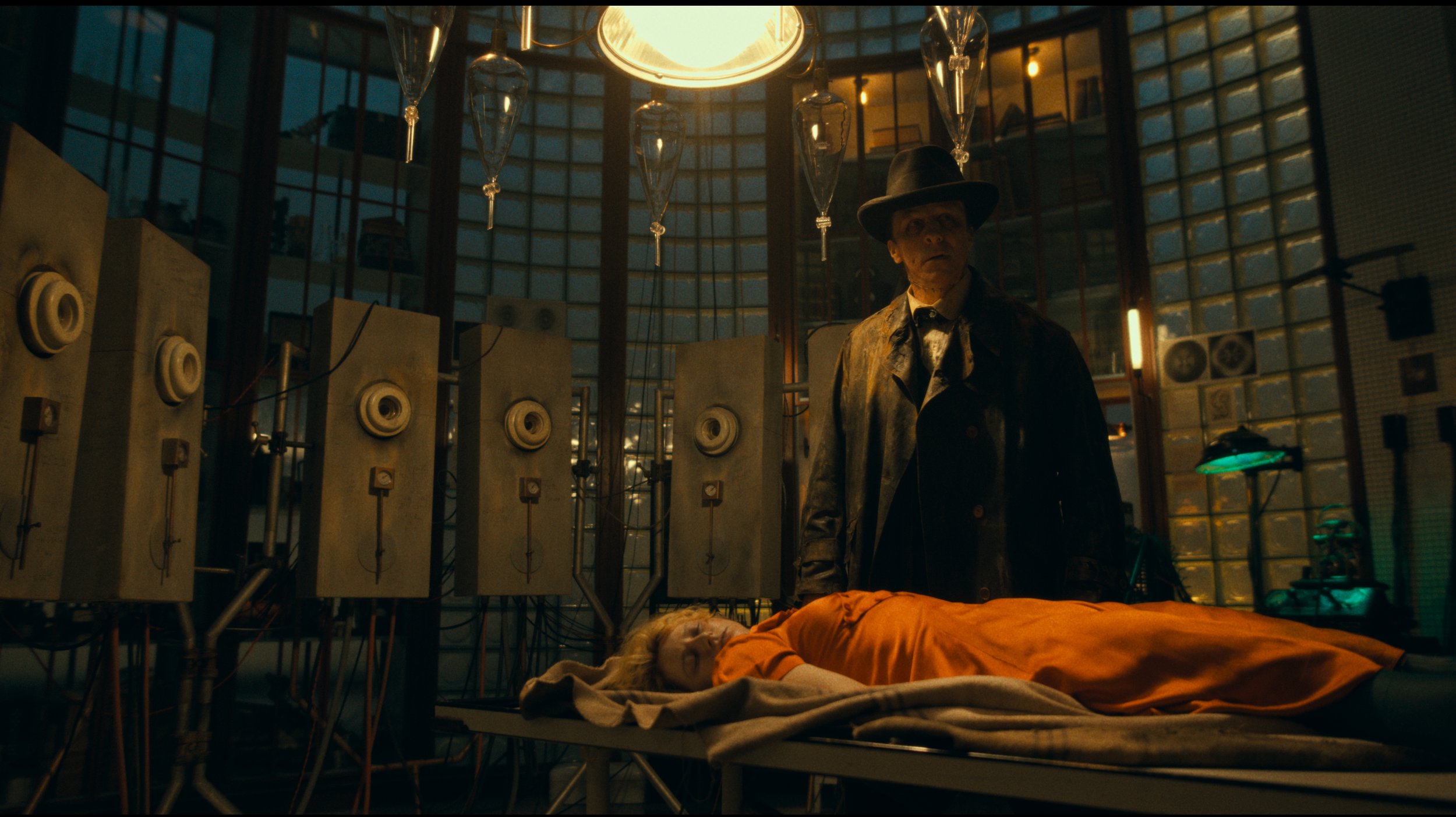
1930s, Chicago: Ida (Buckley) is dining with a bunch of mob members, but one night, Mary Shelley (Buckley) takes possession of her spirit, acting as a cockney-voiced inner ID. Shelley compels Ida to cry out all the suppressed truths about the mob's cover-up murders. However, these revelations ultimately result in her death, as she falls down a flight of stairs. Shortly after, Frankenstein's exceedingly lonely monster, Frank (Bale), treks to Chicago to find forward-thinking scientist Dr. Euphronius (Annette Bening) and ask her to create a romantic companion for him. Though reluctant, she accepts, and they dig up the grave of a random woman, Ida, bringing her to life. Upon reanimation, Ida bears no recollection of her past or identity, as Shelley's volatile, anarchic spirit takes over. She refers to herself as Penny or "Pretty Penny."
While out on the town, Frank and Penny are attacked at a cabaret nightclub, but they bash some heads in self-defense. Consequently, their disfigured looks are enough to label them public enemy number one, placing police detectives Jake Wiles (Peter Sarsgaard) and Myrna Malloy (a fantastic Penélope Cruz) on their tail.
The Bride is stylish, but struggles to find focus.
(L to r) Christian Bale as Frank and Jessie Buckley as The Bride in Warner Bros. Pictures THE BRIDE! A Warner Bros. Pictures release.
The Bride is stunning. Lawrence Sher’s cinematography, paired with Karen Murphy’s 1930s production design and art direction, places realism-rendered monstrous creatures within a gangster-ridden world. Yet, The Bride comes alive when those elements are set against flashy vaudeville or cabaret backdrops and a variety of theatrical locations. The contrast between gritty realism and stylized spectacle gives the film a cool, bodacious look.
The buck really stops there, as Gyllenhaal seems scatterbrained in ideas, oscillating between dismantling the patriarchy and a love letter to all forms of classic cinema – big cinematic romance, detective noir, and even musicals. Gyllenhaal stumbles in most genres she experiments with here – a few dance sequences lack spectacle, poorly shot with actors mugging for the camera rather than focusing on the choreography or cinematic scope. Plus, Maggie has Jake Gyllenhaal tap-dance and sing as a fictional movie star, which is the film's best gag.
The misdirection of the not-so-Bonnie-and-Clyde dynamic between Frank and The Bride lies in the romantic coil that keeps them together, misplaced in an unjust world. She’s a fearless living thesaurus, less gun-toting but more freak for freak. He’s a cinephile whose heart is fueled by in-universe musical movie star Ronnie Reed (Maggie's bro-bro Jake Gyllenhaal singing and dancing). He's neurodivergent; she’s bipolar. Though the substance of Ida or even Shelley doesn't come to life, as Buckley takes the brunt of an annoying creative decision, I was drawn to her, even if there was no real ground for me to hold onto with her. It's a fun range to see from the actress amid her current Hamnet award season streak. Her performance as Agnes in Hamnet was quiet and internal, while The Bride is loud and dramatic, but still a mesmerizing display. Her dynamic with the charming, soft-spoken yet “mumbling like Batman” Bale, in all its chaotic fervor, worked for their romance. Her black goo makeup and thick British accent reminded me of Glenn Close's Cruella De Vil, so that got me good.
The Bride aims for revolution but delivers empty provocation.
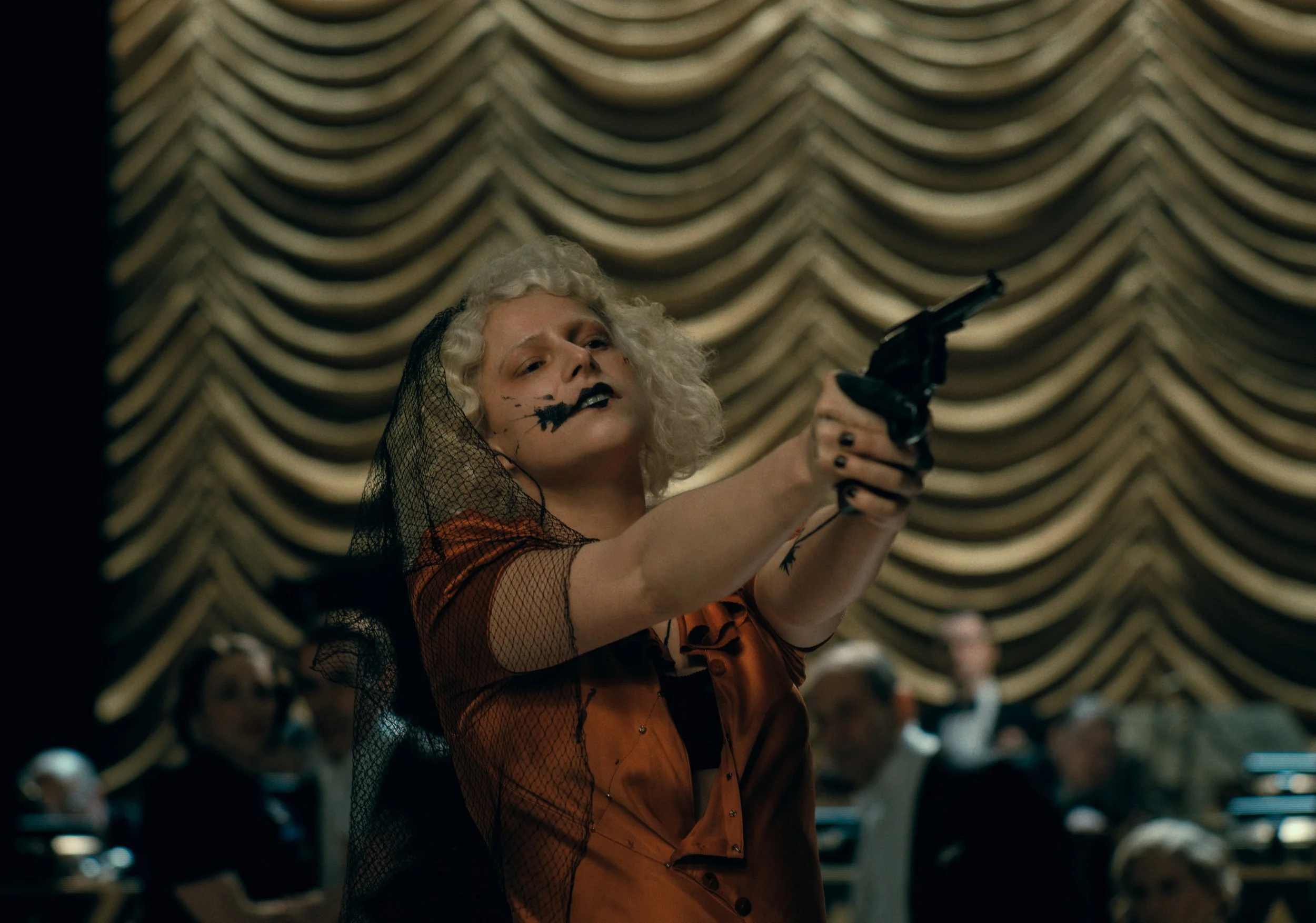
Jessie Buckley as The Bride in Warner Bros. Pictures THE BRIDE! A Warner Bros. Pictures release.
Gyllenhaal's The Bride wants to function as a revenge story, though not specifically for Ida, but symbolically for all women. As she moves through the present-day narrative, fragments of Ida’s past begin to surface, gradually revealing her desire to retaliate against the criminal mob boss (Zlatko Burić) responsible for the disappearance of multiple women. However, this drive isn’t introduced until a strangely abrupt and forced story beat that arrives almost out of nowhere. Much like Joker, the film leans on an unearned monologue that suddenly pivots the character toward radical social change and, of course, starts a revolution among the ladies. Nevertheless, Joker's gradual development is in stark contrast to Gyllenhaal's script and direction, which are disorganized.
The Bride is another movie that takes a serious subject (in this case, sexual violence) and gives it a swollen, empty feel. It mostly relies on Shelley being Ida's “Green Goblin” to enact its feminist statements, and it feels like a lame joke straight out of The Other Two. I can envision Wanda Sykes saying, "Yes, we have a Maggie Gyllenhaal Bride of Frankenstein film that uses Mary Shelley as the bride's subconscious. But get this, the subconscious is a tool to discuss fourth-wave feminist stuff." It all comes off as an exploitative joke, right down to a rambling scene where Buckley cries out, "Me too," like a breathy slam poet out of spiritual exhaustion. The otherwise pointless detective subplot feeds into the film’s shallow exploration of gender norms, with Cruz’s Myrna Malloy dismissed as a detective simply because she’s a woman, even though she’s the sharpest mind in the room.
It's done with the same lazy, irritating attitude found in Joker, but it’s best compared to Emerald Fennell’s works, as it’s actively concerned about homaging better features while taking no real discernible interest in the themes she introduces.
The Bride’s ambition outpaces Gyllenhaal’s control.
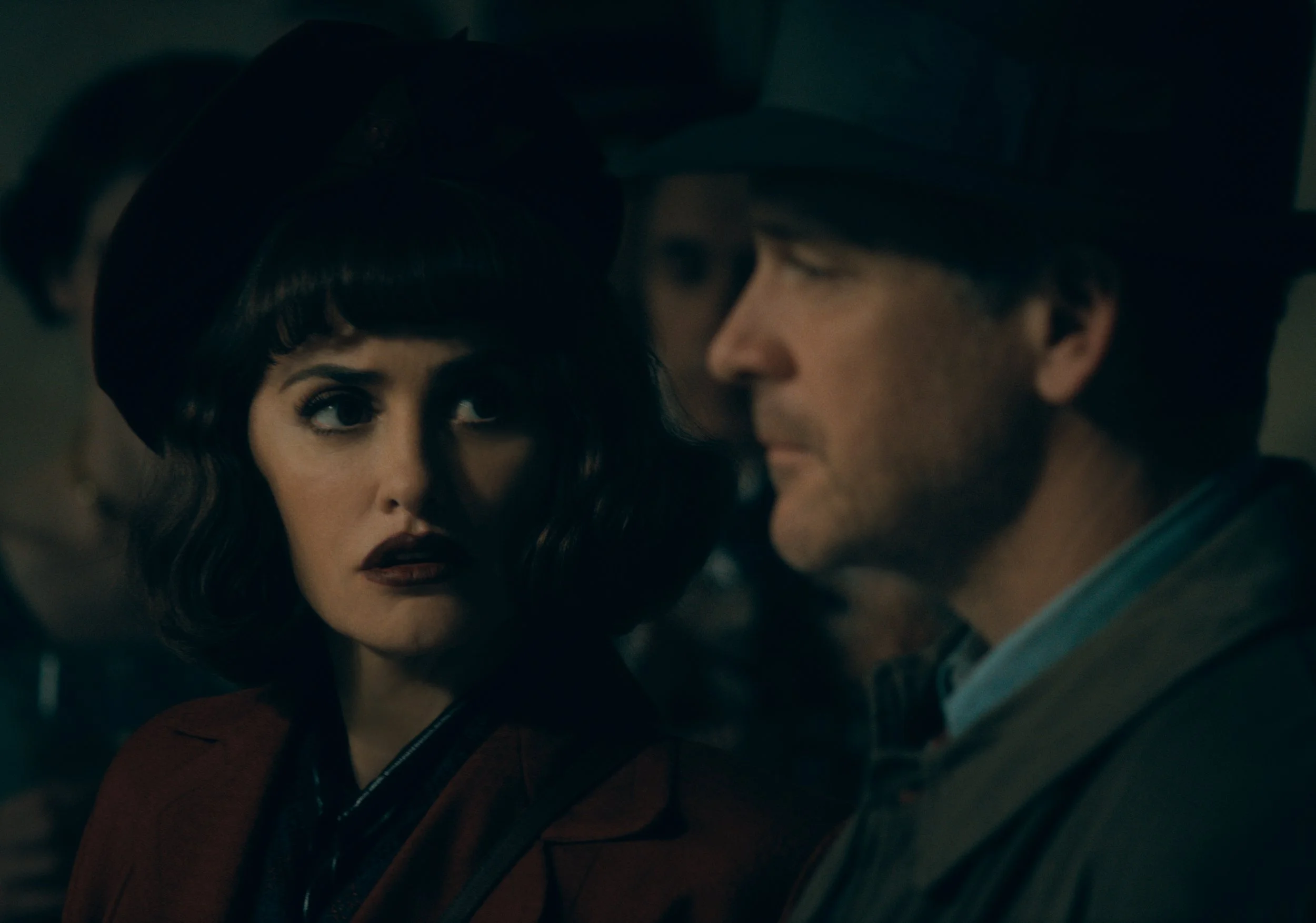
Caption: (L to r) Penélope Cruz as Myrna Mallow and Peter Sarsgaard as Jake Wiles in Warner Bros. Pictures THE BRIDE! A Warner Bros. Pictures release.
A telling example comes in a scene where Ida and Frank crash a party thrown by Ronnie Reed. What goes into a devastating and awkward interaction between Frank in stan mode and Reed turns into a random dance party and then a standoff where Ida monologues about dispatching the truth of dead women… all in the same sequence. That's how contrived The Bride is. The tone snaps back and forth between self-serious contemplation and outright camp, often undercutting its own dramatic weight. And when it does, Gyllenhaal breezes past it, or revelations arise at random junctures without any satisfying buildup or payoff. What initially feels engaging gradually turns lethargic, incoherent, and ultimately boring.
The Bride was originally a Netflix movie, but they didn't want to spend the $100 million production cost. Then, WB took it up. But compared to the $8 million scale of The Lost Daughter, this project feels like a leap Gyllenhaal wasn’t fully prepared for. Handling an $80 million production demands a superior level of directorial control and experience. The result is a movie that has a spark to woo audiences, a decade past its prime, offering little substance in familiar thematic ground.
Final Statement
Even with Buckley’s showstopping lead and bursts of striking imagery, The Bride never comes alive, smothered by a tangle of half-formed ideas and inflated ambition.
