
'Rustin' Review: Civil Rights Legend Receives His Belated Spotlight Through Solid Netflix Bio-Drama
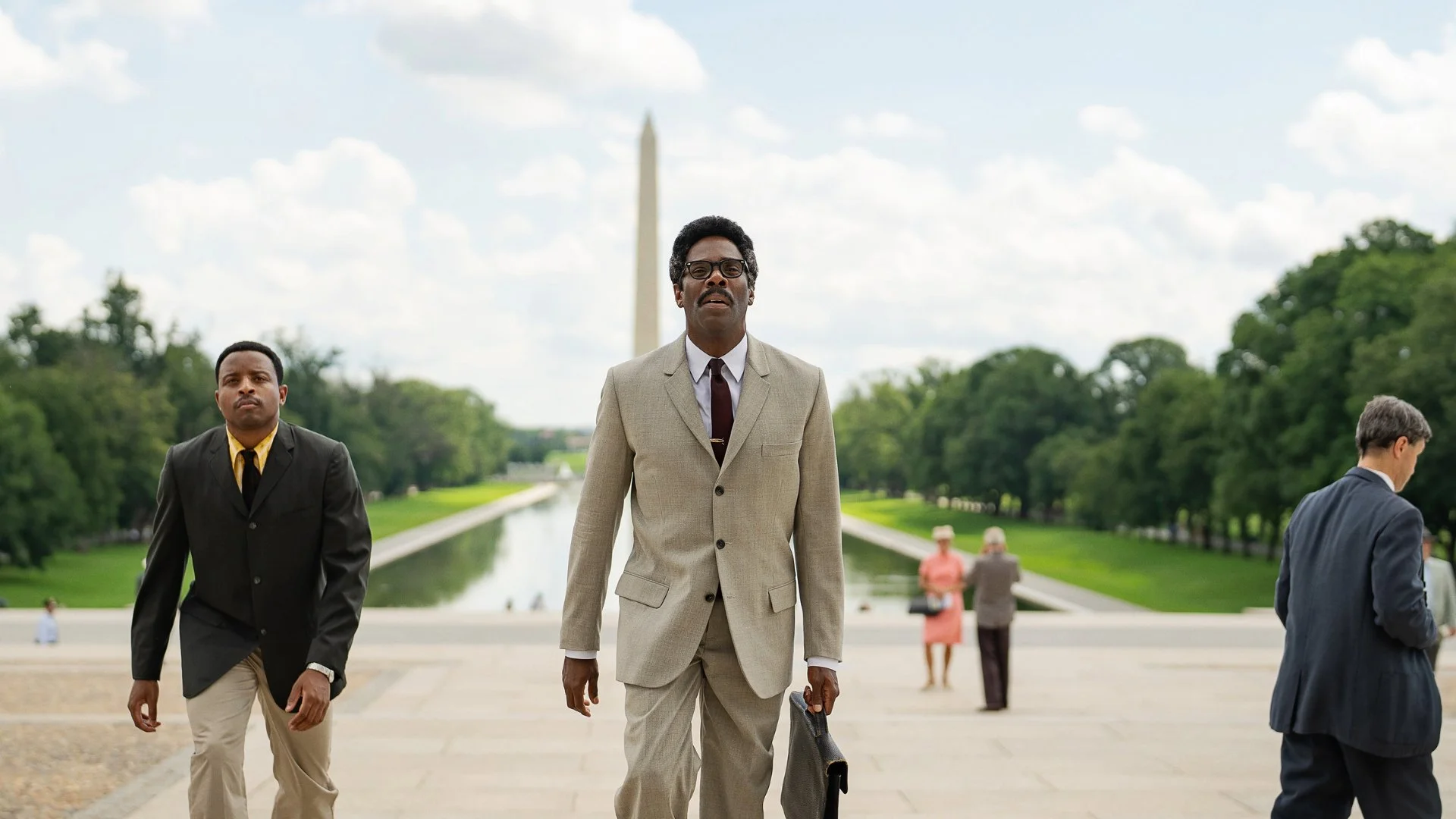
On August 28, 1963, hundreds of thousands of Americans gathered at the Lincoln Memorial in Washington D.C., and marched for Black freedom and equality. The March on Washington was pivotal to the civil rights movement, where Martin Luther King Jr. made his iconic "I Have a Dream" speech that many white conservatives today keep misquoting to support their shitty, racist takes. Wouldn’t it be shameful if the lead organizer of the March didn’t get their flowers or got erased from history? They didn’t even get a mention or footnote in an inner-city kids' history textbook (because those don't sugarcoat America's dark past). That person had a name: Bayard Rustin. He was Black and gay, and his dream eventually gave MLK a platform to make his “I Have a Dream” speech a reality. Today, the late civil rights activist finally gets his due in the form of George C. Wolfe’s historical bio-drama, Rustin.
PG13: Thematic material, some violence, sexual material, language including racial slurs, brief drug use, and smoking
Runtime: 1 Hour and 46 Minutes
Production Companies: Higher Ground
Distributor: Netflix
Director: George C. Wolfe
Writer: Julian Breece, Dustin Lance Black
Cast: Colman Domingo, Chris Rock, Jeffrey Wright, Audra McDonald, Glynn Turman, Aml Ameen, CCH Pounder, Michael Potts, Gus Halper, Da'Vine Joy Randolph, Bill Irwin
Release Date: November 3, 2023 | November 17, 2023 (Netflix)
In Theaters & Netflix
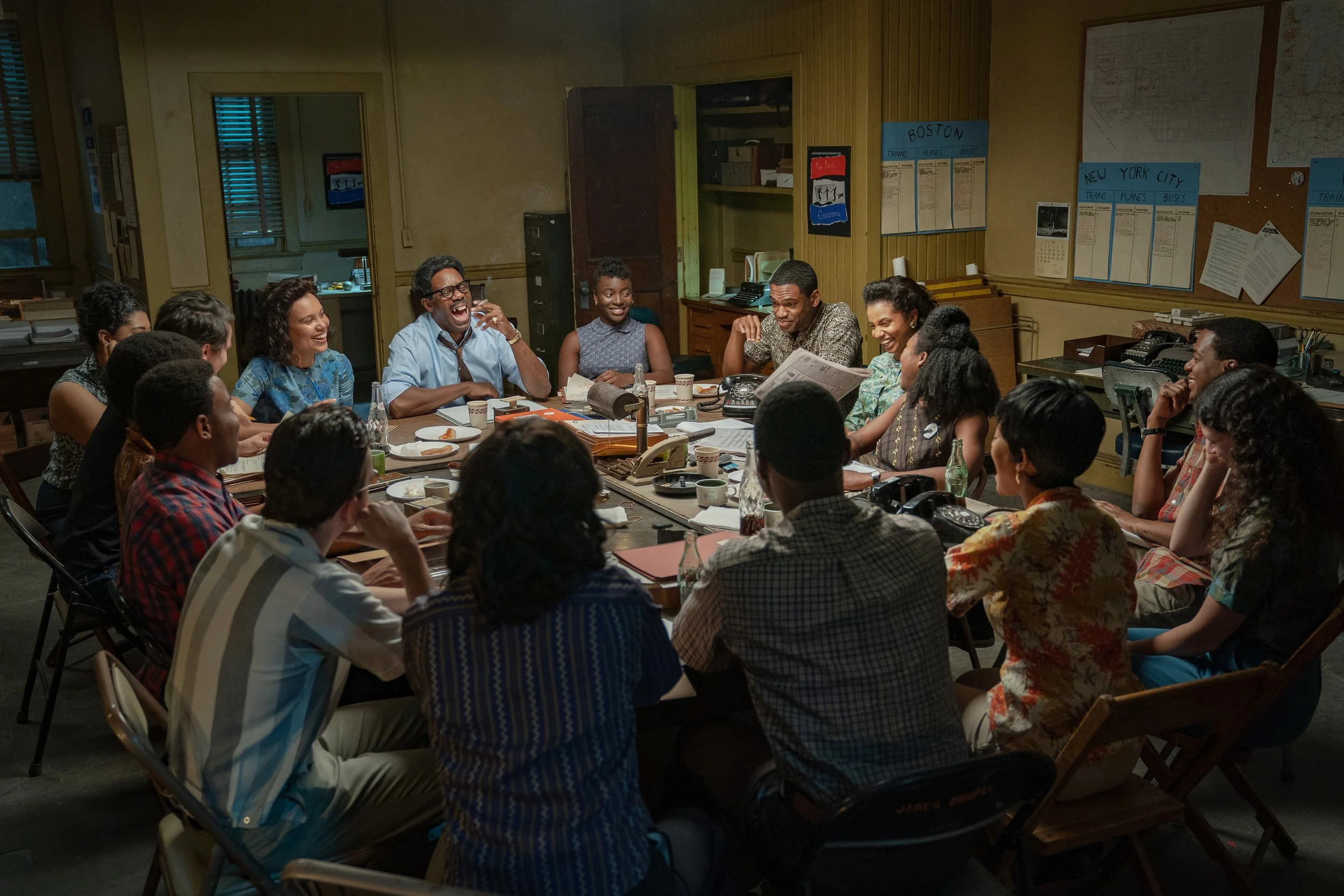
Years after a falling out with his close friend Martin Luther King Jr. (Aml Ameen) under the influence of Roy Wilkins (Chris Rock), Adam Clayton Powell Jr. (Jeffrey Wright), and other NAACP members who saw his public homosexuality as a threat to their entire movement, Bayard Rustin (Colman Domingo) springs into action and tries to organize a peaceful mass protest in Washington, D.C. at the Lincoln Memorial for job equality and freedom. Alas, he doesn't have the financial support from unions to accomplish it. With A. Philip Randolph (Glynn Turman), Rustin assembles a ragtag team of activists to make what eventually became a historical March a reality.

Since Bayard Rustin's media footprint is minimal, the film built around him functions sufficiently as an enlightening guide to the figure’s traits, flaws, and impact on the movement. Plotting-wise, it’s an events-planning procedural framed as if it’s a civil rights heist (if the thing the civil rights activists stole was the freedom they deserved). In the meantime, he explores his promiscuity during a crucial time: when homosexuality is criminalized. Through it all, Rustin is always unapologetic and confident in his identity, and it's refreshing to witness the landscape of queer period dramas. Director George C. Wolfe distinguishes Rustin from other civil rights-centric flicks by shaping the film after the titular character’s essence. Much like Rustin himself, the film powers on high-spirited energy while tackling a light yet authentic tone, contributing to the breezy pacing.
The overall liveliness is satisfying enough for a history teacher to play in their class without fear of traumatizing their students. Back in my day, I had to watch Amistad and Glory for history. Never again. The kids have options. One that still highlights the cruelty of the Jim Crow era, for Wolfe incorporates visceral imagery but never approaches gratuitous territory.
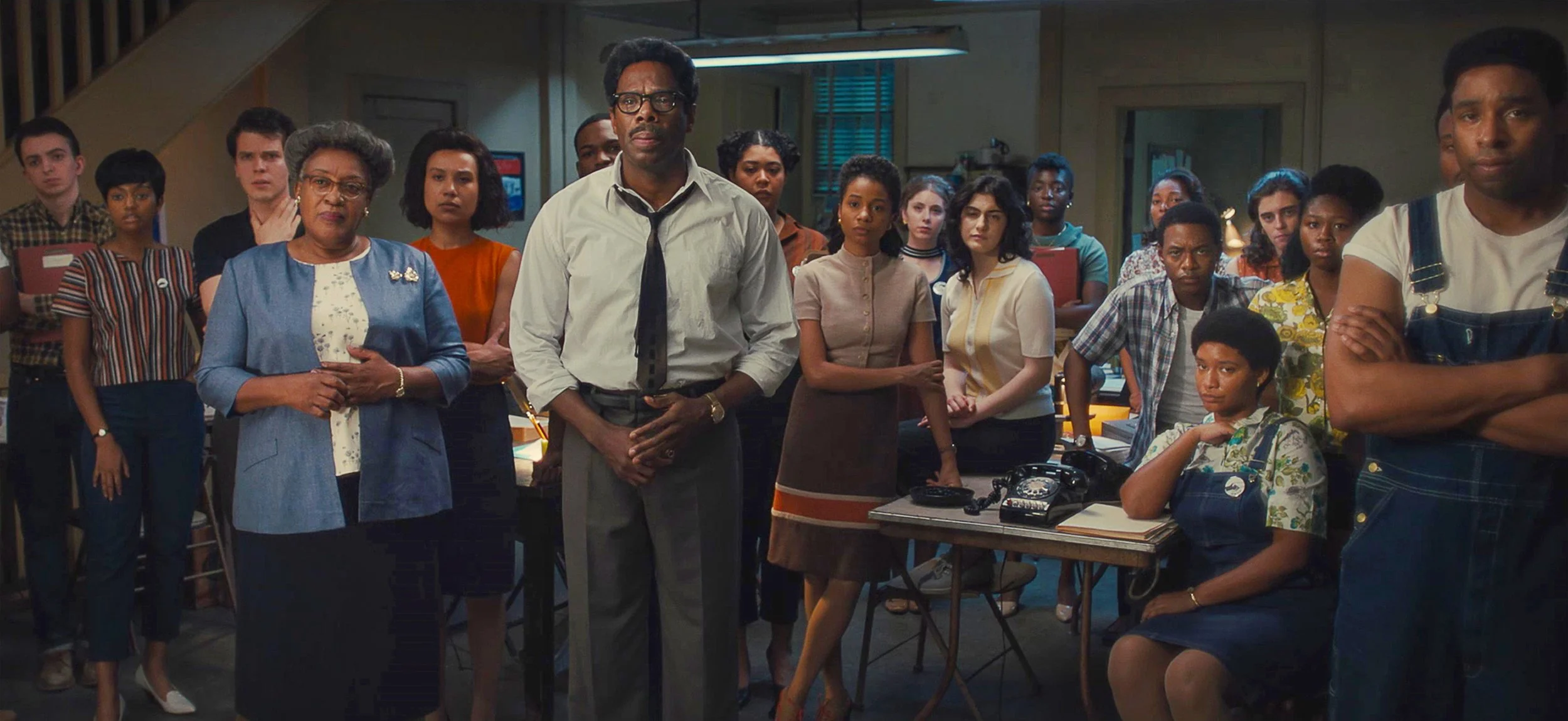
None other than Colman Domingo, one of the most versatile working actors, can capture Bayard Rustin’s persona. In his first leading role, Domingo carries the film with the same animated electricity as the figure he portrays, as if Rustin's spirit possessed the actor. He effortlessly embodies a one-of-a-kind vibrancy, sharp wittiness in the face of adversity, and conviction when someone obstructs him.
In its simplicity, the film is as wildly entertaining as it is educational, with one of its most intriguing aspects lying in the lengths Rustin went to spearhead the march on his own. There was marginalization if you were a straight person of color, but gay Black boys had it worse. Even organizations like the NAACP, which was working for a common goal, were depicted as capital-h HATERS. Rustin's primary adversary was Roy Wilkins, who would pull up old receipts, from his former communist identity to his criminal record, so that they could sever his ties with MLK. In hindsight, his “crime” was being caught having a threesome with two men in a car in Pasadena in the ‘40s. Back then, that was blasphemy, but today, you want to dap him up. Rustin vs. the NAACP made for some delicious tea, for it gives Domingo the spotlight to show off his flame, and man, his comebacks set some folks aflame. The conflict between him and Dr. King is like the influencer beef blueprint. It gets Audra McDonald as Ella Baker to come on screen, slay for two minutes, and put Rustin in place, saying, “Y’all are great solo, but when you do a joint collab, you’re both unstoppable.'' Rustin sets the stage, and Dr. King shines in the limelight. The film paints their friendship with jolliness and deep respect, which Domingo and Aml Ameen, who portrays the king, channel with endearment.

It’s that time of year when Oscar conversations occur, which means there will be movies tailor-made to better a performer's chances. Julian Breece and Dustin Lance Black's script can't help but fall for Oscar-bait trappings with ample scenes of people speaking in rebuttals rather than fluent conversation. The skilled cast elevates the material, but several moments have a shimmering sign flashing, "FYC Colman Domingo," repeatedly.
Whenever the film deviates from his interpersonal life, the intimate scenes add decent complexity to the figure, but little substance stems from it. Rustin includes an affair subplot between him and a married pastor named Elias (Johnny Ramey), who puts the mack on him. Meanwhile, Rustin's collaborator and part-time lover, Tom (Gus Halper), is thrown to the wayside. The pacing suffers during interpersonal moments that explore his flaws, especially emotional distance from his casual partners, and the dialogue hardly hits the same strengths as other areas.
Rustin's cast is mighty, and most of the ensemble, including Glynn Turman, Aml Ameen, CCH Pounder, Michael Potts, Jeffrey Wright, and Audra McDonald, make their time onscreen worth every minute. Chris Rock, on the other hand, disrupts the illusion because he's too recognizable as Roy Wilkins. Rock and Wilkins have some uncanny facial similarities, but unlike everyone who attempted to portray their figures, Rock sounds like himself, and it's distracting. Also, I'm never one to point out or notice lousy hair and makeup because… well, I'm not looking at the top of somebody's head like that. In Rustin, the wigs (mostly on Rock and Wright) are glaringly horrendous. It's as if they were purchased from Party City at the last minute before shooting.

Doing right by the late activists erased from history, Rustin finally brings visibility to a prominent civil rights figure via an educational and entertaining civil rights drama led by a showstopping Colman Domingo.

