
Pain and Glory Review
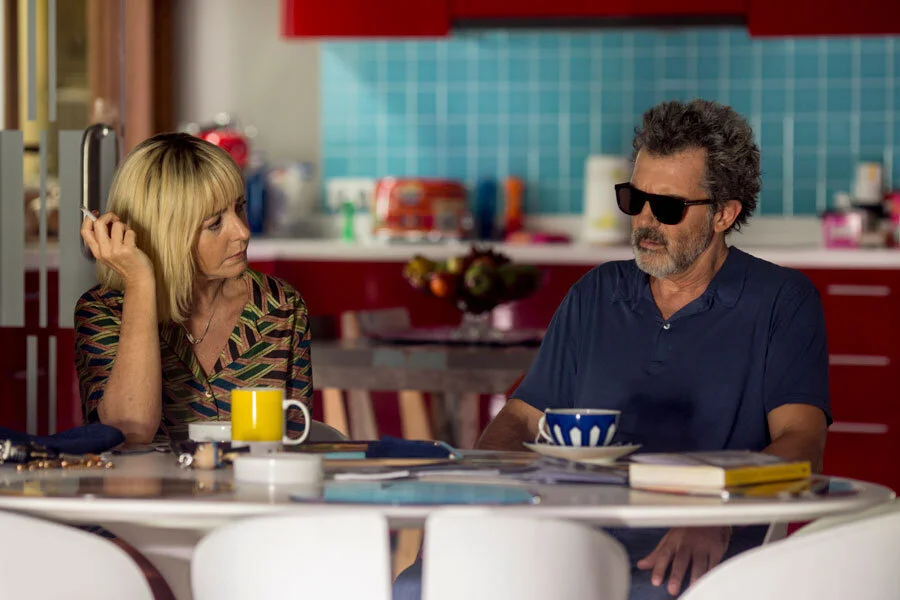
Pain and Glory tells of a series of reencounters experienced by Salvador Mallo, a film director in his physical decline. Some of them in the flesh, others remembered: his childhood in the 60s, when he emigrated with his parents to a village in Valencia in search of prosperity, the first desire, his first adult love in the Madrid of the 80s, the pain of the breakup of that love while it was still alive and intense, writing as the only therapy to forget the unforgettable, the early discovery of cinema, and the void, the infinite void that creates the incapacity to keep on making films. Pain and Glory talks about creation, about the difficulty of separating it from one's own life and about the passions that give it meaning and hope. In recovering his past, Salvador finds the urgent need to recount it, and in that need he also finds his salvation.
R: For drug use, some graphic nudity and language
Runtime: 1 Hour and 53 Minutes
Production Companies: Canal+, Ciné +, El Deseo, El Primer Deseo, Gobierno de España, Radio Televisión Española (RTVE)
Distributor: Sony Pictures Classics
Writer/Director: Pedro Almodóvar
Cast: Antonio Banderas, Asier Etxeandia, Leonardo Sbaraglia, Nora Navas, Julieta Serrano, Penélope Cruz
Release Date: October 4, 2019

I’m loving this recent surge of screenwriters getting self-reflective with their projects, making some of the most poignant and effectively moving pictures of the year. You have Honey Boy, a film I truly love and personally reside with (coming out soon), but this week you got Pain and Glory, the latest film from acclaimed Spanish writer/director Pedro Almodóvar. Part of me feels like this was my first time watching a film of his in full. I’ve seen bits and pieces of The Skin I Live In, but Elena Anaya’s plastic-covered face freaked me out (I was 13 okay) so I couldn’t finish. But hey, this is my first Pedro Almodóvar film and it’s hella good.
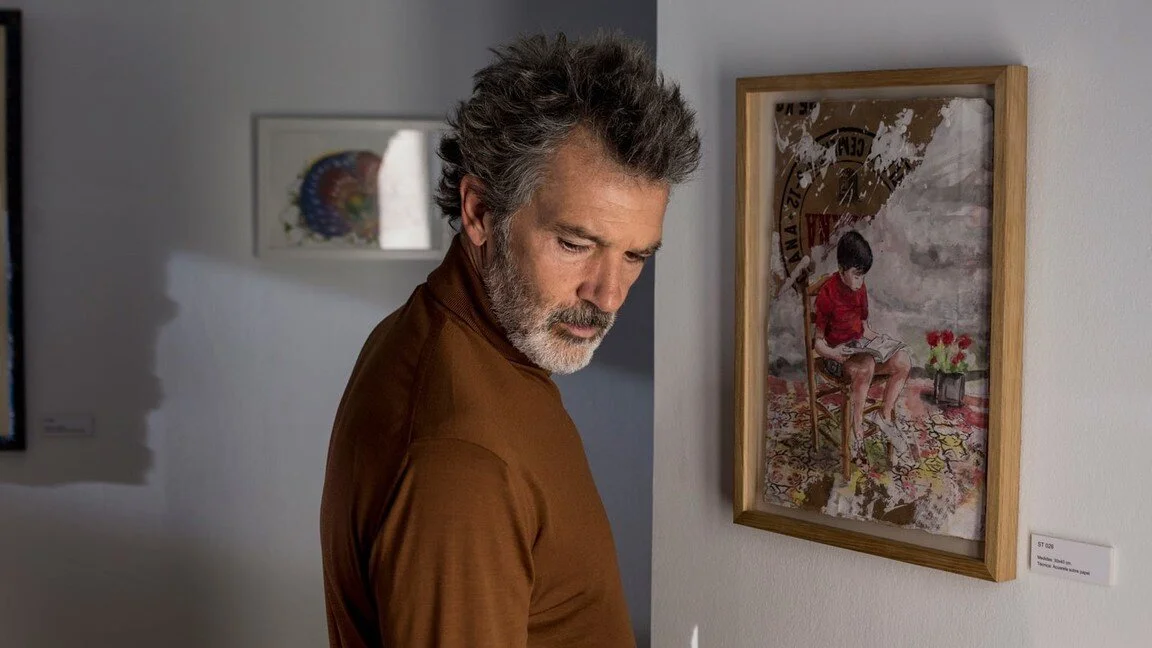
Similar to Gerwig’s Lady Bird, the film is an autofiction, but instead of reflecting solely on his youth, the film is a reflection of his current lifestyle and his youth. Cynical 50-something film director and writer Salvador Mallo (portrayed by Almodóvar’s longtime collaborator Antonio Banderas) gets a call to do a Q&A for his film Sabor, which he hasn’t seen in 32 years. He gets in contact with his lead actor Alberto Crespo (Asier Etxeandia) whom one has a heroin problem, and two he did not leave on good terms with. As they reunite, Mallo develops a heroin addiction himself because he feels he doesn’t have much left to lose. Though the Q&A doesn’t go as planned, Mallo hatches up a project just for Crespo which leads to unexpected areas for Mallo. In the midst of all this, Mallo recollects his memories from his time as a child, growing up with his loving, hard-working mother and discovering his homosexuality.
This film is a reflection of one's self and Almodóvar holds absolutely nothing back. As far as character study goes, watching this artist face his past while never being way too saccharin through his naked and honest script/direction energizes this film all the way through. It’s kind of a coming-of-age story and it made me realize that the category can apply to anyone of a particular age; they don’t necessarily have to be young people. Youth is subjective and this film is evidence that a distinct element of coming-of-age stories — besides growing up — is to make peace with yourself. This is set on a man who looks back at his upbringing and attempts to seek closure, and while his success rate is rather scattershot, he becomes more accustomed to his current self by confronting his past. Almodóvar speaks to this in a realist perspective which captures the unexpected beauties of life, the tragedies that occur with age, and the impact it leaves on you. Sometimes life can be absurd or random and as sad as it may seem internally, externally it’s funny. By description, it’s not technically a comedy, but the film is surprisingly hysterical and charismatically quirky.
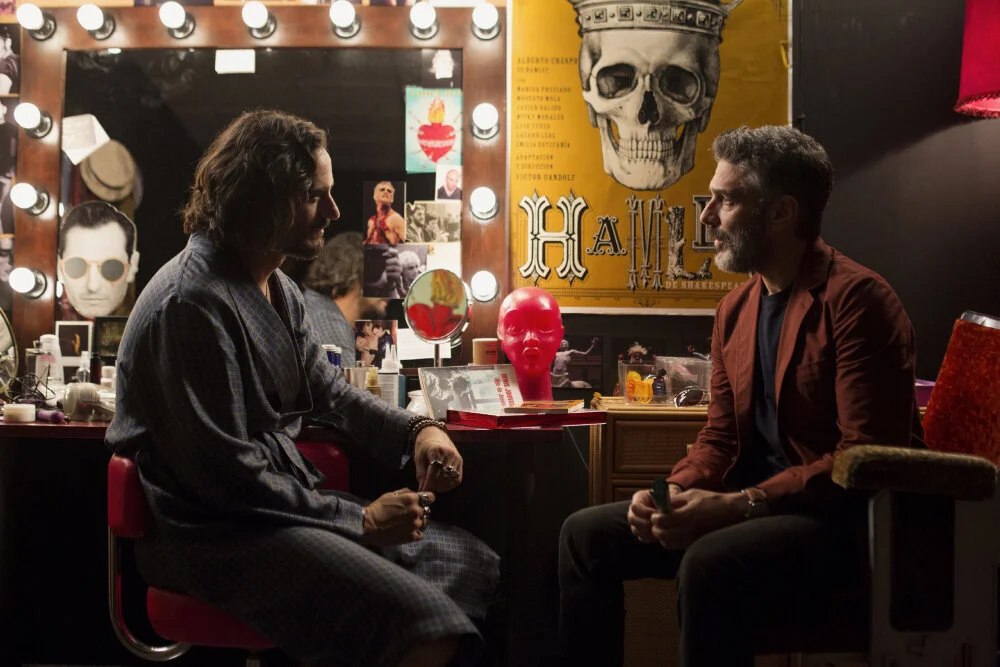
The narrative has a non-sequential flow that borders on experimental as Mallo is going through a new stage in life. The moments that helped him become the person he is are present and they flow so fluently. Each transition or jump cut to Mallo’s youth is well executed and hits the right beats. It puts you in Mallo’s headspace, reminiscing on his youth, the birth of his sexuality, and the cause of his demanding and abrasive personality. The more that his story unravels, the more you sympathize with him and his life choices.
Besides this being a great character study, there are some amazing details about the production that give the film a bolstering life. I love the production design, which juxtaposes the dark and tragic story. Mallo’s surroundings are bright and stylishly colorful with an ‘80s retro flair, which contradicts the sad stuff he faces emotionally and physically as his life spirals out of control. The more color that’s shown, the more depressing and tragic his story gets, helping the production design stand out and be effective.
I’ve spoken about how contemplative and truthful the film is behind the scenes from Almodóvar’s vision, but Antonio Banderas is the wonderful powerhouse who primarily carries the film on his shoulders. The entire ensemble is fantastic without a doubt, but Banderas is phenomenal. You can tell his friendship with Almodóvar is strong and built on a trust that translates through his performance. He’s not playing Almodóvar per se, but a fictionalized version of him. He captures a poignant depiction of a homosexual male through his reserved mannerisms and gestures. God, he’s just wonderful to watch throughout. Plus, he’s looking much better with age, like… Banderas has aged so well and I love his grey facial hair.

Pain and Glory is a fun and tightly crafted autofiction that confronts the realities of aging in an entertaining, honest light, bolstered by powerful direction from Pedro Almodóvar and a mesmerizing leading performance by Antonio Banderas.

