
‘Our Hero, Balthazar’ Review: Oscar Boyson’s Darkly Funny Debut Tackles Influencer Culture and Male Isolation
Growing up, you'd hear many reports of people acting stupid, hoping that their most absurd acts would land them on reality TV and five seconds of fame. Craving social clout with little humanity became the norm in the wake of millennials and the rise of reality TV in the 2000s. Hell, it was so prevalent that Scream 4 had Emma Roberts commenting on those notions. But what My Super Sweet 16, 16 & Pregnant, and The Real World were for millennials and cuspers has now morphed into TikTok and Instagram for Gen Z. To quote the Total Drama Island theme song, everyone “wanna be, they wanna be, they wanna be famous.” It doesn't matter how. Those teens will turn any real-world travesty into social clout.
It's a sentiment I felt Ari Aster's Eddington (a movie I was “meh” about) came close to cracking in its subplot about two boys wanting to join a Black Lives Matter protest just to hook up with an activist crush. Whereas that movie faltered in tonal execution, Oscar Boyson's directorial debut, Our Hero, Balthazar, tremendously surpasses it. Like a twisted Nightcrawler and American Psycho for the Gen-Z digital age, this darkly comedic story about an upper-class teen wanting to gain social fame, traveling to Texas to prevent a potential school shooter, is a sharp headshot on our current era of teen desensitization and internet fame addiction – while being one of the most outrageously funny films of the year.
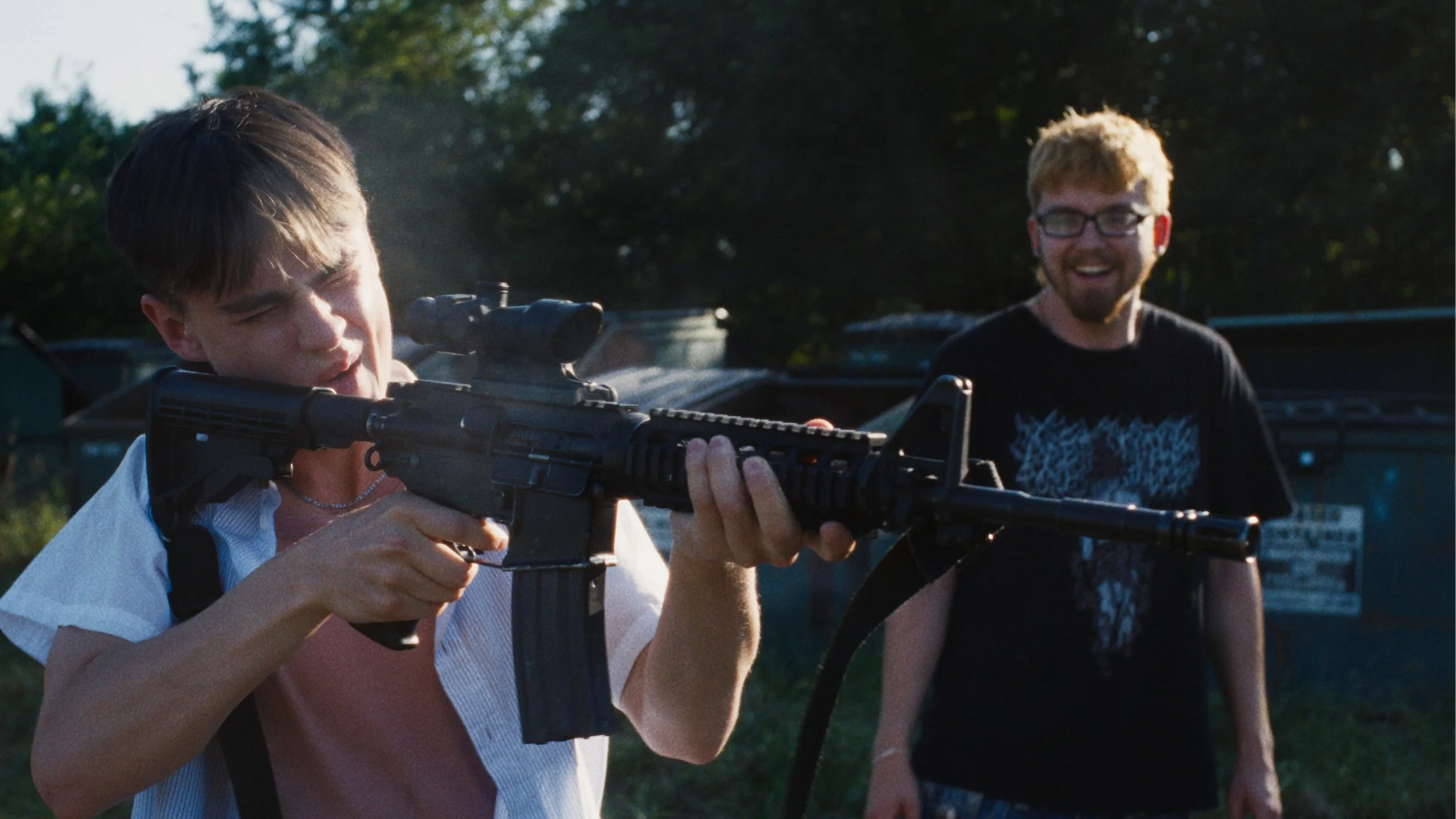
Image copyright (©) Courtesy of Picturehouse/WG Pictures
MPA Rating: R (for crude sexual content, graphic nudity, language throughout, some violence/a grisly image and drug use.)
Runtime: 1 Hour and 36 Minutes
Language: English
Production Companies: Spacemaker Productions, Curious Gremlin, Roosevelt Film Lab, Hypothesis, Giant Leap Media
Distributor: WG Pictures
Director: Oscar Boyson
Screenwriters: Oscar Boyson, Ricky Camilleri
Cast: Jaeden Martell, Asa Butterfield, Chris Bauer, Jennifer Ehle, Anna Baryshnikov, Noah Centineo, Becky Ann Baker, Avan Jogia, Pippa Knowles
U.S Release Date: March 27, 2026 (New York), April 3, 2026 (Los Angeles), with additional cities to follow
In a New York City penthouse, teenager Balthazar Malone (Jaeden Martell) lives lavishly but spends much time on his own making videos for Instagram. Secured by wealth, distant from actual people, his mom (Jennifer Ehle) cares about playing political power games and leaves him to his life coach, Antony (Noah Centineo). At his school, following absurdist mock shooting drills, he meets and becomes smitten by Eleanor (Pippa Knowles), a young activist who actually cares about her cause. Keen on impressing her to the point of creeping her out with stalker behavior, Balthazar encounters a random DM. Balthazar instantly believes the user is a school shooter and takes it upon himself to prevent it. So, with a bit of catfishing and sheer determination, he travels from his high-class concrete jungle to a trailer park in impoverished Arlington, Texas. There, he meets the man in troll clothing: Solomon (Asa Butterfield), a downtrodden, Slim Shady-looking, waifu-obsessed white trash Texan loser, whose deadbeat, money-sucking supplement dad (Chris Bauer) weaseled his way into his life. When they meet, the two are on the opposite side of the same lonely coin and subsequently attempt to take a shot at a friendship.
Oscar Boyson taps into the loneliness beneath internet brain rot.
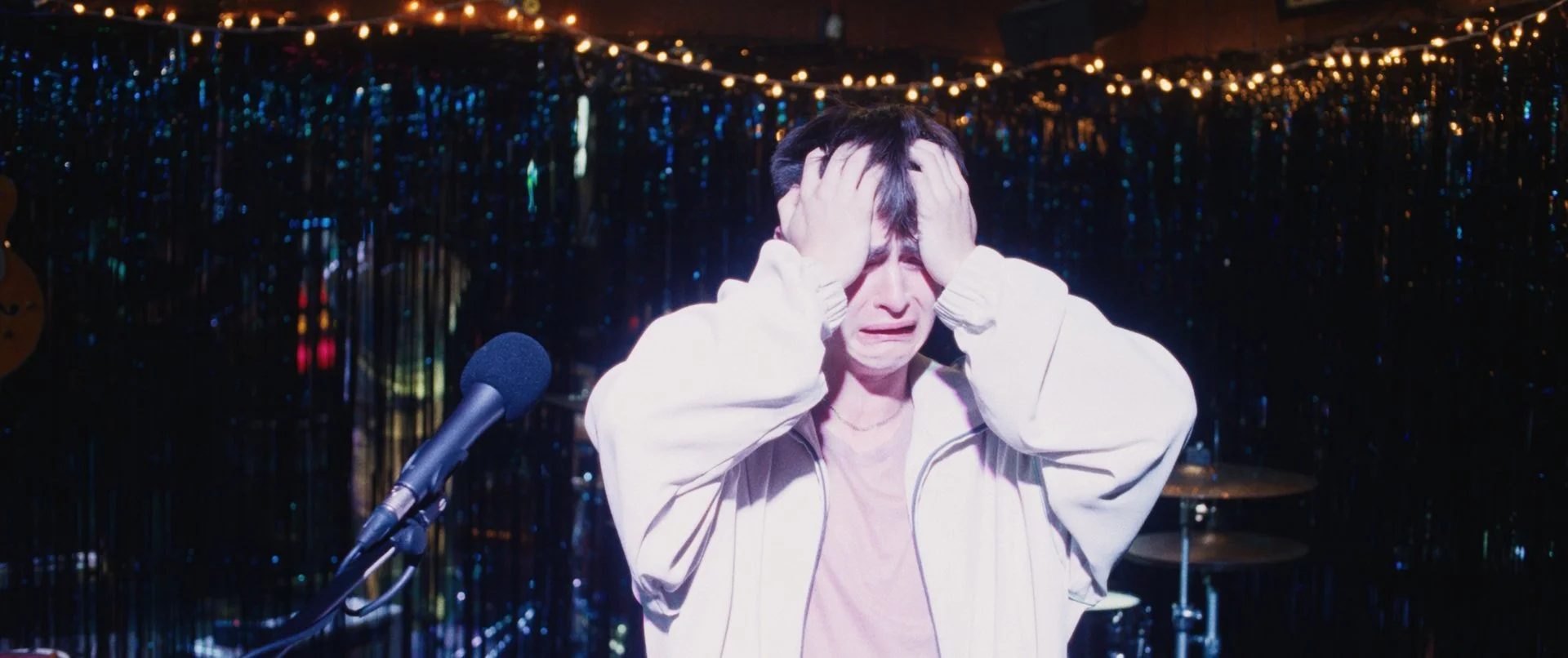
Following years of producing many of the Safdie brothers' iconic flicks and the underrated Funny Pages, director Oscar Boyson’s debut finds its middle ground, evoking the same grimy 1970s neo-thriller of Good Time and Uncut Gems, but it's modern in its own way, capturing a tenderness that sets him apart.
It’s daring to discuss the pillars of today's desolate, algorithm-poisoned culture, but Balthazar combats it with subtle honesty rooted in character. The movie essentially plays like a deranged Gen-Z version of The Prince and the Pauper, using their wildly different socioeconomic backgrounds to explore the core loneliness infecting both of them. One lives in a Manhattan penthouse, drowning in privilege and isolation; the other rots in financial instability and internet-induced arrested development. Yet both are desperately searching for connection in a world that has completely warped how young men communicate and emotionally function. Rather than simply mocking internet addiction, Balthazar examines how online alienation mutates people into hollowed-out versions of themselves. It’s essentially American Psycho for a generation raised by social media – not because these boys are born monsters, but because modern American culture keeps shaping them into variations of one.
Beneath all the satire about Instagram brain rot and performative activism is something much sadder: a movie about how digital culture has completely distorted young male connection and emotional development. What makes Our Hero, Balthazar work so well is the chemistry between the two leads.
Jaeden Martell chills while Asa Butterfield completely transforms.
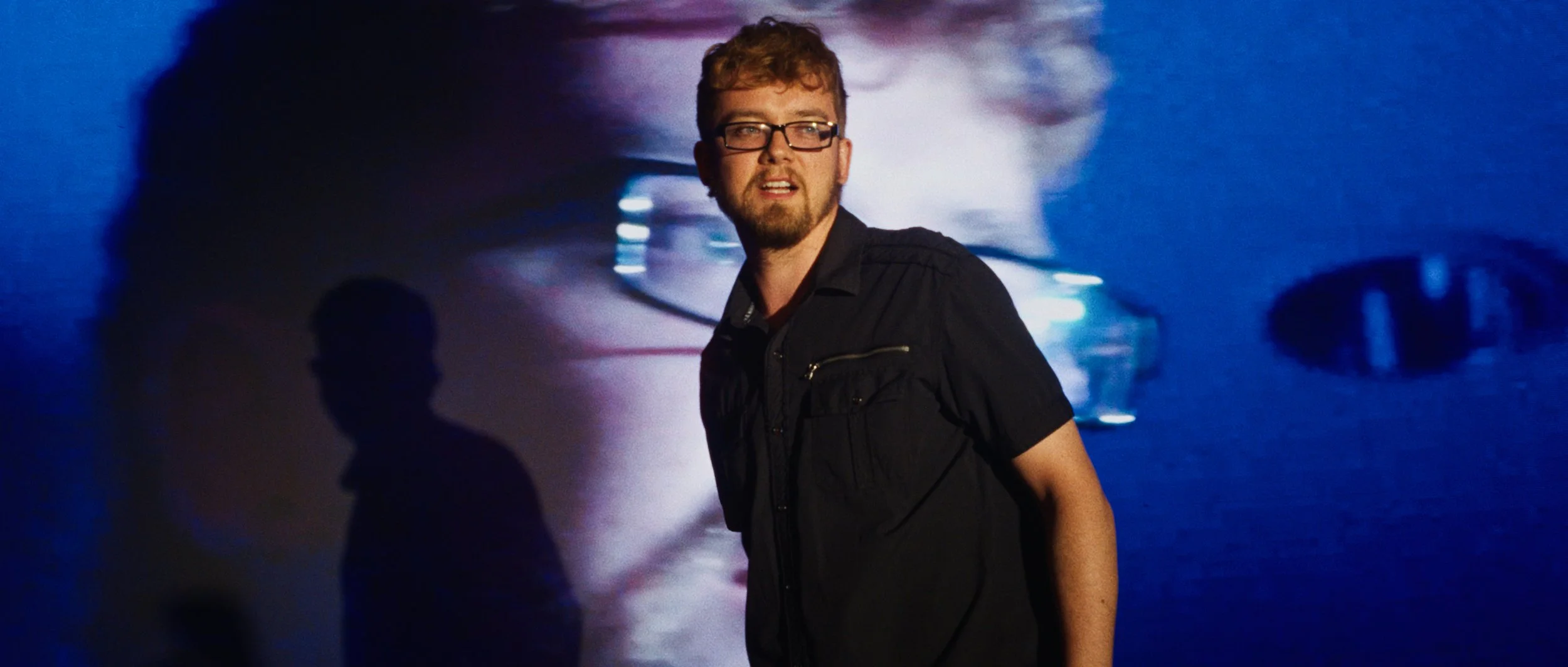
Butterfield and Martell’s dynamic is the functioning heart that helps smooth out the film’s tenderness despite its aggressively dark tone. Martell continues his streak of playing deeply unsettling soft-spoken weirdos, but this might be his creepiest performance yet. If Butterfield provides the film’s wounded heart, Martell supplies its unnerving social satire. Balthazar feels like a modern Patrick Bateman filtered through influencer culture: emotionally vacant, performatively empathetic, and so detached by wealth and internet validation that he treats real-world tragedy like an opportunity for personal branding. Martell nails that blank-eyed narcissism while still making Balthazar weirdly sad underneath it all.
Asa fucking Butterfield floored me here. It’s a transformative, borderline unrecognizable performance that completely sheds every preconceived notion attached to him. This is the same kid from Hugo and the awkward charmer from Sex Education, yet here he looks and sounds like a washed-up, waifu-obsessed Slim Shady cosplayer rotting away in suburban Texas. I was slack jawed for about ten minutes straight questioning “how is this Asa Butterfield?!” The bleached hair, the exhausted Texan drawl, the slouched body language – Butterfield disappears into Solomon so thoroughly that it genuinely caught me off guard. More importantly, he finds heartbreaking humanity underneath the absurdity. Solomon is introduced at the absolute lowest point in his life: desperate for validation from his deadbeat father, losing his gas station job, struggling to make rent, and barely holding himself together emotionally. Butterfield plays all of it with such defeated sincerity that you can’t help but sympathize with him despite how pathetic and chronically online he is. It’s one of the year’s most shockingly great performances and, honestly, career-best work from Butterfield.
Where Our Hero, Balthazar’s vicious comedy gives way to genuine tenderness.
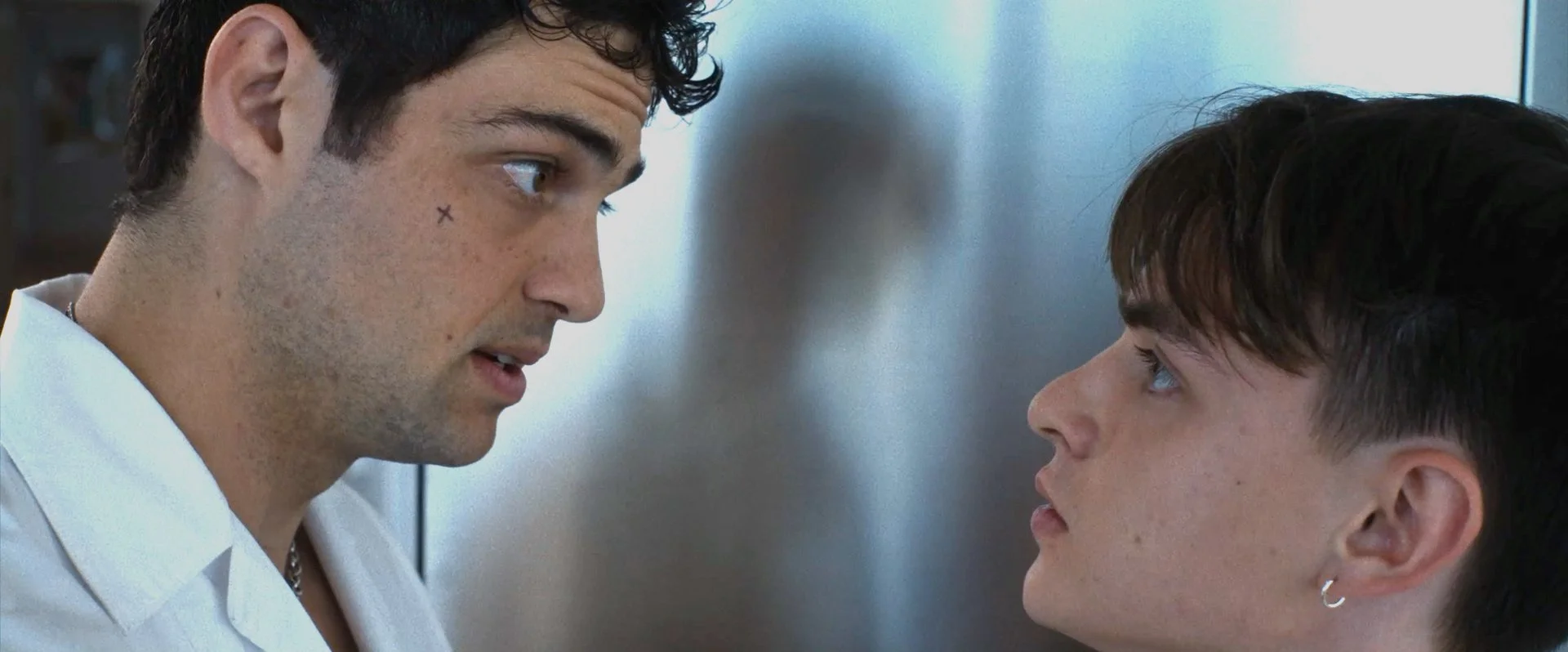
Oscar Boyson and Ricky Camilleri’s script walks an incredibly difficult tonal tightrope. The film can be viciously funny one second, deeply uncomfortable the next, then suddenly sincere without losing its identity. There were moments where I found myself cackling at something horrible, immediately feeling guilty for laughing, only for the movie to double down and make me laugh again. That balancing act is incredibly hard to pull off, especially with material this sensitive, but the film mostly nails it. Their evolving friendship becomes surprisingly tender, funny, and even a little heartbreaking.
For all its pitch-black humor and uncomfortable subject matter, the movie ultimately succeeds because it genuinely cares about these boys beneath all the satire. Hell, I want this as a litmus test for all the lonely little white boys in their twenties and teens struggling to connect.
I know it’s an indie working the best of its budget, but I do feel some pieces could’ve been extended in Balthy and Solomon’s friendship, feeling a scene or two short to emotionally lock me into their dynamic. I also felt a little lost with the story direction, especially towards its latter half when his dad becomes more of a prominent presence.
Between The Drama, Our Hero, Balthazar – well, it was at Tribeca 2025 – and Sundance’s Run Amok, 2026 has seen numerous movies that tackled the subject matter of school shootings and the link to teenagers or people who were once teenagers trying to grapple with the aftermath of one. Balthazar tackles the subject matter of the modern desensitization and ego so exact, sharp, and tonally sure of itself throughout. Nevertheless, this is a strong debut and for quite some time one of my favorites of this year (yeah, even more than The Drama).
Final Statement
Oscar Boyson’s Our Hero, Balthazar is a razor-sharp, disturbingly hilarious Gen-Z satire that turns influencer brain rot and school shooting desensitization into one of the year’s funniest and most hauntingly human debuts.
