
‘One Battle After Another’ Review: Paul Thomas Anderson’s Postmodern Spectacle is the American Satire We Need Right Now
Our reality must have become so horrendous that it finally snapped Paul Thomas Anderson out of his 25-year-long period-piece psychosis. Tackling the now for the first time since Punch-Drunk Love, PTA is responsible for the latest genre-bending sociopolitical action satire, One Battle After Another. Inspired by Thomas Pynchon's Vineland, he adapts the Reagan-era American nightmare of whence to our current Trump-dominated one. Boldly approaching new territory in filmmaking and storytelling, One Battle After Another is an audacious and ambitious epic that tackles a huge range of topics under his commercialized lens yet stands among his best works to date.
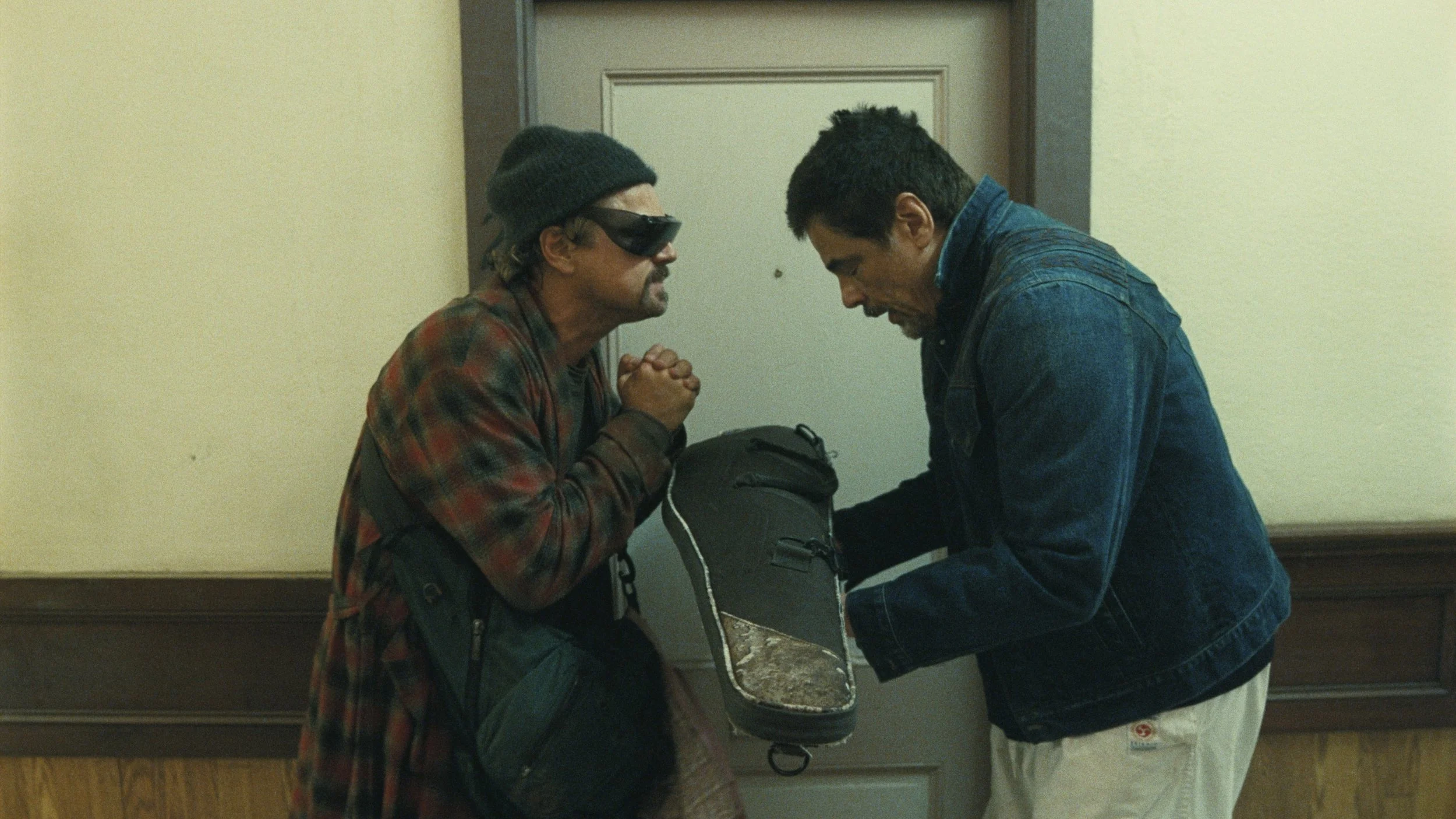
Image copyright (©) Courtesy of Warner Bros. Pictures
MPA Rating: R (for pervasive language, violence, sexual content, and drug use)
Runtime: 2 Hours and 42 Minutes
Language: English
Production Companies: Domain Entertainment, Ghoulardi Film Company
Distributor: Warner Bros. Pictures
Director: Paul Thomas Anderson
Writer: Paul Thomas Anderson
Cast: Leonardo DiCaprio, Sean Penn, Benicio del Toro, Regina Hall, Teyana Taylor, Chase Infiniti, Alana Haim, Shayna McHayle, Paul Grimstad, Tony Goldwyn
U.S Release Date: September 26, 2025
The decade-spanning tale begins with two lovers: explosives expert Pat Calhoun “Ghetto Pat” (Leonardo DiCaprio) and firecracker Perfidia Beverly Hills (Teyana Taylor). They, along with their comrades Deandra (Regina Hall), Mae West (Alana Haim), Laredo (Wood Harris), Junglepussy (Shayna McHayle), and Somerville (Paul Grimstad), are members of the French 75, a group of radical Californian revolutionaries targeting corrupt institutions. Perfidia eventually becomes involved with Steven J. Lockjaw (Sean Penn), a self-serving sergeant who fetishizes her and is indifferent to the 75. When she and Pat have a baby, Pat goes into dad mode while Perfidia, struggling with postpartum depression, chooses the cause over motherhood. She leaves them and tragedy strikes when a mission goes awry. In the aftermath, Pat, now Bob Ferguson and infant Charlene, now Willa move to Baktan Cross, California, for a fresh start.
Sixteen years later, Bob is a paranoid recluse and teenage Willa (Chase Infiniti) ends up parenting him. Meanwhile, Lockjaw is offered a huge career opportunity. When complications with Bob and Willa derail his plans, he leads a botched siege on Baktan to find them. Separated, the father and daughter must grow into themselves to reunite and lead each other home.
Paul Thomas Anderson’s first venture into action is an exceptional display.
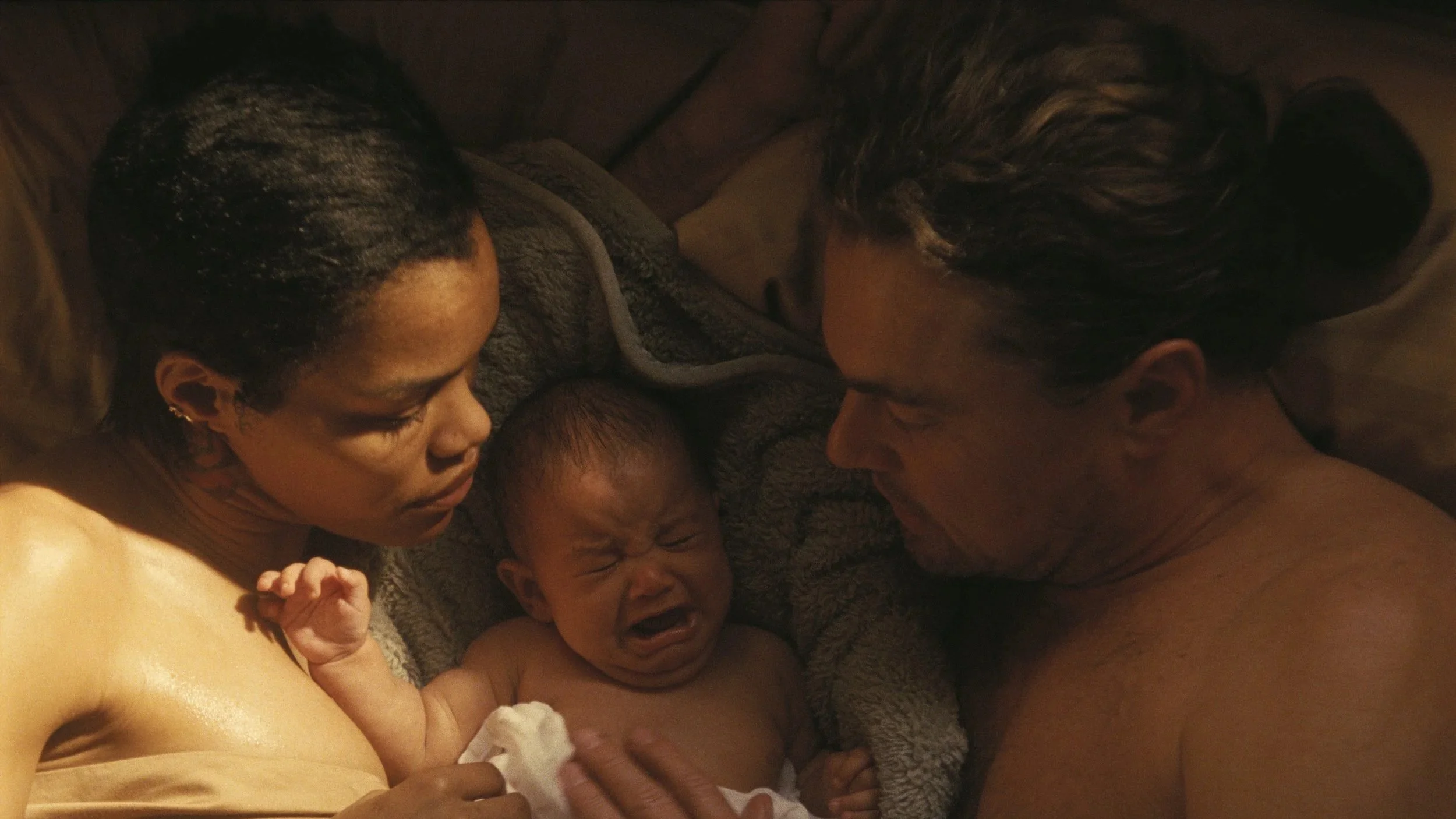
Caption: (L-r) TEYANA TAYLOR as Perfidia and LEONARDO DICAPRIO as Bob Ferguson in “One Battle After Another.”
A Warner Bros. Pictures Release.
One Battle After Another marks many firsts for PTA: it’s his first tale set in the 2020s, his first time working with a three-figure-million-dollar budget, and his first foray into high-spectacle action. He pulls off this new expedition like a seasoned pro. Though this is the furthest PTA has strayed from arthouse flair, his witty yet thoughtful writing imbues the film with his consistent humanity that many modern commercial films lack. One Battle After Another boasts classic studio action flair with striking practical stunt work and on-location filmmaking, building blockbuster grandeur that's frustratingly rare. DP Michael Bauman's vivid, engrossing composition and masterful blocking (especially on VistaVision or 70mm), amplified by editor Andy Jurgensen's meticulous stitching of pulse-pounding chase sequences, speeds through the film's 2 hr and 42 minute runtime.
The contemporary setting of the film allows PTA to integrate numerous thematic elements into a grand-scale father-daughter story. Throughout the decade-spanning story — it even extends into 2025 — he nails the stress of being American in the current authoritarian landscape, hitting on the increasing prevalence of dehumanizing immigration detention centers, the linkage of white supremacy and religious evangelism, and even the weakness of liberalism. Through expertly toned vaudeville-style humor interspersed with urgent radical action, the conversations he engages in have a seamlessly executed naturalistic flow. Refreshingly, the atmosphere, while realistically dour, avoids the cynicism of other neo-westerns of the same ilk. (*cough* Eddington cough*) Instead of emphasizing, "Hey, everything sucks now," his radical ensemble evokes the hopefulness that moviegoers currently sorely need.
As usual, PTA’s masterful tonal ballet of high-stakes action and surrealistic comedy (sometimes in the same scene) is nothing without the deep-seated emotions of his complex characters. The film navigates the extremism of love and its consequences.
One Battle After Another ingeniously reworks PTA character types for potent American social commentary.
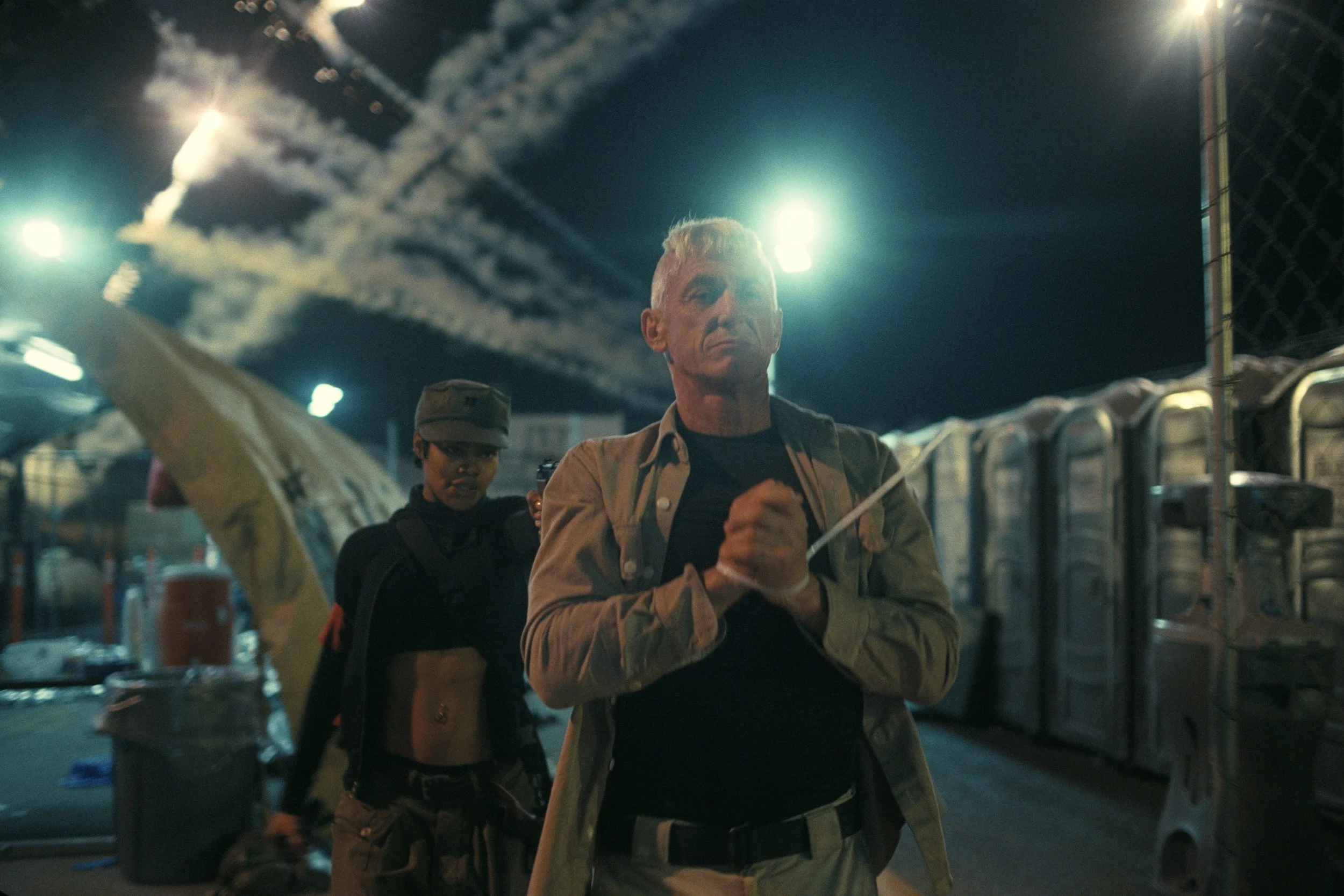
Caption: (L-r) TEYANA TAYLOR as Perfidia and SEAN PENN as Col. Steven J. Lockjaw in “One Battle After Another.”
A Warner Bros. Pictures Release.
In a dazzling first act that plays like the Boogie Nights gang were radicalists but also unabashedly horny, a love triangle unfolds between Perfidia, Bob, and Lockjaw. The relationship between Perfidia and Bob is humanistic, while the relationship between Perfidia and Lockjaw is power-driven. Moreover, with the love triangle, PTA (or should I say Mr. Maya Rudolph?) boldly depicts the opposite ends of interracial relationships that other movies don't address: one is soulful and deep, while the other is rooted in fetishization. At every turn, Teyana Taylor's vivacious performance humanizes Perfidia and her internal fiery battle.
Said racial fetishization stems from, surprise surprise, Lockjaw, who might be the film's most interesting character. He's like the lovechild of The Master's Freddie Quell (insane, horny, rabid dog) and Lancaster Dodd (will bullshit anyone and believe his own hype to get his way), but I saw him as the American militant equivalent of Frollo from The Hunchback of Notre Dame — a monstrous force of power, deceit, hypocrisy, and lustful racial fetishization that serves to enhance his authority.
PTA goes dad mode and invokes hope at our most dire time.
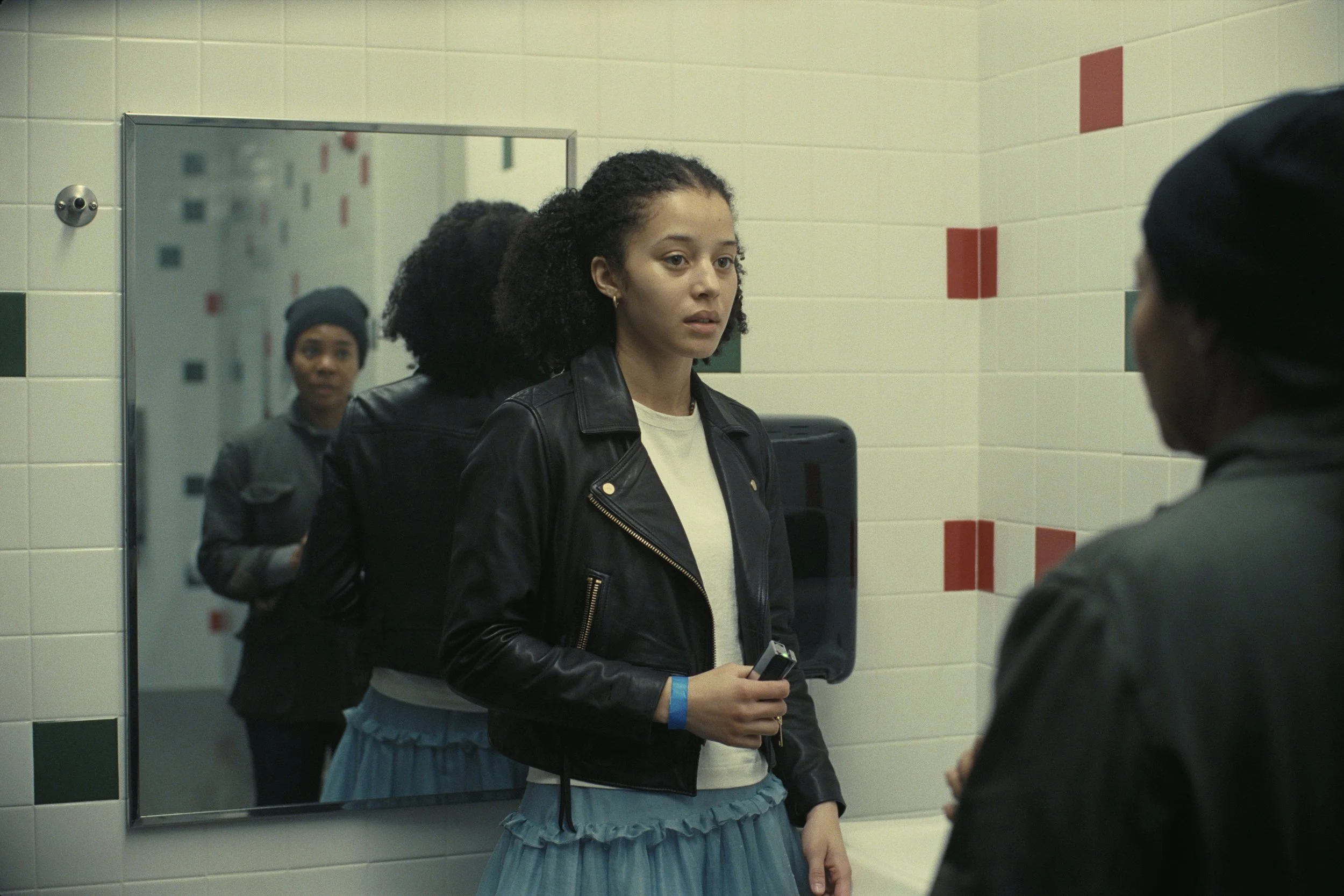
Caption: (L-r) CHASE INFINITI as Willa Ferguson and REGINA HALL as Deandra in “One Battle After Another.”
A Warner Bros. Pictures Release.
Once the time skip occurs, One Battle After Another finds PTA personalizing his experience as an aging girl-dad adapting to new generational values in modern America. Now a dad-failure, Bob’s obsessive love for the absent Perfidia leads him to feed their daughter Willa lies about her background. Having drifted away from the radical fight, he has fallen into centrism and now treats his activism like a phase, but his trauma and paranoia become a breaking point for Willa. This tension builds into a thrilling and hilarious affair once the two are separated and threatened by Lockjaw’s resurgence.
DiCaprio once again proves that, for an A-lister, he’s one of the best comic performers alive. He delivers another brilliant physical performance, full of loserdom, humility, and anxiety. Much of his journey to find Willa pairs him with Sergio St. Carlos (an effortlessly cool Benicio del Toro), a badass karate instructor who moonlights as a selfless "Latino Harriet Tubman”. And man, DiCaprio and Benicio del Toro make an incredible duo. The film’s thematic urgency — touching on migration, militant occupation, and opposition to tyranny — is tightly woven into Bob’s paranoid quest. The second act mounts to a beautiful, chaotic ballet as their scenes blend expert comedy and sharp sociopolitical commentary in the same frame. It's all elevated by frequent collaborator Jonny Greenwood’s quirky, discordant, jazz-driven score, which perfectly matches the scenes’ chaos and offbeat tone.
But Chase Infiniti’s commanding, self-assured performance is the movie’s true revelation. As Willa, she embodies one of the film’s many themes—grappling with her radicalist heritage in her mother’s absence—while clearly being cut from the same cloth. She retains composure and a hard-edged independence, never backing down in the face of adversity. One standout moment is a hilarious face-off against Lockjaw, where she plays a psychological game of chicken and watches him crack. Whether opposite DiCaprio or Penn, Infiniti confidently holds her own, maintaining an inspiring level of strength and resilience. Through sheer physicality and unflinching screen presence, she bursts onto the screen with a remarkable debut—and hopefully, the beginning of a star-making career.
Final Statement
After two viewings, there’s no doubt: One Battle After Another is the movie of the year. In the face of the authoritarianism, cruelty, and terror defining our bleak Trump 2.0 era, this is the kind of hopeful film America desperately needs — a must-see for anyone living in this country. It’s a bold new American classic, offering a potent and personal dissection of our current moment. It finds storytelling richness without letting its setting overshadow the urgency of the narrative, and it humanistically carves out a vision for a better future. PTA pulls off the best directing feat of the year, and his optimism gives One Battle After Another a rare combination of novelty and lasting power.
Please consider supporting Rendy Reviews. We’re an independent run, Gen-Z and Black-owned entertainment outlet. You can donate to our Paypal or Venmo to help keep our site running. Or become a subscriber for access to 13-years worth of reviews, exclusive interviews, and more! A free way to support is a sign up for the Rendy Reviews’ newsletter and get weekly emails about latest on movie reviews, interviews with film artisans, features, and more.
