‘Nimona’ Review: Long Awaited LGBTQ+ Netflix Animated Film is a Shapeshifting Masterpiece
Nimona
PG: For violence and action, thematic elements, some language, and rude humor.
Runtime: 1 Hour and 37 Minutes
Production Companies: DNEG Animation, Annapurna Pictures
Distributor: Netflix
Directors: Nick Bruno, Troy Quane
Writers: Robert L. Baird, Lloyd Taylor
Cast: Chloë Grace Moretz, Riz Ahmed, Eugene Lee Yang, Frances Conroy, RuPaul, Beck Bennett, Indya Moore, Sarah Sherman, Julio Torres, Lorraine Toussaint
Release Date: June 30, 2023
In SELECT theaters and on Netflix
ND Stevenson's mischievous little shapeshifter Nimona put up a hell of a fight in her seven-year quest to go from a 2D graphic novel to a 3D animated feature. From production starting at the once Fox-owned Blue Sky studios, continuing when the Mouse House acquired Fox, progressing remotely when the pandemic hit, and then a year later, in 2021, Disney shuttered Blue Sky, and the film was dead. Or so we presumed.
Cut to the fall of 2021 when I attended The Summit of the Gods awards screening, where Blue Sky founder Chris Wedge was moderating a Q&A. I met him, talked about Blue Sky, and said, “Sorry about Nimona." He immediately responded, "Oh, Nimona is still getting made. She's still in production.” I had to keep that secret until 2022, when Netflix, Megan Ellison, and British-based DNEG Animation publicly announced their joint resurrection of the project. Nimona had to be a remarkable film for the Biblical-like history it went through. It feels great to say this film was worth fighting for.
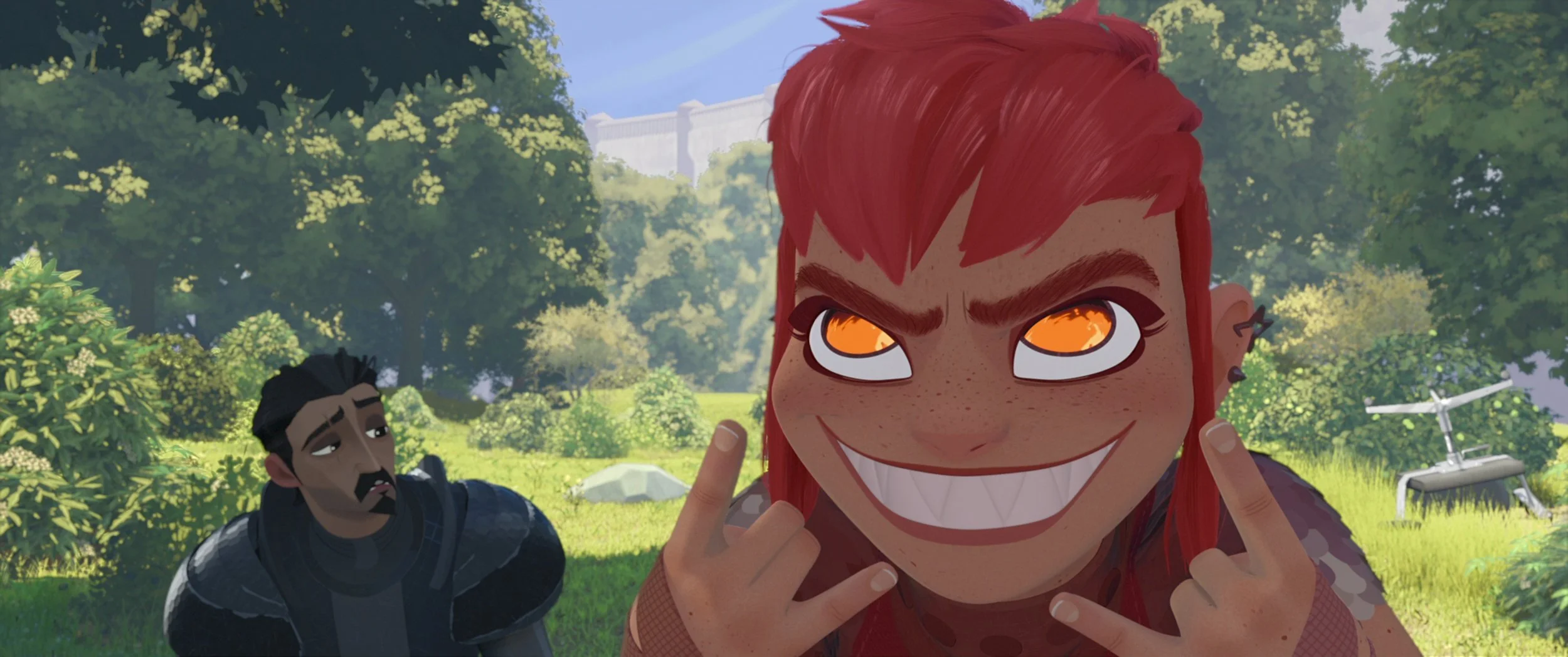
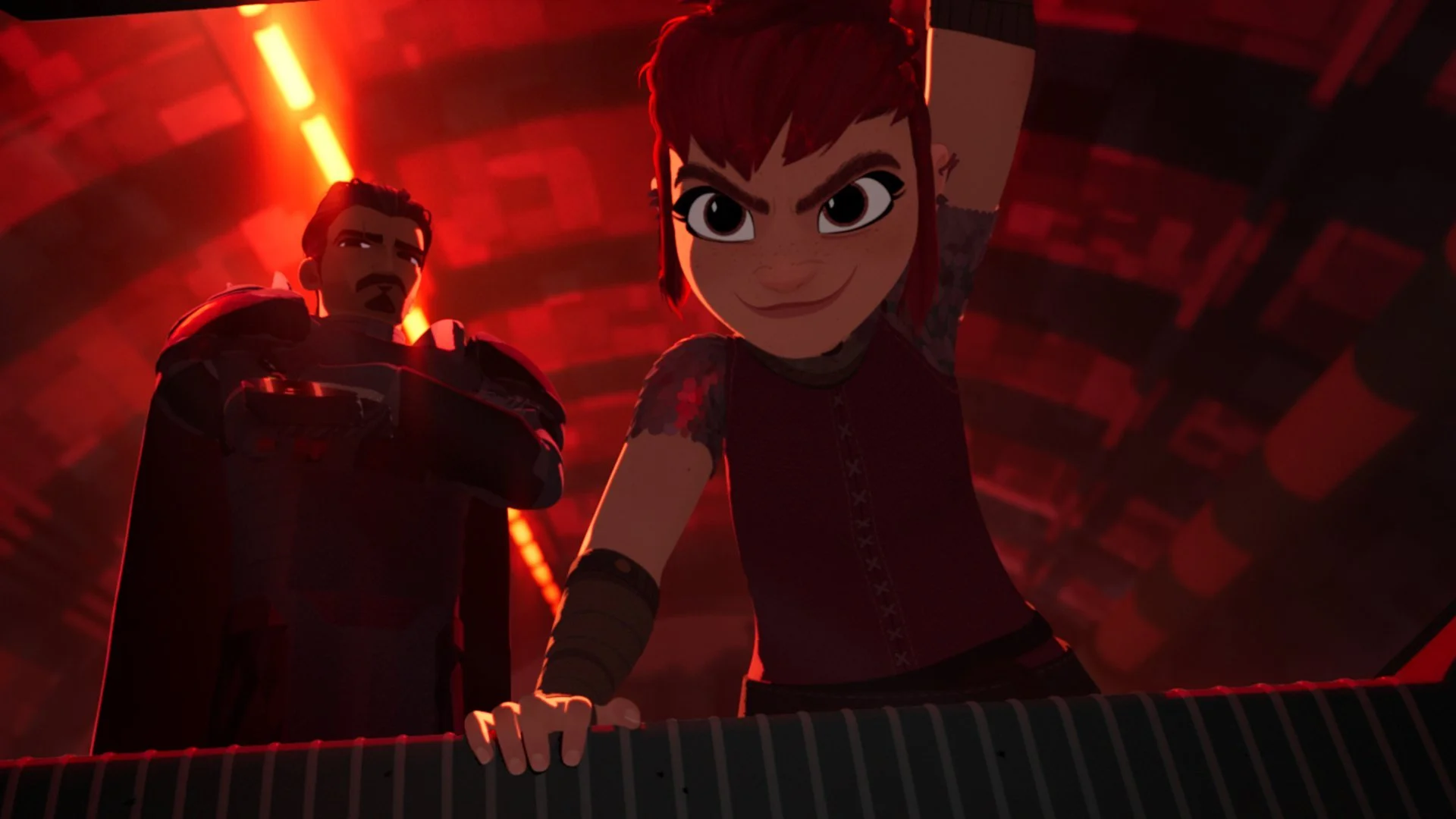
Set in a techno-meets-medieval futuristic fantasy realm, Ballister Boldheart (Riz Ahmed, delivering a suave, soft-spoken performance), a lowly classed knight, is framed for the tragic murder of his kingdom's Queen Valerin (Lorraine Toussaint). During the event, his arm is cut off by a fellow knight and boyfriend, Sir Ambrosius Goldenloin (Eugene Lee Yang). With no allies at his side, Boldheart's only hope at proving his innocence is Nimona (Chloe Grace Moretz)—a sadistic punk-rock shapeshifting teen, like Hit-Girl if she loved Warped Tour and was on an endless sugar high—who arrives at his doorstep, thinking he's a supervillain, and dubs her as his assistant. Influenced by his government-controlled organization, The Institute, led by The Director (Frances Conroy), Boldheart initially sees Nimona as a monster due to her abilities. But along the ride, their bond deepens as Ballister starts questioning the system and if they were wrong about what's considered a monster.
With this adaptation, directors Nick Bruno and Troy Quane (Spies in Disguise) capture the offbeat, irreverent spirit of the source material and expand on the castle Stevenson built. For starters, the animation is stunning. British-based studio DNEG Animation had to start the animation process from scratch following the Blue Sky version's shuttering, and they knocked it out of the park with a distinctive flair. Continuing the 2D stylization in a 3D environment that's been all the rage in animation recently, Nimona bears a unique cel-shaded art style inspired by background artist Eyvind Earle and the graphical designs of modernist Charley Harper. The futuristic world comprises simple geometric shapes varying from architecture to character designs. The lighting and hues added to each set piece are well-detailed, adding grit and elevating the noir-like narrative. The animation quality closely aligns with the graphical attributes of the Disney 2012 short Paperman (which shares the same composer, Christophe Beck) but with simplistic geometric shapes and Blade Runner-infused coloring. The stylish look matches the dynamic, fast-paced movement and expressionism, specifically during the high-octane action sequences—Bruno and Quane's finest strength showcased in Spies in Disguise.
Nimona features unique innovation with its color scheme, including hues of red and pink coated in its Nimona- and Ballister-based backgrounds, as opposed to the shimmering white golden colors of the Institute's knights. Once you notice the film's subtle allegory to LGBTQ+ acceptance, the impactful color detail reflects the classist hierarchy's narrow-minded and brainwashed traditional mindset.
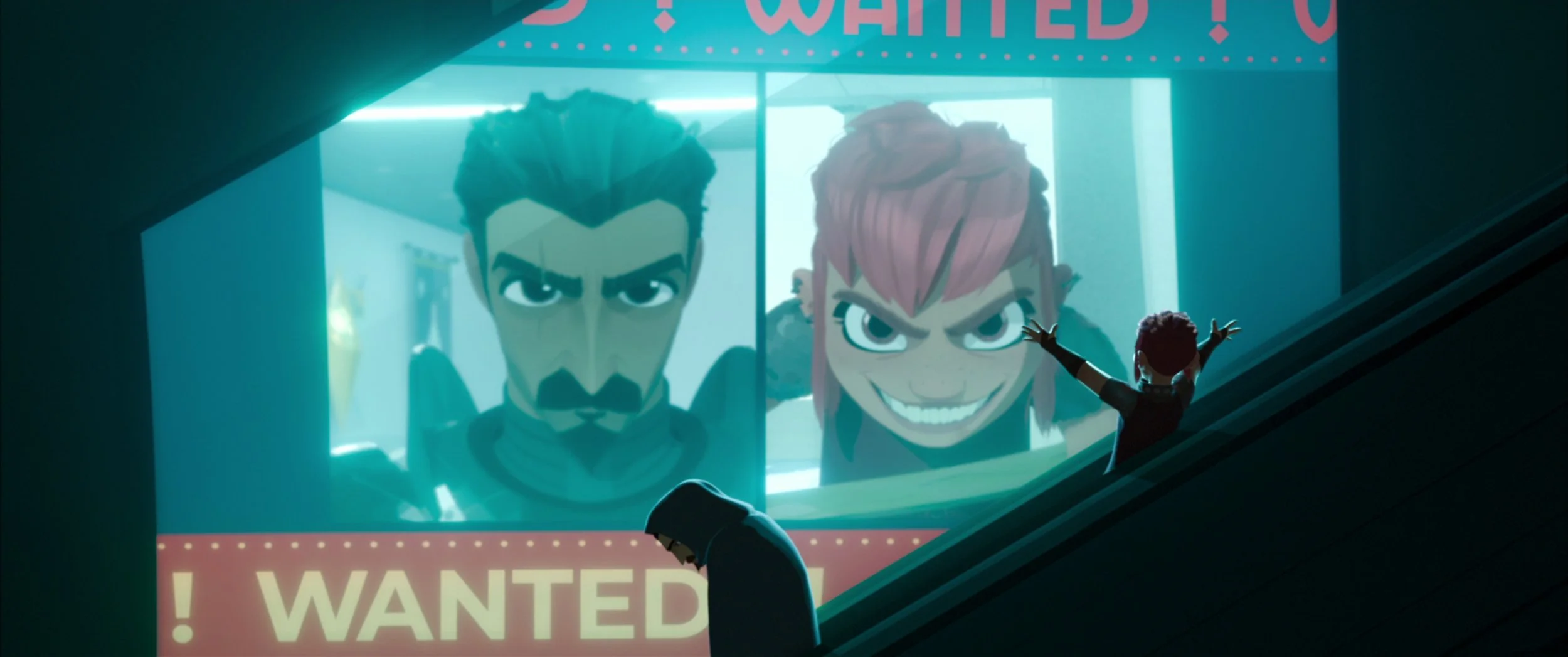
Given that this is an ND Stevenson—one of the most prominent queer voices who pioneered LGBTQ visibility in family animation—project, you know it’ll have a beating gay heart. And its lead couple is at odds throughout. Bursting its characters right out of the closet within its quickly-paced setup, screenwriters Robert L. Baird and Lloyd Taylor sculpt a deeply Shakespearean friction between lovers-turned-foes Ballister and Goldenloin. With a change to their backstory as significant as Goldenloin's haircut, the writers cleverly detail the reciprocal love and care between them, but the unprecedented circumstances and misunderstanding out of either's control pit against them.
While under the Disney banner, the film received pushback from upper Disney authorities who wanted to tone down the LGBTQ themes, but alas, Goldenloin and Boldheart are gay on main. Through the character acting and meticulous dialogue—one moment where Goldenloin ensures The Director he can track down Ballister by saying, "If anyone can find Bal (nickname), I mean Ballister, it's me," had me clenching my chest—everything concerning the two stands refreshing.
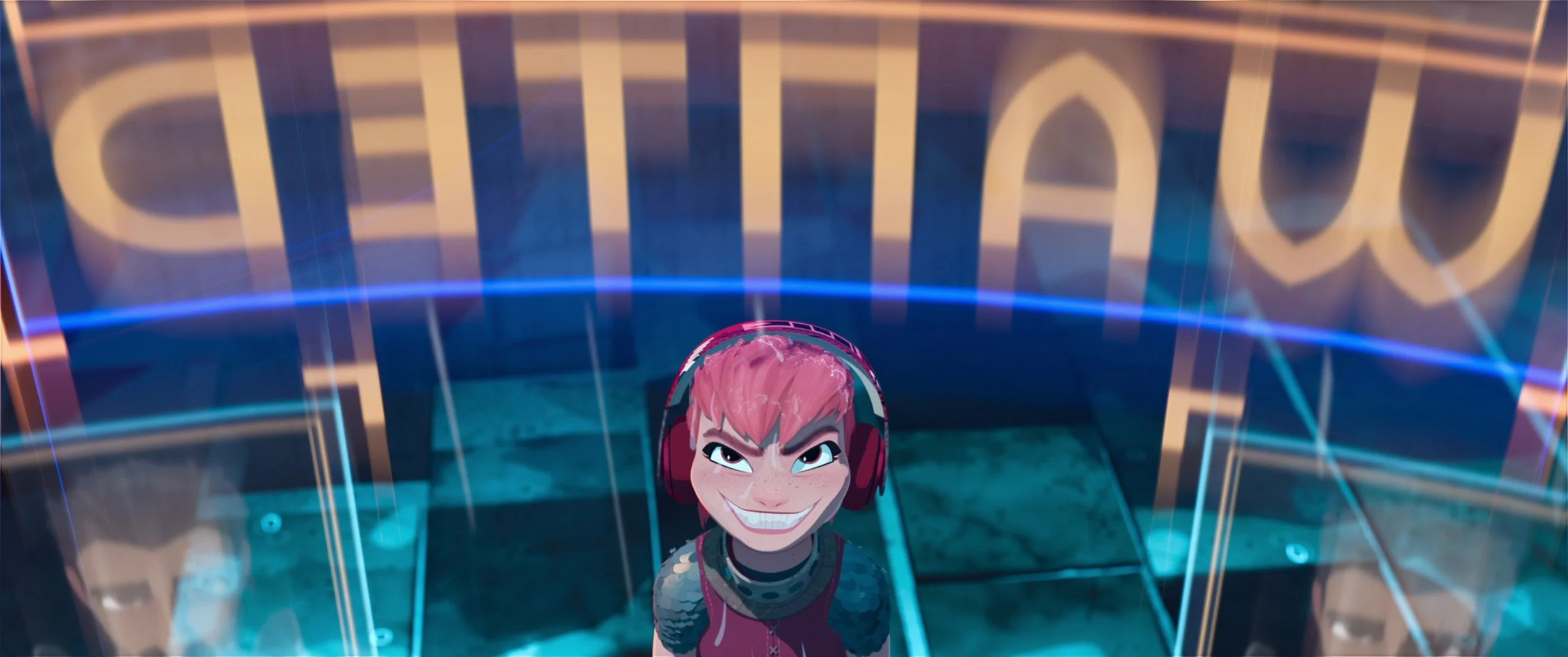
Surprisingly, their relationship isn't the best LGBTQ stride the film makes, for it bears a bold trans allegory via Nimona's shapeshifting abilities and Boldheart's slow acceptance of her uniqueness. While many other movies hold a similar theme of tolerance and embracing others for their real identities, it comes so often in animated films. But the dialogue, Nimona's powers, and Chloe Grace Moretz's spirited vocal performance add an extra queer oomph to the message. Whenever Ballister questions what she is or her origins, Nimona confidently responds, "I'm Nimona." She doesn't identify herself as a person, and when she describes shapeshifting, it's of euphoric freedom. But when it furthers into Nimona's loneliness, traversing into heavy dark material, the film's trans allegory hits all the authentic marks.
Nimona isn't flawless, but the film takes great pride in its imperfections. If you're unfamiliar with the source material and going into the mystery trying to guess who framed Boldheart, you will spot the culprit the moment the character enters. As apparent as the “mystery” villain is, they help realize the film's commentary on government-controlled othering, classism, fearmongering, and propaganda, all present at religious institutions that demonize people like Nimona and Boldheart.

Nimona sometimes fails to overcome familiar plot beats pulled from some of the best-animated films ever. There's a joke reminiscent of a Shrek bit, and the third act goes full early-day Brad Bird. What it lacks in its story is compensated for by the wit and charm of Boldheart and Nimona's budding dynamic. The serious brooder mixed with a hyperactive teen is a dynamic that never grows stale, and the two carry the film. Moretz and Ahmed have great chemistry within their vocal performances, even if they didn’t record in the same booth together.
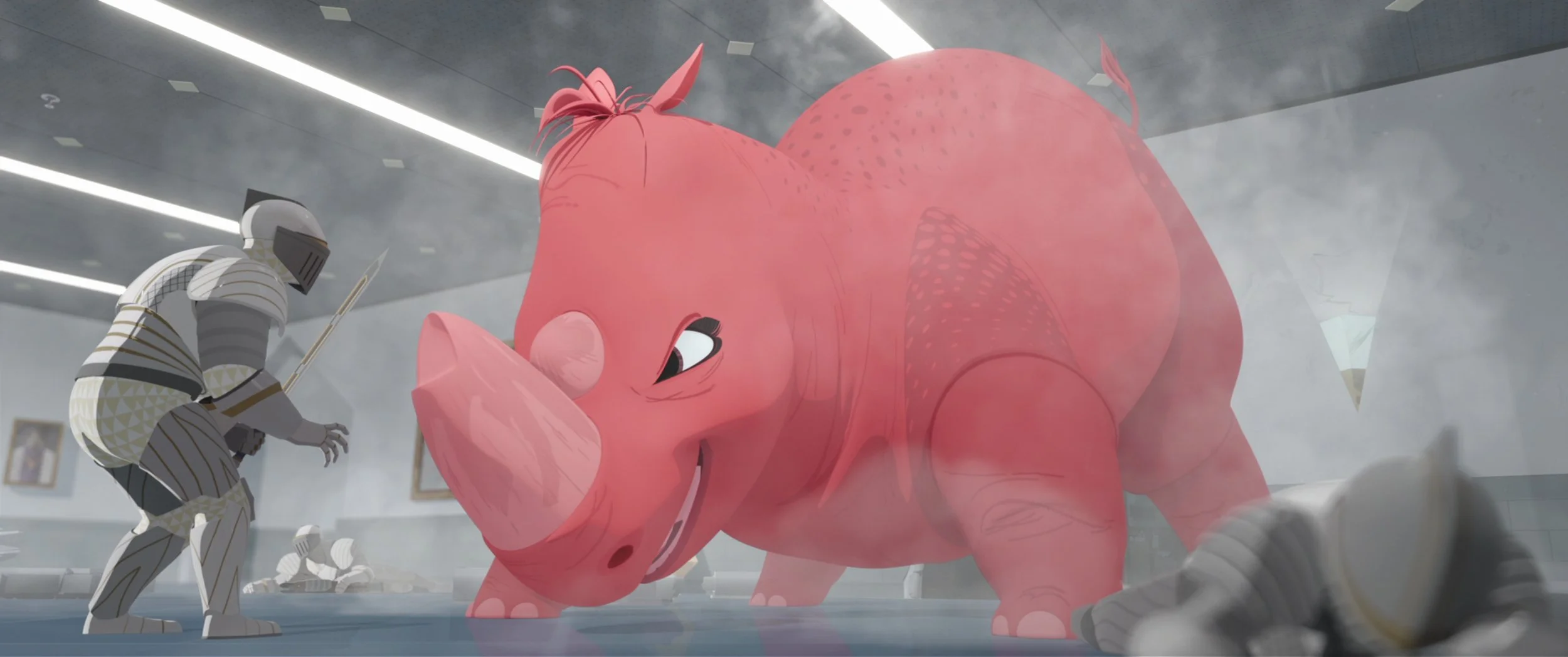
Despite the film's third act being too speedy, the final twenty minutes are jaw-dropping. I've seen Nimona three times now as I write this. Whenever the climax arrives, I am in awe of the storytelling, writing, and overtly trans-acceptance message that Disney wishes they could pull off. That might explain why Disney shut down Blue Sky. Not only would Nimona have been the best film out of the studio's catalog, but it also runs laps around the movies they theatrically set for last year (Pixar's Lightyear and WDAS' Strange World). All three feature queer representation, but Nimona has the cojones to do something meaningful, unlike any other animated family film has done to date.

Risen from the ashes and burning with a fiery punk-rock edge, Nimona is a terrific movie with stunning animation, incredible vocal performances by Moretz and Ahmed, and a bold queer message of tolerance that'll leave you breathless and in tears. No offense to Elemental, but Disney, you can have your water non-binary rep; you'll never be Nimona. Hell, Disney never even deserved her in the first place.