
Luce Review
R: Language throughout, sexual content, nudity and some drug use
Studio: NEON, Topic Studios, Dream Factory Group, Altona Filmhaus, Cinetic Media
Run Time: 1 Hr and 49 Minutes
Director: Julius Onah | Screenwriters: J. C. Lee, Julius Onah
Cast: Naomi Watts, Octavia Spencer, Kelvin Harrison Jr., Norbert Leo Butz, Tim Roth, Andrea Bang
Release Date: August 2, 2019
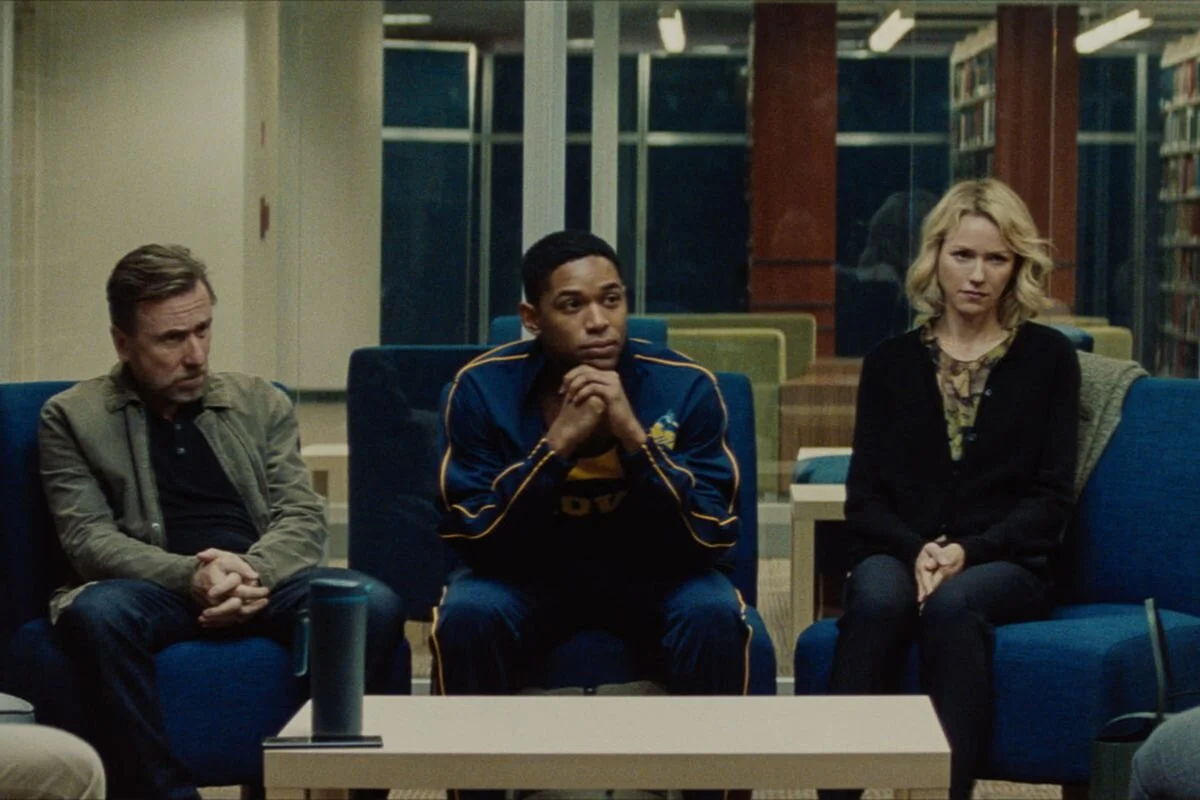
It's been ten years since Amy and Peter Edgar (Naomi Watts and Tim Roth) adopted their son from war-torn Eritrea, and they thought the worst was behind them. Luce Edgar (Kelvin Harrison Jr.) has become an all-star student beloved by his community in Arlington, Virginia. His African American teacher, Harriet Wilson (Octavia Spencer), believes he is a symbol of black excellence that sets a positive example for his peers. But when he is assigned to write an essay in the voice of a historical twentieth-century figure, Luce turns in a paper that makes an alarming statement about political violence. Worried about how this assignment reflects upon her star pupil, Harriet searches his locker and finds something that confirms her worst fears.
Personally, I don’t think we need a Joker movie anymore. As of now, I’m completely satisfied with not seeing it because Luce is everything one should look for in a satisfying super villain origin story, if not more. Granted, the film isn’t based on any sort of property and is in fact adapted from a NYC stage play, but even then this provocative film bears all the beats of a super villain story and it’s the best psychological thriller you’ll find this year.

Luce follows the story of Luce (Kelvin Harrison Jr.), a Black 17-year-old prodigy. Adopted at a young age from a war-torn country by two Caucasian parents, this straight-A valedictorian and all-star athlete is deemed perfect by everyone. He has the ability to code-switch his vernacular between his superiors and his fellow peers, but what throws you off as a viewer is his dialect along with his actions. After his teacher, Ms. Wilson, finds illegal items in his locker and becomes concerned over the submission of a violence-themed research paper, she contacts his parents. His adoptive parents start to question his actions, leading to his mother Amy uncovering a barrage of secrets held by her son.
You might remember his face from a few features, most notably the underrated 2017 horror film It Comes At Night where he made a valuable impression, but Luce is the film that allows actor Kelvin Harrison Jr. to shine, and my God, he is a whirlwind as he portrays the titular character. With a lot of preparation to take on this complicated character, Harrison brings gumption to the role through his calm and charismatic demeanor, exhibiting the characteristics of a goody two-shoes model student. His innocent dialect makes it difficult to decipher if his words are sincere or not and that is what truly throws you off as a viewer, especially as you witness the horrors inside this kid’s head. When he is interacting with others, you hear the faux caring tone that makes you feel ambivalent towards his sincerity. That’s just how incredible Kelvin Harrison Jr.’s performance is. It’s reminiscent of Jack Reynor’s performance as Christian in Midsommar where you know his dialogue is never sincere because of the tone of his voice as he’s projecting his lines. The entire story is centered on Luce who, to the dismay of his teacher, does something out of character. From then on, this former child soldier conducts psychological warfare and mayhem with this teacher and his parents.

Besides Harrison, the entire ensemble is great as they play their respective roles, especially Naomi Watts and Octavia Spencer. Watts plays Amy, Luce’s loving and supportive mother who is slightly coddling and must conduct her own investigation to figure out if her son is a menace or not. It’s insane how incredible Watts’s performances are when she portrays a mother, for she is captivating in this. Through her anxious mannerisms full of concern, you witness this woman with an inner turmoil so grand that her blindspot is put to the test, leading to some unpredictable moments. Because of her undying love for her son, you often can’t tell what her next move will be as she attempts to figure out what is going on with him.
Octavia Spencer is phenomenal. Strangely enough, earlier this year we saw Spencer in a thriller tormenting high school kids, and now we’re witnessing the exact opposite. Like Harrison, Spencer puts on a calm demeanor as she is the target of Luce’s actions. As his game gets bigger, the more you wonder when she is going to lose her cool. As she becomes a target to his meddling and is trying her damndest to keep her composure through it all, the two are metaphorically at each other’s throats as she challenges his questionable viewpoints and brings them to the forefront.
Tim Roth is present. He barely has any screen time and isn’t given much character. He’s particularly one-note as his attitude to the entire scenario often switches on a dime to serve either Amy or the plot. He gives a great performance, but I wish he was as explored as Watts’s character.
It wasn’t until recently that I discovered this feature was based on a stage play. The film is so elaborately crafted that you can’t even tell what its source material is, which is a testament to Julius Onah’s direction. With this being his sophomore feature after the mess that was The Cloverfield Paradox, this is a perfect exhibit of his voice through his direction. And boy, is that voice powerful! Onah puts you in the front seat of the ride, for his camera is its own character as the audience’s avatar. Even if you’re trying to observe how the drama unfolds from the stance of individual characters, you’re ultimately in Luce’s point of view. There are plenty of shots that make you think you’re just observing a scene, but as the film progresses, you realize you’re watching through the lens of someone else, which is an exquisite addition that elevates the intensity of the film. There are so many cinematic sequences that keep you gasping for air and make you feel a sense of disbelief that this was a stage play given how much they let this story breathe in an open world.
I am complimenting the performances and the direction, but the glue that holds this feature so tightly together is the script written by Onah and J.C. Lee, which is filled with so much clever commentary on class, race, and most of all tokenism, a topic not many films speak on. While tackling these themes through the enticingly powerful narrative that rocks you to your core, the dialogue is full of convincing ideologies and conversations mixed with a twisted edge of wit that might seem too on-the-nose at first, but once some of the ideas become clear, you’re at the edge of your seat sipping that sweet, sweet tea.

While there are a ton of topics the film tries to juggle, there are a few moments where it bites off more than it can chew as some subjects are muddled within the story. There is a subplot with a character who is a victim of sexual assault and it ultimately goes nowhere. Then, before she’s even involved, there is a topic of victimization that’s never really followed through on. But the topics that are developed make for the intricate core pieces of the narrative. While some may not fit tonally, it is captivating enough to watch, enjoy, and dissect.
Luce is a hefty psychological drama with provoking topics like race, privilege, and tokenism, all layered into a complex story that is pulse-pounding with nearly every frame.
Rating: 4/5 | 89%

