'Luca' Review
PG: Some thematic elements, brief violence, rude humor, language
Runtime: 1 Hr and 30 Minutes
Production Companies: Walt Disney Pictures, Pixar Animation Studios
Distributor: Disney
Director: Enrico Casarosa
Writer: Jesse Andrews, Mike Jones
Voice Cast: Jacob Tremblay, Jack Dylan Grazer, Emma Berman, Marco Barricelli, Saverio Raimondo, Maya Rudolph, Jim Gaffigan
Release Date: June 18, 2021
Disney+

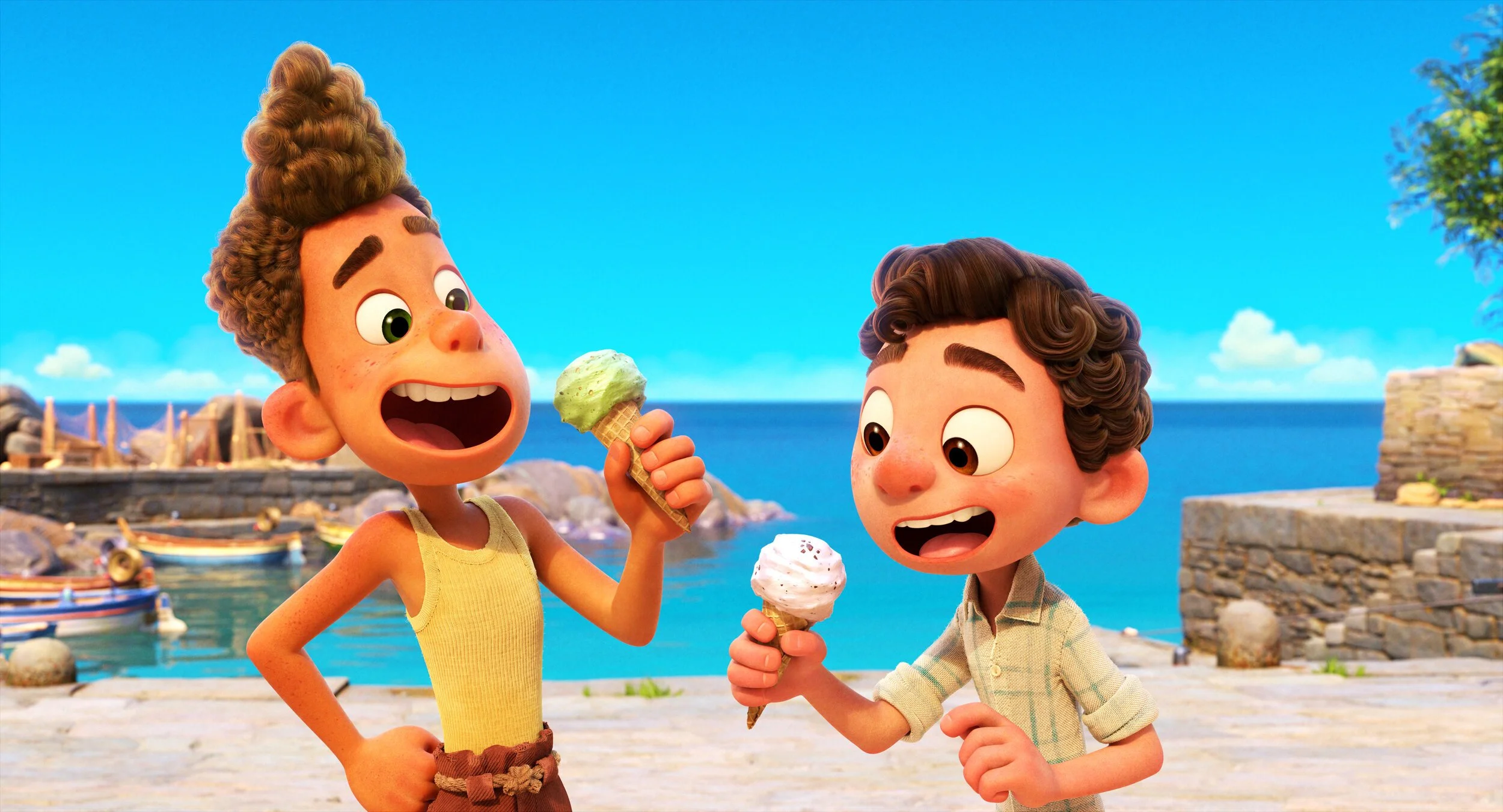
Set in a beautiful seaside town on the Italian Riviera, Disney and Pixar's original feature film "Luca" is a coming-of-age story about one young boy experiencing an unforgettable summer filled with gelato, pasta and endless scooter rides. Luca (voice of Jacob Tremblay) shares these adventures with his newfound best friend, Alberto (voice of Jack Dylan Grazer), but all the fun is threatened by a deeply-held secret: they are sea monsters from another world just below the water's surface.

Pixar has been the leader in state-of-the-art animation thanks to how meticulous they can be making their animated worlds so similar to ours through production design, lighting, and most importantly character designs. They have lately emphasized on realism so much that when you take any establishing shot from Toy Story 4 or Soul, you could mistake it for a live-action film. While that is fine and all, it’s been a while since they’ve done anything visually distinct and felt vastly different from the rest of their fare. Thankfully, Luca is that breath of fresh air. Instead of leaning toward the real, director Enrico Casarosa has Luca embracing a more vibrant art style that seemingly translates a series of Italian oil paintings of Sicilian cities and harbors into a 3D backdrop. The fictional town of Portorosso is beautifully inspired by the various environments of Italy, and both its land and sea are an absolute marvel to look at. The artists have brought this small-scaled town to life in excellent fashion and in such luscious detail, all without having to make it so photorealistic. There’s still the breathtaking attention to detail, especially when you have establishing shots of the harbor or close-ups of the sea creatures’ scales/human flesh.
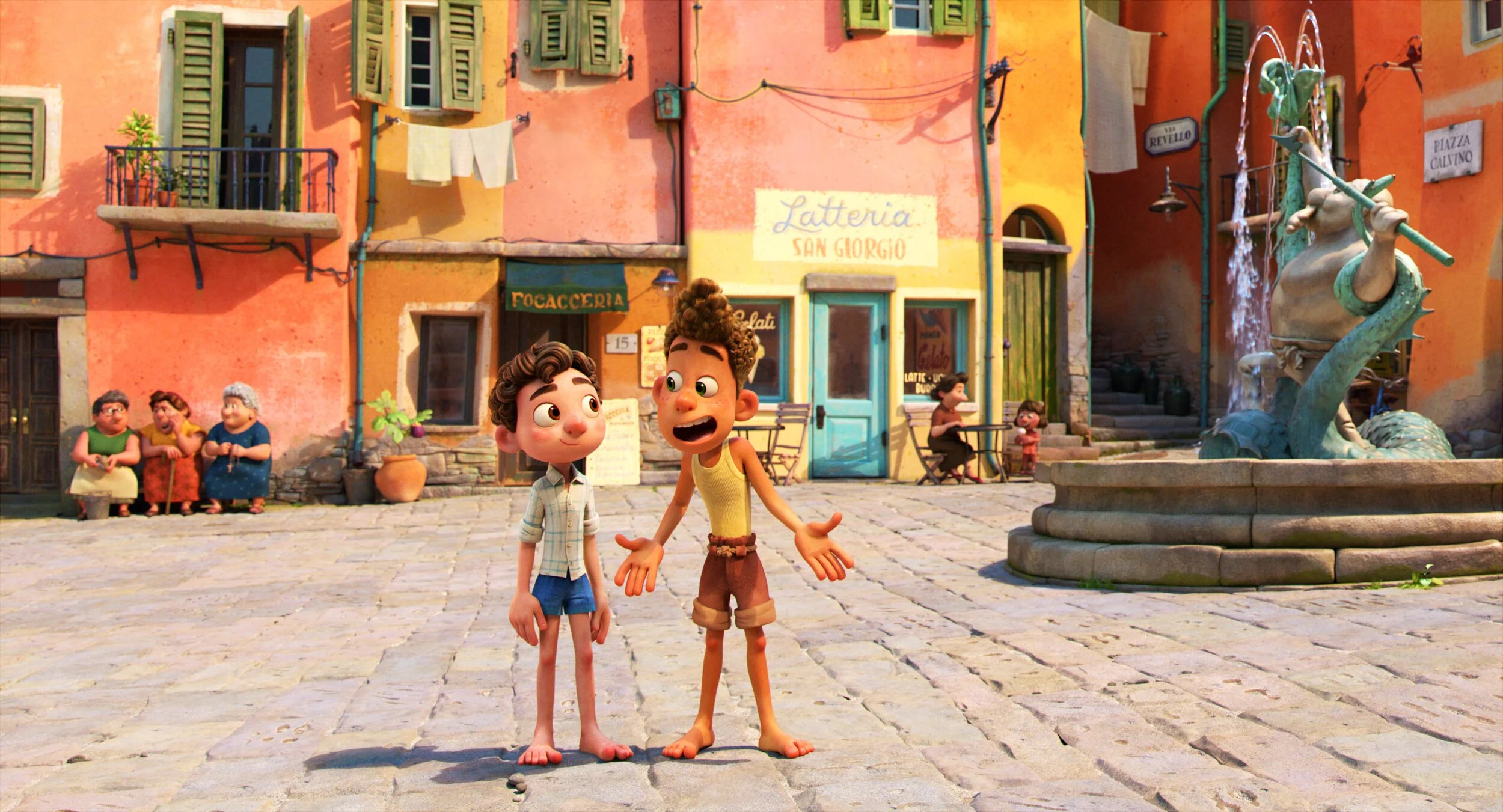
Apart from the incredible production design, the film also shines through the characters’ appearances and their motions. I loved watching how expressive the mouth movements of the characters, who mostly share that worm-shaped mouth look in modern Western cartoons. Then when you see their side profiles, they emulate this more revealing 2D look than trying to blend in with the 3D landscape they’re in, allowing the expressions to harken back to the early days of 20th century hand-drawn animation. It combines a hybrid of modern and classic animation in form and function as well. Movements are fast and emphasize on silly slapstick, working so well with the comedy it helps evoke the film’s overall identity. Just from the frenetic motion alone, you can tell the animators and storyboard artists were having a fun time working on this project. It clearly is a movie that deviates from the studio’s work, one that allows the animators to go insanely experimental and work to their hearts’ content. This is where I feel the studio is finally giving people who aren’t its key veterans, like Pete Docter and Andrew Stanton, a platform to express themselves, and from there getting the studio out of their comfort zone. Much of Casarosa’s style and tone from his 2011 short La Luna is incorporated so well here, especially capturing the wondrous imagination of a young dreamer.
The film’s narrative and tone aim for a slice-of-life that is clearly inspired by Hayao Miyazaki and his works such as My Neighbor Totoro, Ponyo, and even Kiki’s Delivery Service. While I do feel it successfully captures the essence, the more apparent vibe is one of Meléndez. Back in the day, Bill Meléndez was the guy who often collaborated with Charles Schulz to translate Peanuts to screen. Name any old Peanuts classic special or movie, and chances are he directed it. What made him such an incredible visual storyteller was his ability to bring all of Schulz’s comics into rich, full-length specials and films that other kid-friendly content at the time just can’t match. Luca gave me a feeling similar to that: a classic Peanuts special, now mixed with 1977’s Race For Your Life, Charlie Brown. There is the narrative, following a group of underdogs who must overcome adversity against a pig-headed town bully in a summer triathlon to win a Vespa, that has a clear Peanuts energy. As someone who grew up with those specials, it’s what made me fall in love with the film’s overall atmosphere. The film does not shy away from depicting the cruel realities of the world and it tackles topics like acceptance and abandonment without speaking down to audiences. This isn’t a movie meant to swing for the fences. And sometimes, it’s fine to not go that hard, especially when you’re Pixar. Since it’s a down-to-earth sweet and charming ride, I adored its story and characters even more.
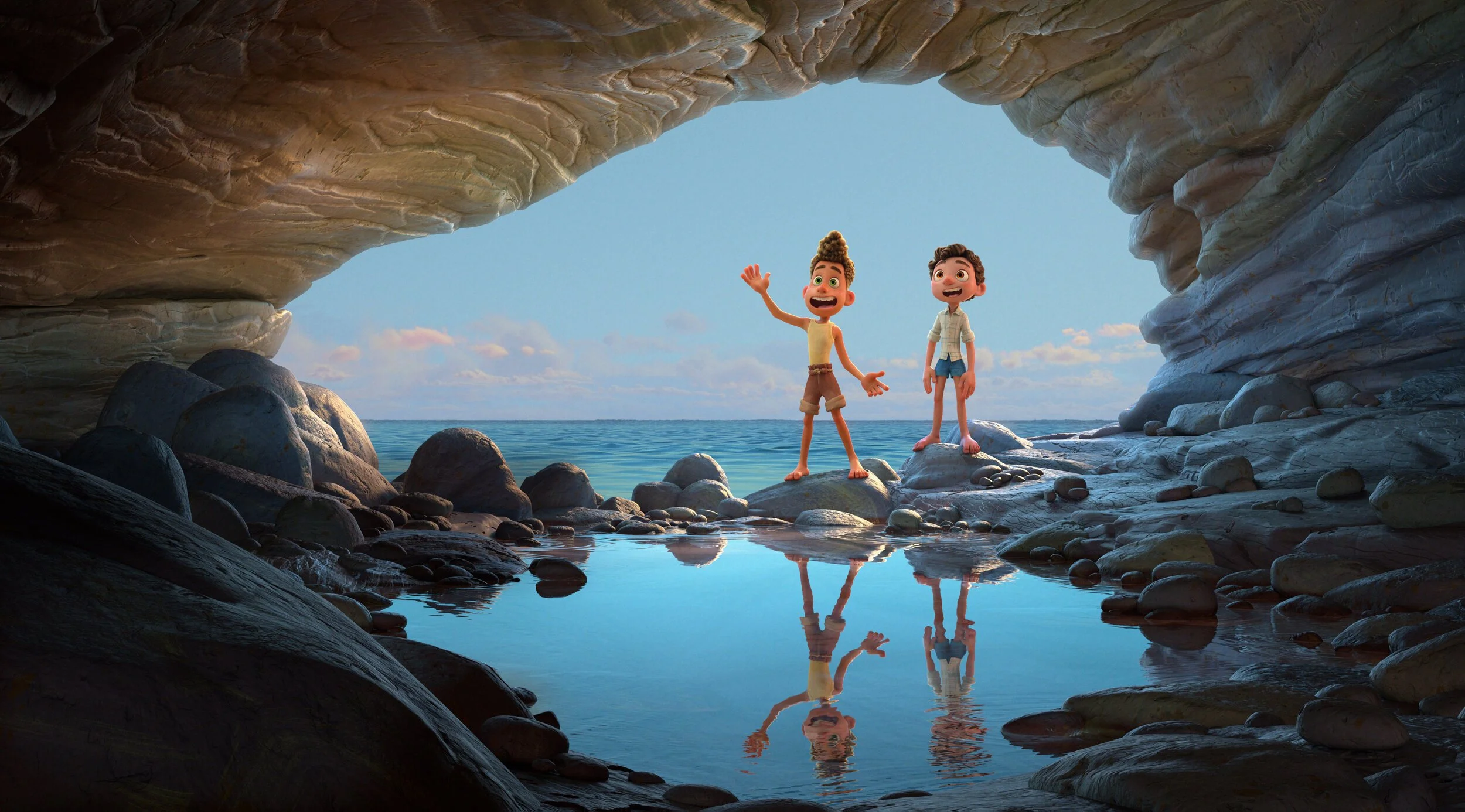
The budding friendship between Luca (Jacob Tremblay) and Alberto (Jack Dylan Grazer) is so tender, pure, and fun to watch as it unravels. The narrative quickly starts with Luca, this sheltered sea creature boy with overprotective parents, meeting Alberto, this free spirit who resides on a tower on his own. Luca wants to see the world while Alberto doesn’t want to be alone. Because Luca is inexperienced with hiding in a human guise, he’s easily impressed with and influenced by his new best friend’s confidence. Their dynamic would have me cracking up early on when Alberto would just say Italian lingo without knowing what it is, but he is so assured in his delivery that Luca would just follow his lead. The strongest character moments come from their developed friendship that the more emotional beats will gut-punch you. Yeah, it’s cliched to say “I got misty-eyed in a Pixar movie,” but damn by the way they invest you with the friendship, it’s difficult not to find yourself feeling all warm and fuzzy.

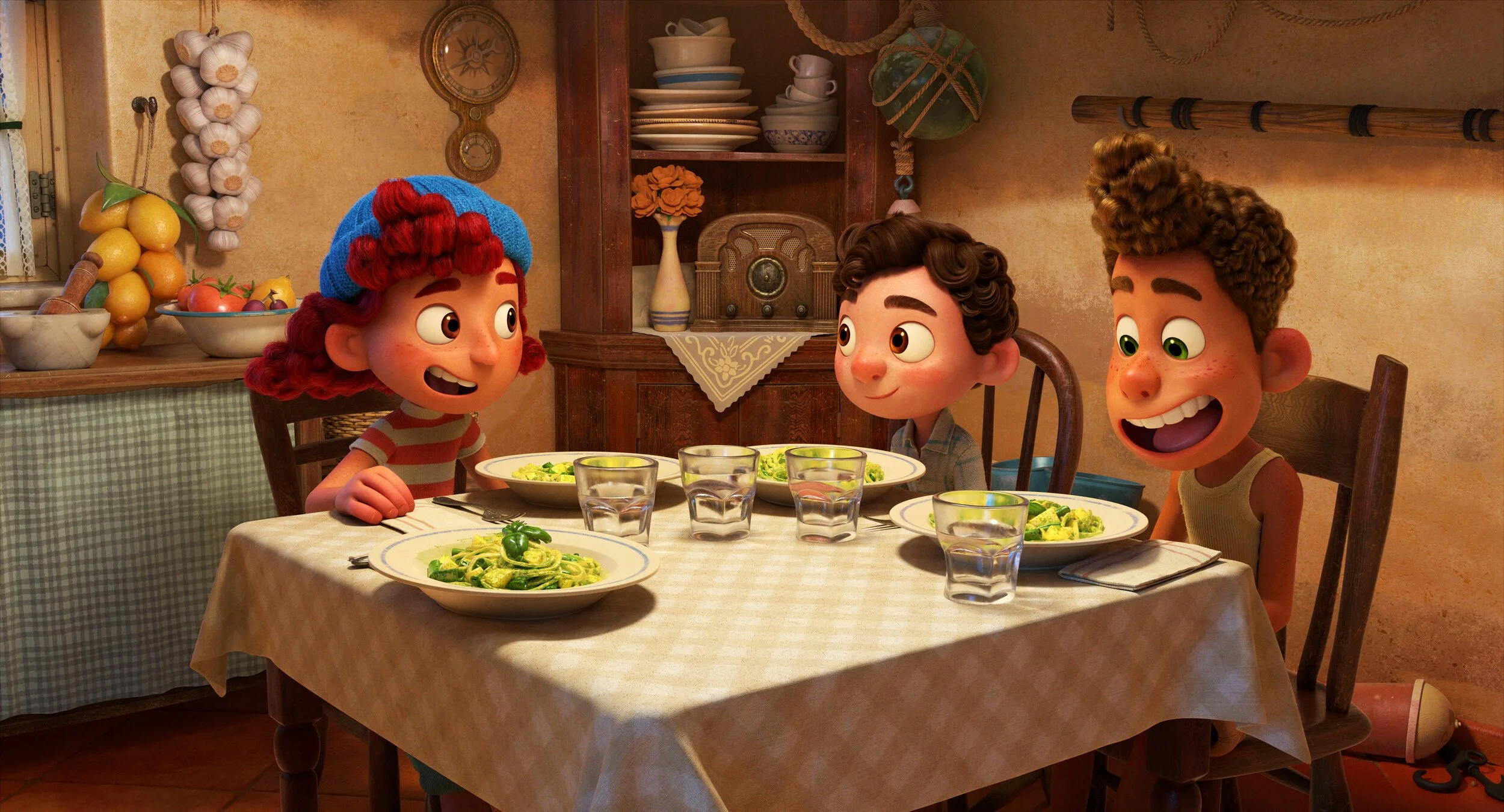
In its short 96 minute runtime, there are story elements I thought were pretty weak, or in need of some fine-tuning so all the pieces can click. The movie already moves at a fast pace, and at times so does the development of the relationship which Luca shares with others. Shortly after Luca swims away from home, his parents (Maya Rudolph and Jim Gaffigan) go on a quest to find him. The typical parent-finding-lost-child (Finding Luca) subplot, and everything regarding his parents is not that impactful. They are reduced to a running gag until it's convenient to the story. While they’re funny, they could’ve been more assistive to the plot, but it’s difficult due to little establishing of a distinct relationship between them and their son. When Luca and Alberto befriends Giulia (Emma Berman) who invites them to stay with her and team up for the triathlon, a rift begins between the two fish-boys. It’s relative to see where it all stems from when you’re aware that each boy has their own dream above the water. While it does work thematically, I think Alberto got too envious far too fast.

Disney would not see heaven for not putting this in theaters. God, I’d give anything to witness this gorgeous film in a theater. I’d even put on 3D glasses to savor the detailed animated environments. There’s no excuse to not have this both run in a theater and on Disney+ simultaneously. Two original Pixar movies in a row, first Soul and now Luca, getting the straight-to-streaming is straight-up violence. If you guys send Domee Shi’s Turning Red to the service, I, too, will be turning red. All in all, Enrico Casarosa’s Luca may be small in scale and unbalanced in story, but its heart is absolutely huge and its capturing of the classic family animation storytelling is beautiful. It’s a great slice-of-life that is a love letter to Italy, summer, and the life-long bonds we make during the season.