
‘Knock at the Cabin’ Review: Killing of a Sacred Queer
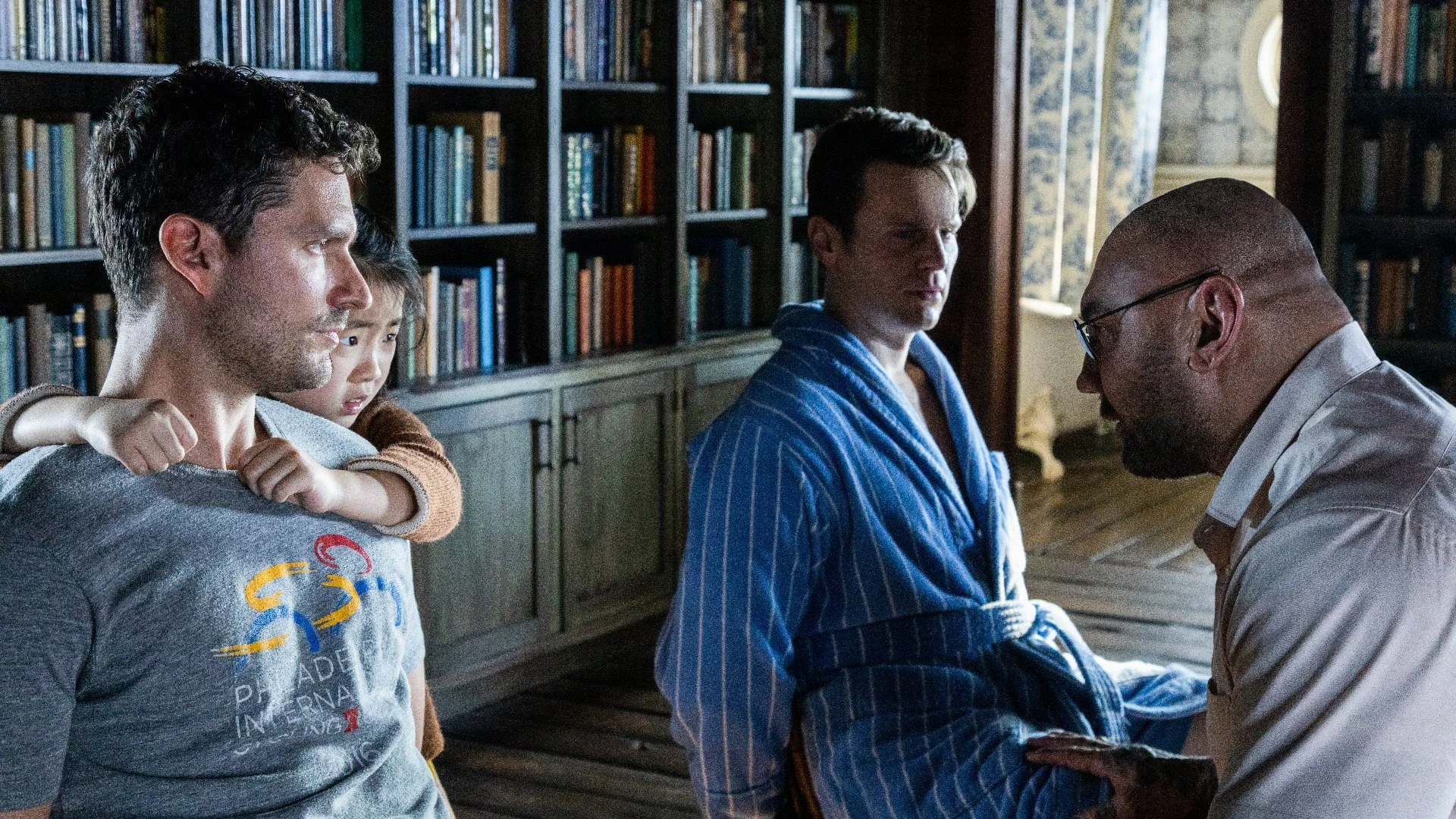
Knock at the Cabin
R: Violence and language
Runtime: 1 Hour and 40 Minutes
Production Companies: Blinding Edge Pictures, FilmNation Entertainment, Wishmore Entertainment
Distributor: Universal Pictures
Director: M. Night Shyamalan
Writers: M. Night Shyamalan, Steve Desmond, Michael Sherman
Cast: Dave Bautista, Jonathan Groff, Ben Aldridge, Nikki Amuka-Bird, Kristen Cui, Abby Quinn, Rupert Grint
Release Date: February 3, 2023
In Theaters Only

The quality of M. Night Shyamalan’s projects within the past decade has given me comedy and tragedy mask energy. I’m over the moon on the rare occasion that Shyamalan makes a good movie. His inconsistency knows no bounds, yet I keep returning to him like a toxic ex. With his latest feature Knock at the Cabin, based on the Paul Tremblay horror novel The Cabin at the End of the World, Shyamalan offers his most mature, poignant, and surprisingly human horror tale to date. I know, what a twist!

Eric (Jonathan Groff), Andrew (Ben Aldridge), and their daughter Wen (Kristen Cui) are on a quaint family vacation in a cabin in the woods of Pennsylvania. Wen is approached by Leonard (Dave Bautista), a calm yet intimidating man who informs her that she and her dads are the only people that can help him save the world. She was taught the perils of stranger danger, so she runs inside the cabin and warns her dads of the people lurking in the woods. Leonard and his three colleagues—Redmond (Rupert Grint), Sabrina (Nikki Amuka-Bird), and Adriane (Abby Quinn)—invade their vacation cabin and hold them hostage. Leonard tells the family that one of them must be sacrificed to prevent the end of the world. Failure to comply means a series of plagues for humanity.
Knock at the Cabin is a single-set bottle story. There are moments where it could easily veer into the melodramatic territory, which evokes the feel of a stage adaptation more than anything else. Thankfully, the dialogue, direction, and ensemble steer it away from that area. Dave Bautista steals the show as Leonard. His calm demeanor and intense delivery as the leader send chills down your spine. He's incredibly frightening and oddly comforting, and that uncertainty within his character creates most of the tension. Leonard is Bautista’s career-best performance to date.
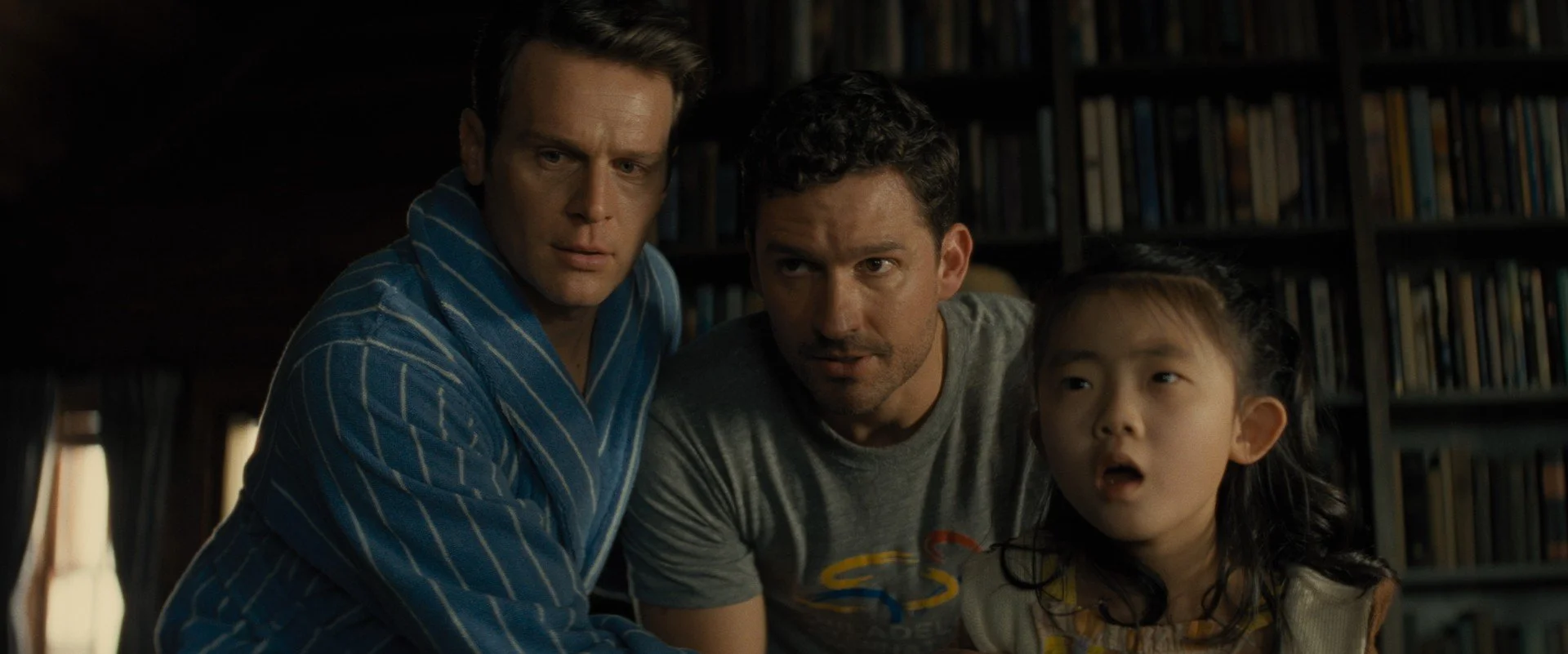
Jonathan Groff and Ben Aldridge deliver fine performances as the couple whose valid skepticism is tested throughout. Flashback scenes from Eric and Andrew’s marriage are integrated during tense moments. The portrait of their love and life together, along with their flaws, are nicely detailed, and every decision they make in the present feels natural and aligns with their personalities. Groff displays a sweet tenderness while Aldridge is apprehensive. Both are relatable given the bizarre situation they’re in. Eric and Andrew are an unlucky but loving couple who were in the wrong place at the wrong time without falling into the tortured queer trope.
Shyamalan knows how to get good performances out of child actors (except that one time); Kristen Cui is no exception. She’s excellent, blending childlike innocence, precariousness, and a natural fear that elevates the stakes.
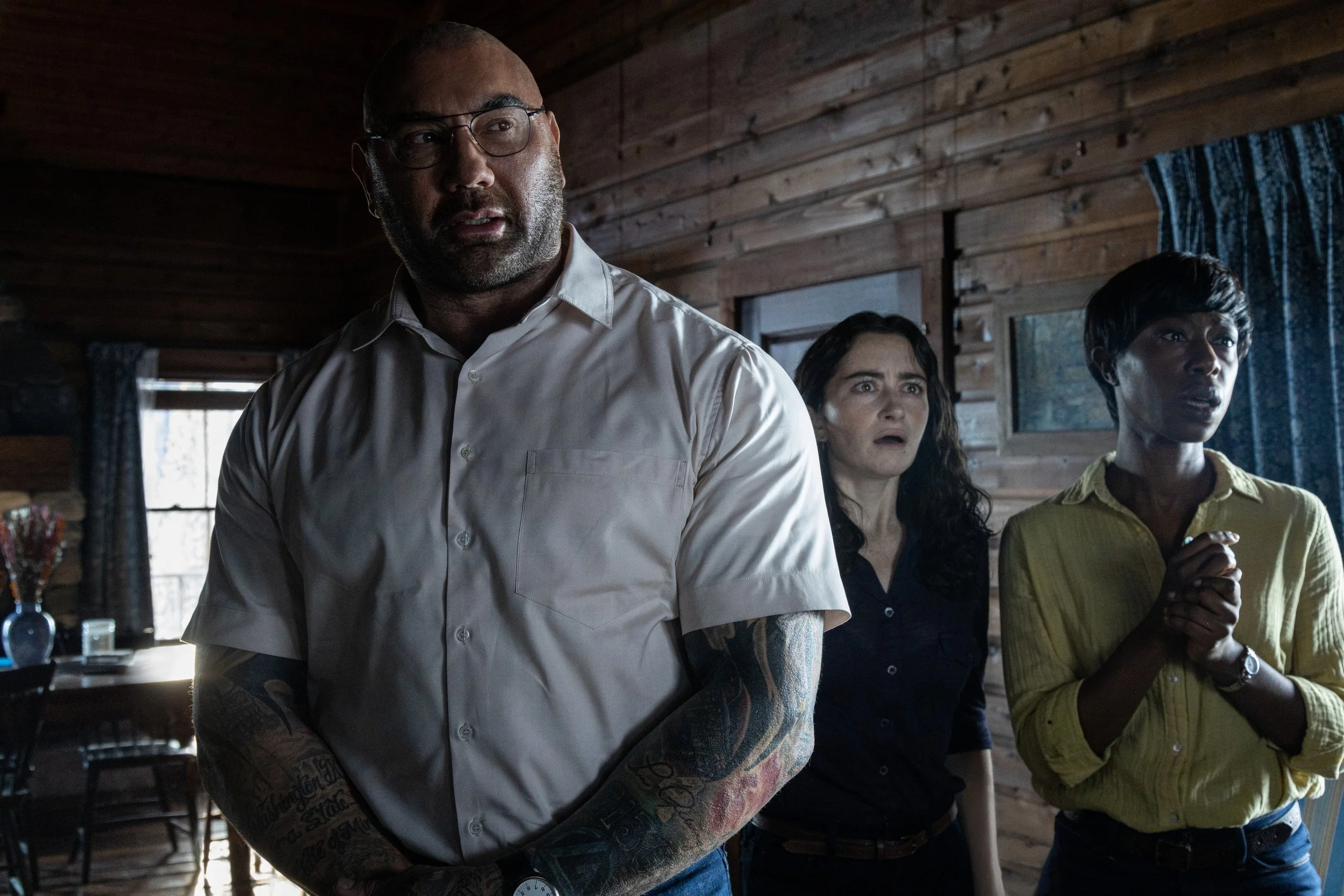
The rest of the ensemble, including Nikki Amuka-Bird, Abby Quinn, and Rupert Grint, delivers a combination of intensity that pairs well with the tone. Everyone operates on a shared anxiety so well-executed that I developed my own migraine. It was nice to see Abby Quinn add a nurturing factor to her character that never came across as over-the-top. I would love to see her in more projects.

Shyamalan's direction shines brightest in a single-set narrative. Films like The Visit, Split, and Old thrived under his direction, which evokes a dreadfully claustrophobic vibe. Those attributes carry over to Knock at the Cabin. As Eric, Andrew, and Wen are taken hostage by the doomsday preppers during the opening invasion scene, Shyamalan provides expert camera movement that takes full advantage of the cabin’s space to portray the couple's fear. The cabin isn’t tiny, yet with the number of people occupying the room, I was impressed by how the shot composition—including oners, dolly movement, and sweeping camera angles—elevates the thriller elements. Despite the film’s R-rating and body count, Shyamalan shies away from gratuitous violence and keeps this thriller about humanity in a grounded atmosphere.
Knock at the Cabin is the most mature film in Shyamalan’s filmography to date, yet it was in dire need of another pass to nail the emotional heft it aims for at the climax. Screenwriters M. Night Shyamalan, Steve Desmond, and Michael Sherman offer a balanced tone of terror and dark humor that slowly burns into seriousness. The placing of Eric and Andrew’s flashbacks within their scenario hardly disrupts the pacing. That said, the writing for those scenes falls flat. The writing trio glosses over the nurturing of Wen, and moments, where their marriage is on the rocks, bear too much familiarity to other works.
If you’re expecting this to be a trademark plot-twisty Shyamalan film, you’ll be disappointed. It’s not a complete departure like After Earth, but it falls into the lines of contemporary Twilight Zone episodes, which I dug. By the 30-minute mark, you can easily guess what the four strangers represent. I’ll admit that the revelation is executed poorly but everything leading up to it is thoroughly engaging as it is intense.

I’m pleasantly surprised by M. Night Shyamalan’s Knock at the Cabin. It’s a refreshingly solid, brilliantly directed psychological thriller that showcases the talents of its featured ensemble while crafting a unique tale of love and sacrifice.

