
Joker Review
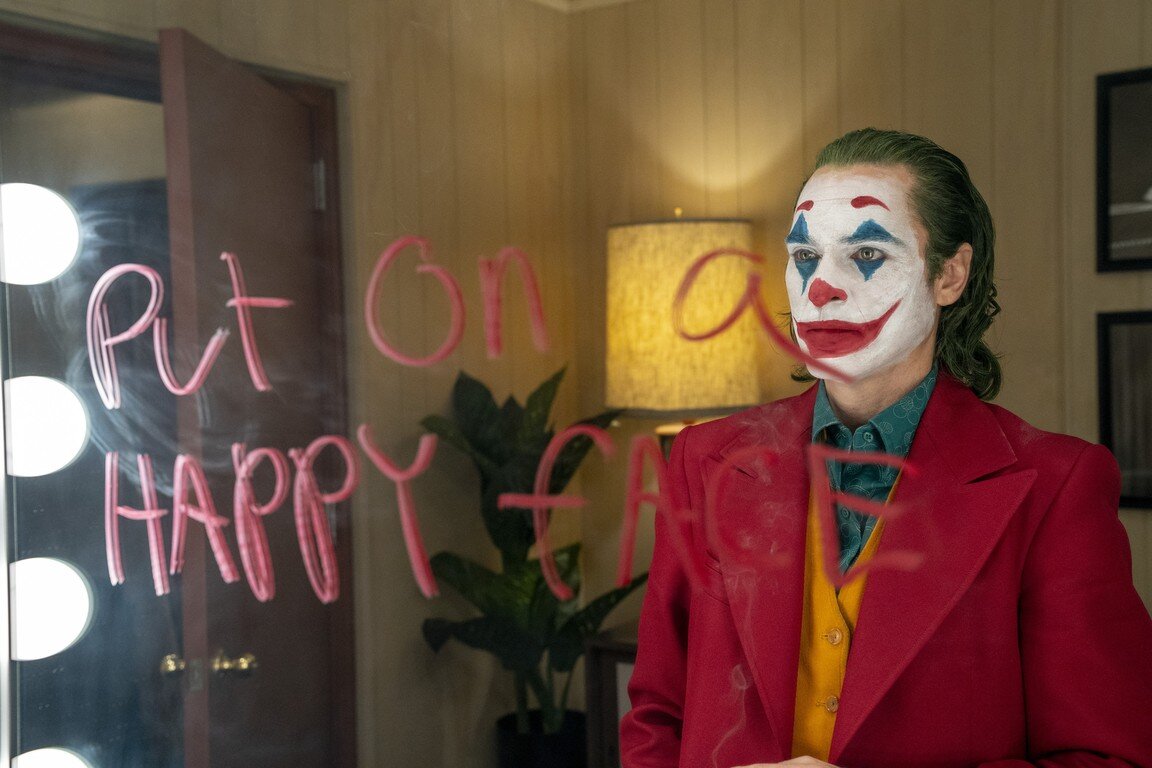
Joker centers around the origin of the iconic arch nemesis and is an original, standalone story not seen before on the big screen. Todd Phillips' exploration of Arthur Fleck (Joaquin Phoenix), a man disregarded by society, is not only a gritty character study but also a broader cautionary tale.
R: Strong bloody violence, disturbing behavior, language, and brief sexual images
Runtime: 2 Hours and 1 Minute
Production Companies: DC Films, Village Roadshow Pictures, Bron Creative, Joint Effort
Distributor: Warner Bros. Pictures
Director: Todd Phillips
Writer: Todd Phillips, Scott Silver
Cast: Joaquin Phoenix, Zazie Beetz, Robert De Niro, Marc Maron, Frances Conroy, Brett Cullen, Bill Camp, Glenn Fleshler, Douglas Hodge, Josh Pais, Shea Whigham, Douglas Hodge, Dante Pereira-Olsen
Release Date: October 4, 2019
God, it feels as if this movie has been out forever. Its official release isn’t until Friday and yet, it felt like I had already seen it because of the tedious discourse leading up to it. Does it incite violence? What political commentary does it stir? What was Joaquin’s preparation for the role? What does it mean for the DC Universe? Like, I’m done. I’m tired. It was so hard not to walk into Joker—which was at some point one of my most anticipated movies of the year—without feeling exhausted by the controversies leading up to its release. Now I’ve seen it. I’m done with it. I don’t care. Take this review as you will, but let it be known… I didn’t like it. The more I think about it the more I don’t like it. But you know my format. Let’s get into some of the positives first.

Joaquin Phoenix is the film’s ringleader and by God does he put on a show. Despite how Arthur Fleck is written, Phoenix puts his all into his performance, making him ruthlessly terrifying and vigorous to watch. He exhibits the defining, unflinching turbulence and grandeur of the character in such a distinct way where he makes it his own. He nails the signature laugh of the character and presents him in a manner that never feels completely sinister nor completely sympathetic. He walks that line where he travels as this deranged man who slowly finds his calling in the fucked up world he lives in. The way he exhibits his pseudobulbar affect disability is well done and spot on.
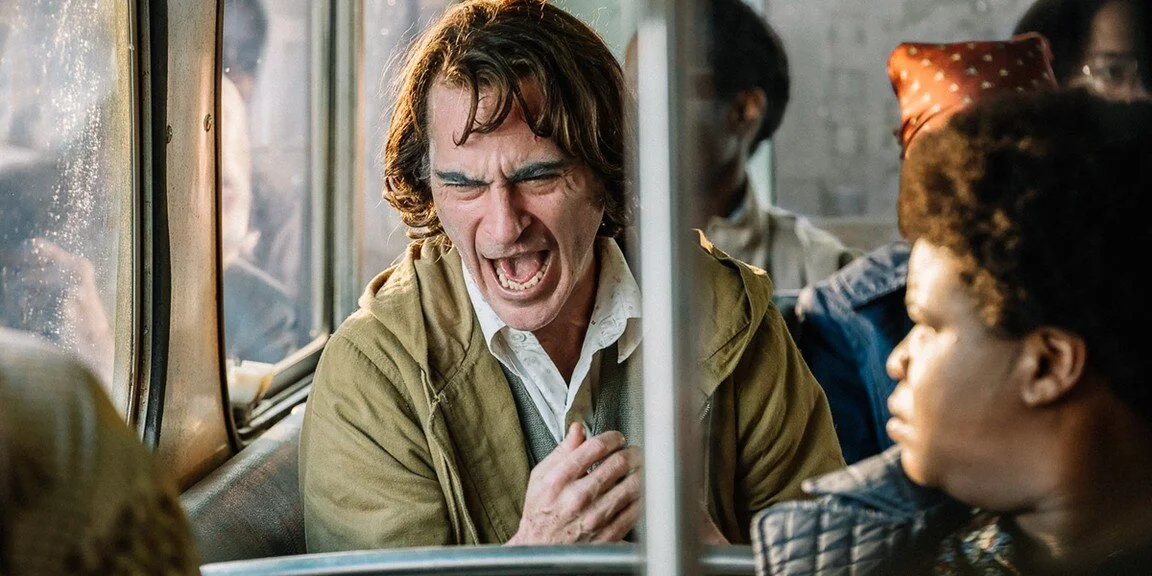
You gotta hand it to Todd Phillips, he knows how to make a movie aesthetically pleasing to look at, to say the least. The cinematography is beautiful. Though the city of Gotham is the most New York City-influenced in the comic book world, Phillips gives it a distinguishable gritty, vicious look with an aggressive atmosphere to match. Arthur’s surroundings are often foggy or riddled with trash, depicting the grim nature of his life and his world. Oscar the grouch would’ve wallowed in this city. You feel as if you’re in his shoes, navigating through his fucked up world and, most of all, inside his unstable brain. Another element that benefits the look of the film is Hildur Guðnadóttir’s score. Holy shit, if there’s anything that I do love about Joker it’s Hildur Guðnadóttir’s score. It’s heavily dependant on strings, but the blaring tunes and the arrangements that soundtrack Arthur’s manic lifestyle go hand in hand, which makes some scenes where he’s in dominant control or in utter heartbreak ever so effective. There are sparse moments of subtlety where you’re watching Phoenix do his thing (when he’s not dancing around) and the music perfectly aligns with his mood. The few genuine chills I got stemmed from Phoenix's performance and the score in the background.

From a conceptual standpoint, Joker certainly had the pieces to be a phenomenal film. It has the star power of its powerful lead and the ‘70s Scorsese-style aesthetic to match. For DC, this is a great departure from their current works, but this did not need to be in the hands of Todd Phillips, a director whose recent ambitions are so egregiously self-righteous that only his fans will get a kick out of this. Now, if only this was placed in the hands of a competent screenwriter—or in this case, two writers—who knew how to tell a compelling story.
I don’t have a problem with Phoenix’s performance. On the contrary, he’s the primary factor that keeps this film rolling. It’s Phillips’ direction that damages the effect of his performance. Every Joker has their signature shtick and Phoenix’s is more ballet-based. He tiptoes his way to insanity (there are sequences of him literally tiptoeing and doing expressional dance, which is fine), but it becomes pretentious so quickly, for there are ample sequences of it that pad out the runtime long after Phillips made his point with Fleck’s mental freedom. I get that his ballerina-like dance is his shtick, but he dances in four separate scenes that play out in slow motion and you get the same closeup/low angle shot of Phoenix's boney body. Also, most of the sequences feature a shirtless Phoenix as if to go, “HEY, LOOK! HE LOST WEIGHT FOR THIS ROLE! GIVE HIM THAT OSCAR NOM! HE TRANSFORMED HIS BODY!” After a while, this holds the same significance as Mr. Meeseeks' introduction.
It doesn’t help that he does bizarre, unexplainable things that are more nonsensical than menacing or unsettling, such as hiding in his own fridge or crossing out “forget to” in at a sign that says “don’t forget to smile” so it could read “don’t smile” because hey, he’s edgy.

Besides that, I don’t mind the Joker character. I have no quarrels with him. Now, the main detriment to the movie is its own incoherence as it tries to cram in so many ingredients. It attempts to make a statement about classism and societal chaos, being a compelling origin story for the clown prince, and tying everything to Batman’s world. Blending all those elements together results in a very messy execution that barely hits the effect it’s ambitiously aiming for.
How does one hold a mirror up to society (the aristocrats and the commoners) and have them all act exactly the same (awful violent savages) with no significant difference in depiction other than wealth? Arthur navigates through Gotham as he’s ignored or treated like trash by everyone. In the intro, some kids steal his sign and he proceeds to chase them down. He gets his ass handed to him and later on he’s beaten down by upper-class business guys. Once he actually takes action, his one act of cathartic release is seen as a statement because of their economic status. But then it becomes something else. If you cross him, he will kill you—or he’ll put a pin in it and THEN kill you—no matter how much wealth you possess. Now, Phillips gets that aspect of the character right AND wrong because his actions are often justified. The film takes the broadest of routes to begin the killings so you won't feel emotionally detached from him, which justifies his actions as well. Like, it’s the Joker. I don’t want to be manipulated into feeling Arthur’s justifications for his murders.
The film hamfisted a statement about class with no logical meaning outside of the obvious, with crowds of people in clown costumes holding signs that say things like “RESIST” (resist what exactly?) and being so blinded yet so belligerent about it, like an edgy kid who just doesn’t know why he’s edgy. Also, don’t show this to any unfunny White standup comic because they might put this down as their favorite movie of all time in their Letterboxd.
Low-class people are aggressive, angry animals and upper-class people are also aggressive assholes. Everyone is an asshole, so who do you want viewers to fucking stand with? It's funny because the film also descends into a race problem to coincide with the class. Whether intentional or not, it's pathetic that everyone Arthur interacts with as a low-class citizen are Black people because, stereotypically, they’re poor. That’s their role. They exist solely to convey his low-class stature. Even his “love interest” who lives next door is Black.

Speaking of Black people with thankless roles, Zazie Beetz was wasted as a character who doesn’t need to be there at all and serves no purpose. Like, she’s so insignificant that you don’t even know her name until the credits roll. She portrays Arthur’s love interest, which starts as a lame subplot that serves absolutely no purpose outside of the obvious. Her presence is so fantasy-based that when a twist regarding her character eventually drops—thinking it pulled off an impressive trick—you’re not shocked or surprised. The twist is presented rather well, but the entire narrative would’ve done better without it. Also, Brian Tyree Henry appears in an even more pointless role. I’m talking just one scene and that’s it. You can’t fucking waste Brian Tyree Henry, especially while he’s out here making a name for himself.
At its worst, I felt that the film was irresponsible. It’s irresponsible in the handling of the environment and forced political message that distracts from Arthur's main story of finding his belonging. Phillips overexerts himself while trying to say something, but he just doesn’t know how to without resorting to violence as the justifier. And if you’re saying, “But Rendy, no movie can make a statement about class and be violent at the same time” or, “It’s paying homage to Taxi Driver,” may I direct you to two movies that are similar to Joker in many respects?
Last year, 2018, Lynne fucking Ramsay dropped the hammer (literally) with You Were Never Really Here, a smaller-scale film starring Joaquin Phoenix in a dark Taxi Driver-esque NYC thriller as a guy with mental issues, psychological trauma, and as a caregiver to his sick mother who goes on a violent rampage all over town to rescue a sexually abused little girl from disgusting corrupt politicians.

There’s also a remarkable movie coming out called Parasite which is a very dark, unsettling narrative that is disturbing and violent while making a statement about classism and self-arrogant behavior. It’s a movie where every individual character is a bad person, but they’re distinct and set in a society where they’re forced to fight to survive.

There are so many other substitutes that tackle the same themes but are well developed and thought out, told through their own distinctive personalities without dumbing themselves down for audiences. These are movies that build-up to their own chaos and drop bombshells effectively. Violence be damned. I like myself a little chaos, but chaos that’s built up organically, not stemming from social statements that aren’t even clear.
At the end of the day, this feels like a Todd Phillips movie. It feels like the same filmmaker who has learned nothing from his Hangover days. If only this project had fallen in the hands of somebody who knew how to write good dialogue and could develop a good story featuring characters with depth besides the lead. But damn, this was just so ill-conceived.
Now, here’s Myan with her take because she’s the DC nerd who has better insight into the character than I do.

I have had a love/hate relationship with Joker since the first trailer dropped. On one side, my favorite thing about the Joker is that he generally has no backstory and he exists solely to cause mayhem (and to give Bruce Wayne headaches). Therefore, I wasn’t too thrilled that Todd Phillips wanted to poke into his past and give him a reason to be who he is. On the other side, I was convinced that Joaquin Phoenix would be a stellar Joker and that he would bring a brilliant twist to the famous villain. After viewing the film, my opinions still sit on that same love/hate fence where I disliked many things about it and liked several others.
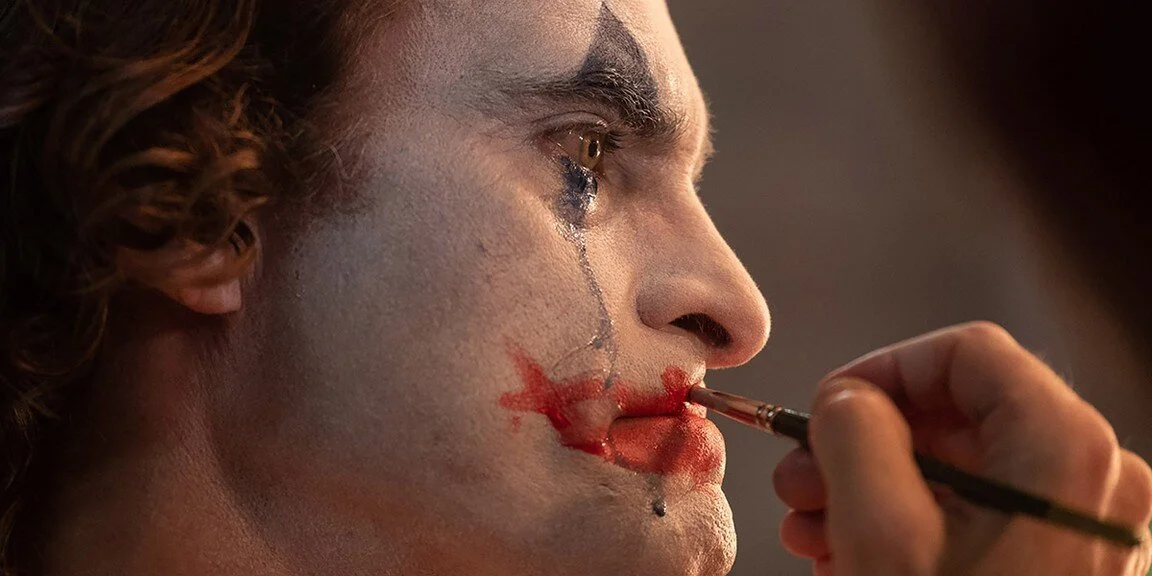
As was expected, Joaquin’s performance is excellent. He puts on a chilling show that made me visibly uncomfortable at times, which makes sense given the villain he’s portraying. The Joker—as glorified as he is—has always been an unsettling character, whether it be in the comics, in cartoons, or in his live-action appearances. The only exception to this would be the disgrace that is Jared Leto’s “Joker”, if one could even call him that. When all is said and done and Arthur Fleck rises into his full-blown Joker persona, he joins the ranks of Heath Ledger in terms of intensity and madness. Unfortunately, everything leading up to that is incredibly muddled and convoluted.
One of the most prominent aspects of Fleck’s background is his mother (played by an incredible Frances Conroy, who I’ve had a soft spot for since her American Horror Story days), but the route that the writers chose to make a Wayne connection is built upon an unsteady foundation. Joker and Batman go hand and hand; you can’t tell one’s story without mentioning the other. Sadly, Phillips takes some liberties with their connection that doesn’t really add up to anything significant. It attempts to be some sort of social commentary about the rich and the poor and yadda yadda. We all know that narrative. Everything that’s supposed to mean something has a hard time finding its footing, so all of the edgy commentary on society ends up being cringeworthy.
The most frustrating thing about Joker is that excellent ideas and concepts were present in bits and pieces, even within its messy narrative, but the writing simply wasn’t up to par. You can’t hand such a complex character to a bunch of filmmakers who clearly don’t know what to do with him. It’s like taking the keys to a high-end luxury car and handing them to a ten-year-old whose only driving experience involves Mario Kart.
In all honesty, I didn’t fully hate Joker. Phillips does his damn best to ruin the film in many ways, but the lead (ironically) saves the day, though not by much. Joaquin deserved a solid script and a worthy director. I had a vivid daydream about what this Joker could’ve been under the guidance of someone like Christopher Nolan, perhaps as part of a talented ensemble cast with great roles. Unfortunately, that’s all that’ll ever be: a daydream.

Similar to slamming mismatched jigsaw pieces together and not knowing how to make them fit, Todd Phillips’ Joker is a confused and muddled mess that irresponsibly crams in way too many underdeveloped themes in an immature manner, making for an egregiously incohesive narrative.

