
Honey Boy Review
R: For pervasive language, some sexual material and drug use
Studios: Amazon Studios, Automatik, Stay Gold Features, Delirio Films
Runtime: 1 Hr and 33 Minutes
Director: Alma Har'el | Screenwriter: Shia LaBeouf
Cast: Shia LaBeouf, Lucas Hedges, Noah Jupe, FKA Twigs, Natasha Lyonne
Release Date: November 8, 2019
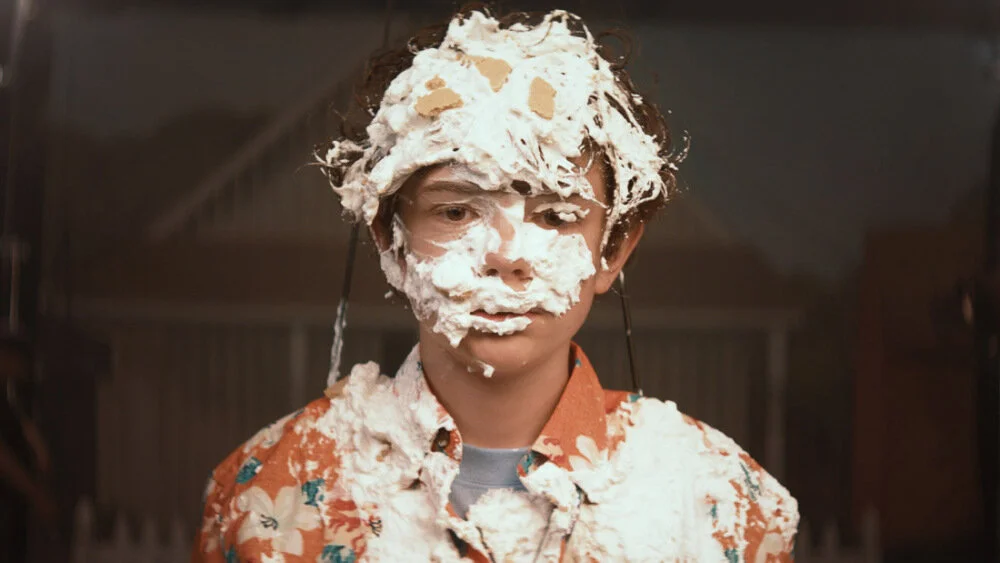
When 12-year-old Otis starts to find success as a child television star in Hollywood, his ex-rodeo-clown father returns to serve as his guardian. When Otis isn’t on set charming audiences, he spends his days with his father at an extended-stay motel on the edge of the city, enduring his overbearing father’s abuse. Honey Boy follows two threads of time, watching father and son's contentious relationship and their attempts to mend it across the course of a decade.
Shia LaBeouf is a major personality that always seems to find his way into the tabloids. Whether he puts a paper bag over his head at a red carpet, becomes an inspirational meme, or even installs an exhibit outside of The Museum of Moving Image, LaBeouf always finds a way to be seen but never in the same vein as he does with his first written feature debut, Honey Boy.
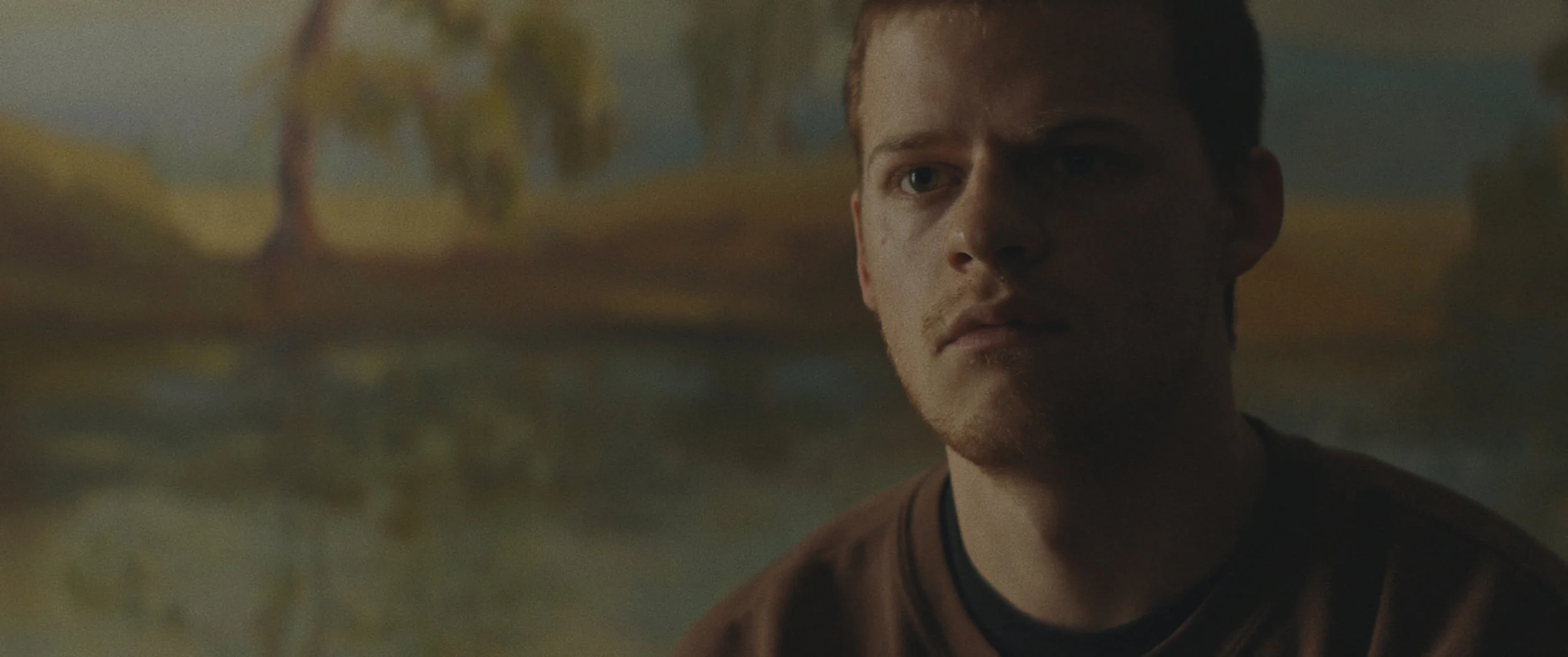
The film centers on Otis and immediately confirms this character is a fictional representation of LaBeouf, especially with the strong cold open where a montage of his erratic lifestyle as an actor plays. This leads him to rehab, the place he must reside in to face his past. Lucas Hedges portrays the older Otis and he impressively displays the same mannerisms as LaBeouf, down to his cadence whenever he speaks.
The film doesn’t dedicate too much time on older Otis, meaning Hedges doesn’t get much screen time. Instead, it focuses more on his youth as a child star who lives with his abusive alcoholic father and the struggles they go through. The breakout shining star of the film is Noah Jupe who delivers a magnificent performance as he stands his own ground. In the midst of this terrible environment that young Otis lives in, Jupe brilliantly captures the childlike innocence that he desperately desires even when adult situations are forced upon him. This 12-year-old kid being forced to depart from childhood in order to survive his father adds another layer of tragedy in this story and Jupe walks a perfect line that not many child actors can. Whenever the film cuts from a segment of 12-year-old Otis to 22-year-old Otis, you heavily sympathize with him and the person the film is based on.
What makes this narrative really effective is the original screenplay LaBeouf provides. As the story plays out, it becomes evident how much of the writing comes from a real dark place that is raw, haunting, yet true. Family toxicity is real, but not many storytellers have the courage to express it or go in depth with it. The only series which I can compare this to is Bojack Horseman (which I mention way too many times on this site, but it proves how many layers that show has that nobody discusses.) Their relationship is unhealthy where Otis’ primary objective is to make his narrow-minded dad proud and he has to sacrifice a lot in order to do it. It's a heartbreakingly raw representation of abuse for whoever has experienced it and can relate to it. It has a similar authenticity to A Star is Born where, even though the leads are in the midst of stardom, the drama they deal with is relevant to an audience in ways that they can relate to. How Otis and his father James interact will resonate with other people who are from broken families, especially with the way a conversation will sometimes escalate into a full-blown argument.
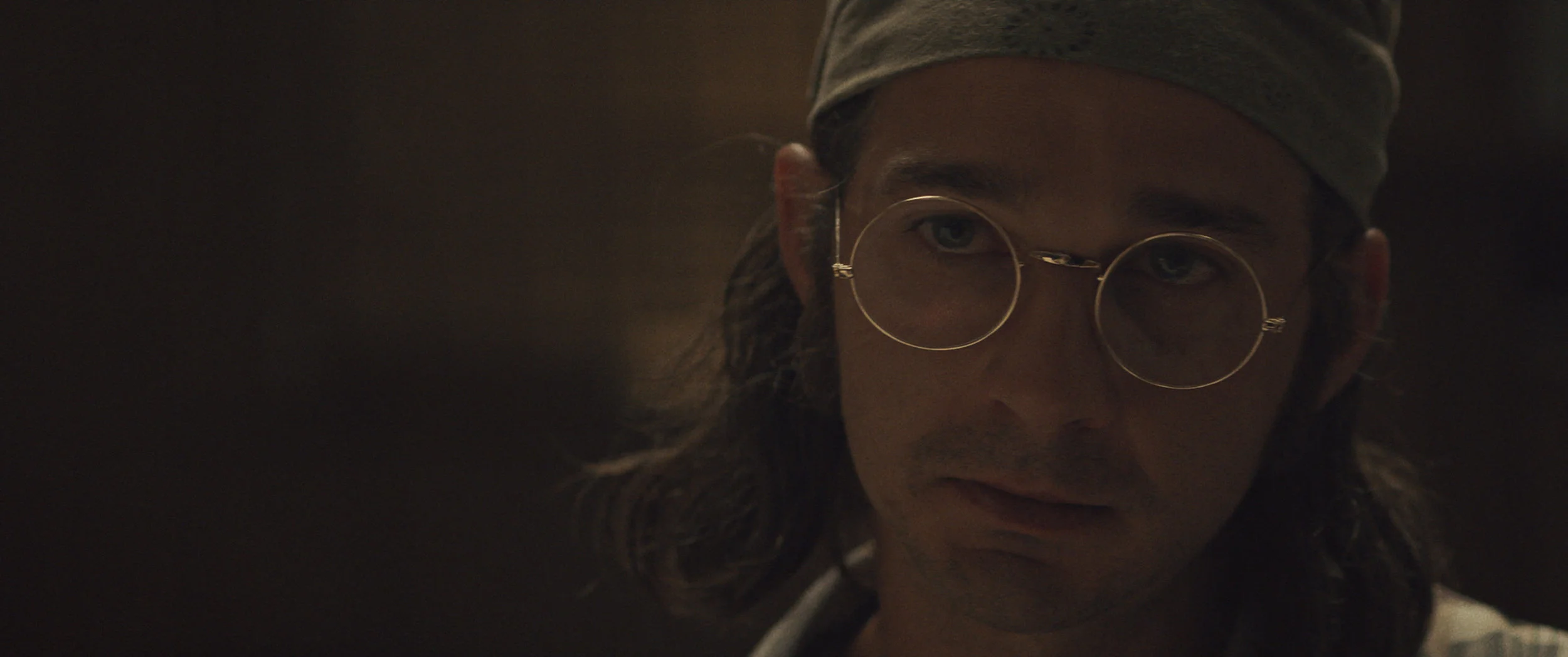
Funny enough, last week I watched Surf’s Up on Hulu and made a post on LetterBoxd claiming it was LaBeouf’s best movie. That has been proven to be true no more. LaBeouf has always been a rather great, if not underrated, actor. He’s displayed an impeccable amount of range in his last several projects, but Honey Boy is his true winning performance. Besides providing the script, he portrays Otis’ dad James. LaBeouf unrecognizably takes on a completely different personality in a way we’ve never seen portrayed from him before. It’s also rather bold how he takes on the responsibility of playing a representation of his own father. To portray the person who is the reason behind your PTSD is brave as a both an artist and a person. It feels as if it was a form of healing for him, but while doing that he gave a hauntingly powerful performance that will surely linger on towards the end of the year.
If there was a ranking of worst parents in cinematic history, James Lort would take the cake right next to Halley from The Florida Project. James is impulsive, inconsiderate, irresponsible, and many other negative adjectives that begin with the letter “i”. To see how toxic this one man is and for his child to be the total antithesis of him is heartbreaking. Similar to Halley, while they are shitty parents, there is a gut-wrenching mesmerization where you anticipate the unpredictable actions they’ll do next. Even the environment plays an intricate part to this kid where he lives in a trashy single-room shack amongst hookers and other bad influences in the underrepresented slums of LA. Yet, the people around him care for him more than his father. He even develops a relationship with an older neighbor. It may make you feel uncomfortable at first, with a vibe similar to Mid90s, but there is a heartwarming turn that makes their relationship the best, for she is the only figure of bliss that he has.
All of my praise for the performances are stemmed from the magnificent direction by Alma Har'el. For a directorial debut, she showcases her ability to get legendary performances out of her entire ensemble making her one of the powerful voices who is surely to get her name around throughout the rest of the year. If you’ve seen any of her works, most specifically the Sigur Rós music video Fjögur Píanó which LaBeouf also starred in. In that music video, Har’el captures humanitarian vulnerableness in an authentically beautiful manner while bursting with experimental creativity through her lens. I encourage you to watch all of her other works prior to seeing this because the way she tells stories is distinctive and how she exhibits raw human emotion where you analyze the emotions of her subjects along with the situation they’re set in gives you an understanding as to why Shia trusted her to help tell his story. All of her techniques as a visionary and a storyteller through her music videos are translated here and it’s masterful.
I’m going to be honest... this movie wrecked me. Not like your regular shed-a-tear wreck me, but the wreckage of full-on weeping in the theater. When I walked out once the film was done, there was a stream of dry eyes on my face as I went—
Har’el captures the true horrifying experiences of many children who have suffered from varying forms of abuse and LaBeouf's script pulls no punches from reality. This is a reality that I personally resonated with, as will a lot of other people. It sucks to be a person who works his way up to success and notice the absence of love from that parent you want to make proud, which naturally psychologically fucks you up in the unprecedented future. There is a powerful scene where older Otis admits to his therapist that he’d rather embrace his pain instead of strip it away, because it’s a part of who he is. It’s a brilliant relation to the Tennessee Williams quote, “If I got rid of my demons, I’d lose my angels,” and it rings true. LaBeouf was able to confess that through his writing and his performance. With each frame, you feel that this is his healing process it’s going to be inspirational for many storytellers.
To face your demons is a difficult feat but Alma Har'el’s Honey Boy allows Shia LaBeouf to do so with his phenomenal script and incredible performance. With an unforgettable ensemble and a heartbreaking, yet profound, personal narrative, it displays a welcoming side of Shia that you’ve never seen before and look at a different light from now on.

Rating: 5/5 | 96%
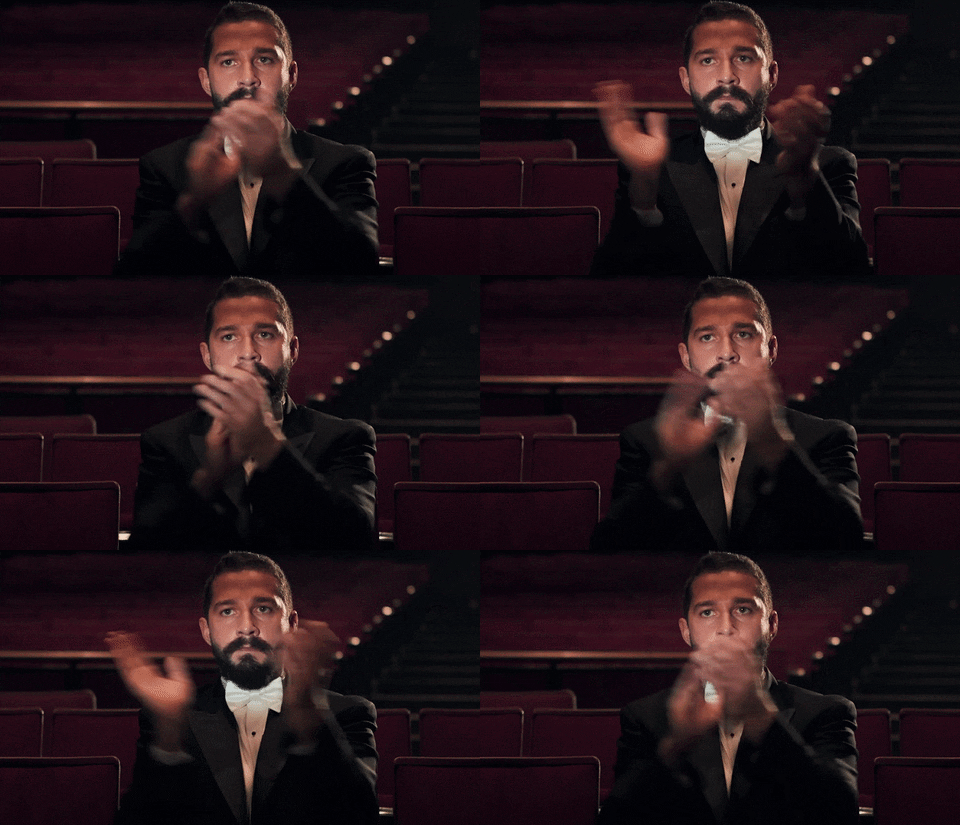
The irony of using a Shia gif for a Shia movie.
