
Harriet Review
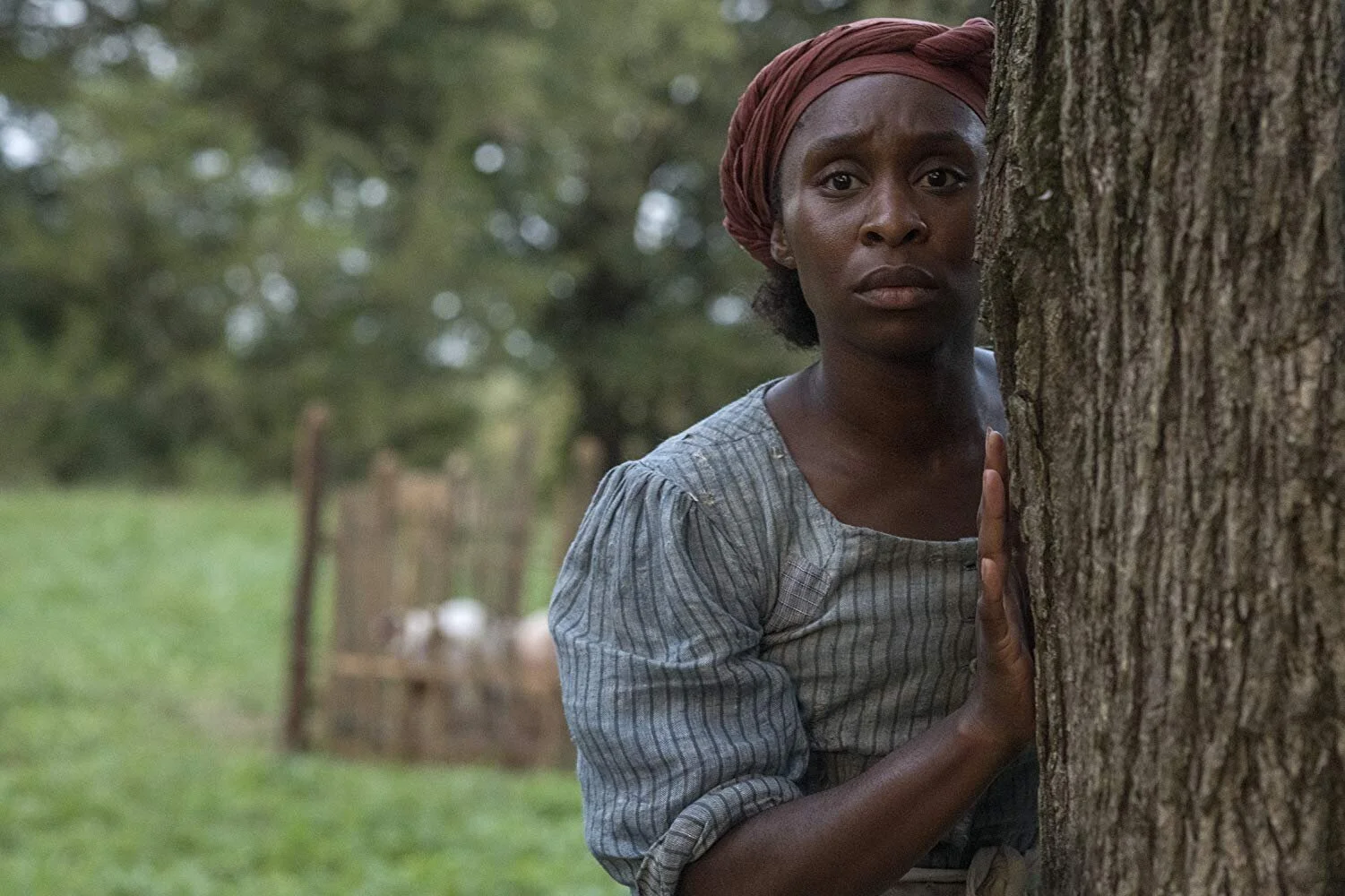
Based on the thrilling and inspirational life of an iconic American freedom fighter, Harriet tells the extraordinary tale of Harriet Tubman's escape from slavery and transformation into one of America's greatest heroes. Her courage, ingenuity, and tenacity freed hundreds of slaves and changed the course of history.
NR
Studio: Focus Features, Perfect World Pictures, New Balloon, Stay Gold Features
Runtime: 2 Hours and 5 Minutes
Director: Kasi Lemmons | Writers: Gregory Allen Howard, Kasi Lemmons
Cast: Cynthia Erivo, Leslie Odom Jr., Joe Alwyn, Janelle Monáe
Release Date: November 1, 2019
I’m genuinely shocked that, over the course of history, there has never really been a Harriet Tubman biopic. It’s not like one was necessary to begin with; she is a historical essential to African-American history whose stories are better read than watched, especially now that the slavery narrative has been played out to death. Believe me, Black people are friggin’ done with watching slavery movies. But hey, I guess you might as well do it now rather than never. Congratulations, Hollywood. You did it. You made a Harriet Tubman biopic. Now, let's retire the slavery narrative, especially the ones as generically formulaic as this.
European performers are so good at delivering that American accent. It’s outstanding how they convincingly deliver incredible performances, especially when they take on the role of a historical figure. David Oyelowo is a primary example of this. He’s notably known as MLK thanks to Ava Duvernay’s Selma, but then you hear him speak with that unexpected English accent. The same applies to Cynthia Erivo. Even though she’s a British performer, we usually see her in projects where she’s required to have an American accent, specifically a Southern one. She donned one for 2018’s Bad Times at the El Royale (where she delivered an impressive breakout performance), and she does it again in Harriet.
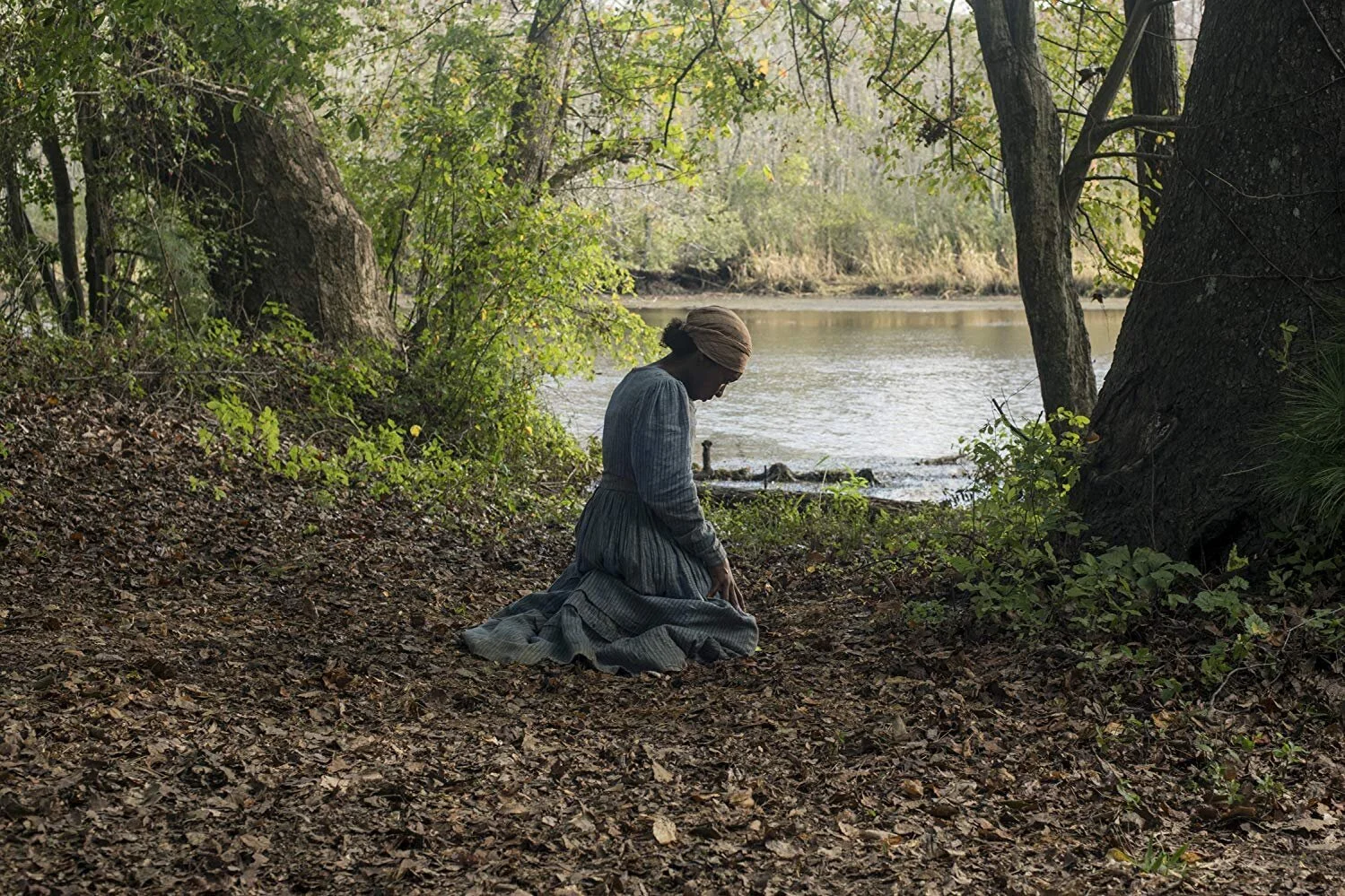
If there is anything worth applauding for in Harriet, it’s Cynthia Erivo’s performance. This is her major lead role and she captures the rich determination, persistence, and conviction that was present within the historical figure. Director Kasi Lemmons does a decent job at depicting Tubman as a human being more so than an iconic character through her direction. The story is primarily set through her experience; the longer you witness her expedition to freedom, the more you comprehend the change in her behavior and growth in character. Granted, the film takes poor and questionable routes to express her personal growth, but Erivo delivers that power all the way through, depicting her as the badass that she was. Even though the material she’s given is weak, Erivo gives it her all and once again proves that she’s an incredible actress who deserves more big screen roles. I also love how Lemmons has her singing as a means of communication for other enslaved people (which is an accurate aspect of Tubman’s story), ‘cause you can’t just simply have Cynthia Erivo in a movie without her belting out a tune. She has the voice of an angel, you gotta incorporate it. All jokes aside, she truly carries the movie and does a great job solidifying her talent.
The supporting cast does a serviceable job doing their damn hardest to work with the material they’re given. Leslie Odom Jr. is good as William Still, showcasing his gentleman-like nature with his dialect, movement, and the wardrobe (specifically his top hats, which often take up half of the frame. It’s okay. I’m a short boi too, I understand). The scenes where he interacts with Tubman are very entertaining. Janelle Monáe, as the non-existent Marie Buchanon, the woman who takes Harriet in when she reaches the North and must learn how to behave proper like a free woman, is great as well. The scenes they share are effective and leave you wanting to see more.
The cinematography by John Toll (who has worked on titles such as Braveheart and Sense8) is striking at times. Through his DP work you begin to feel for these characters once they obtain freedom. The film has breaths of beauty that are shown through gorgeous landscapes of the North and fields that align with Tubman’s achievements. Once Harriet finds herself free from her masters and arrives at the grassy fields of the North looking at the sunrise, I went, “Oh, so that’s what freedom looks like.” The landscape shots are beautiful and you understand the triumphant victory she feels.

One of the worst things a biopic can do—especially one set during a time that people are borderline numb to nowadays—is not be able to justify its existence because of bland storytelling. Aside from the performances by the cast, especially the lead, the narrative must capture the essence of the figure, convey to the audience what exactly makes them enticing, and tell an interesting story in a profound light. Harriet is unable to do any of that. If you’ve seen the trailer for the film and were not engaged by it like most people I’ve talked to... well, I’m here to tell you that what you see is what you get: a formulaic biopic that hits on the most basic knowledge of Tubman without going in depth about her identity.
Right in the beginning, you’re thrusted into all the checkboxes of a slavery-centered narrative. The racist master denying them their rights? Check. The physical (and sexual, even though it's just heavily implied here) abuse? Check. Referring to the slaves with the slur “nigger”? Checkerino! Yes, I get that it’s congruent to the time setting or whatever, but even then it’s just the most simplistic way to attach you to the lead. Regardless if the figure is fictional or not, most movies set during this era follow the same exact trail to get an emotional reaction from the audience. In this case, it gets a bit dangerous and I will get to that later.
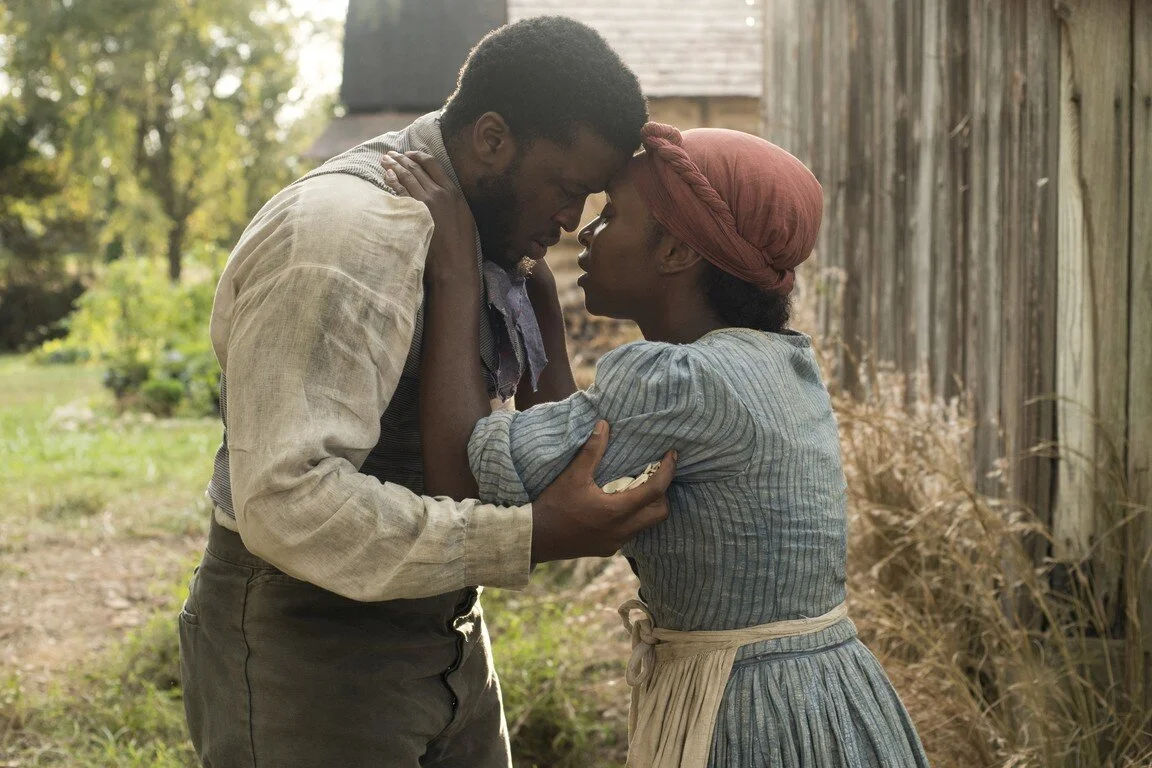
Its pace is relatively slow and for a two-hour runtime there aren’t enough moments where you see Harriet as a human rather than a victim of oppression. It’s not until the latter half where you see the complexities of the character. In terms of dialogue, it all revolves around Tubman discussing freedom or the masters discussing property. Maybe I’m just personally exhausted of films set during this era, but even then it doesn’t do enough in the writing department to showcase her as a person.
Even with the plodding of the narrative, it skims over important information about Tubman and her significance, especially for a recurring element that is one of the major determinants of the story. There are sequences of Tubman receiving spiritual superhuman premonitions of the future, which is apparently (and surprisingly) accurate, but what it leaves out is how she received that ability. In reality, Harriet got hit in the head with a weight that was intentionally set to hit a boy, but got her instead, and it severely fractured her skull. Because of this she was able to achieve a spiritual connection to God and she received visions of the future (but also experienced seizures at the same time). Now, that information is NEVER brought up in the movie at all. Instead, it incorporates sequences of her having those premonitions in the vein of how Jimmy Neutron has a “brain blast” or how Raven Baxter has a vision. You don’t see her having seizures, she just receives these premonitions on a whim to progress the story. Sometimes it would cut to a blue-tinted vision of the future and the role it plays is so bizarre where it’s used as a deus ex machina that she could channel. It works for a few instances, but the more it’s utilized, the more baffling it becomes. Seriously, it’s used as if that’s Tubman’s mutant power. She was one of the first X-Men and the way the movie depicts it kinda proves it. The lack of explanation for that ability is a major detriment to the film and its audience. Not many people know the origins of these abilities, so the fact that it’s left out might not be received well. I unintentionally cracked up because of how unexplained it is, leaving me confused as well.
What really prevents me from feeling any sort of positivity towards this is the script. You check to see if the details in the movie are historically accurate (and the majority of them are), but the story is still very weak. The original writer of the story is Gregory Allen Howard, who has written stuff such as Remember the Titans. Unfortunately, the blandness of his storytelling that even Lemmons attempted to rewrite can’t save the film. It just moves from one aspect of the figure’s life to another without constructing a cohesive narrative. You know the areas of triumph, you know when the heartbreaking sequence of despair drops, you know the exact beat where Erivo does her Oscar speech... yet, none of the emotions actually hit. The screenwriting is weak and so reliant on the most basic dialogue, ridding it of intimate moments—moments of needed subtlety to deliver any form of nuance. There is an area of experimental potential where the underground railroad sequence is done in the spirit of a heist movie, which becomes obvious due to the weak jazzy score from composer Terence Blanchard, whose stylings just don’t fit here, but right when it’s teased, the movie diverts itself back to the conventional storytelling.
Some of Tubman’s nicknames are depicted in a literal sense and I personally found that to lean more towards being pandering and cheap rather than clever. Tubman is nicknamed the Moses of her people and the film does everything in its power to literally portray her as just that. There are sequences where she speaks to God in her visions, guiding her people through rivers without any obstacles in their path, praying to keep her alive every step of the way. Tubman is deliberately depicted like this to get the religious Black audience into the theater, which is a lazy form of pandering.
Lastly, for a movie set during slavery, I'm a bit appalled by there being prominent scenes of Black-on-Black violence and where this leads. There is a brutal scene of a Black man physically abusing a Black woman that is so over-the-top and violent that when that character gets their just deserts, your reaction is muddled.

Although entertaining (to say the least) and held together by Erivo’s performance, Harriet suffers from an egregiously formulaic script that restricts it to conventional storytelling and never delivers the impactful significance of the figure it's based on.
Rating: 2/5 | 47%

