
‘Godzilla Minus Zero’ Review: Takashi Yamazaki’s Sequel Unleashes a Brutal Kaiju Brawl for the Ages
One can’t keep a good Godzilla down.
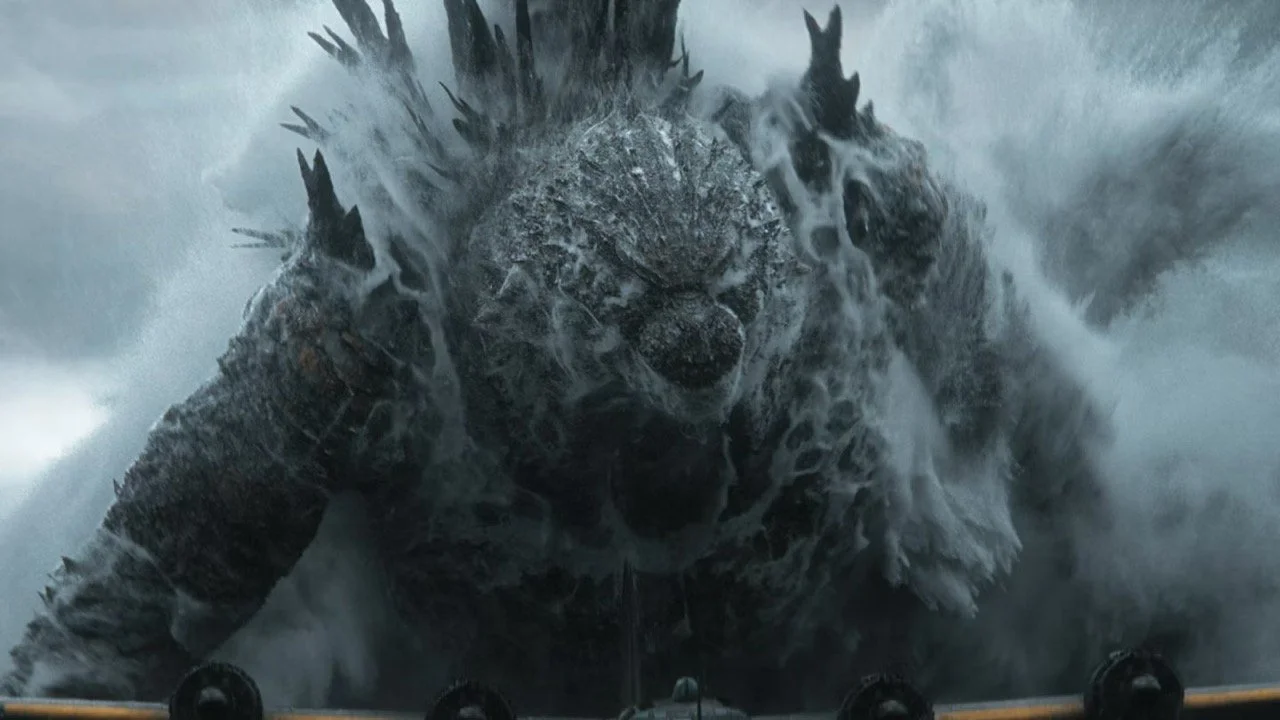
Writer/director/VFX maestro Takashi Yamazaki did the impossible a few years ago with Godzilla Minus One: demonstrating that you can craft an epic Godzilla period piece with a captivating human drama about grief and redemption, all on a $15 million budget, and win a Best VFX Oscar. Godzilla Minus One raised Godzilla stocks, dare I say. Meanwhile Legendary Pictures’ MonsterVerse films have prominently featured the big-headed, little-armed lizard in their rock ‘em, sock ‘em team-up films alongside Kong like a superhero. But the Toho-made ‘Zilla flicks got me looking like J. Jonah Jameson lambasting him as a menace. In Yamazaki’s follow-up, Godzilla Minus Zero, he deploys his own version of a rock ‘em sock ‘em brawl against another stark post-World War II drama in an exhilarating, bigger, badder, and blisteringly louder sequel, with a few drawbacks.
MPA Rating: R (for some violent content/bloody images.)
Runtime: 2 Hours and 15 Minutes (135 minutes)
Language: Japanese
Production Companies: Toho Studios, Robot Communications
Distributor: Toho (Japan), GKIDS (North America)
Director: Takashi Yamazaki
Screenwriter: Takashi Yamazaki
Cast: Ryunosuke Kamiki, Minami Hamabe, Min Tanaka, Hidetaka Yoshioka, Yuki Yamada, Kuranosuke Sasaki, Sakura Ando, Mio Tanaka, Masami Nagasawa, Jun Kunimura, Sae Nagatani, Koh Maehara, Eita Okuno, Kai Inowaki, Motosuke Iida, Kenji Mizuhashi
U.S Release Date: November 6, 2026
In 1949, two years after WWII, vets used science experiments to take down Godzilla and emotionally heal their battle scars, with Kōichi Shikishima (Ryunosuke Kamiki) being the fighter pilot to kill him once and for all. Today, Shikishima is a full-time family guy; he’s the best dad to his adopted Akiko (Sae Nagatani), and husband to Noriko (Minami Hamabe), who’s recovered from her Godzilla-related injuries. Meanwhile, after his efforts in leading the Godzilla plan, Kenji “Doc” Noda (Hidetaka Yoshioka) is appointed chief of the disaster relief bureau, or “Monster Buster.” Clairvoyant meteorologist Makoto Aoyama (Masami Nagasawa) is enlisted to forecast monster drops. Alas, a new kaijuu emerges: Ghidorah, terrorizing Matsumoto City. So it’s back in the saddle for Doc and, subsequently, Shikishima to use their monster-destruction experiments to send Ghidorah back to hell. But when their weapons prove ineffective, a fully regenerated Godzilla arises from his watery grave. With no other options, vengeful, grieving biologist Kanji Murakami (Min Tanaka) suggests pitting the monsters against each other and, whoever wins, annihilate them to high heaven. This time around, the mission involves Noriko and Shikishima embarking, and they hope to God Godzilla takes Ghidorah down.
Godzilla Minus Zero is the kind of blockbuster Hollywood wouldn’t have the atomic firepower to make.
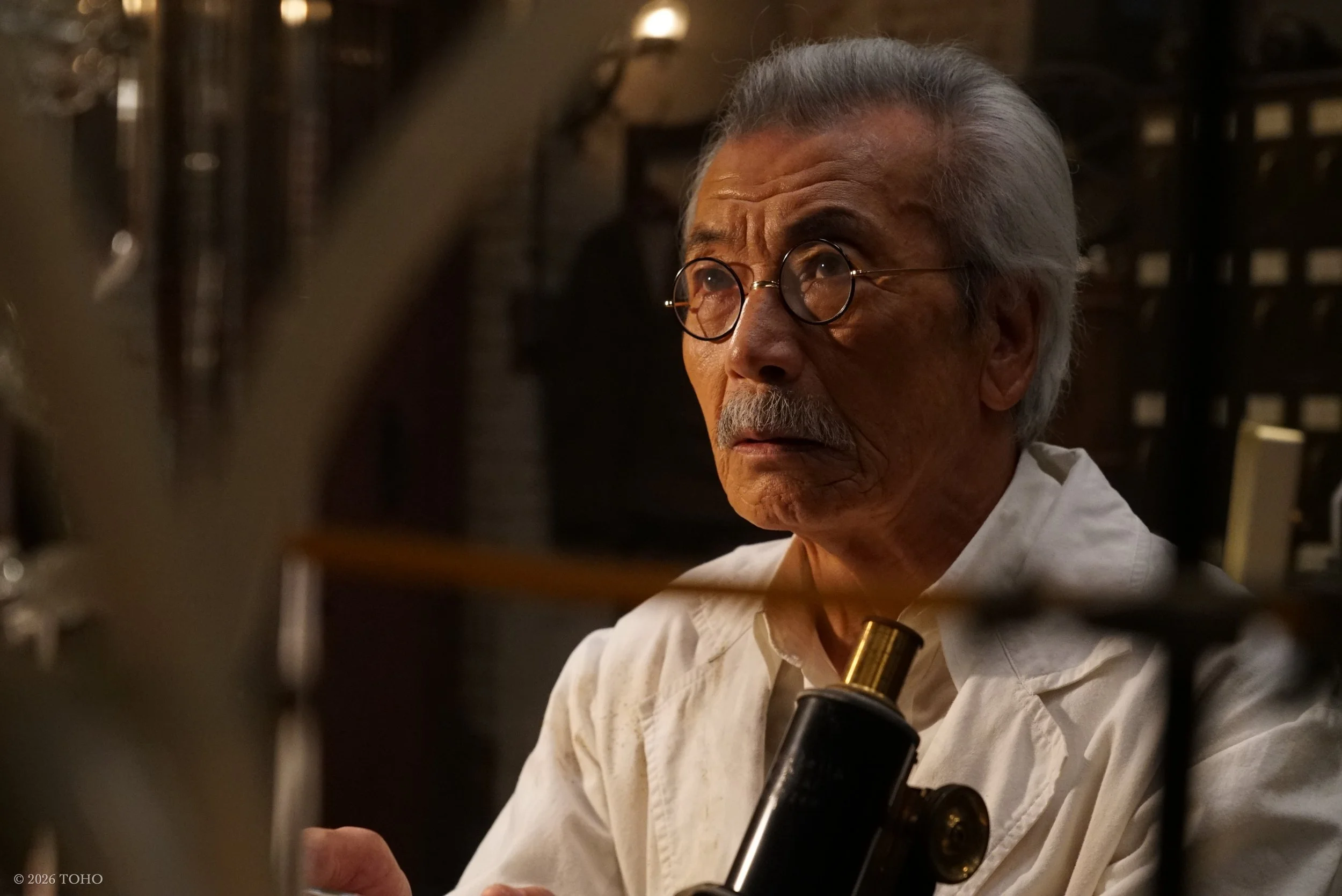
Min Tanaka in Godzilla Minus Zero © 2026 TOHO
Minus Zero plays in our American faces; these massive, immersive, and riveting Toho movies cost a fraction of our films’ budgets. Takashi Yamazaki and his team deliver another technical achievement, executing their lofty ambition with the most meticulous, exhilarating, and imaginative action sequences you’ll see all year. Even if you don’t know the filmmaker’s background, you feel his animation experience, as every procedural sequence is patient and thorough whilst scaled up to dazzling effect. Besides wartime melodrama, these movies thrive on watching science experiments unfold, making you scream “Yeah, science, bitch!” like Breaking Bad’s Jesse Pinkman when a plan comes together. Trading sea for air, Yamazaki flexes with an outstanding dogfight sequence that ups the ante in effort from a technical and VFX standpoint. The film is as loud as its American counterparts, but each aspect of Doc’s plans immerses you with detailed sound mixing and a practical/CGI blend. It demands to be seen in IMAX. I need to go break down the doors at Toho’s building and see the storyboards.
Leaning more into spectacle, Yamazaki takes Minus Zero to bold areas that would make American blockbusters clutch their pearls. People die in destruction-heavy films, but you don’t usually see it outright onscreen. Proving you can’t spell King Ghidorah without the letter R, the magnitude of the destruction he wreaks is par for the course for the franchise’s first R-rating. Yamazaki lingers on the terror, propelling the stakes and your hatred towards that dragon bastard. Beyond disaster, he exercises his horror prowess with Ghidorah nabbing some jump scares better than most of what I screened at Fantastic Fest 2026. Naoki Sato’s rocking theme amplifies his threatening demeanor reminiscent of Sephiroth from Final Fantasy VII, sharing the same “Oh, we’re all so fucked,” impact. By the time big G shows up, now positioned as an ally to control rather than a force to fear, it’s triumphant.
Witnessing Godzilla reemerge from the ocean depths and hearing the Alice Tully room at the premiere lose their shit at his iconic roar is among the best New York Film Festival moments of my entire life. The kaijuus go toe-to-toe, and the monster violence gets gory. Yamazaki further illustrates the devastation caused by the monsters, akin to America’s nuclear warheads in Hiroshima. Charred corpses and severely wounded citizens fill the screen, boldly intensifying the trauma its war-stricken survivors traverse.
Minus Zero has a soulful heart trapped inside a stagnant character drama.
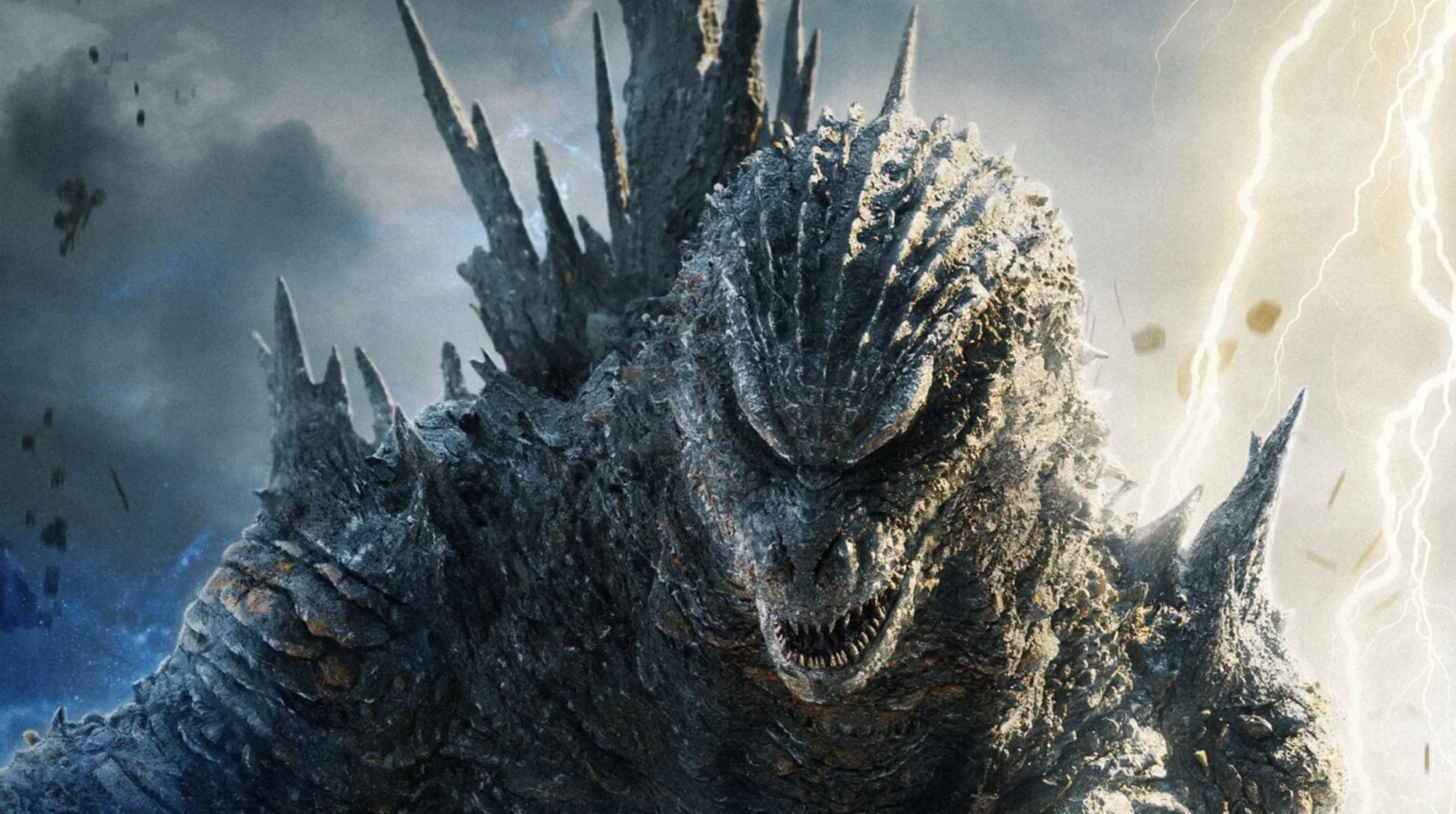
Godzilla Minus Zero © 2026 TOHO
Like Minus One, Minus Zero successfully blends its familiar format with wartime-centric melodrama, this time investigating unexplored pockets: the abandoned, the orphaned, and the vengeful, stricken by grief. The Minus movies are perfect companion pieces to Oppenheimer, concentrating on the immense pain in the wake of WWII.
While Yamazaki takes control of the aux this time, it’s at the expense of Shikishima, Noriko, and Doc’s character growth. You feel the emotional weight of their newfound drama, especially when they learn Godzilla ain’t dead, but this doesn’t provide them with new emotionally challenging arcs.
The film’s strongest emotional crux stems from Dr. Murakami, whose survival instincts from Hiroshima and Ghidorah’s initial attack fuel his intentions and involvement. He steers the grief motif, and Min Tanaka delivers a soulful performance in the film’s most moving elements.
Noriko and Shikishima’s non-romantic relationship factors into the film’s emotional drawbacks. I get it. They’re in it for Akiko, and when that adorable girl cries, I cry. The emotional swings with the three of them are tearjerky. But the married pair, with no romance between them, renders their emotional swings hollow, weakened by their minimal character growth.
Minus Zero trades emotional depth for one hell of a kaiju showdown.
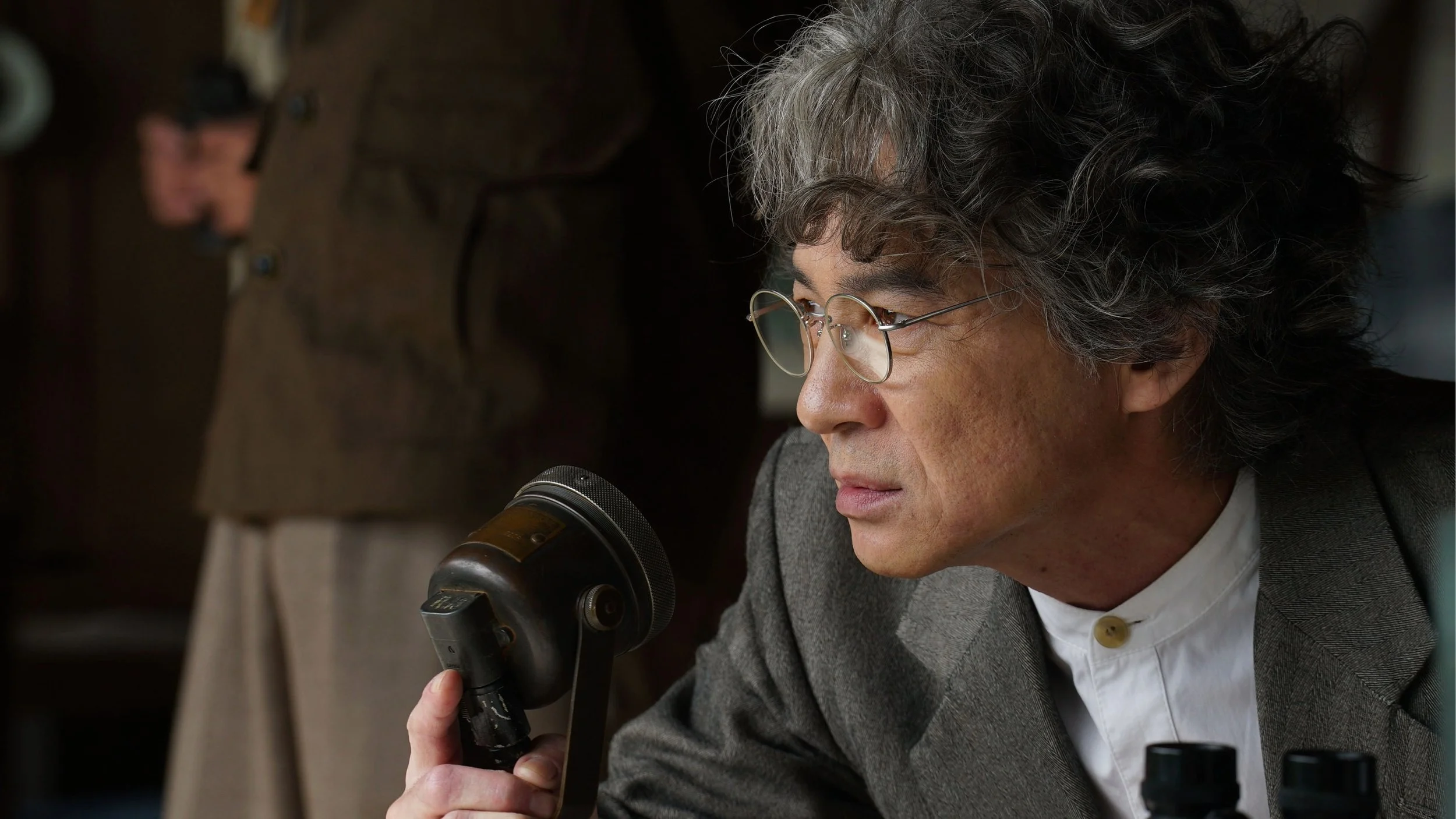
Hidetaka Yoshioka as Doc in Godzilla Minus Zero © 2026 TOHO
Minus Zero suffers from middle-act trilogy syndrome where it’s just clamoring for a final chapter to round out a full-scale story. And though we don’t have any trilogy details at the time of this writing, its narrative and emotional setbacks, and action-oriented plotting make it feel like Yamazaki is saving his best atomic breath for last. Either way, it still runs circles around the Legendary MonsterVerse movies.
Though it scales down the human drama despite another riveting post-war dissection of thoughtfulness and humanity, Godzilla Minus Zero goes all in with a captivating monster-brawl action spectacle fueled by bold, creative narrative turns, sublime technical feats, and a brutal showdown for the ages.
Hello, World!
