
‘Forbidden Fruits’ Review: Witchy Mall Horror Comedy is Pure 2000s Mean-Girl Magic
Now that Gen Z has become adults, we’ve seen early-2000s icons and cultural touchstones being remade and rebooted largely for nostalgia. The recent 13 Going on 30 reboot announcement nearly gave me an aneurysm. But to me, real nostalgia isn’t just about revivals; it’s about capturing the atmosphere of an era. It’s about spirit. And that’s exactly what Meredith Alloway’s hilarious pink-collared, mall-set supernatural horror comedy Forbidden Fruits – based on her co-writer Lily Houghton’s play, Of the woman came the beginning of sin, and through her we all die – delivers in its darkest, meanest, femme-est form, encapsulating the long-forgotten era of early-2000s female-led movies that I deeply miss.
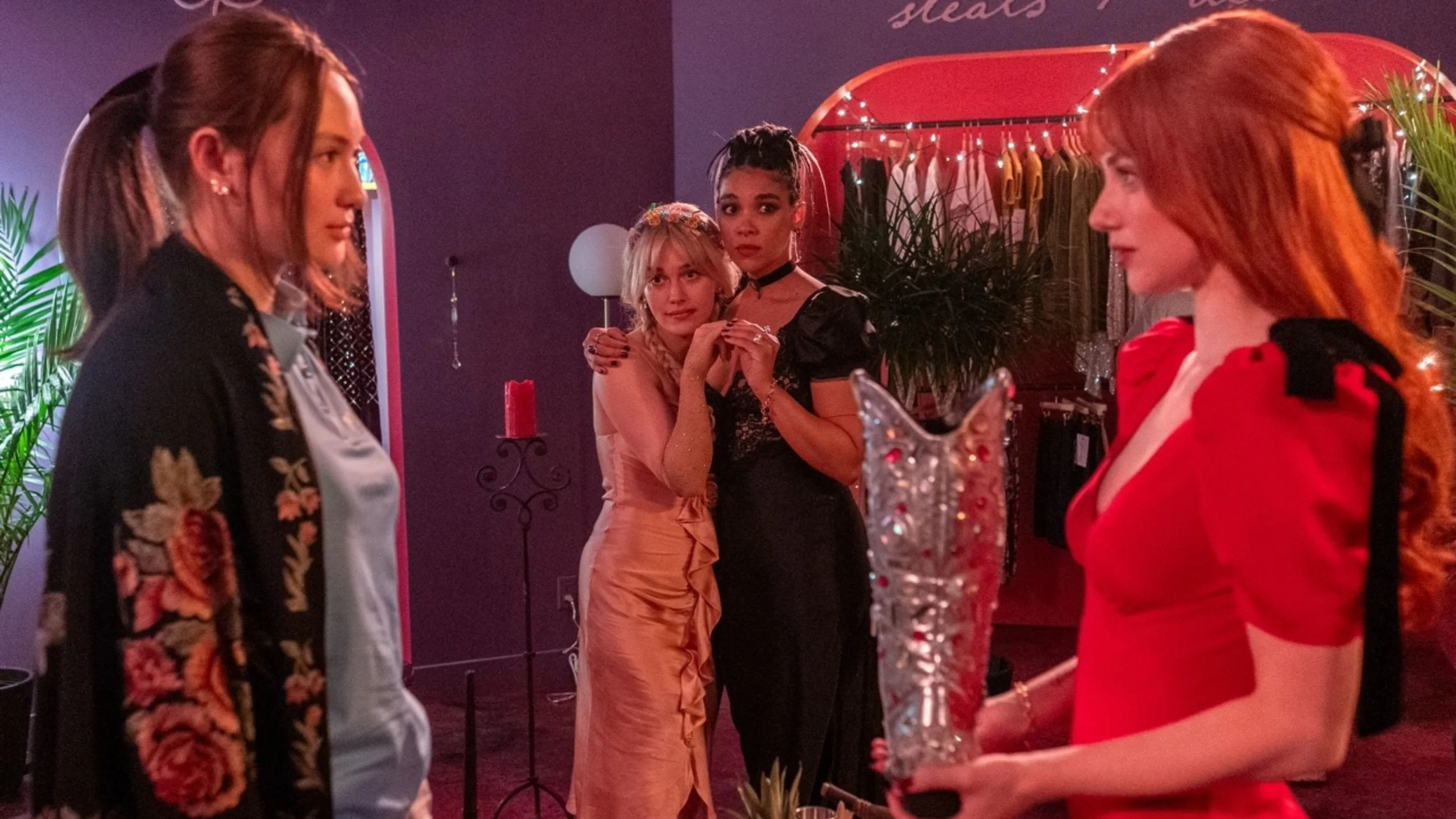
Image copyright (©) Courtesy of Independent Film Company
MPA Rating: R (for strong violent content/gore, sexual content, nudity, language and brief drug use.)
Runtime: 1 Hour and 43 Minutes
Language: English
Production Companies: MXN Entertainment, Quadrant Motion Pictures, Lollipop Woods
Distributor: Independent Film Company, Shudder
Director: Meredith Alloway
Screenwriters: Lily Houghton, Meredith Alloway
Cast: Lili Reinhart, Lola Tung, Victoria Pedretti, Alexandra Shipp, Emma Chamberlain, Gabrielle Union
U.S Release Date: March 27, 2026
Set in a Dallas mall, pretzel girl Pumpkin (Lola Tung) infiltrates a preppy clique known as the Free Eden Girls, a group of coworkers named after fruits. The group includes the compassionate, physics-minded Fig (Alexandra Shipp), the airheaded but loyal Cherry (Victoria Pedretti), and their cold, commanding leader, Apple (Lili Reinhart). Together, they run the Free People-inspired boutique. As Pumpkin is drawn deeper into the group during her new-hire initiation, she discovers that Apple leads a secret witch coven called Paradise, supposedly devoted to protecting the Fruit's sisterhood. But she quickly realizes that Paradise is far from what it claims to be, especially as Apple manipulates Fig and Cherry, having them under her powerful short leash. Suspicious, Pumpkin begins her own investigation into Apple’s true identity, determined to uncover what lies beneath her witchy attire, sharp nails, and carefully constructed persona.
Forbidden Fruits balances sharp camp, horror, And 2000s Girl-power style.
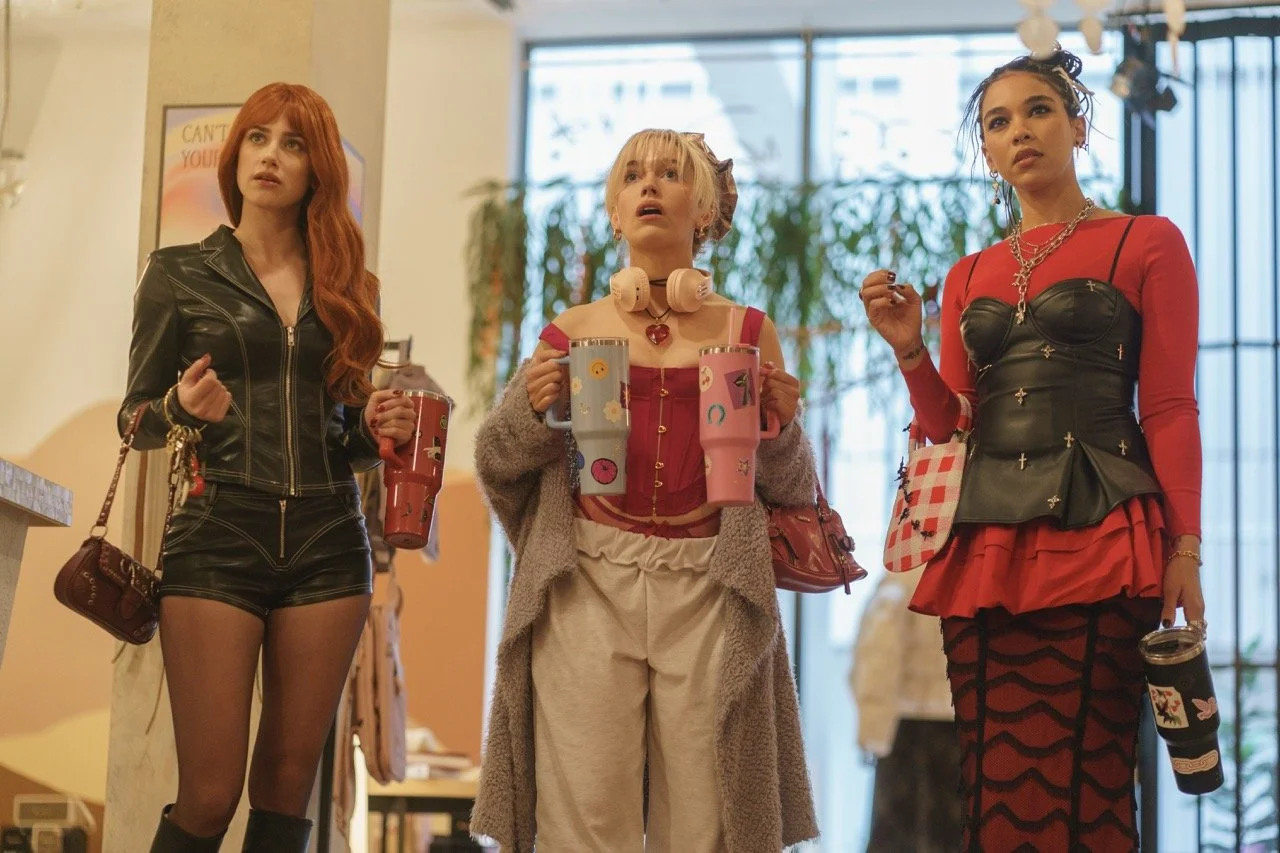
Alexandra Shipp, Lili Reinhart, and Victoria Pedretti in Meredith Alloway’s FORBIDDEN FRUITS. Courtesy of Sabrina Lantos. An Independent Film Company and Shudder Release.
Meredith Alloway’s transition from film journalist to horror filmmaker in her debut is impressive. She demonstrates a keen eye for practicality, delivering strong, grotesque horror and building tension in a steady, bubbling way. She wears her inspirations on her sleeve, using them for laughs that often land; a well-placed The Shining nod made me laugh out loud. She strikes a strong balance, building toward a dark turn while leaning into its campy spirit. Through thoughtful design across every department, it effectively recaptures the energy of 2000s girl-power cinema.
Ciara Vernon’s production design and Tremé Manning-Céré’s art direction give the Free Eden shop a distinctive femme, retro-2000s aesthetic – one that feels like it was made for the now-adult girlies who always wished Limited Too had a Mean Girls and The Craft section in their youth. Filmed in Toronto, the visual style evokes the vibrant energy of iconic Canadian mall-set cartoon 6Teen, brought to life on screen. Sarah Millman’s colorful costume design further amplifies each character’s personality, adding a liveliness that has become increasingly rare in modern films.
Ultimately, it’s co-writers Lily Houghton and Meredith Alloway’s sharp writing that makes the film feel both like a tribute to the cliquey, sardonic, mean-spirited girl movies we love to watch and something entirely its own. For starters, the mall setting adds to the humor and wit. Watching these girls navigate dark, seedy circumstances and unravel their toxic power dynamics across their 9-to-5 and beyond is so fucking funny. It bears the same humor as Tina Fey’s Mean Girls (the original, not the toothless musical remake), especially in Apple’s cutting dialogue and cold, commanding presence, as well as Cherry’s more vacuous nature. It makes so much sense that Diablo Cody is a producer on Forbidden Fruits. Like her film Jennifer’s Body, it’s dimensional in its toxic friendships, boasts an evil lesbian icon, while getting unapologetically mean on main. Like Jennifer, it’s destined to become a cult-classic.
Forbidden Fruits unpacks toxic sisterhood with sharp, subversive character work.
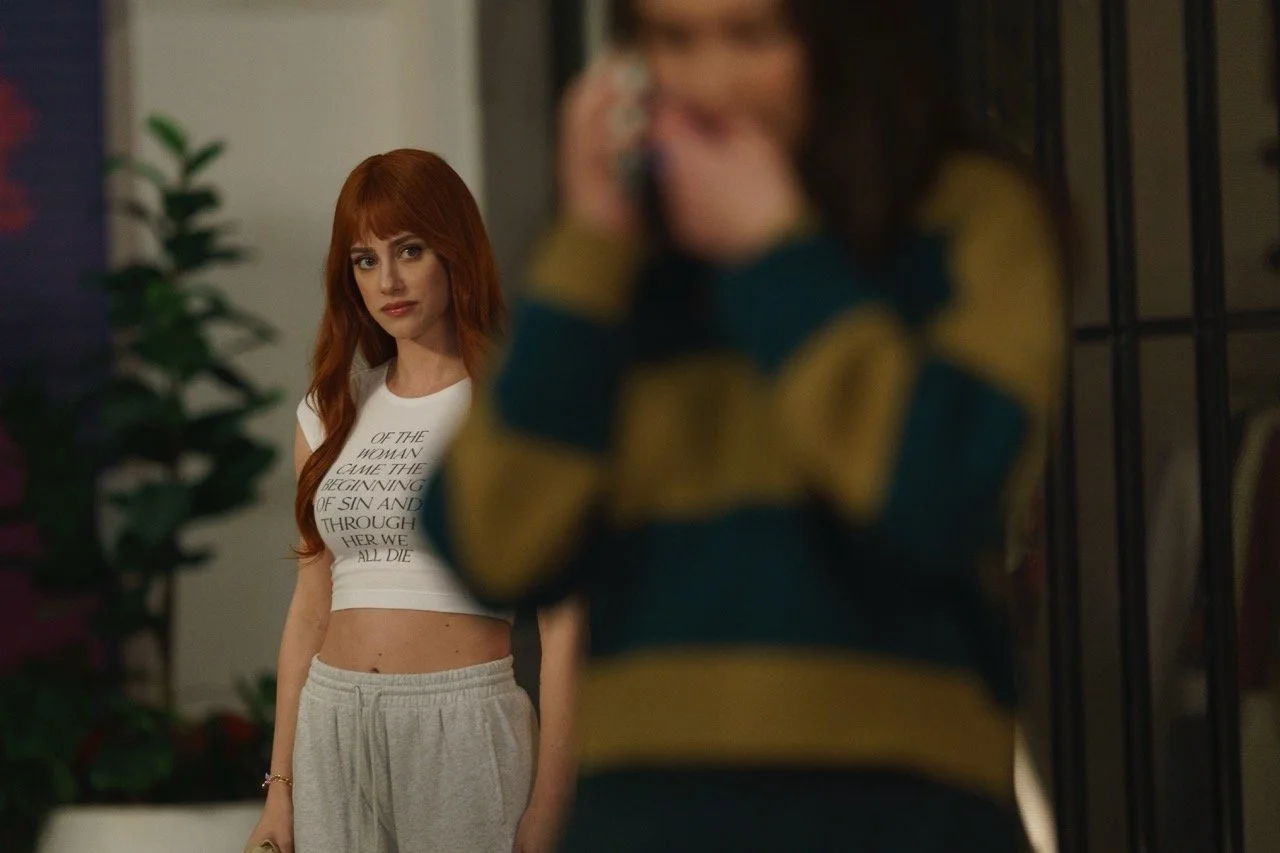
Lili Reinhart and Lola Tung in Meredith Alloway’s FORBIDDEN FRUITS. Courtesy of Sabrina Lantos. An Independent Film Company and Shudder Release
The script explores the Fruits’ dynamics, particularly their need for connection and performative sisterhood, and their relation to self-esteem. Houghton's theatrical background is apparent in the film's use of a Bloody Mary-like apparition device, which enables the girls to confess their sins to Marilyn Monroe in their fitting room mirror. As the girls spout monologues, it sheds smart character dimensions while piercing into their respective mental spaces, resulting in uncomfortable confrontations. At times, the pacing slows, feeling like it comes to a halt, but this rarely detracts from the overall experience thanks to the strong character writing. It also demonstrates a strong sensibility in capturing, at times subverting, the spirit of the films it's inspired by.
This dynamic allows Apple – arguably the lowest of them all – to maintain control over the group. It carries a level of bite and subversive character detail that gives it real weight.
Much of the film follows Pumpkin as she uncovers the truth about Apple through her Nancy Drew-like investigation. Though she spends much time with Fig and Cherry, it comes at the expense of her relationship with Apple, which forms a key emotional thread.
Ultimately, Forbidden Fruits builds a compelling character study of Apple, layering traits that make her both complex and unsettling. Without giving too much away, Apple’s need for control extends beyond class or convention. The same applies to the other Fruits, each of which is given a distinct personality and performance.
Lili Reinhart and Co. conjure killer performances.
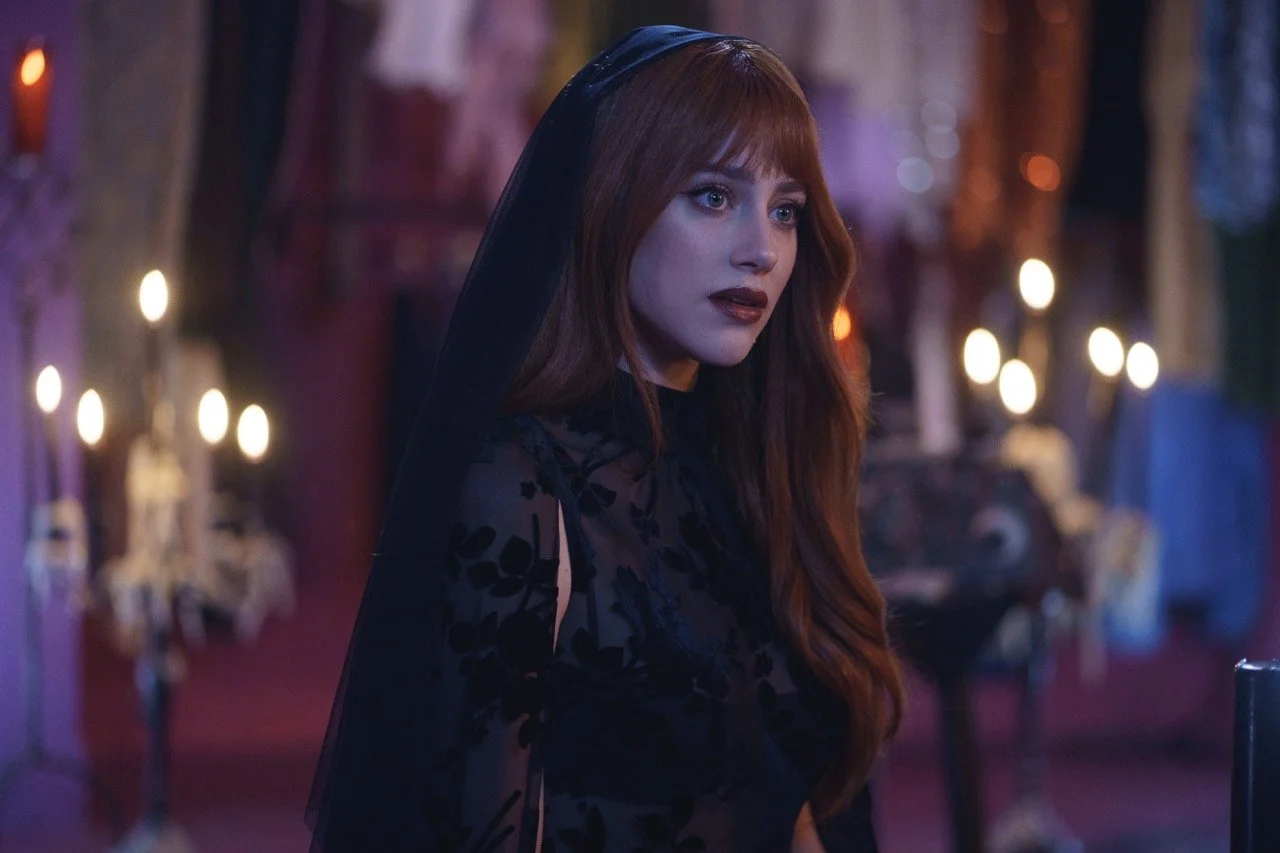
Lili Reinhart in Meredith Alloway’s FORBIDDEN FRUITS. Courtesy of Sabrina Lantos. An Independent Film Company and Shudder Release.
Lili Reinhart, in of her absolute best feature performances yet, delivers a keen turn, allowing a darker edge to emerge in her performance. It’s as if the spirit of Rachel McAdams compelled Reinhart while shooting in Toronto, as she carries a presence that evokes the same quick comedic wit and cold persona as McAdams’ Regina George.
Victoria Pedretti is a standout as Cherry, bringing a high-pitched, Dolly Parton-like accent and impeccable comedic timing to the role. Alexandra Shipp is equally charming and funny, surprising with her quirky obsessions. The Summer I Turned Pretty’s Lola Tung, in her feature debut, shines as Pumpkin, bringing a cool, assured presence that holds its own, especially in her dynamic with Apple.
Once every SXSW, there’s a movie that speaks to my nonbinary, early-2000s-obsessed femme core; a film that aligns so closely with my tastes it feels like it belongs in the pantheon of movies that help define me. Mind you, 2019 was when I first came out after watching Booksmart. 2023 gave me Bottoms. In 2024, I had a visceral reaction to I Saw the TV Glow. In 2025, nothing quite filled that space. Forbidden Fruits filled that void and then some. My love for this film is so serious, I’m gonna start adding “vom” into my personal vocabulary.
Final Statement
Forbidden Fruits is a sharp, campy blast of 2000s femme nostalgia—with a subversive bite all its own.
