
'Don't Worry Darling' Review: Florence Pugh Carries Wilde's Stylish yet Middling Sci-Fi Thriller
Don’t Worry Darling
R: Sexuality, violent content, and language
Runtime: 2 Hrs and 3 Minutes
Production Companies: New Line Cinema, Vertigo Entertainment
Distributor: Warner Bros. Pictures
Director: Olivia Wilde
Writer: Katie Silberman
Cast: Florence Pugh, Harry Styles, Olivia Wilde, Gemma Chan, KiKi Layne, Nick Kroll, Chris Pine
Release Date: September 23, 2022
In Theaters Only
No one with internet access has been able to escape the wrath of the press surrounding Olivia Wilde’s highly-anticipated sophomore flick, Don’t Worry Darling. The vast array of behind-the-scenes drama between the filmmaker and her stars has been such a next-level mess, not even Marie Kondo would attempt to clean it up. With new tea continuously being served to us on a silver platter, there’s been speculation that the troubled production reflects in the final result. Thankfully, there’s no need to worry darling, for this film is far from being a total disaster. However, that doesn’t mean it’s anything to write home about, and it certainly doesn’t compensate for the weird press it’s been receiving.

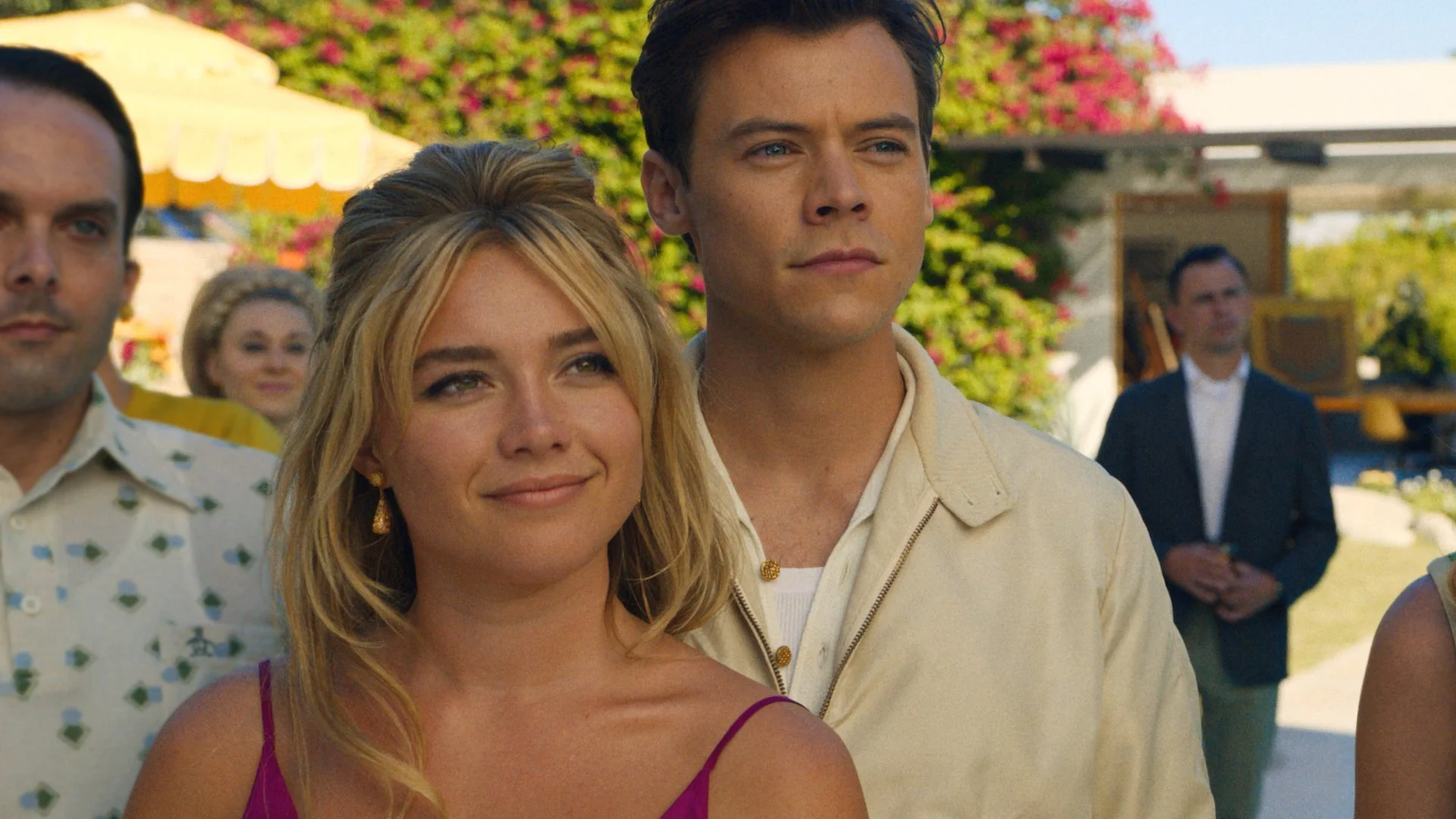
Alice (Pugh) and Jack (Styles) are lucky to be living in the idealized community of Victory, the experimental company town housing the men who work for the top-secret Victory Project and their families. The 1950s societal optimism espoused by their CEO, Frank (Pine)—equal parts corporate visionary and motivational life coach—anchors every aspect of daily life in the tight-knit desert utopia.

Don’t Worry Darling finds Olivia Wilde expanding her skill set, attempting to touch the psychological thriller sub-genre as well as her debut, Booksmart, touched comedy. Thankfully, she understands the language as she captures an ominous mood juxtaposed with colorful settings. While many psychological thrillers are set during the daytime, Wilde’s depiction of a slow-burn dread and paranoia in a sunshiney setting is boosted by master cinematographer Matthew Libatique. He provides visual splendor to give the film a dreamlike and sinister edge.

Influences such as The Truman Show and The Stepford Wives are worn heavily on its sleeve. Still, the unique art direction mixed with its claustrophobic atmosphere allows it to deviate instead of imitate. The vibrant ‘50s-like Palm-Springs-meets-Arrakis suburban setting of Victory is so brilliantly crafted in every facet. Production designer Katie Byron (Zola, Booksmart) fleshes out a distinctive look with a mid-century modernist flair for the exteriors of suburban homes and muted interior designs to capture a futuristic yet retro vibe. It’s similar to, say, Brad Bird’s The Incredibles. Meanwhile, Arianne Phillips’ costume design elevates Victory’s pristine aesthetic where everyone rocks a ‘50s style like an ensemble straight out of Life magazine. Mind you, all of this was done with a $20 million price tag.
Miss Flo has proven that she’s one of the most powerful and magnetic actresses of our time, pouring her limitless talent into any role she tackles. She deserves a massage after carrying Don’t Worry Darling on her shoulders. Alice is the film’s driving force, balancing a slow descent into madness and a gradual rise to power. Pugh is no stranger to roles where she gets gaslit in broad daylight, so she’s able to channel a subtle vulnerability and anxiety, but also force the tables to turn.
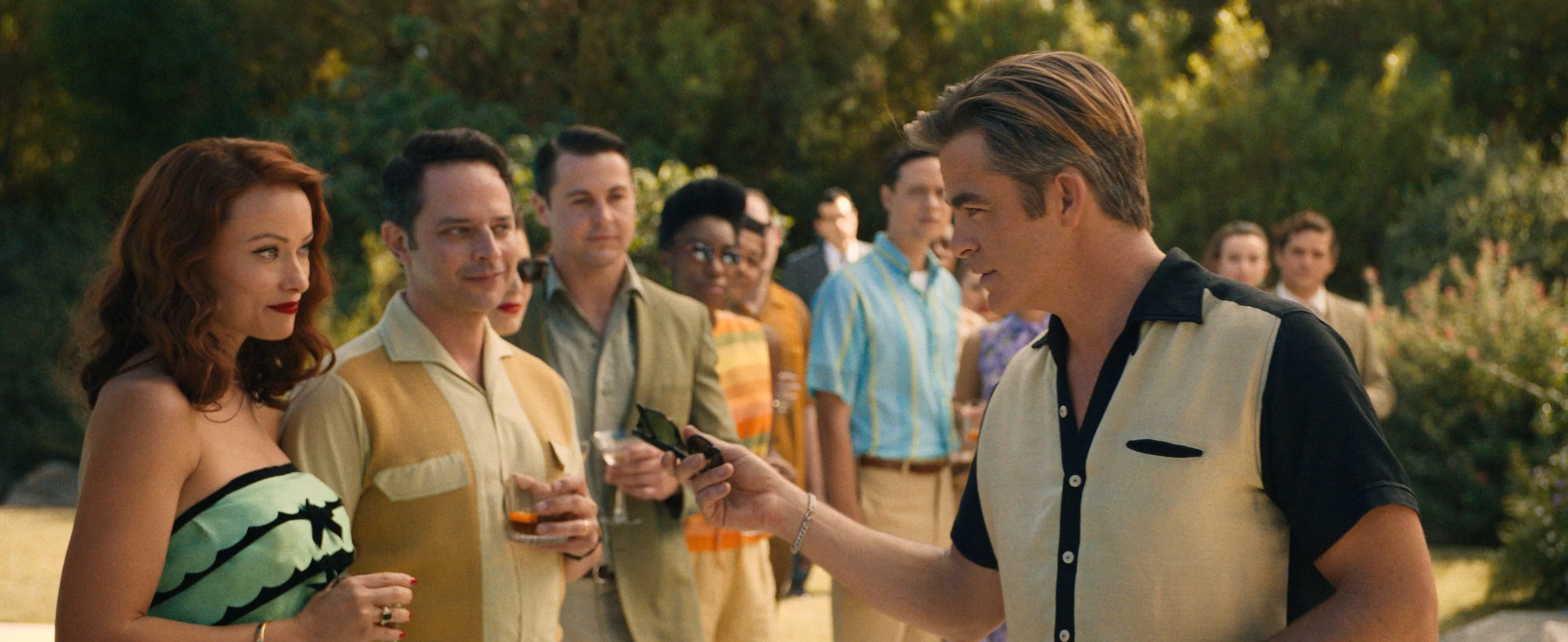
Another standout is Chris Pine as antagonistic Victory founder Frank. Though not proactive enough to leave an impression, his smug presence is chilling. He's charismatic in front of a crowd but his silence as he goes toe to toe with Alice is unnerving. Pine never overexerts himself while playing this slimy character, so his scenes with Pugh are a masterclass of performances by two pros.

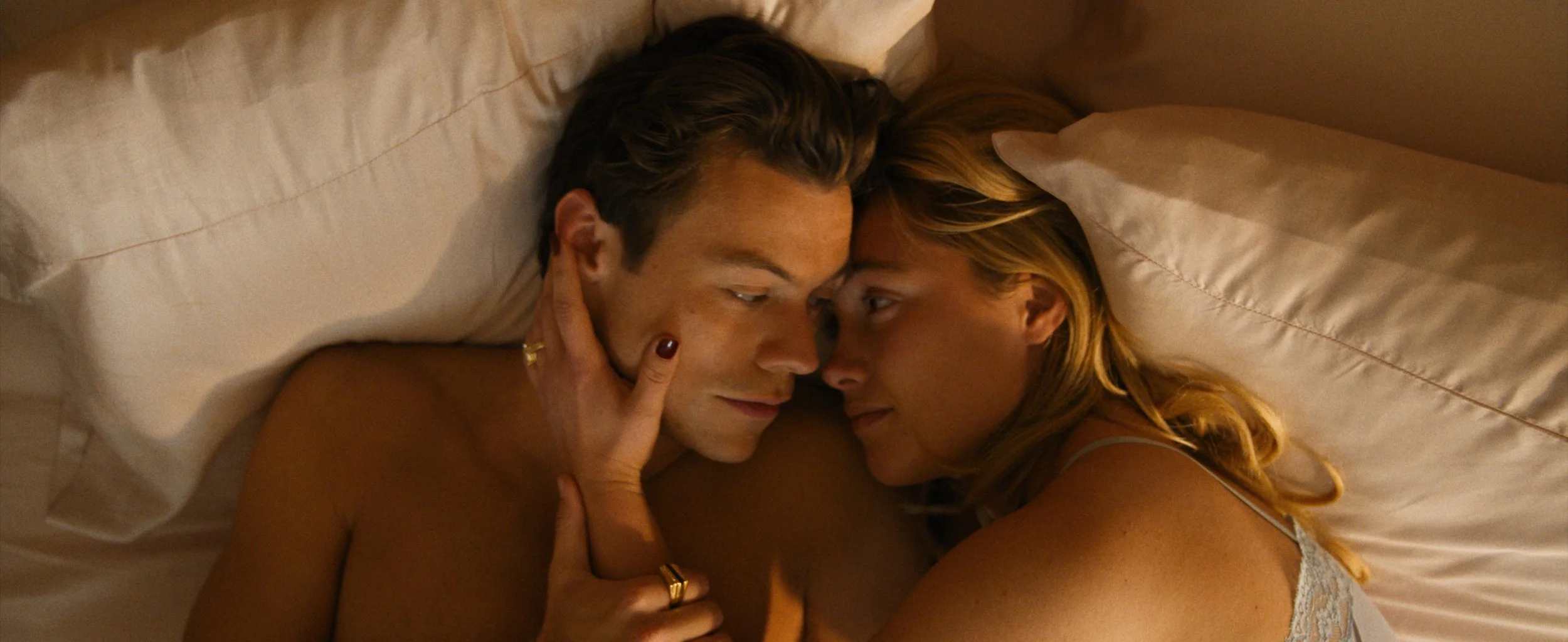
Olivia Wilde’s direction shines in all things visual. Sadly, Don’t Worry Darling’s cast (outside of Pugh) leaves much to be desired. This is Harry Styles' sophomore role and you know what? It’s stunt casting. The man has charisma and charm but that doesn’t necessarily translate to his acting chops. He’s missing a certain x-factor (no pun intended) in this performance that gives, *baby voice* "This is my second role ever," energy. Thank god his screen time is limited because he has zero chemistry with Florence Pugh. Those two (yes, the two from the trailer) “Watermelon Sugar”-centric sex scenes be damned, their chemistry resembles a competition where Pugh is running laps around Styles until he becomes lightheaded. Styles has a lot of work to do if he wants his acting career to soar but he is completely miscast in Don’t Worry Darling.
Olivia Wilde and Booksmart screenwriter Katie Silberman have become a tight duo and have several upcoming features together. Given that the latter has a proficient comedy portfolio, penning a psychological thriller is as much unexplored territory for her as it is for Wilde. However, Wilde’s direction ends up soaring while Silberman's screenplay stumbles down a hill.
Too many movies I’ve seen this year suffer from underdeveloped screenplays that read like a first draft. Don’t Worry Darling is yet another addition to that list. The story follows the traditional beats of many features within its genre but adds nothing of flavor to its predictable storytelling. It borrows multiple outdated tropes that are far from congruent with any of the thrills and chills it visually provides. At a certain point, its visuals feel like compensation for its poor story choices. There’s a major turning point within the first act that left me completely aggravated as a Black film critic and soured my perception of the narrative.
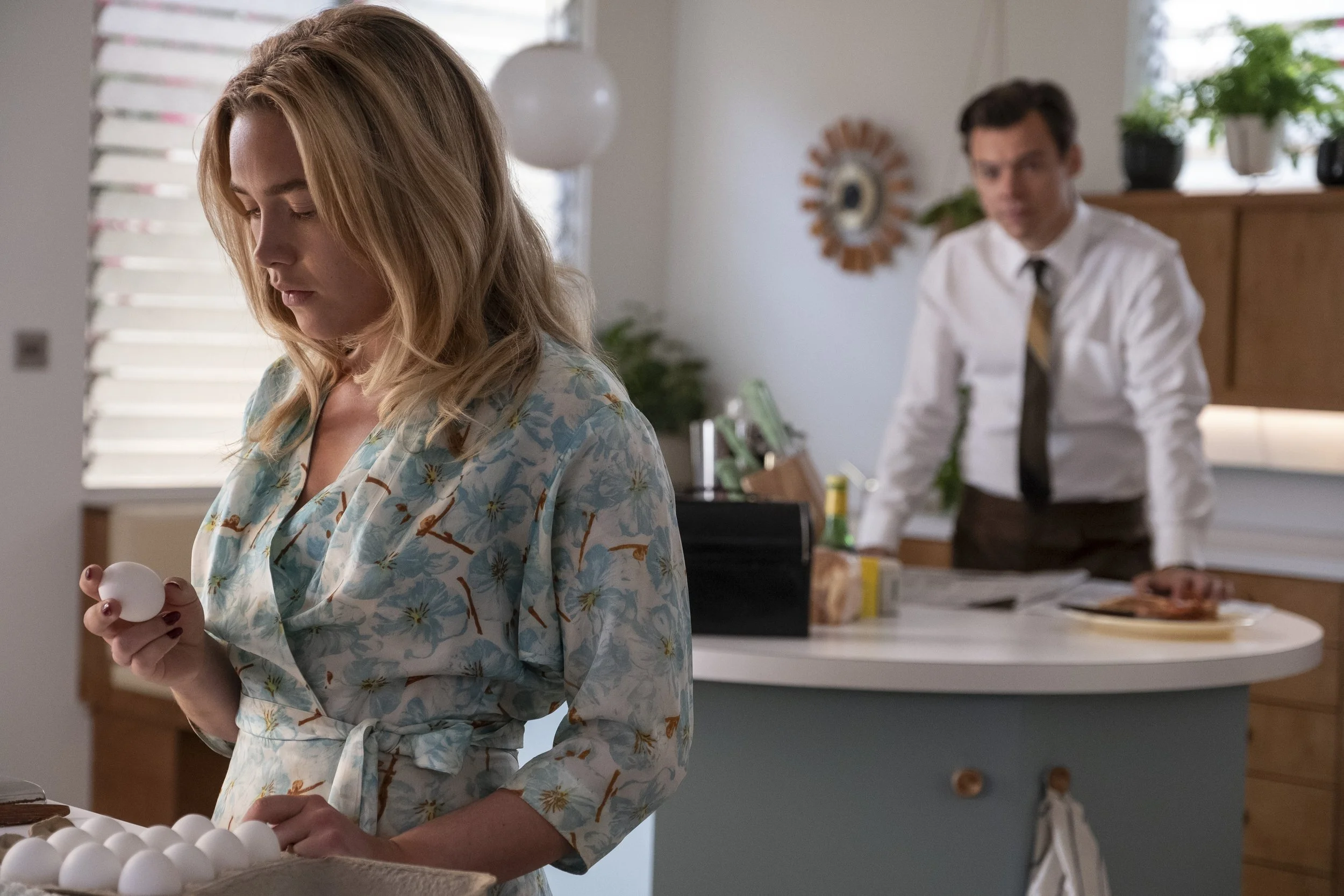
The screenplay meanders while adding unnecessary weight to Alice’s deteriorating psyche rather than providing concrete clues about the mystery behind the Victory community. Little time is spent developing the big picture alongside Alice’s arc where many story elements are revealed deep into the second act. Any sense of a clear and fluent theme is absent, for the plot tries to mislead in multiple directions so often that it backs itself into a corner.
Don’t Worry Darling’s screenplay falls flat on its face with its “twist”. I speculated many outcomes and wrote a “worst case scenario” twist in my journal before entering the screening room. Somehow, that contingency scenario became reality and it’s completely incomprehensible, if not lazy. Immediately after the shocking reveal, DWD rushes into a riveting climax that is well crafted but unearned. At least Wilde gets to show off her action filmmaker chops as a cherry on top. It’s the equivalent of dropping a smoke bomb and disappearing. The twist is treated as an afterthought to provide spectacle and by the time you lift a finger to ask a question… it’s done. A twist can make or break a thriller/mystery flick and the twist in DWD broke every bone in its already fragile body.

At best, Don’t Worry Darling is an extended Black Mirror episode that’s not even impressive by Black Mirror standards. It continues Olivia Wilde’s venture as a filmmaker and she’s still impressive behind the camera. Outside of its lavish production quality—and Florence Pugh being the badass that she is—the screenplay is an underdeveloped mess that emphasizes its slow-burn thrills and mystery rather than being cohesive for its twist. How baffling that the drama surrounding this film is a better psychological thriller popcorn flick than the final product.

