'Doctor Strange in the Multiverse of Madness' Review: More like Multiverse of Mid-ness, Right?
PG-13: Intense sequences of violence and action, frightening images, and some language
Runtime: 2 Hrs and 6 Minutes
Production Companies: Marvel Studios
Distributor: Walt Disney Studios Motion Pictures
Director: Sam Raimi
Writer: Michael Waldron
Cast: Benedict Cumberbatch, Elizabeth Olsen, Chiwetel Ejiofor, Benedict Wong, Xochitl Gomez, Michael Stuhlbarg, Rachel McAdams
Release Date: May 6, 2022
In Theaters Only
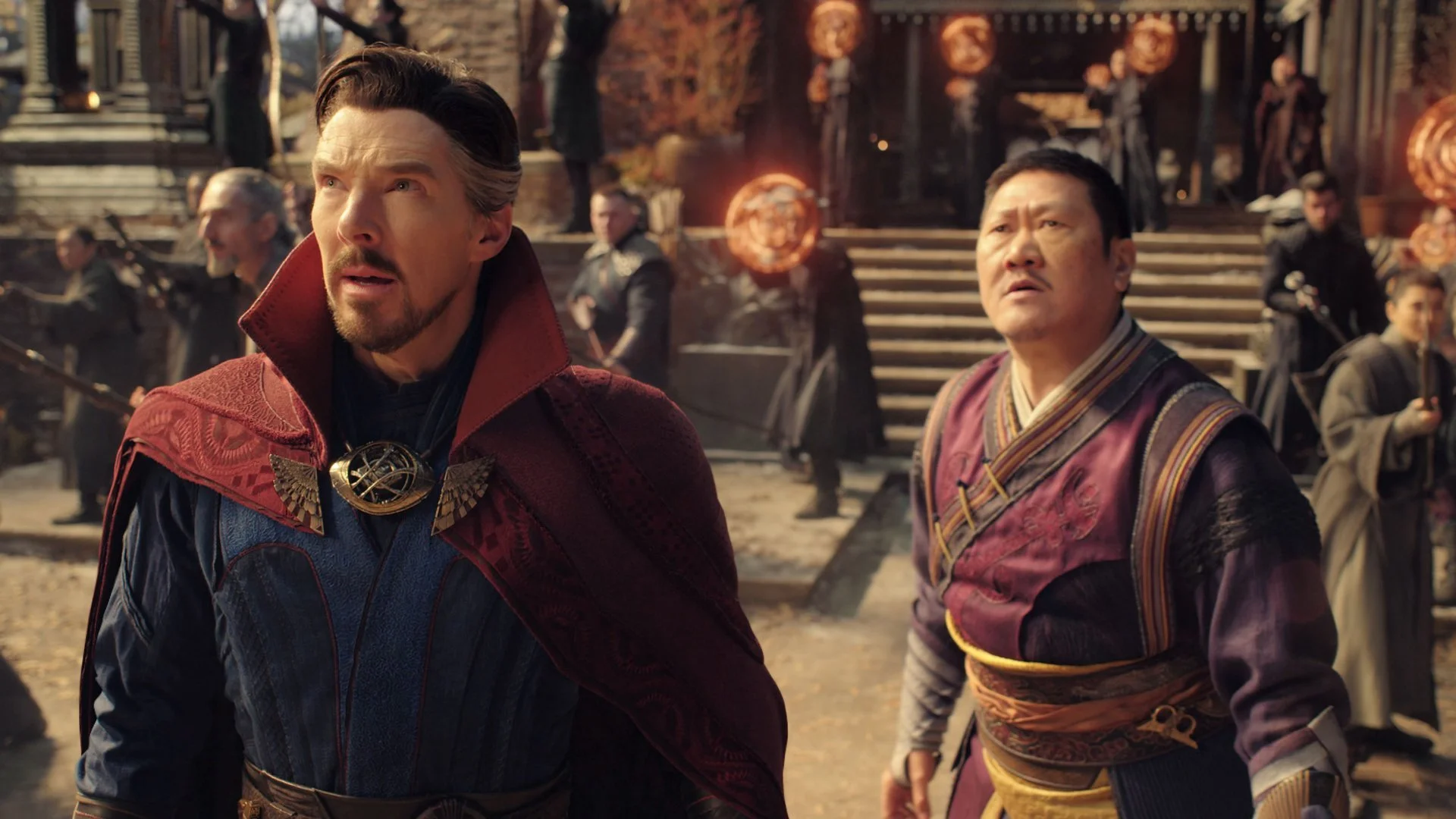
In Marvel Studios’ “Doctor Strange in the Multiverse of Madness,” the MCU unlocks the Multiverse and pushes its boundaries further than ever before. Journey into the unknown with Doctor Strange, who, with the help of mystical allies both old and new, traverses the mind-bending and dangerous alternate realities of the Multiverse to confront a mysterious new adversary.
It’s been 15 years since Sam Raimi—horror master and original cinematic Spidey daddy—directed some capeshit. After dealing with Sony’s belligerence with Spider-Man 3, one can understand why Raimi hung up the superhero cape. But alas, when his old pal Feige (fun fact: he was an executive producer on Spider-Man 3) comes calling and tells him he can do an MCU flick while giving him the freedom to let his freak flag fly, it does Multiverse of Madness wonders.

Given that Feige has been laser-focused on giving indie filmmakers the keys to the van with every feature, limiting their artistic freedom in their process ––except for Taika Waititi and Chloe Zhao, whose voices are strong enough to burst through the MCU’s insipid barrier––it’s refreshing to see the touch of a legend whose signature artistic style we all know and love. Raimi has not made a horror feature since Drag Me to Hell in 2009 and you feel his need to explode, for he experiments with horror as much as he can within the MCU. Whenever it’s allowed, Raimi’s visual style does the heavy lifting on the feature. He utilizes techniques such as crossfades and overlays in the editing and the shot composition is composed of quick zoom-ins and rotating camera pans. It just oozes with style. It’s like 77% of the Raimi experience, which is great because that’s the highest percentage a filmmaker’s identity will reach in a Marvel flick.
Since Wanda Maximoff (Elizabeth Olsen)––now fully Scarlet Witch––is positioned to be the antagonist of the film, Raimi utilizes her as the catalyst for his horror beats. There are several instances where she goes full Evil Dead in movement, resulting in some effective jump scares. The body count during her rampage is as brutal as it can get in a flick like this, and Raimi relishes incorporating classic horror tropes to make her a terrifying foe for Strange.
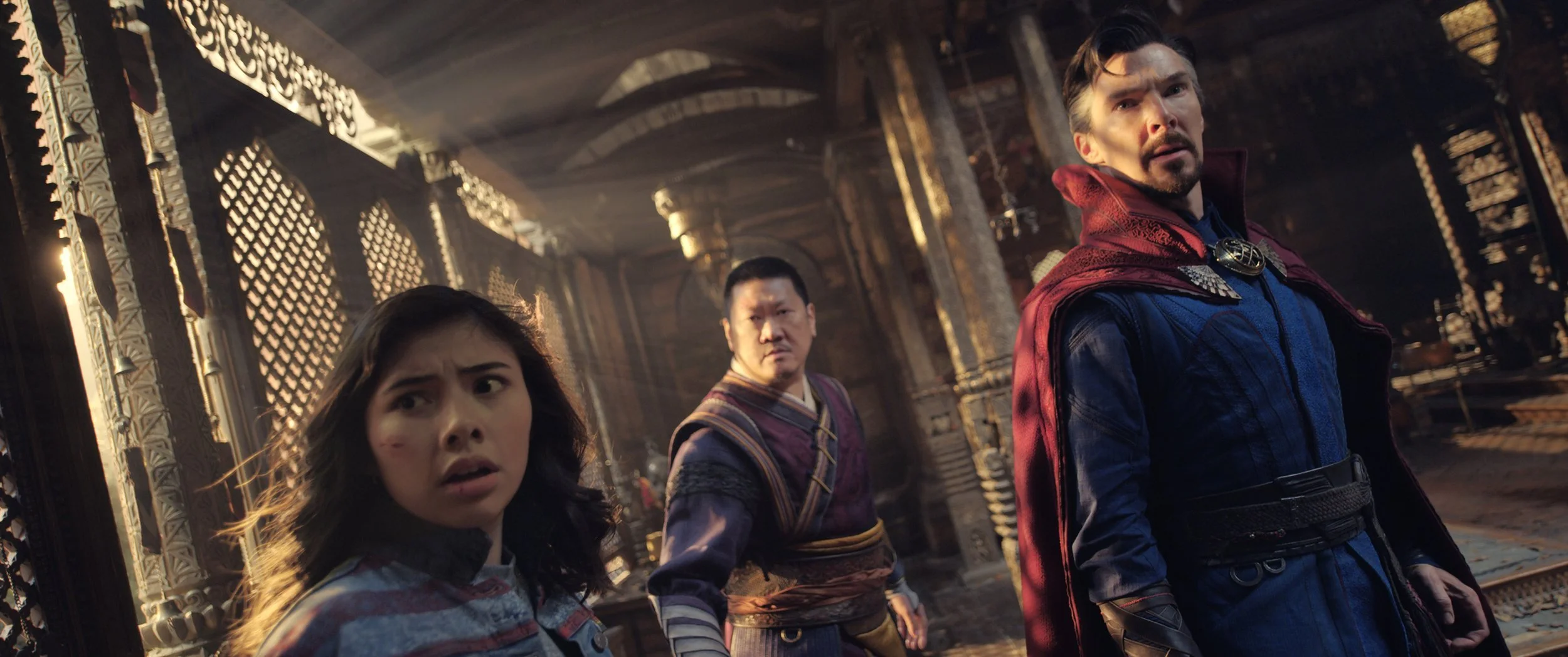
The action sequences in the movie's latter half are pretty fun, if not innovative. That music fight between the two Doctor Stranges combines the likes of great visuals, shot composition, and sound design to give it one of the most fantastic-looking fight scenes in MCU history. That’s followed by that Darkhold finale where Strange has some of that stop-motion Nightmare Before Christmas skeletons infiltrating his body. I couldn’t help but grin ear to ear at how batshit insane the sequence was. If only Kevin Feige gave the same freedom to some of the other filmmakers in the universe’s catalog. But it's as they say: with great creative freedom comes great… consequences?

Remember the good ol’ days when the idea of a Marvel Cinematic Universe felt like a pipe dream? So do I. Maybe it’s the superhero fatigue talking or the scattershot quality of the current “phase four,” but Doctor Strange: Multiverse of Madness is so damn mid. If you look up the term “style over substance” in the dictionary, you might see a still image from this movie. Seriously, the screenplay is so bare-bones, that I can only envision Raimi grabbing a Darkhold for this to be even remotely watchable.
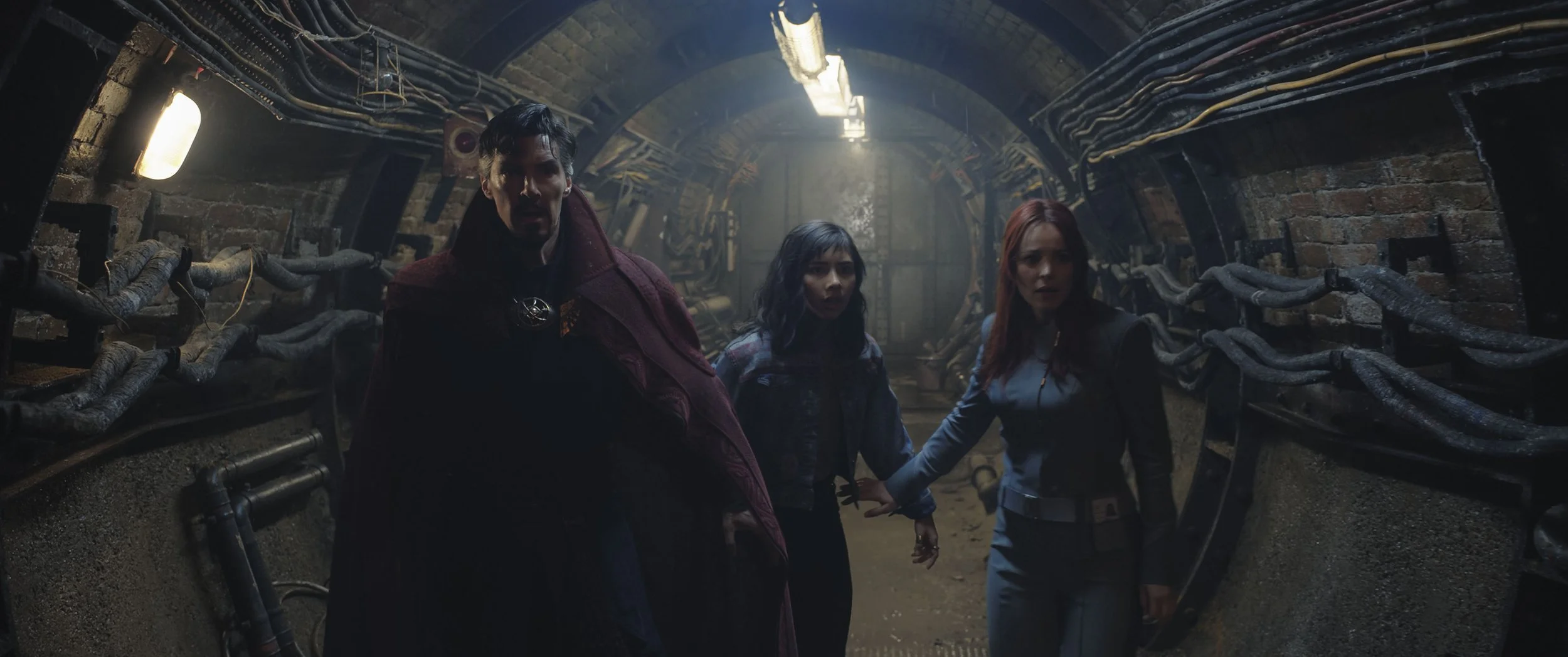
Michael Waldron's screenplay is transparent about how disconnected he is from the characters he’s given responsibility for. This is the second film Stephen Strange is headlining on his own and he acts more like a pawn to enact the “multiverse” saga. The story finds Doctor Strange in an enticing position where people begrudgingly turn to him and ask, “Hey, are you certain that giving up the time stone and letting the blip happen was the only way to defeat Thanos?” Even though nobody was there for that because that shit happened when Stephen was on another planet… but whatever. Conceptually, that’s a good basis for his arc. Yet, instead of exploring his past sins, especially how they could contrast with Wanda’s predicament, the majority of his arc hinges on his “what could’ve been” relationship with Christine Palmer (Rachel McAdams). Their relationship wasn’t even well established in the predecessor and it’s pathetically strained. It’s as Stephen said in his first solo feature: “Christine, we aren’t really friends. Hell, we were hardly even lovers.” This is true, but Waldron’s screenplay strains this not-so-impactful relationship between the two that when its attempt at emotional resonance comes to pass, you end up feeling nothing.
The same goes for Strange’s relationship with newcomer America Chavez (Xochitl Gomez), who is barely even a character. This is the first appearance of America Chavez in this vast world and she’s practically a McGuffin. She only exists to move the plot along, getting Dr. Strange from one multiverse to another as Wanda hunts her down so she can live with her kids in a multiverse. Much like Tony Stark to Spider-Man in his first few films, Strange has to play babysitter and guardian to this kid and she doesn’t get to display an iota of a personality because the plot has to keep trucking along. At best, you know her superhero tragic backstory where she has two moms. Outside of her powers, her parents’ queerness is the only thing you know about her.
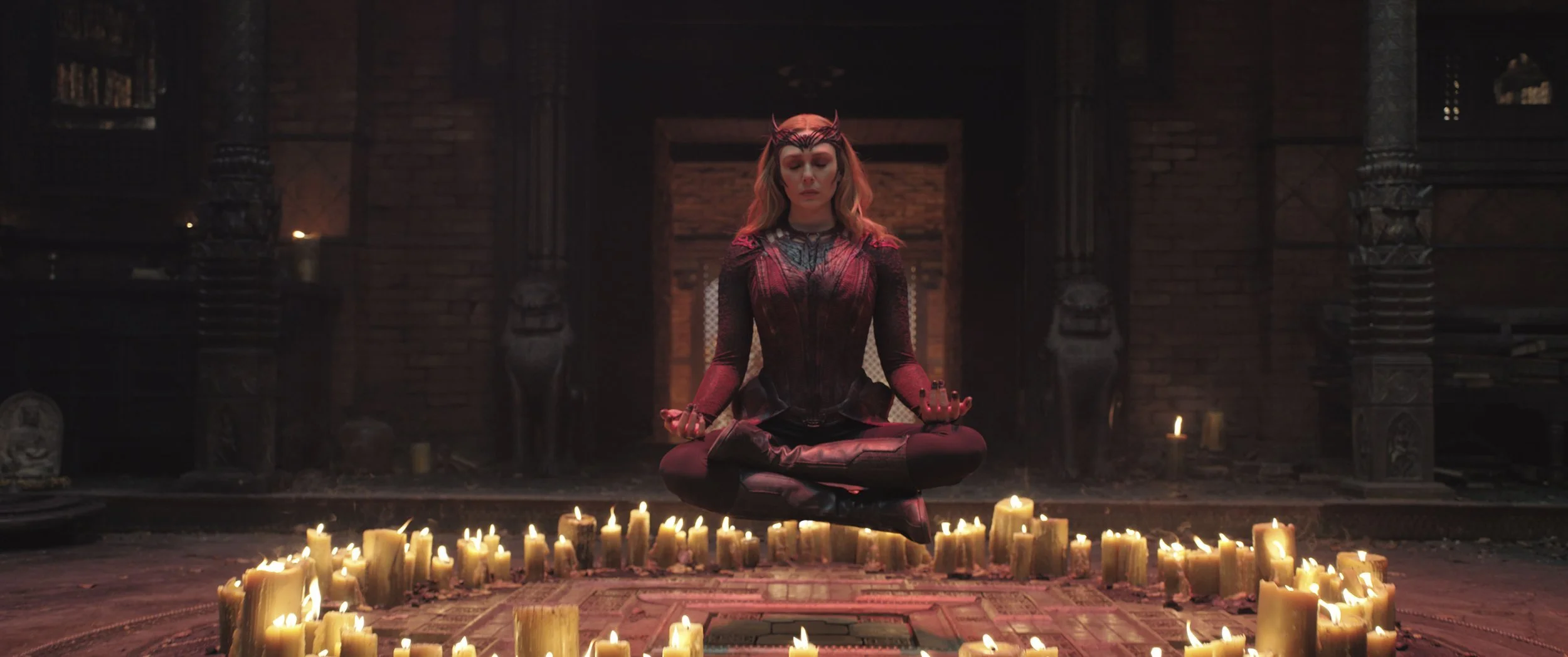
Wanda Maximoff. My God, how the mighty have fallen. Outside of Raimi using her as a means to exude horror film tropes, she is done extremely dirty. First off, it’s exhausting to have to watch Disney+ shows to understand Wanda’s arc in Multiverse of Madness. Yet, it meant LITTLE TO NOTHING. Do you think Wanda went through any type of growth in WandaVision outside of a power upgrade and new title? Nope. Now, instead of enslaving a town to create a picture-perfect life for herself, she goes on a homicidal rampage so she can be a mom. I know this is closely related to the House of M story arc but the fact that she’s chasing after fictional sons who never existed after sort of exploring that already with her trauma makes her arc completely uninteresting, if not redundant. Given how poorly female characters are handled in this series where they’re either meant to pander to the girlies or become literal martyrs to motivate the male leads, this is another low. It’s been nearly a decade since Wanda joined the MCU and despite being the most powerful Avenger of them all, Waldron gives her the worst arc I’ve seen in ages. From the veteran characters to straight-up newcomers, everyone is reverted to the most reductive they’ve ever been, and the poor dialogue sours the taste even further.
Doctor Strange in the Multiverse of Madness is what happens when you let a crafty auteur run wild on a mid script. A visual spectacle that is delightful to witness whenever Sam Raimi gets experimental but is bogged down with the messiest and most lifeless stories the MCU has to offer. I can go on with other critiques, such as its frustrating fan service cues to pander to audiences waiting for a nostalgia rush or its poor CGI during close-up shots… but I’m just tired. At this rate, I might just copy and paste words from other Marvel reviews I’ve written because I’m being less and less enthralled by the MCU. Taika please do something, because I’m nearing the limit of my power. Good Sam Raimi movie, worst MCU narrative yet.